Best Cantonese Podcasts for Learning: How to Listen to Cantonese Podcasts and Learn the Language
Last updated: April 4, 2026

If you're trying to learn Cantonese, you've probably noticed something frustrating: there just aren't as many resources compared to Mandarin or other popular languages. Finding quality Cantonese podcasts can feel like searching for a needle in a haystack. But here's the good news. There are actually some solid podcasts out there that can help you improve your listening skills, pick up natural expressions, and get familiar with how real Cantonese speakers actually talk. I've spent way too much time testing different shows, so let me break down the best options for learners at different levels.
How Cantonese podcasts can help you learn
Podcasts give you something textbooks can't: real spoken Cantonese at a natural pace. When you're learning a tonal language like Cantonese, you need to hear those tones over and over again in different contexts. The thing is, reading about tones and actually hearing them are completely different experiences.
Listening to Cantonese podcasts regularly trains your ear to distinguish between sounds that might seem identical at first. You'll start picking up on the rhythm of conversations, common sentence patterns, and how native speakers actually use particles like 啦, 囉, and 咩. These little words make Cantonese sound natural, but they're hard to master without hearing them used constantly.
Plus, podcasts fit into your life way easier than sitting down with a textbook. You can listen while commuting, doing dishes, or going for a walk. The consistency matters more than cramming for hours once a week.
Best Cantonese podcasts for absolute beginners
1. CantoneseClass101
This one shows up on basically every list for a reason. CantoneseClass101 structures their episodes specifically for language learning, starting from zero. Each episode focuses on a specific topic or grammar point, and they break everything down with English explanations.
The hosts speak clearly and repeat key phrases multiple times. You'll hear a dialogue, then they'll explain what's happening, teach you the vocabulary, and give you cultural context. Pretty straightforward format, but it works.
They have hundreds of episodes organized by level, so you can start with survival phrases and work your way up to more complex conversations. The podcast is available on Spotify and their own platform. Some content is free, but you'll need a subscription to access their full library and PDF transcripts.
2. Learn Cantonese Daily
This podcast takes a different approach with super short episodes, usually around 5-10 minutes. Each one teaches you a specific phrase or expression you'd actually use in Hong Kong.
What I like about this show is that it doesn't overwhelm you. You get one concept per episode, hear it used in different sentences, and move on. The host keeps things casual and explains pronunciation tips that actually help.
It's perfect if you're just starting out and can't commit to longer study sessions. You can knock out an episode while making coffee and actually remember what you learned.
Intermediate listening that is worth your time
Naked Cantonese
Once you've got some basics down, Naked Cantonese becomes way more useful. The hosts are a mix of native speakers and learners, and they discuss real topics in Cantonese while occasionally switching to English to explain tricky parts.
Episodes cover everything from Hong Kong slang to cultural differences to grammar explanations. The conversations feel natural because they're not scripted for textbooks. You'll hear people interrupt each other, use informal language, and speak at a normal pace.
Fair warning: this might be tough if you're still struggling with basic sentences. But if you can follow along even partially, you'll pick up tons of colloquial expressions that make you sound less like a textbook and more like an actual person.
Advanced listening for serious learners
RTHK Radio 3
Ready for the real deal? RTHK (Radio Television Hong Kong) produces actual news and talk shows in Cantonese for native speakers. This isn't designed for learners, which makes it both challenging and incredibly valuable.
You'll hear professional broadcasters speaking clear Cantonese at a natural pace. News programs use formal vocabulary you won't encounter in casual conversation podcasts. Cultural shows and interviews expose you to different speaking styles and topics.
This is tough, no question. But if you want to actually understand Cantonese media and speak the Cantonese language at a high level, you need to graduate from learner content eventually. Start with topics you already know about so you can guess meanings from context.
How to use these podcasts to learn Cantonese
Just passively listening won't get you very far. Here's what actually works:
- Start with episodes at your level or slightly above. If you're catching less than 30% of what's said, it's probably too advanced right now. You want enough comprehension to follow along but enough challenge to learn new things.
- Listen to the same episode multiple times. First time, just try to get the gist. Second time, focus on picking out individual words and phrases. Third time, try shadowing by repeating what you hear.
- Use transcripts when available. Read along while listening to connect the sounds with the characters. This helps your pronunciation and reading skills simultaneously.
- Take notes on new vocabulary and expressions. When you hear something useful, write it down with the context. Just hearing a word isn't enough, you need to save it somewhere you'll review it later.
- Set a realistic schedule you'll actually stick to. Maybe that's one episode every morning, or three episodes spread throughout the week. What matters is showing up regularly.
- Track your progress somehow. This could be as simple as noting which episodes you've completed or keeping a list of new expressions you've learned. Seeing your progress accumulates keeps you motivated when improvement feels slow.
Apps and tools to supplement podcast learning
What's the best app for learning Cantonese? There's no single perfect answer, but a few options work well alongside podcasts.
- Drops focuses on vocabulary building with visual associations. It's good for learning words you'll then recognize in podcasts.
- Ling offers structured lessons covering grammar and conversation practice.
- Anki or other spaced repetition systems help you remember vocabulary from podcasts. When you hear a useful phrase in an episode, make a flashcard with the audio clip and review it regularly.
Honestly though, apps work best as supplements. The real progress comes from consuming actual Cantonese content like podcasts, shows, and conversations.
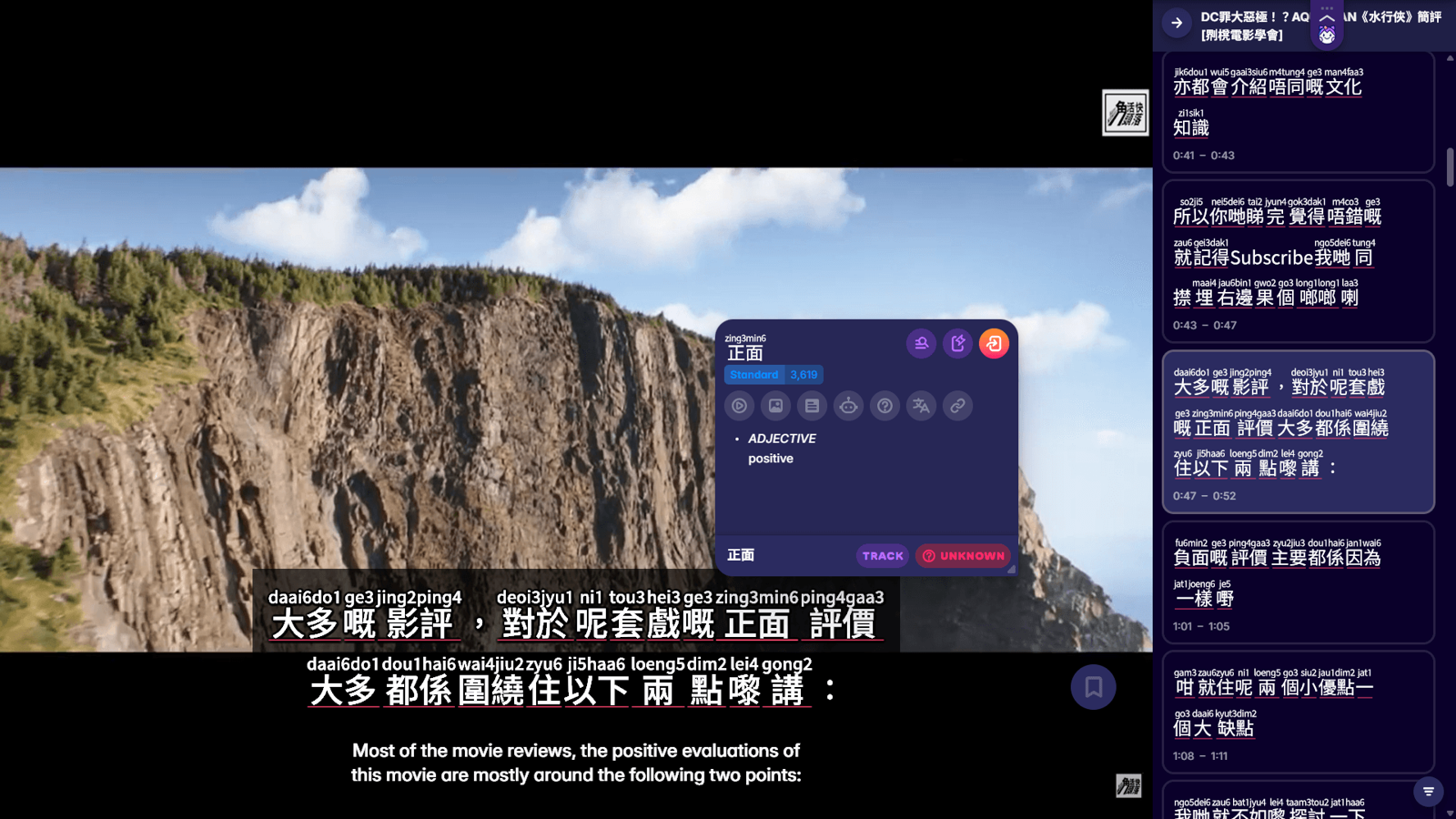
Migaku's browser extension and app let you look up words instantly while watching content. Makes immersion learning way more practical when you can save vocabulary directly from what you're watching. There's a 10-day free trial if you want to check it out.
Choose one Cantonese language podcast to start your journey!
You've got options now. Whether you're starting from zero with CantoneseClass101 or pushing your limits with RTHK news broadcasts, there's a podcast that fits your current level. The best Cantonese podcasts are the ones you'll listen to consistently. Start with one or two shows, give them a few episodes to see if they click, and build from there.
If you consume media in Cantonese, and you understand at least some of the messages and sentences within that media, you will make progress. Period.
Your ears will adjust, and the tones will start making sense.✅