Best Movies to Learn Chinese in 2026: Explore Chinese Culture Through Mandarin Movies
Last updated: April 4, 2026

Learning Mandarin through movies is one of the most enjoyable ways to improve your Chinese skills. You get natural dialogue, cultural context, and real pronunciation all wrapped up in an entertaining package. The trick is picking the right films that match your level and learning goals. Some Chinese movies use crystal-clear Mandarin perfect for learners, while others throw in regional dialects or super-fast slang that'll leave you scratching your head. I've watched dozens of Chinese films specifically for language learning, and I'm going to share the ones that actually helped me make progress.
- Why Chinese movies beat textbooks for learning Mandarin
- Best Chinese movies for beginners
- Movies to learn intermediate Mandarin
- Best Chinese movies for advanced learners
- Shanghai stories worth watching
- Best movies for learning by genre
- How to learn Chinese with movies and subtitles
- How different Chinese dialects in dramas affect your learning
- FAQs
Why Chinese movies beat textbooks for learning Mandarin
Textbooks teach you formal, proper Mandarin that sounds kind of robotic in real life.
- Movies show you how people actually talk. You'll hear the rhythm of natural speech, the way people cut sentences short, and all those little particles like 啊, 呢, and 吧 that textbooks mention but never really explain well.
- Chinese films also give you cultural context that's impossible to get from grammar drills. You'll see how people greet each other in different situations, what's considered polite or rude, and how relationships work in Chinese society. This cultural knowledge makes your Mandarin feel more authentic when you use it.
- Plus, movies are just more fun than staring at vocabulary lists. When you're entertained, you pay attention longer and remember more. I've retained phrases from movies way better than anything I memorized from flashcards alone.
Best Chinese movies for beginners
In the Mood for Love (2000)
This Wong Kar-wai film set in 1960s Hong Kong moves slowly and features clear, deliberate dialogue. The characters speak standard Mandarin (there's also a Cantonese version, so make sure you get the Mandarin one), and the pacing gives you time to process what you're hearing. The story follows two neighbors who discover their spouses are having an affair, and the emotional restraint means people speak carefully and thoughtfully.
The vocabulary stays pretty everyday, covering topics like work, neighbors, and relationships. Nothing too technical or specialized. The film's gorgeous cinematography keeps you engaged even when you're working hard to understand the dialogue.
Eat Drink Man Woman (1994)
Ang Lee's food-centered family drama uses accessible Mandarin and revolves around daily life situations. A retired chef and his three daughters navigate modern life in Taipei, dealing with relationships, career choices, and family obligations. The conversations happen mostly around the dinner table or in domestic settings, so the vocabulary stays practical and useful.
You'll hear tons of food-related vocabulary, family terms, and everyday expressions. The drama moves at a reasonable pace, and the multiple storylines mean you get exposed to different speaking styles and age groups. Pretty cool for picking up how different generations use Mandarin differently.
Movies to learn intermediate Mandarin
Farewell My Concubine (1993)
This epic spans several decades of Chinese history, following two Peking Opera performers through political upheaval. The Mandarin is more complex than beginner films, but still clear and well-enunciated. You'll encounter historical terms and opera-related vocabulary, which expands your range beyond everyday conversation.
The film gives you insight into Chinese history and culture that's valuable for understanding modern China. The dialogue includes both formal and informal speech, depending on the setting and time period. At around 170 minutes, it's long, but you can watch it in chunks.
To Live (1994)
Zhang Yimou's drama follows one family through decades of Chinese political movements. The Mandarin pronunciation is excellent, and the story's emotional weight keeps you invested even when the language gets challenging. You'll hear vocabulary related to Chinese history, family life, and survival during difficult times.
The film covers the 1940s through the 1970s, so you get exposed to how Mandarin was used across different eras. The characters come from ordinary backgrounds, so their speech patterns feel authentic and grounded. This one really helped me understand how historical context shapes the way Chinese people communicate.
Crouching Tiger, Hidden Dragon (2000)
This martial arts film features beautiful, clear Mandarin with a slightly formal register that's great for learners. The dialogue isn't too fast, and the dramatic pauses give you processing time. You'll learn vocabulary related to honor, duty, and martial arts philosophy, which might seem specialized but actually uses common character combinations you'll see elsewhere.
The film was specifically designed to appeal to international audiences, so the pacing and clarity work in your favor as a learner. The action sequences give your brain breaks between dialogue-heavy scenes.
Best Chinese movies for advanced learners
Devils on the Doorstep (2000)
This black comedy set during the Japanese occupation of China features rapid-fire dialogue and regional expressions. The Mandarin is natural and unpolished, exactly how people actually talk when emotions run high. You'll encounter a wider range of vocabulary and some darker humor that requires cultural understanding to fully appreciate.
The film challenges your listening skills with overlapping dialogue and characters who speak quickly. If you can follow this one comfortably, your Mandarin is genuinely strong.
Lost in Beijing (2007)
This drama about working-class life in modern Beijing uses contemporary Mandarin with all its slang and casual expressions. The dialogue feels completely natural, sometimes messy and overlapping like real conversations. You'll learn how young Chinese people actually talk, not the polished version from textbooks.
The film deals with adult themes and modern urban life, so the vocabulary skews toward contemporary issues and relationships. It's challenging but gives you the kind of Mandarin you'd actually hear if you lived in a Chinese city.
Ne Zha 1 (2019)
This animated fantasy film uses a mix of modern Mandarin and mythological storytelling, so the language shifts between casual banter and dramatic, poetic lines. The characters speak in a lively, emotional way that feels much more natural than the stiff dialogue you sometimes hear in educational material. You'll pick up contemporary expressions, playful insults, and the exaggerated humor common in Chinese pop culture.
Because the story reimagines a famous Chinese legend for a modern audience, the vocabulary blends everyday speech with cultural references and fantasy terminology. It's easier to follow than many serious historical dramas, but still exposes you to the rhythm and emotional intensity of native Mandarin conversation.
Shanghai stories worth watching
Shanghai Triad (1995)
Zhang Yimou's gangster film set in 1930s Shanghai features period-appropriate Mandarin with a Shanghai flavor. The dialogue is clear despite the regional touches, and the story's perspective through a young servant boy means you get explanations of things that might otherwise confuse you.
You'll pick up vocabulary related to organized crime, loyalty, and survival, plus get a feel for how Shanghai Mandarin differs from standard Putonghua. The film's visual storytelling means you can follow the plot even when the language gets tricky.
Suzhou River (2000)
This mystery romance set in contemporary Shanghai uses modern Mandarin with urban slang and casual speech patterns. The narrator's voice-over provides context that helps you understand the more cryptic dialogue scenes. You'll hear how young Shanghai residents speak, which includes some local expressions mixed with standard Mandarin.
The film's dreamlike quality means the dialogue isn't constant, giving you breaks to process what you've heard. The vocabulary covers relationships, urban life, and memory, all useful topics for intermediate learners.
Best movies for learning by genre
For romance learners, try "Comrades: Almost a Love Story" (1996), which follows two mainland Chinese immigrants in Hong Kong. The Mandarin is clear, and the emotional story keeps you engaged through challenging vocabulary sections.
Comedy fans should check out "Lost in Thailand" (2012), a buddy comedy with accessible Mandarin and physical humor that helps you follow along even when you miss words. The modern setting means contemporary vocabulary and slang.
Historical drama enthusiasts will love "Raise the Red Lantern" (1991), which uses formal, clear Mandarin in a 1920s setting. The limited cast and confined setting mean you hear the same voices repeatedly, which helps with comprehension.
For crime thriller lovers, "Black Coal, Thin Ice" (2014) offers modern Mandarin in a northern Chinese setting. The dialogue is naturalistic, and the mystery plot keeps you motivated to understand every detail.
How to learn Chinese with movies and subtitles
- Start with Chinese subtitles, not English. I know English subtitles feel safer, but they actually slow down your learning. When you read Chinese subtitles while listening, you're connecting sounds to characters, which builds both your listening and reading skills simultaneously.
- Watch scenes multiple times. First time, just enjoy the story. Second time, focus on catching individual words and phrases. Third time, pause and look up anything interesting. This layered approach keeps movies enjoyable while maximizing learning.
- Pick one movie and really dig into it rather than watching tons of different films once. When you rewatch the same movie, you'll catch things you missed the first time, and familiar scenes let you focus on language details instead of just following the plot.
- Create a vocabulary list from each film. Jot down useful phrases and expressions you hear, especially ones that appear multiple times. Movie dialogue tends to repeat certain patterns, so you'll naturally encounter your new vocabulary multiple times throughout the film.
How different Chinese dialects in dramas affect your learning
Most films marketed internationally use standard Mandarin (Putonghua), but some include regional dialects or accents.
Hong Kong films often use Cantonese, which is completely different from Mandarin. Make sure you're actually getting a Mandarin version before you start watching.
Even within Mandarin films, you'll notice regional accents. Beijing Mandarin sounds different from Taiwan Mandarin, which differs from Singapore Mandarin. These variations are actually helpful once you're intermediate or advanced because they train your ear to understand different speakers.
Some films intentionally use dialect for authenticity or character development. A character from rural areas might speak with a heavy accent, while urban professionals use standard pronunciation. This reflects real life in China, where dialect and accent indicate someone's background.
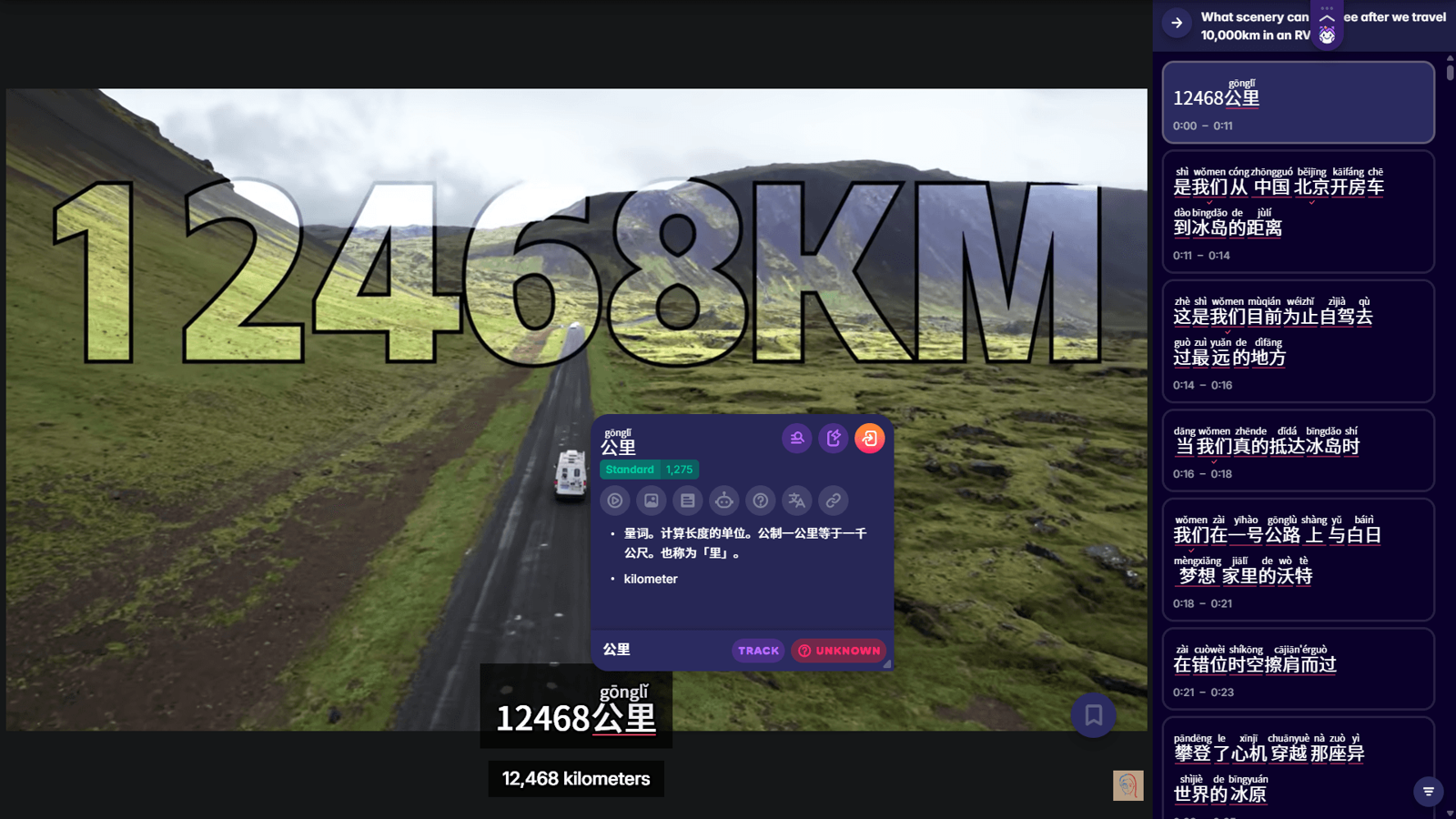
If you want to supercharge your movie-based learning, Migaku's browser extension and app let you instantly look up words while watching Chinese content online. You can save sentences directly from films into your review system with one click. There's a 10-day free trial if you want to see how much faster you can learn from the movies you're already watching.
FAQs
Chinese cinema offers an incredible resource for language learners at every level
Pick one film from this list that matches your level and watch it this week. Really dig into it, rewatch your favorite scenes, and notice how much more you understand on the second viewing. That progress feels pretty awesome.
If you consume media in Mandarin, and you understand at least some of the messages and sentences within that media, you will make progress. Period.
What’s better than learning from things you actually enjoy?🫡