# Cantonese Body Parts Words that Learners Should Know
> Essential Cantonese body parts vocabulary with pronunciation guides, formal vs. colloquial terms, and practical usage examples for real conversations.
**URL:** https://migaku.com/blog/chinese/cantonese-body-parts-vocabulary
**Last Updated:** 2026-03-20
**Tags:** vocabulary, phrases
---
Body parts in [Cantonese learning](https://migaku.com/learn-cantonese) is one of those foundational vocabulary sets that you'll actually use all the time. Whether you're describing an injury at the doctor's office, talking about exercise, or just having everyday conversations, knowing how to refer to different parts of your body comes up way more often than you'd think. Plus, Cantonese has some pretty interesting distinctions between formal medical terms and casual everyday language that make this topic more nuanced than just memorizing a simple list.
----
## Head and facial features
The head in Cantonese is 頭 (tau4), and it forms the basis for many compound words. Your face is 面 (min6), though you'll also hear 臉 (lim5) in some contexts.
| Cantonese | Jyutping | English |
| - | - | - |
| 額頭 | ngaak6 tau4 | Forehead |
| 眼 / 眼睛 | ngaan5 / ngaan5 zing1 | Eyes |
| 鼻 | bei6 | Nose |
| 口 / 嘴 | hau2 / zeoi2 | Mouth |
| 耳仔 | ji5 zai2 | Ears |
| 牙 | ngaa4 | Teeth |
| 舌頭 | sit6 tau4 | Tongue |
| 喉嚨 | hau4 lung4 | Throat |
| 下巴 | haa6 baa1 | Chin |
| 面珠 / 面頰 | min6 zyu1 / min6 gaap3 | Cheeks |
| 頭髮 | tau4 faat3 | Hairs |
| 眉毛 | mei4 mou4 | Eyebrows |
| 眼睫毛 | ngaan5 zit3 mou4 | Eyelashes |
----
## Neck and upper torso
| Cantonese | Jyutping | English |
| - | - | - |
| 頸 | geng2 | Neck |
| 膊頭 / 肩 | bok3 tau4 / gin1 | Shoulders |
| 胸 | hung1 | Chest |
| 背脊 / 背 | bui3 zik3 / bui3 | Back |
| 腰 | jiu1 | Waist |
| 肚 | tou5 | Stomach / Belly |
| 腹部 | fuk1 bou6 | Abdomen (more medical) |
| 肋骨 | lak6 gwat1 | Ribs |
| 脊椎 | zik3 zeoi1 | Spine |
----
## Arms and hands
| Cantonese | Jyutping | English |
| - | - | - |
| 手臂 / 手 | sau2 bei3 / sau2 | Arms |
| 手踭 | sau2 zang1 | Elbows |
| 手腕 | sau2 wun2 | Wrists |
| 手 | sau2 | Hands |
| 手指 | sau2 zi2 | Fingers |
| 手指公 | sau2 zi2 gung1 | Thumbs |
| 食指 | sik6 zi2 | Index fingers |
| 中指 | zung1 zi2 | Middle fingers |
| 無名指 | mou4 ming4 zi2 | Ring fingers |
| 尾指 | mei5 zi2 | Pinkies |
| 手掌 | sau2 zoeng2 | Palms |
| 手背 | sau2 bui3 | Backs of the hands |
| 手指甲 / 指甲 | sau2 zi2 gaap3 / zi2 gaap3 | Fingernails |
----
## Common words for legs and feet
| Cantonese | Jyutping | English |
| - | - | - |
| 腳 | goek3 | Legs / Feet (context-dependent) |
| 大腿 | daai6 teoi2 | Thighs |
| 小腿 | siu2 teoi2 | Lower legs / Calves |
| 膝頭 | sat1 tau4 | Knees |
| 腳眼 | goek3 ngaan5 | Ankles (literally "foot-eye") |
| 腳 | goek3 | Feet |
| 腳趾 | goek3 zi2 | Toes |
| 腳踭 | goek3 zang1 | Heels |
| 腳板 | goek3 baan2 | Soles of the feet |
| 腳甲 | goek3 gaap3 | Toenails |
----
## Internal organs
[Learning Cantonese vocabulary](https://migaku.com/blog/chinese/cantonese-clothing-vocabulary) for internal organs helps when discussing health issues or understanding medical contexts.
| Cantonese | Jyutping | English |
| - | - | - |
| 心 / 心臟 | sam1 / sam1 zong6 | Heart |
| 肺 | fai3 | Lungs |
| 肝 | gon1 | Liver |
| 腎 | san6 | Kidneys |
| 腦 / 腦袋 | nou5 / nou5 doi6 | Brain |
| 胃 | wai6 | Stomach (organ) |
| 腸 | coeng4 | Intestines |
| 小腸 | siu2 coeng4 | Small intestine |
| 大腸 | daai6 coeng4 | Large intestine |
| 膀胱 | pong4 gwong1 | Bladder |
----
## Formal versus colloquial terms
One thing that makes Cantonese body parts vocabulary interesting is the distinction between formal medical language and everyday colloquial terms. In a hospital setting, medical professionals might use more formal terms, while in casual conversation you'd hear different words entirely.
For example, while 眼睛 (ngaan5 zing1) is the formal word for eyes, many people just say 眼 (ngaan5) in everyday speech. Similarly, 耳朵 (ji5 do2) is formal for ears, but 耳仔 (ji5 zai2) is what you'll hear on the street.
This matters because if you only learn the textbook formal terms, you might sound overly stiff in casual conversations. On the flip side, using too much slang at the doctor's office might not be appropriate either.
----
## Building vocabulary systematically
When you're first tackling body parts in Cantonese, it helps to organize your learning by region.
1. Start with the head and face since those terms come up most frequently. Then move to the limbs, torso, and finally internal organs.
2. Creating mental associations between related terms speeds up retention. Notice how many compound words use 頭 (tau4): 頭 (head), 額頭 (forehead), 膊頭 (shoulder), 膝頭 (knee). Recognizing these patterns makes the vocabulary less random and more systematic.
3. [Spaced repetition](https://migaku.com/blog/language-fun/spaced-repetition-vs-cramming) really helps with this kind of foundational vocabulary. You need these words accessible in your active vocabulary, ready to use without hesitation when the situation calls for it.
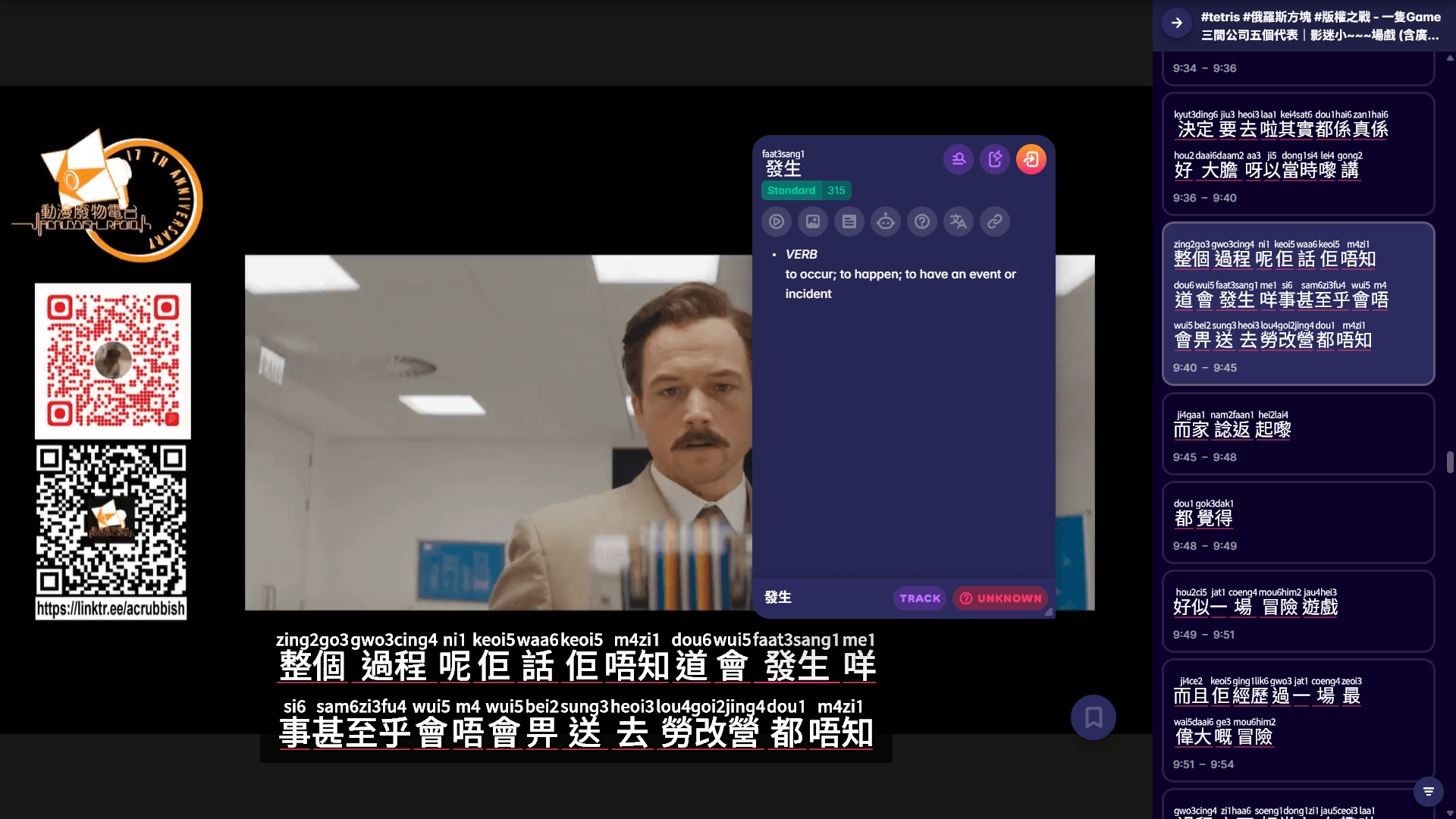
Anyway, if you want to practice this vocabulary with real Cantonese content, Migaku's browser extension and app let you look up words instantly while watching shows or reading articles. Makes learning from authentic materials way more practical. There's a 10-day free trial if you want to check it out.
 ----
## FAQs
Absolutely. Since Cantonese is primarily written using traditional characters in Hong Kong and Macau, learning them alongside the vocabulary makes sense. The characters often give you clues about the meaning, too.
For sure. This is essential foundational vocabulary that supports so many other areas of language learning. You'll use these words constantly.
----
## To really master the body parts in Cantonese, you need exposure beyond just memorizing lists
Watch [Cantonese dramas or movies](https://migaku.com/blog/chinese/best-cantonese-shows-for-language-learners) and pay attention when characters discuss injuries, illnesses, or physical descriptions. Listen to how native speakers use these terms in context. Reading materials like health articles and exercise instructions, give you varied exposure to these words. The more contexts you encounter a word in, the better you'll remember and understand its nuances.
> If you consume media in Cantonese, and you understand at least some of the messages and sentences within that media, you will make progress. _Period_.
Keep exploring different ways to learn!
----
## FAQs
Absolutely. Since Cantonese is primarily written using traditional characters in Hong Kong and Macau, learning them alongside the vocabulary makes sense. The characters often give you clues about the meaning, too.
For sure. This is essential foundational vocabulary that supports so many other areas of language learning. You'll use these words constantly.
----
## To really master the body parts in Cantonese, you need exposure beyond just memorizing lists
Watch [Cantonese dramas or movies](https://migaku.com/blog/chinese/best-cantonese-shows-for-language-learners) and pay attention when characters discuss injuries, illnesses, or physical descriptions. Listen to how native speakers use these terms in context. Reading materials like health articles and exercise instructions, give you varied exposure to these words. The more contexts you encounter a word in, the better you'll remember and understand its nuances.
> If you consume media in Cantonese, and you understand at least some of the messages and sentences within that media, you will make progress. _Period_.
Keep exploring different ways to learn!