# Cantonese Clothing Vocabulary: Essential Terms for Clothes in Cantonese
> Practical Cantonese clothing vocabulary for everyday use with audio. Complete guide to fashion terms, from shirts and pants to shoes and accessories.
**URL:** https://migaku.com/blog/chinese/cantonese-clothing-vocabulary
**Last Updated:** 2026-03-13
**Tags:** vocabulary, phrases, listicle
---
Learning how to talk about clothes in Cantonese opens up everyday conversations you'll actually use. Whether you're shopping in Hong Kong, chatting with friends about what to wear, or just trying to describe your outfit, this vocabulary comes up constantly. I'm going to walk you through the essential clothing terms, from basic shirts and pants to accessories and footwear, with the Cantonese words you need to know as a [Cantonese learner](https://migaku.com/learn-cantonese).
----
## Basic tops and shirts
Let's start with what you wear on top.
| Cantonese | Pronunciation | English |
| - | - | - |
| 衫 | saam1 | General word for any shirt or top. Super versatile, can refer to almost any upper body garment. When someone says "你件衫好靚喎" (nei5 gin6 saam1 hou2 leng3 wo3), they're saying your shirt looks nice. |
| T恤 | ti1 seot1 | T-shirt. Cantonese borrowed the English "T" and added 恤 (seot1) from "shirt." Also heard as 短袖衫 (dyun2 zau6 saam1), literally "short sleeve shirt." |
| 恤衫 | seot1 saam1 | Dress shirt or formal shirt. What you'd wear to work or a formal event. Combines 恤 (seot1) from "shirt" with 衫 (saam1). |
| 冷衫 | laang5 saam1 | Sweater or knitwear. Literally "cold shirt" — you wear it when it's cold. |
| 褸 | lau1 | Jacket or coat. |
| 西裝褸 | sai1 zong1 lau1 | Suit jacket (more specific). |
----
## Bottoms: Pants, skirts, and shorts
| Cantonese | Pronunciation | English |
| - | - | - |
| 褲 | fu3 | General word for pants or trousers. Just like 衫 (saam1) works for tops, 褲 (fu3) covers most bottom wear. |
| 長褲 | coeng4 fu3 | Long pants. Pattern: long + base word for pants. |
| 短褲 | dyun2 fu3 | Shorts. Pattern: short + base word for pants. |
| 牛仔褲 | ngau4 zai2 fu3 | Jeans. Literally "cowboy pants" — how Cantonese adapted the Western concept of denim jeans. |
| 裙 | kwan4 | Skirts and dresses (general term). |
| 短裙 | dyun2 kwan4 | Short skirt. |
| 長裙 | coeng4 kwan4 | Long skirt. |
| 連身裙 | lin4 san1 kwan4 | Dress (one-piece dress). Literally "connected body skirt." |
----
## Cantonese vocabulary of outerwear and formal wear
When the weather gets cold or you need to dress up, you'll need these terms.
| Cantonese | Pronunciation | English |
| - | - | - |
| 褸 | lau1 | General jacket |
| 大褸 | daai6 lau1 | Coat (especially a longer one). Literally "big jacket." |
| 風褸 | fung1 lau1 | Windbreaker or light jacket. Literally "wind jacket." |
| 西裝 | sai1 zong1 | Suit. Comes from "Western dress." When you need to dress formally in Hong Kong, people might tell you to wear this. |
| 西裝褸 | sai1 zong1 lau1 | Suit jacket |
| 西褲 / 西裝褲 | sai1 fu3 / sai1 zong1 fu3 | Suit pants |
| 旗袍 | kei4 pou4 | Cheongsam / qipao. Traditional Chinese clothing. You'll see these at formal events, weddings, and cultural celebrations. |
----
## Common Cantonese vocabulary of shoes and footwear essentials
Footwear vocabulary is crucial because you can't exactly point at your feet in every conversation.
| Cantonese | Pronunciation | English |
| - | - | - |
| 鞋 | haai4 | General word for shoes. Works for most footwear. |
| 波鞋 | bo1 haai4 | Sneakers or sports shoes. 波 (bo1) refers to ball games, so literally "ball shoes." |
| 跑步鞋 | paau2 bou6 haai4 | Running shoes (more specific). |
| 高跟鞋 | gou1 gan1 haai4 | High heels. Literally "high heel shoes." |
| 涼鞋 | loeng4 haai4 | Sandals. Literally "cool shoes." |
| 拖鞋 | to1 haai4 | Slippers or flip-flops. |
| 靴 | hoe1 | Boots (general). |
| 長靴 | coeng4 hoe1 | Long boots. |
| 短靴 | dyun2 hoe1 | Ankle boots. |
| 襪 | mat6 | Socks. Often said as 對襪 (deoi3 mat6) for "a pair of socks." |
----
## Underwear and sleepwear words and phrases
These might feel awkward to learn, but you'll need them when doing laundry, shopping, or packing for trips.
| Cantonese | Pronunciation | English |
| - | - | - |
| 內衣 | noi6 ji1 | Underwear in general. Literally "inner clothes." |
| 胸圍 | hung1 wai4 | Bra. |
| 底褲 | dai2 fu3 | Panties, underpants, or men's briefs. |
| 四角褲 | sei3 gok3 fu3 | Boxers. Literally "four corner pants." |
| 睡衣 | seoi6 ji1 | Pajamas. Literally "sleep clothes." |
| 睡袍 | seoi6 pou4 | Nightgown. |
| 浴袍 | juk6 pou4 | Bathrobe. |
----
## Accessories that complete the outfit
Accessories in Cantonese are **配件 ** (pui3 gin6) or **飾物 ** (sik1 mat6). Let me walk you through the common ones you'll actually use.
| Cantonese | Pronunciation | English |
| - | - | - |
| 帽 | mou6 | Hat or cap (general). |
| 冷帽 | laang5 mou6 | Winter beanie. |
| 皮帶 | pei4 daai3 | Belt. Literally "leather belt." |
| 首飾 | sau2 sik1 | Jewelry (general term). |
| 頸鏈 | geng2 lin2 | Necklace. |
| 手鏈 | sau2 lin2 | Bracelet. |
| 戒指 | gaai3 zi2 | Ring. |
| 耳環 | ji5 waan4 | Earrings. |
| 袋 | doi6 | Bag or purse (general). |
| 手袋 | sau2 doi6 | Handbag. |
| 背囊 | bui3 nong4 | Backpack. |
| 太陽眼鏡 | taai3 joeng4 ngaan5 geng3 | Sunglasses. |
| 手錶 | sau2 biu1 | Watch (regular). |
| 頸巾 | geng2 gan1 | Scarf. Literally "neck towel." |
| 手套 | sau2 tou3 | Gloves. Literally "hand covers." |
| 遮 | ze1 | Umbrella. Super useful vocabulary in Hong Kong where sudden rain is common. |
----
## Start learning Cantonese shopping phrases and expressions
Knowing the vocabulary is one thing, but using it in real conversations takes practice. Here are some phrases that'll make shopping way easier.
| Cantonese | Pronunciation | English |
| - | - | - |
| 我可唔可以試吓? | ngo5 ho2 m4 ho2 ji5 si3 haa5? | Can I try this? |
| 有冇大啲嘅? | jau5 mou5 daai6 di1 ge3? | Do you have a bigger one? |
| 有冇細啲嘅? | jau5 mou5 sai3 di1 ge3? | Do you have a smaller one? |
| 幾多錢? | gei2 do1 cin2? | How much? |
| 太貴喇 | taai3 gwai3 laa3 | Too expensive. |
| 我想搵…… | ngo5 soeng2 wan2... | I want to find... (followed by the clothing item) |
| 我想搵件恤衫 | ngo5 soeng2 wan2 gin6 seot1 saam1 | I am looking for a dress shirt. |
----
## How to practice and remember clothing vocabulary
The best way to make this vocabulary stick is through active use.
1. When you're getting dressed in the morning, name each item in Cantonese. When you're doing laundry, mentally label everything you're folding. This daily practice builds automatic recall.
2. Another solid technique is [watching Cantonese shows or videos](https://migaku.com/blog/chinese/best-cantonese-shows-for-language-learners) about fashion and shopping. You'll hear these words related to clothes in natural contexts, which helps you understand how native speakers actually use them. Pay attention to how people describe outfits or discuss what to wear.
3. [Creating your own flashcards](https://migaku.com/blog/chinese/chinese-character-flashcards) with images works well too. Take photos of your actual clothes and label them in Cantonese. This makes the vocabulary personally relevant, which helps memory retention way more than generic stock photos.
4. Try describing other people's outfits in Cantonese when you're out and about. You don't have to say it out loud, just practice in your head. "佢著住件紅色T恤同埋藍色牛仔褲" (keoi5 zoek3 zyu6 gin6 hung4 sik1 ti1 seot1 tung4 maai4 laam4 sik1 ngau4 zai2 fu3), meaning "They're wearing a red t-shirt and blue jeans."
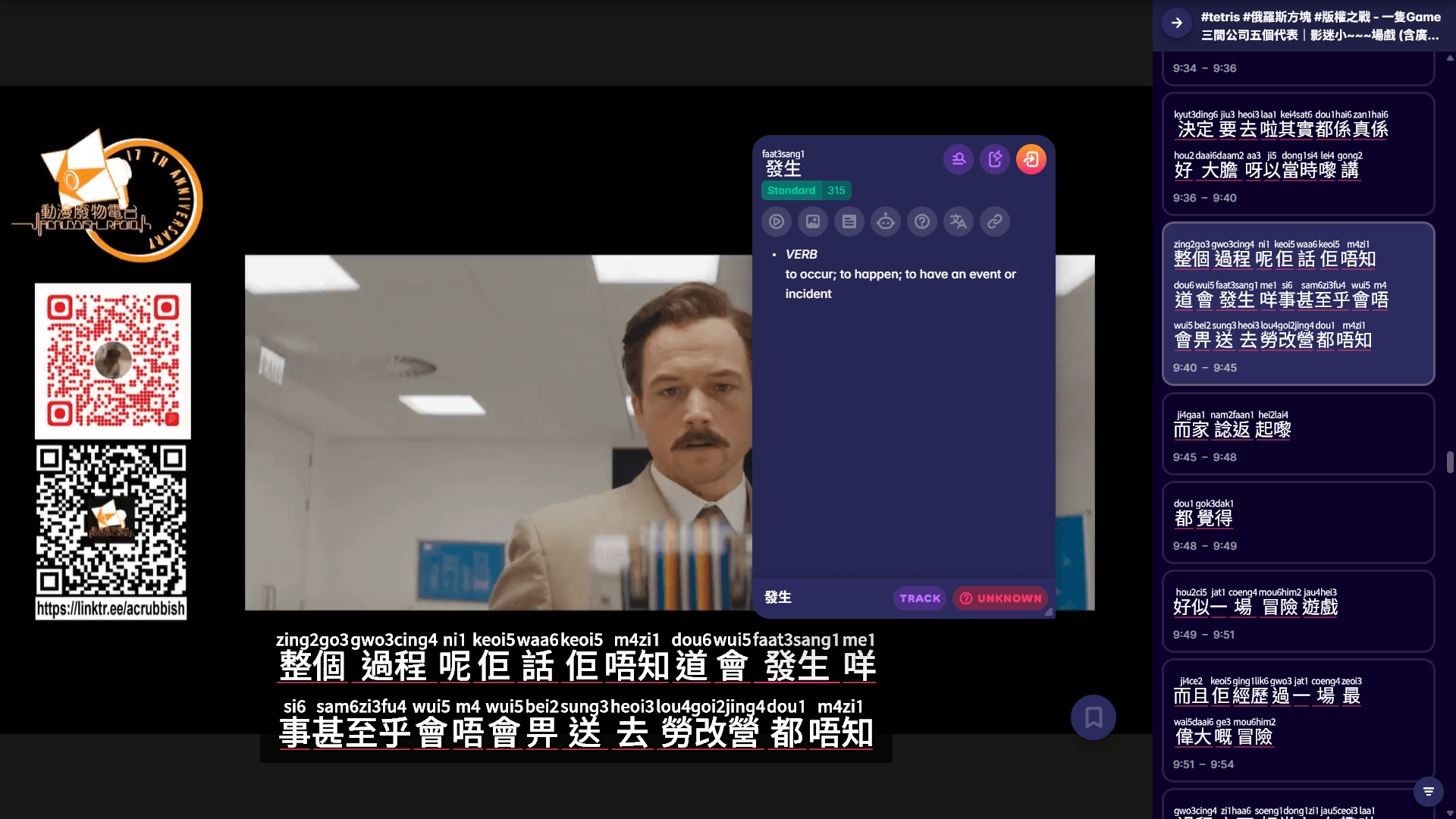
If you want to level up your Cantonese learning beyond just vocabulary lists, Migaku's browser extension and app let you look up words instantly while watching Cantonese shows or reading articles. You can save the words you encounter and review them later with [spaced repetition](https://migaku.com/blog/language-fun/spaced-repetition-vs-cramming). There's a 10-day free trial if you want to see how it works with actual content.
 ----
## Learning these terms related to clothes helps you understand Cantonese culture better
The way people describe clothes, the specific terms they use for different styles, and even the shopping phrases all give you insight into daily life in Hong Kong and other Cantonese-speaking communities. Watching videos about fashion in Hong Kong not only helps you learn new words but also exposes you to the context and fashion discourse.
> If you consume media in Cantonese, and you understand at least some of the messages and sentences within that media, you will make progress. _Period_.
Keep practicing with real situations.
----
## Learning these terms related to clothes helps you understand Cantonese culture better
The way people describe clothes, the specific terms they use for different styles, and even the shopping phrases all give you insight into daily life in Hong Kong and other Cantonese-speaking communities. Watching videos about fashion in Hong Kong not only helps you learn new words but also exposes you to the context and fashion discourse.
> If you consume media in Cantonese, and you understand at least some of the messages and sentences within that media, you will make progress. _Period_.
Keep practicing with real situations.