# Cantonese Emotions Vocabulary: Express Feelings Naturally
> Express happiness, sadness, anger, and more feelings in real conversations. Learn Cantonese emotions vocabulary with Jyutping pronunciation.
**URL:** https://migaku.com/blog/chinese/cantonese-emotions-vocabulary
**Last Updated:** 2026-04-08
**Tags:** vocabulary, phrases
---
Learning how to express emotions and feelings in Cantonese opens up a whole new level of connection with native speakers. You can't really have authentic conversations if you're stuck saying "good" or "okay" when someone asks how you're doing. This guide covers the essential Cantonese emotions vocabulary you need, complete with Jyutping romanization so you can actually pronounce these words correctly. Whether you're planning a trip to Hong Kong, connecting with Cantonese-speaking friends, or just [expanding your language skills](https://migaku.com/learn-cantonese), these emotion words will help you express yourself naturally.
----
## Basic emotion vocabulary every learner needs
Let's start with the core emotions you'll use constantly in Cantonese conversations. These are the building blocks that'll get you through most everyday interactions.
- 開心 (hoi1 sam1) means happy or joyful. This is probably the most common positive emotion word you'll hear. The literal translation is pretty interesting, it breaks down to "open heart." When someone asks how you are and you're feeling good, this is your go-to word.
- 傷心 (soeng1 sam1) expresses sadness or heartbreak. The characters literally mean "injured heart," which captures that heavy feeling when you're genuinely sad about something. You'll hear this in Cantonese songs all the time.
- 嬲 (nau1) is one of those uniquely Cantonese words for anger. The character itself looks like three people squeezed together, which kind of makes sense when you think about that cramped, irritated feeling. Some people also use 生氣 (saang1 hei3), which is more common in Mandarin but works in Cantonese too.
- 驚 (geng1) covers fear and being scared. If you're watching a horror movie with Cantonese friends, you'll definitely hear this word. It can range from mild worry to genuine terror depending on context.
----
## How to express your emotions in real conversations
Here's the thing about Cantonese emotion vocabulary: knowing the individual words helps, but you need to understand how to actually use them in sentences. Cantonese grammar is fairly straightforward when it comes to expressing feelings.
> 💡The most basic pattern is: 我 + *emotion word*. For example:
- 我好開心 (ngo5 hou2 hoi1 sam1) means "I'm very happy." The 好 (hou2) works as an intensifier, similar to "very" in English.
- 我有啲嬲 (ngo5 jau5 di1 nau1) translates to "I'm a bit angry." The 有啲 (jau5 di1) softens the emotion, like saying "kind of" or "a bit."
When you want to explain why you're feeling a certain way, you can add 因為 (jan1 wai6) which means "because":
- 我好傷心因為我隻貓病咗。
*I'm very sad because my cat got sick.*
----
## Advanced emotional vocabulary that adds depth
Once you've got the basics down, these more nuanced emotion words will help you express exactly what you're feeling.
- 感動 (gam2 dung6) describes that touched or moved feeling when something really gets to you emotionally. Maybe someone did something incredibly thoughtful, this is the word you'd use.
- 興奮 (hing1 fan5) means excited or thrilled. Planning a trip? Got good news? This captures that energetic, can't-wait feeling. The word excite in English maps directly to this Cantonese term.
- 自豪 (zi6 hou4) translates to proud. When you accomplish something meaningful or someone you care about does well, you'd say 我好自豪 (ngo5 hou2 zi6 hou4).
- 擔心 (daam1 sam1) expresses worry or concern. The literal meaning is "carry heart," which perfectly captures that weight you feel when you're worried about something. This is more specific than the general fear of 驚.
- 失望 (sat1 mong6) means disappointed. When expectations don't match reality and you're left feeling let down, this word nails that emotion.
- 尷尬 (gaan1 gaai3) captures embarrassment or awkwardness. We've all been there, and Cantonese has a perfect word for it.
----
## Cantonese interjections that show emotion instantly
Interjections are where Cantonese really shines. These sounds and short expressions convey emotion faster than full sentences.
- 嘩 (waa4) works for surprise or amazement, both positive and negative. See something impressive? 嘩! Shocked by bad news? Also 嘩! The tone and context tell you which meaning applies.
- 哎吔 (aai1 jaa3) expresses pain or distress. Stub your toe? This comes out automatically.
- 嘻嘻 (hei1 hei1) represents giggling or light laughter. You'll see this in text messages constantly.
- 唉 (aai1) is that universal sigh of disappointment or resignation. When things don't go your way and you just need to let out that breath, 唉 captures it perfectly.
----
## Common phrases for checking in on feelings
Are you feeling alone after checking in an accommodation in Hong Kong? Knowing how to talk about emotions helps you connect with locals and express what you're going through.
- 你點呀? (nei5 dim2 aa3) is the casual "How are you?" You'll hear this constantly.
- 你開唔開心? (nei5 hoi1 m4 hoi1 sam1) asks "Are you happy?" The 唔 (m4) creates a yes-no question structure.
- 有冇事? (jau5 mou5 si6) literally means "Is there something wrong?" but it's the go-to phrase when you notice someone seems off.
- 唔使擔心 (m4 sai2 daam1 sam1) means "Don't worry." Perfect for reassuring someone or calming yourself down.
----
## Expressing complex emotional states
Some feelings don't fit into neat categories. Cantonese has vocabulary for those mixed emotional states too.
- 怨 (jyun3) captures resentment and grudge-holding better than simple anger words. It's that feeling when you can't quite let something go.
- 怕醜 (paa3 cau2) describes being shy or bashful. It literally means "afraid of ugliness" but refers to that nervous, self-conscious feeling around others.
- 煩 (faan4) expresses annoyance and irritation. When something's bugging you but you're not quite angry, this word hits the spot. You might say 我好煩 (ngo5 hou2 faan4) when dealing with frustrating situations.
- 悶 (mun6) describes boredom or feeling stifled. Stuck inside on a rainy day with nothing to do? That's 悶.
----
## Resources and methods for building your emotion vocabulary systematically
You can't learn every emotion word at once, and honestly, you don't need to.
1. Start with the core feelings you experience and express most often in your native language.
2. Make a list of the top 10 emotions you talk about regularly in English. Then find the Cantonese equivalents. Practice using each word in simple sentences following the patterns covered earlier.
3. Example sentences help way more than isolated vocabulary lists. When you learn 興奮 (hing1 fan5), create a sentence like 我好興奮因為聽日去旅行 (ngo5 hou2 hing1 fan5 jan1 wai6 ting1 jat6 heoi3 leoi5 hang4), which means "I'm very excited because I'm traveling tomorrow."
4. Language learning apps often include pre-made sentence decks for common emotions. These give you ready-to-use phrases while reinforcing the individual vocabulary words.
5. [Flashcard apps](https://migaku.com/blog/japanese/how-to-make-anki-cards) let you create custom decks focused specifically on emotion words. Include the Chinese characters, Jyutping, English meaning, and an example sentence for each card.
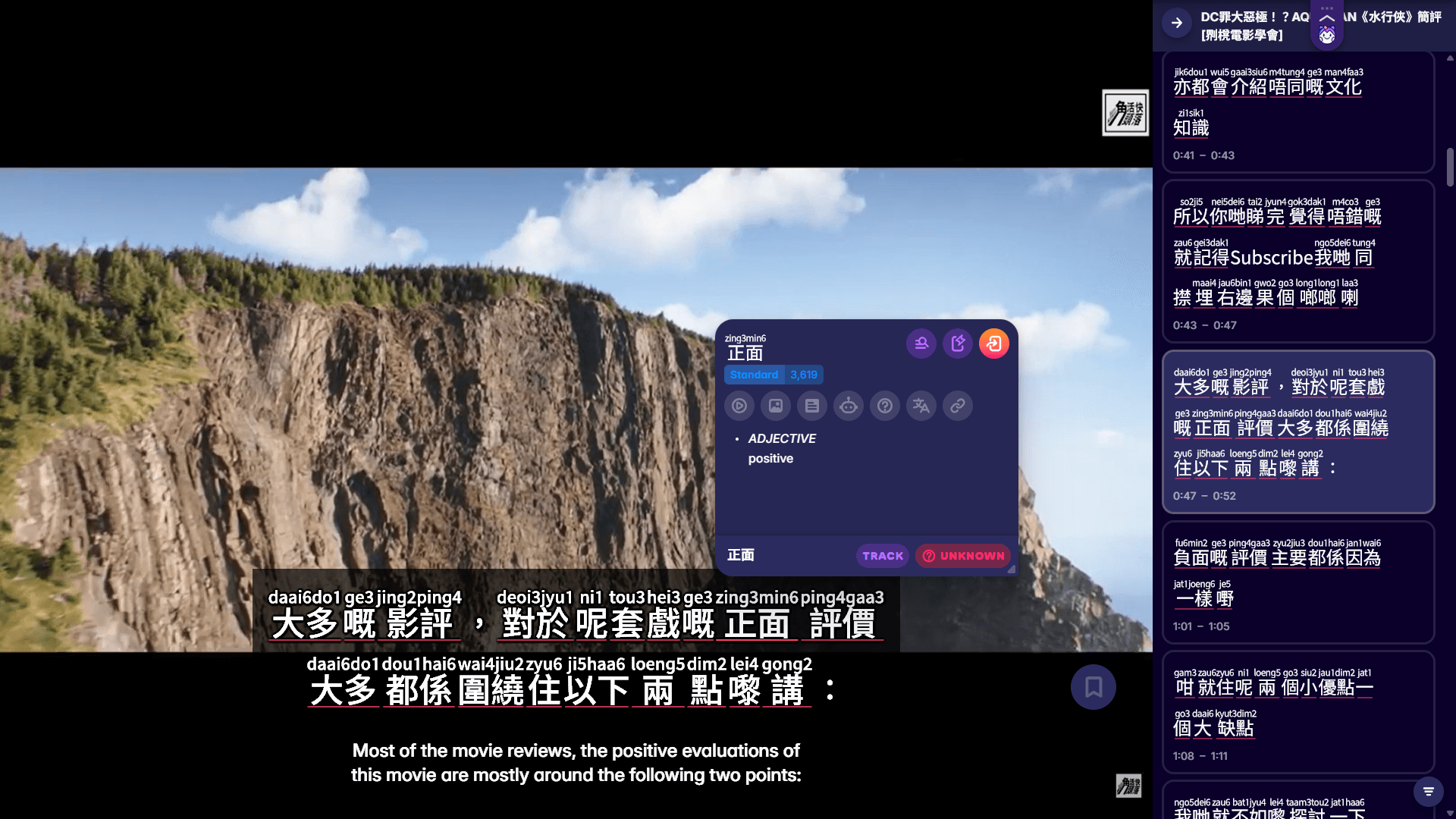
If you want to pick up these emotion words from real Cantonese content, Migaku's browser extension and app let you look up vocabulary instantly while watching Hong Kong shows or reading articles. You can save words directly to your flashcards with context. There's a 10-day free trial if you want to check it out.
 ----
## Now you've got the essential words for expressing your feelings
The next step? Actually use these words. Pick three emotion words from this guide and commit to using them this week. Every time you accurately describe how you're feeling in Cantonese, and every time you perfectly understand the feelings described and manifested in media content, you're making real progress.
> If you consume media in Cantonese, and you understand at least some of the messages and sentences within that media, you will make progress. *Period*.
Learning a language means learning to express your full human experience in that language.💡
----
## Now you've got the essential words for expressing your feelings
The next step? Actually use these words. Pick three emotion words from this guide and commit to using them this week. Every time you accurately describe how you're feeling in Cantonese, and every time you perfectly understand the feelings described and manifested in media content, you're making real progress.
> If you consume media in Cantonese, and you understand at least some of the messages and sentences within that media, you will make progress. *Period*.
Learning a language means learning to express your full human experience in that language.💡