# Cantonese False Friends: Common False Friends in Chinese and Cantonese
> Learn the most common Cantonese false friends that trip up Mandarin learners. Same characters, totally different meanings.
**URL:** https://migaku.com/blog/chinese/cantonese-false-friends
**Last Updated:** 2026-03-10
**Tags:** vocabulary, phrases, comparison
---
If you're [learning both Cantonese](https://migaku.com/learn-cantonese) and Mandarin, you've probably noticed that these two languages sometimes have words that sound similar but carry completely different meanings. These are called false friends, and they can seriously mess with your comprehension if you're not aware of them. Let me walk you through some of the most common examples and why they exist in the first place.
---
## What is a false friend in translation
A false friend is a word in one language that looks or sounds similar to a word in another language but has a different meaning. The term comes from the French phrase "faux amis," and it's a common challenge for learners switching between related languages. You see a familiar character and assume it means the same thing, but then you realize the context makes no sense. Pretty frustrating when you're trying to follow a conversation.
Unlike cognates, which are words that share both form and meaning across languages, false friends share the form but diverge in semantic meaning. This makes them linguistic traps for anyone studying multiple varieties of Chinese.
---
## Where Cantonese false friends come from
The divergence between Cantonese and Mandarin happened over centuries of separate development. While Mandarin became standardized as the official dialect of China, Cantonese evolved independently in the Guangdong region and Hong Kong. Both languages preserved classical Chinese vocabulary, but they often took different words from that classical pool or shifted meanings over time.
Here's the thing: **Cantonese tends to preserve more archaic Chinese vocabulary that disappeared from Mandarin**. Meanwhile, Mandarin adopted different terms or evolved new meanings for existing characters. This created a situation where the same Chinese character could end up meaning something totally different depending on which variety you're speaking.
Regional development played a huge role too. Cantonese speakers developed their own colloquial expressions and assigned meanings to characters based on local usage. When you add in different pronunciation systems and cultural contexts, you get a recipe for false friends.
---
## False friends in Chinese and Cantonese
Some false friends work on multiple levels. They share characters but diverge in both pronunciation and meaning, creating double confusion for learners.
### 走 (zou/zau)
In Mandarin, 走 (zǒu) means "to walk." Simple enough. But in Cantonese, 走 (zau2) means "to run" or "to leave quickly." If a Cantonese speaker says they need to 走, they're not going for a leisurely stroll. They're bolting out of there.
This false friend causes real confusion in everyday situations. Imagine asking someone in Hong Kong to "walk slowly" using Mandarin logic. You'd actually be telling them to "run slowly," which makes zero sense.
### 行
In Mandarin, 行 (xíng) means "okay" or "acceptable" when used alone. It can also mean "to walk" (háng) or refer to a row or line. In Cantonese, 行 (haang4) primarily means "to walk," similar to one of the Mandarin readings but with different primary usage.
The pronunciation difference, combined with the semantic shift, makes this a tricky false friend. You need to know which language you're dealing with before you can interpret the character correctly.
### 得
This character is a linguistic nightmare. In Mandarin, [得 has multiple pronunciations (de, dé, děi) and functions](https://migaku.com/blog/chinese/chinese-particle-de). As a particle (de), it connects verbs to complements. In Cantonese, 得 (dak1) means "okay" or indicates permission/ability, functioning more like Mandarin 可以.
A Cantonese speaker saying 得 and a Mandarin speaker using 得 are often doing completely different grammatical things. This false friend operates at the structural level of the language.
---
## Common different word usages in Cantonese and Chinese languages
Let's get into specific examples. These are the ones that trip up learners most often.
### 食 vs 吃
Mandarin uses 吃 (chī) as the standard verb for "to eat." Cantonese uses 食 (sik6). Now, 食 exists in Mandarin too, but it's a formal, literary term that nobody uses in daily conversation. Meanwhile, 吃 exists in Cantonese but sounds old-fashioned and weird.
This isn't exactly a different meaning situation, but it's a usage false friend. If you use the wrong verb in the wrong context, you'll sound either overly formal or strangely archaic.
### 睇 vs 看
In Cantonese, 睇 (tai2) means "to look" or "to watch." This character is basically never used in Mandarin for this purpose. Mandarin speakers use 看 (kàn) instead. If you're reading Cantonese text and see 睇, don't go running to your Mandarin dictionary because you won't find the right meaning there.
The pronunciation difference makes this even trickier. These two words sound nothing alike, so you can't even rely on phonetic clues.
### 飲 vs 喝
Cantonese uses 飲 (jam2) for "to drink," while Mandarin uses 喝 (hē). Again, 飲 exists in Mandarin as a literary term, but using it in casual conversation would sound bizarre. You'd be like someone saying "I shall imbibe this beverage" instead of "I'll drink this."
This pattern repeats across tons of basic verbs. Cantonese preserved the classical forms while Mandarin moved to different colloquial terms.
### 鍾意 vs 喜歡
Here's a fun one. In Cantonese, 鍾意 (zung1 ji3) means "to like" or "to love." If you look up these characters in a Mandarin dictionary, you'll find 鍾 means "clock" or "bell" and 意 means "meaning" or "intention." Put together in Mandarin, they mean nothing close to "to like."
Mandarin uses 喜歡 (xǐhuan) for "to like," which Cantonese speakers understand but don't typically use in the same way. This is a perfect example of how two languages can take completely different paths to express the same concept.
### 講 vs 說
Both Cantonese and Mandarin use these characters for speaking, but the usage differs. Cantonese heavily favors 講 (gong2) for everyday "to speak" or "to say." Mandarin uses 說 (shuō) as the default. While Mandarin speakers do use 講 in certain contexts (like 講話, "to give a speech"), it's not the go-to verb for daily conversation.
The semantic overlap here creates confusion because the words aren't completely different, just differently distributed in actual usage.
---
## What Cantonese false friends look like in context
Understanding false friends theoretically is one thing. Seeing them in actual sentences really drives home how confusing they can be.
Take this Cantonese sentence: 你鍾意食咩?(nei5 zung1 ji3 sik6 me1). If you parse this with Mandarin meanings for each character, you'd be completely lost. It means "What do you like to eat?" but the verbs 鍾意 and 食 don't work the same way in Mandarin.
These contextual differences matter because you can't just swap vocabulary between the two languages and expect to be understood correctly. The grammar, usage, and semantic fields all shift together.
---
## Tips for managing false friends in language learning
1. First, use a [good dictionary](https://migaku.com/blog/chinese/chinese-words-dictionaries) that specifies which variety it's covering. Don't assume a "Chinese" dictionary covers both Mandarin and Cantonese equally. Many focus primarily on Mandarin with Cantonese as an afterthought.
2. Second, when you encounter a new word, check its usage in both languages if you're studying both. This takes extra time but prevents building false associations that you'll have to unlearn later.
3. Third, immerse yourself in native content for each variety separately. Watch Cantonese shows, read Cantonese social media, and your brain will start picking up the natural usage patterns. Same with Mandarin. The more exposure you get, the less you'll rely on direct translation.
4. Fourth, find a language exchange partner or tutor who can point out when you're mixing up false friends. Real-time feedback catches these mistakes before they become habits.
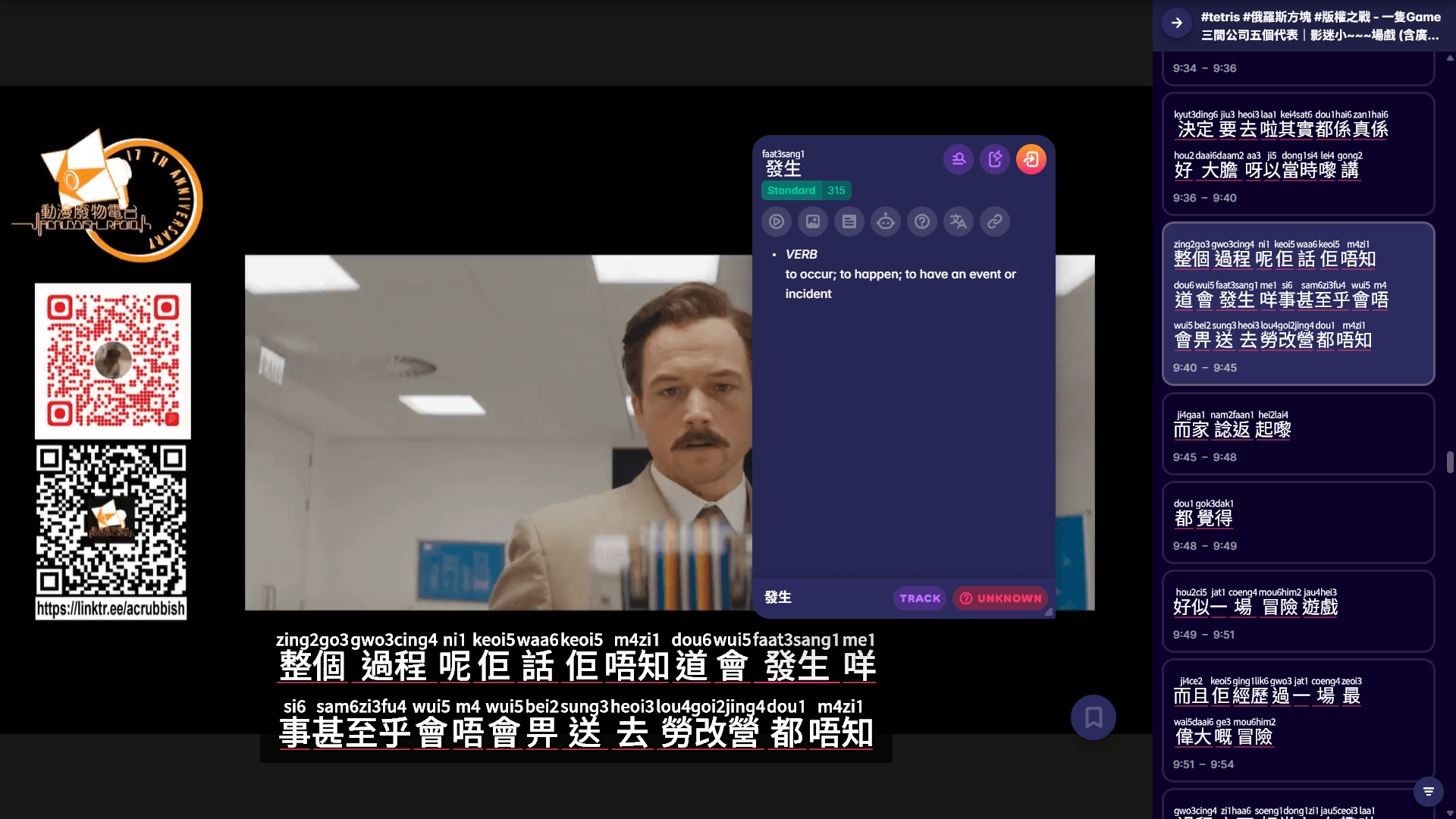
Anyway, if you want to actually tackle these false friends in real content, Migaku's browser extension and app let you look up words instantly while [watching Cantonese or Mandarin shows](https://migaku.com/blog/chinese/best-chinese-shows-for-language-learners). You can build separate vocabulary decks for each variety and the system keeps them organized. There's a 10-day free trial if you want to check it out.
 ---
## FAQs on Cantonese and Chinese false friends
Honestly, false friends will slow you down initially, but they're manageable once you're aware of them. The key is not assuming that identical characters mean identical things across the two languages. If you're learning both varieties simultaneously, keep [separate vocabulary lists](https://migaku.com/blog/chinese/best-chinese-anki-decks) and note which language each word belongs to. Your brain will eventually build separate mental dictionaries for each, but in the early stages, you need to be deliberate about keeping them distinct.
Absolutely. Chinese and Japanese share tons of characters (kanji in Japanese came from Chinese), and false friends abound there too. A Chinese character might mean one thing in Mandarin, something else in Cantonese, and a third thing in Japanese. For example, the character 手紙 means "letter" (mail) in Japanese but "toilet paper" in Cantonese. That's a false friend that can lead to some awkward moments.
---
## The linguistic perspective on Cantonese and Mandarin divergence
From a linguistic standpoint, Cantonese and Mandarin are often described as separate languages rather than dialects, despite both being called "Chinese." Written and spoken Cantonese and Mandarin are as different as Spanish and Portuguese. So, as you train yourself to learn Cantonese, you are spending as much time and energy as when you were learning Mandarin. On the other hand, the training strategy is the same: vocabulary, grammar, and immersion.
> If you consume media in Cantonese, and you understand at least some of the messages and sentences within that media, you will make progress. _Period_.
Little by little, one goes far.
---
## FAQs on Cantonese and Chinese false friends
Honestly, false friends will slow you down initially, but they're manageable once you're aware of them. The key is not assuming that identical characters mean identical things across the two languages. If you're learning both varieties simultaneously, keep [separate vocabulary lists](https://migaku.com/blog/chinese/best-chinese-anki-decks) and note which language each word belongs to. Your brain will eventually build separate mental dictionaries for each, but in the early stages, you need to be deliberate about keeping them distinct.
Absolutely. Chinese and Japanese share tons of characters (kanji in Japanese came from Chinese), and false friends abound there too. A Chinese character might mean one thing in Mandarin, something else in Cantonese, and a third thing in Japanese. For example, the character 手紙 means "letter" (mail) in Japanese but "toilet paper" in Cantonese. That's a false friend that can lead to some awkward moments.
---
## The linguistic perspective on Cantonese and Mandarin divergence
From a linguistic standpoint, Cantonese and Mandarin are often described as separate languages rather than dialects, despite both being called "Chinese." Written and spoken Cantonese and Mandarin are as different as Spanish and Portuguese. So, as you train yourself to learn Cantonese, you are spending as much time and energy as when you were learning Mandarin. On the other hand, the training strategy is the same: vocabulary, grammar, and immersion.
> If you consume media in Cantonese, and you understand at least some of the messages and sentences within that media, you will make progress. _Period_.
Little by little, one goes far.