Cantonese Food Vocabulary: Dim Sum and Hong Kong Restaurant Phrases
Last updated: April 7, 2026
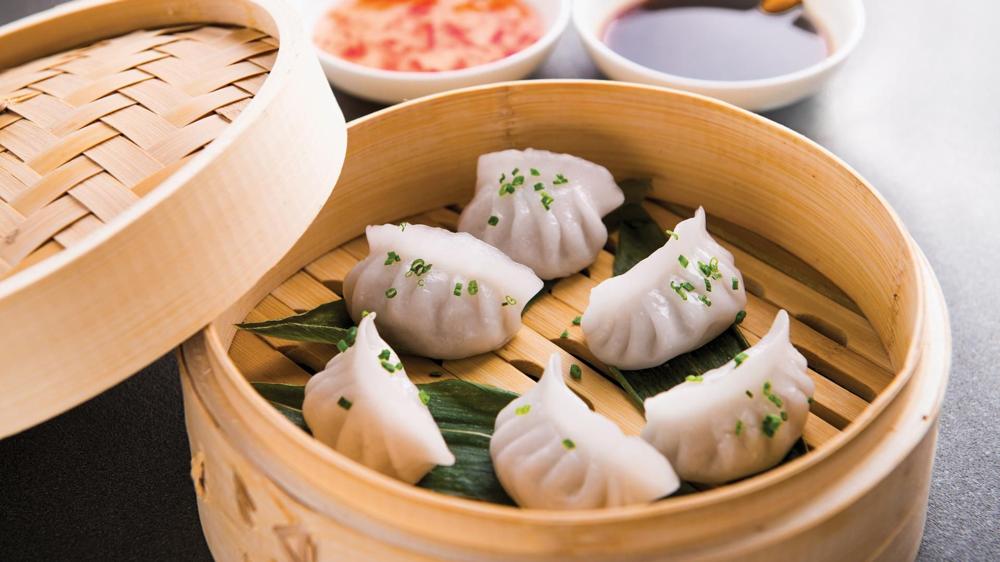
If you're heading to Hong Kong or Guangdong and want to actually order food without pointing awkwardly at pictures, you need to learn some practical Cantonese food vocabulary. The thing is, most phrasebooks give you generic restaurant phrases that don't really help when you're staring at a dim sum cart or trying to customize your noodle order. This guide covers the essential words and phrases you'll actually use in real Cantonese restaurants, from ordering your first meal to paying the bill. Pretty straightforward stuff that works.
Basic ordering phrases you'll use constantly
Let's start with the phrases you'll need every single time you eat out. These are your survival tools.
When you walk into a restaurant, the staff might ask how many people are in your group. You can say "兩個人 " (two people) or "三個人 " (three people). The word "個 " is a classifier that goes between the number and the noun.
Numbers and classifiers are essential for ordering any food. Click the links to learn more!
Here are the essential ordering phrases:
- 我要呢個 means "I want this one." Point at the menu or the actual dish and say this. Works every time.
- 唔該 is your all-purpose polite phrase. Use it when asking for something or saying thanks to service staff. You'll say this dozens of times per meal.
- 多謝 is another thank you, but use it when someone gives you something as a gift or does you a favor. In restaurants, stick with 唔該 mostly.
- 有冇… means "Do you have…" Follow it with whatever you're looking for. 有冇英文菜單? asks if they have an English menu.
- 埋單 is how you ask for the bill. Just catch the server's eye and say this.
The phrase 枱 means table, so 兩個人,一張枱 asks for a table for two people.
Cantonese food categories and cooking methods
Understanding how Cantonese cuisine is organized helps you navigate any menu in Hong Kong.
Cantonese | Jyutping | English |
|---|---|---|
蒸 | zing1 | To steam — huge in Cantonese cooking, preserves natural flavors |
炒 | caau2 | To stir-fry — appears in multiple dishes like 炒麵 and 炒飯 |
炸 | zaa3 | To deep-fry — expect something crispy |
燒 | siu1 | Roasted meats — includes hanging ducks and 叉燒 (barbecued pork) |
滷 | lou5 | To braise / To stew — cooked low and slow in sauce |
Essential dim sum vocabulary
Dim sum is where Cantonese food vocabulary gets specific. Each item has its own name, and pointing only gets you so far when the cart rolls by.
Cantonese | Jyutping | English |
|---|---|---|
蝦餃 | haa1 gaau2 | Har gow — translucent shrimp dumplings, a benchmark for dim sum quality |
燒賣 | siu1 maai2 | Siu mai — open-topped pork and shrimp dumplings with orange roe on top |
叉燒包 | caa1 siu1 baau1 | Char siu bao — barbecued pork buns (steamed or baked) |
腸粉 | coeng4 fan2 | Cheung fun — smooth rice noodle rolls with different fillings |
糯米雞 | lo6 mai5 gai1 | Lo mai gai — sticky rice wrapped in lotus leaf with chicken |
鳳爪 | fung6 zaau2 | Fung jaau — "phoenix claws" (chicken feet), braised until tender |
蛋撻 | daan6 taat1 | Daan taat — egg tarts, a sweet finish with custard in a flaky pastry shell |
煎堆 | zin1 deoi2 | Jin deui — deep-fried sesame balls with a sweet filling |
When the dim sum cart comes by, you can say "我要呢個" and point, or just say the name of what you want. The staff will stamp your card to track what you ordered.
Street food and casual eating vocabulary
Hong Kong street food and casual eateries use different vocabulary than formal restaurants.
Cantonese | Jyutping | English |
|---|---|---|
雞蛋仔 | gai1 daan6 zai2 | Egg waffles — bubble-textured street snacks, you'll smell them from blocks away |
魚蛋 | jyu4 daan2 | Fish balls — usually on skewers, appear in soups and as street food |
牛肉丸 | ngau4 juk6 jyun2 | Beef balls — appear in soups and as street food |
燒賣 | siu1 maai2 | Siu mai — street stall version is often bigger and different from dim sum siu mai, usually pure pork and fried |
臭山竹 | cau3 saan1 zuk1 | Stinky tofu — the smell is intense, but locals love it |
菠蘿包 | bo1 lo4 baau1 | Pineapple bun (no pineapple inside) — top has cookie-like crust that looks like pineapple skin |
菠蘿油 | bo1 lo4 jau4 | Pineapple bun with butter — slice of butter inside |
At casual noodle shops, you order by choosing your noodle type, your soup or sauce, and your toppings. The staff might rapid-fire questions at you. Just know what you want ahead of time.
Customizing your order
Being able to customize your food makes eating out way better. Here's how to adjust dishes to your taste.
- 唔要… means "don't want" or "no…" Follow it with whatever you want to exclude. 唔要蔥 means no green onions. 唔要芫荽 means no cilantro (coriander).
- 少少 means "a little bit." Put it before ingredients you want less of. 少少辣 means a little spicy. 少少鹹 means a little salty.
- 多啲 means "more" or "extra." 多啲汁 asks for extra sauce.
- The word 辣 means spicy or hot (temperature-wise, depending on context). If you can't handle spice, say 唔好太辣 (not too spicy please).
- 甜 means sweet. Cantonese cuisine uses sweet flavors in savory dishes more than you might expect, especially in sauces.
- 鹹 means salty.
- 酸 means sour.
- 苦 means bitter.
- If you have allergies or restrictions, 我對…敏感 means "I'm allergic to…"
- 花生 is peanuts.
- 海鮮 is seafood.
- 雞蛋 is eggs.
Common ingredients and proteins
Knowing ingredient names helps you understand what's actually in each dish.
Proteins:
Cantonese | Jyutping | English |
|---|---|---|
雞 | gai1 | Chicken |
豬肉 | zyu1 juk6 | Pork |
牛肉 | ngau4 juk6 | Beef |
羊肉 | joeng4 juk6 | Lamb |
魚 | jyu4 | Fish |
蝦 | haa1 | Shrimp / Prawn |
蟹 | haai5 | Crab |
龍蝦 | lung4 haa1 | Lobster |
扇貝 | sin3 bui3 | Scallop |
Vegetables:
Cantonese | Jyutping | English |
|---|---|---|
菜 | coi3 | Vegetables / Greens (general word) |
白菜 | baak6 coi3 | Bok choy (Chinese cabbage) |
芥蘭 | gaai3 laan4 | Chinese broccoli (gai lan) |
豆苗 | dau6 miu4 | Pea shoots |
絲瓜 | si1 gwaa1 | Loofah / Luffa gourd |
Sauces and condiments:
Cantonese | Jyutping | English |
|---|---|---|
醬 | zoeng3 | Sauce (general word) |
豉油 | si6 jau4 | Soy sauce |
海鮮醬 | hoi2 sin1 zoeng3 | Hoisin sauce |
辣醬 | laat6 zoeng3 | Chili sauce |
醋 | cou3 | Vinegar |
糖 | tong4 | Sugar |
鹽 | jim4 | Salt |
Navigating the Hong Kong restaurant experience
Hong Kong restaurants have their own culture and customs that affect how you order.
In many casual restaurants, especially for dim sum, you sit at communal tables. Don't be surprised if strangers sit at your table when it's busy. That's normal.
Tea is automatic in most places. The server brings a pot and cups, and you pour for others before yourself. When someone refills your cup, tap two fingers on the table as a silent thank you. This gesture comes from an old legend and everyone does it.
The phrase 飲茶 literally means "drink tea" but refers to the whole dim sum experience. When Hong Kong people say they're going to 飲茶, they mean eating dim sum and socializing, not just drinking tea.
Water isn't always free or automatically served. You might need to ask for it specifically. 我要一杯水 means "I want a glass of water."
Tipping isn't expected like in Western countries, but many restaurants add a 10% service charge to the bill automatically. You can leave small change if service was good, but it's not required.
When you're ready to leave, catch the server's attention and say 埋單 or make a writing gesture in the air. They'll bring the bill to your table. In casual places, you might take the bill to the register yourself to pay.
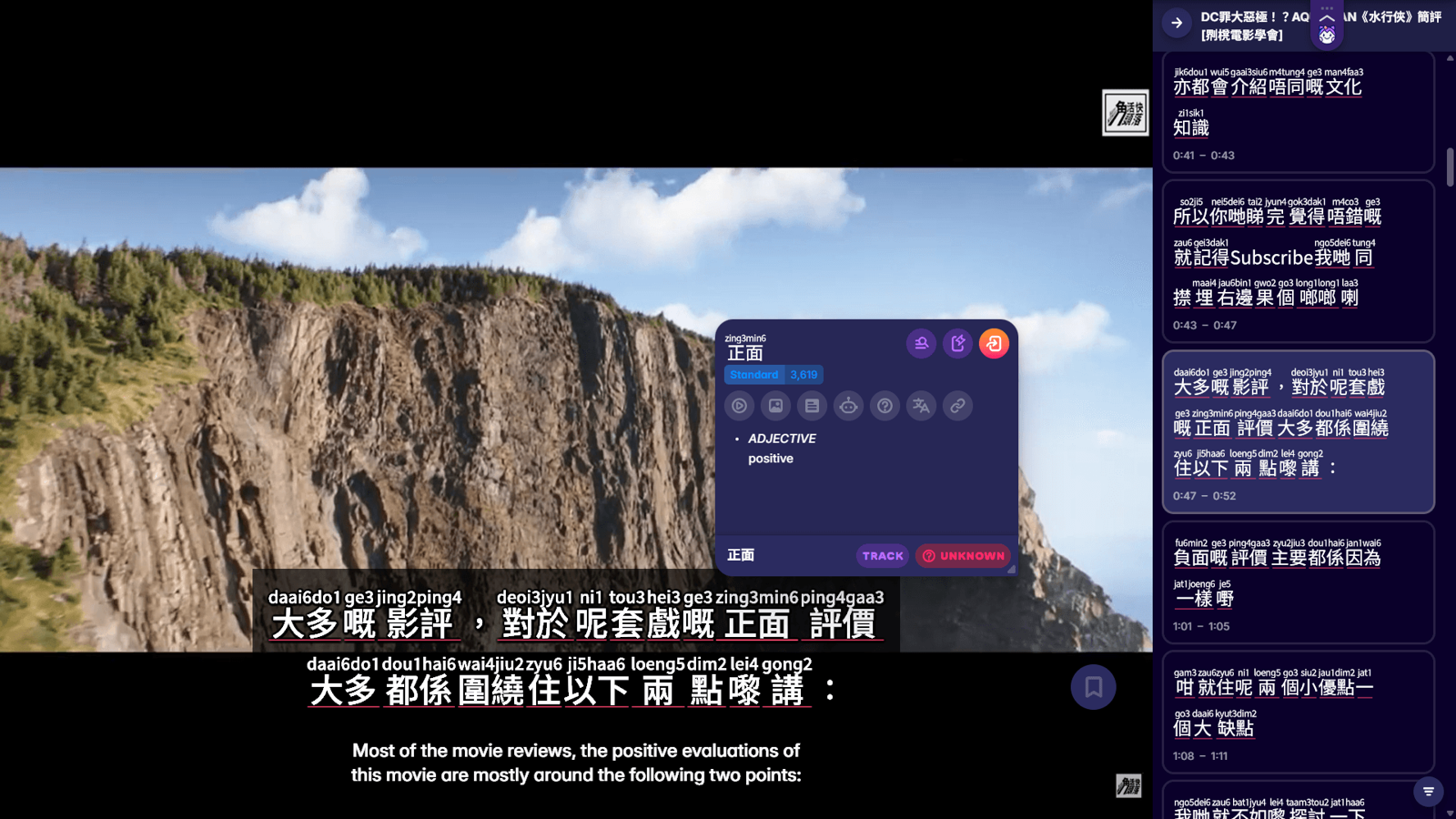
Want to level up your Cantonese beyond restaurant vocabulary? Migaku's browser extension and app let you look up Cantonese words instantly while watching Hong Kong dramas or reading articles. You can save phrases directly to flashcards with context, which beats memorizing random word lists. There's a 10-day free trial if you want to check it out.
Your Cantonese food journey starts here
Whether you're heading to Hong Kong next month or just want to order properly at your local Cantonese restaurant, this vocabulary gives you a solid foundation. The key is actually using these phrases, not just memorizing lists. Order something new, ask questions, watch documentaries about dim sum culture, and explore vlogs and blogs about Cantonese food.
If you consume media in Cantonese, and you understand at least some of the messages and sentences within that media, you will make progress. Period.
The tastiest ways to learn Cantonese!😋