# Cantonese Professions Vocabulary: Words for 80+ Jobs in Cantonese
> Lists of 80+ Cantonese job and profession terms with Jyutping, audio, and English. Organized by industry for practical conversation.
**URL:** https://migaku.com/blog/chinese/cantonese-professions-vocabulary
**Last Updated:** 2026-03-11
**Tags:** vocabulary, phrases
---
[Learning Cantonese](https://migaku.com/learn-cantonese) vocabulary for jobs and professions gives you a practical edge when talking about work in Hong Kong or Guangdong. Whether you're chatting with locals about what you do, reading job postings, or just trying to understand conversations about careers, knowing these terms makes a real difference. This guide covers over 80 profession-related words in Cantonese, organized by industry, with Jyutping romanization and Chinese characters so you can actually learn how to say them.
---
## Why learn job vocabulary in Cantonese
Do you want to know what your job is called in Cantonese? Pretty much everyone who learns the language eventually needs these words. They come up constantly in everyday conversation when people ask "nei5 zou6 mat1 je5 gaa3?" (你做乜嘢㗎? ), which means "What do you do?"
Here's the thing. Hong Kong has the second most number of billionaires in the world, which makes it a major business hub where job talk happens all the time. You'll hear people discussing their occupations at social gatherings, networking events, and even casual meetups. Knowing profession vocabulary helps you participate in these conversations naturally.
The language also reflects Hong Kong's unique work culture. Some job titles blend English and Cantonese, while others use traditional Chinese terms that differ from Mandarin. Learning these distinctions helps you understand the local context better.
---
## Common professions in Cantonese
Ever wonder what occupations are commonly spoken of in Cantonese? Let's start with the most frequently mentioned jobs you'll encounter in daily life.
The word for "job" or "work" in Cantonese is 工 (gung1). When you combine it with other characters, you get specific professions. For example, 工人 (gung1 jan4) means "worker" in general.
Here are some essential profession terms:
| Cantonese | Pronunciation | English |
| - | - | - |
| 老師 | lou5 si1 | teacher |
| 學生 | hok6 saang1 | student |
| 經理 | ging1 lei5 | manager |
| 秘書 | bei3 syu1 | secretary |
| 會計 | wui6 gai3 | accountant |
The structure is pretty straightforward once you recognize the patterns. Many professions use 師 (si1) at the end, which roughly translates to "master" or "specialist." Others use 員 (jyun4), meaning "member" or "staff."
---
## Education professions
Education jobs use specific terminology in Cantonese that you should know if you work in schools or universities.
| Cantonese | Pronunciation | English |
| - | - | - |
| 教授 | gaau3 sau6 | professor |
| 講師 | gong2 si1 | lecturer |
| 校長 | haau6 zoeng2 | principal / headmaster |
| 教師 | gaau3 si1 | teacher (formal) |
| 導師 | dou6 si1 | tutor / instructor |
| 助教 | zo6 gaau3 | teaching assistant |
| 圖書館管理員 | tou4 syu1 gun2 gun2 lei5 jyun4 | librarian |
The education sector in Hong Kong uses these terms consistently. If you're learning Cantonese for professional reasons and work in education, these words will come up in meetings, emails, and official documents.
---
## Healthcare and medicine
Medical professions have a precise vocabulary in Cantonese. You'll need these terms if you visit clinics or hospitals in Hong Kong.
| Cantonese | Pronunciation | English |
| - | - | - |
| 醫生 | ji1 saang1 | doctor |
| 護士 | wu6 si6 | nurse |
| 牙醫 | ngaa4 ji1 | dentist |
| 藥劑師 | joek6 zai1 si1 | pharmacist |
| 外科醫生 | ngoi6 fo1 ji1 saang1 | surgeon |
| 心理學家 | sam1 lei5 hok6 gaa1 | psychologist |
| 物理治療師 | mat6 lei5 zi6 liu4 si1 | physiotherapist |
The term 醫生 (ji1 saang1) literally means "healing person" and serves as the general word for doctor. When you need to specify, you add the specialty before 醫生. The healthcare system in Hong Kong is well-developed, so these profession names appear frequently in everyday situations.
---
## Legal and business professions in Cantonese language
Professional services form a huge part of Hong Kong's economy. These job titles reflect that.
| Cantonese | Pronunciation | English |
| - | - | - |
| 律師 | leot6 si1 | lawyer |
| 大律師 | daai6 leot6 si1 | barrister |
| 法官 | faat3 gun1 | judge |
| 銀行家 | ngan4 hong4 gaa1 | banker |
| 商人 | soeng1 jan4 | businessperson |
| 企業家 | kei5 jip6 gaa1 | entrepreneur |
| 顧問 | gu3 man6 | consultant |
The distinction between 律師 (leot6 si1) and 大律師 (daai6 leot6 si1) matters in Hong Kong's legal system. A 律師 is a solicitor who handles legal documentation and client meetings, while a 大律師 is a barrister who argues cases in court. This two-tier system comes from British common law traditions.
---
## Engineering and technology jobs in Cantonese
Tech jobs have become increasingly common in Cantonese conversation as Hong Kong develops its innovation sector.
| Cantonese | Pronunciation | English |
| - | - | - |
| 工程師 | gung1 cing4 si1 | engineer |
| 電腦程式員 | din6 nou5 cing4 sik1 jyun4 | computer programmer |
| 軟件工程師 | jyun5 gin6 gung1 cing4 si1 | software engineer |
| 網頁設計師 | mong5 jip6 cit3 gai3 si1 | web designer |
| 建築師 | gin3 zuk1 si1 | architect |
| 電工 | din6 gung1 | electrician |
| 技術員 | gei6 seot6 jyun4 | technician |
The word 工程師 (gung1 cing4 si1) covers various engineering disciplines. You can add specific fields before it, like 土木工程師 (tou2 muk6 gung1 cing4 si1) for civil engineer or 機械工程師 (gei1 haai6 gung1 cing4 si1) for mechanical engineer.
---
## Food and service industry words and phrases
Restaurant and hospitality jobs are everywhere in Hong Kong, making these terms super useful.
| Cantonese | Pronunciation | English |
| - | - | - |
| 廚師 | cyu4 si1 | chef / cook |
| 侍應 | si6 jing3 | waiter / waitress |
| 調酒師 | tiu4 zau2 si1 | bartender |
| 經理 | ging1 lei5 | manager (restaurant) |
| 清潔工 | cing1 git3 gung1 | cleaner |
| 保安員 | bou2 on1 jyun4 | security guard |
| 司機 | si1 gei1 | driver |
The service industry employs a massive portion of Hong Kong's workforce. If you eat out regularly or use services, you'll hear these occupation names constantly. The term 侍應 (si6 jing3) is particularly common since dining out is such a big part of local culture.
---
## Cantonese words for government and public services
Public sector jobs use formal terminology in Cantonese.
| Cantonese | Pronunciation | English |
| - | - | - |
| 警察 | ging2 caat3 | police officer |
| 消防員 | siu1 fong4 jyun4 | firefighter |
| 公務員 | gung1 mou6 jyun4 | civil servant |
| 郵差 | jau4 caai1 | mail carrier |
| 社工 | se5 gung1 | social worker |
| 政治家 | zing3 zi6 gaa1 | politician |
Government positions carry specific prestige in Hong Kong society. The term 公務員 (gung1 mou6 jyun4) refers broadly to anyone working in the civil service, which is considered a stable and respected career path.
---
## Common words for art and entertainment
Creative professions have their own vocabulary set in Cantonese.
| Cantonese | Pronunciation | English |
| - | - | - |
| 演員 | jin2 jyun4 | actor / actress |
| 歌手 | go1 sau2 | singer |
| 畫家 | waa6 gaa1 | painter / artist |
| 作家 | zok3 gaa1 | writer / author |
| 音樂家 | jam1 ngok6 gaa1 | musician |
| 攝影師 | sip3 jing2 si1 | photographer |
| 設計師 | cit3 gai3 si1 | designer |
Hong Kong has a vibrant entertainment industry, so these words appear frequently in media and conversation. The suffix 家 (gaa1) indicates expertise or mastery in a field, similar to how English uses "artist" or "specialist."
---
## Common phrases about jobs and work
Knowing individual profession names is useful, but you'll also need phrases to discuss work naturally.
| Cantonese | Pronunciation | English |
| - | - | - |
| 你做乜嘢工? | nei5 zou6 mat1 je5 gung1? | What kind of work do you do? |
| 我係老師 | ngo5 hai6 lou5 si1 | I'm a teacher |
| 佢做醫生 | keoi5 zou6 ji1 saang1 | He/She is a doctor |
| 返工 | faan1 gung1 | to go to work |
| 放工 | fong3 gung1 | to get off work |
| 搵工 | wan2 gung1 | to look for a job |
| 辭職 | ci4 zik1 | to resign |
These phrases come up constantly in casual conversation. The verb 做 (zou6) means "to do" or "to work as," so you'll use it frequently when discussing occupations. The construction "我係 + profession" (ngo5 hai6 + profession) is the standard way to state your job.
---
## Differences between Cantonese and Mandarin profession terms
Some profession vocabulary differs between Cantonese and Mandarin, which can confuse learners studying both languages.
The word for lawyer shows this clearly. In Cantonese, it's 律師 (leot6 si1), while in Mandarin it's 律师 (lǜshī). The characters are the same (simplified vs. traditional), but the pronunciation differs significantly.
Certain colloquial terms exist only in Cantonese. For instance, 侍應 (si6 jing3) for waiter/waitress is distinctly Cantonese, while Mandarin uses 服务员 (fúwùyuán). Understanding these differences helps you navigate both language contexts.
Hong Kong's bilingual environment means some professions use English terms directly in conversation. You might hear people say "我做 IT" (ngo5 zou6 IT) rather than using a full Chinese translation. This code-switching reflects the city's international business culture.
---
## How to practice and remember profession vocabulary
Learning these words requires consistent practice. Here are some practical approaches that actually work.
1. Start by categorizing professions based on your interests or needs. If you work in healthcare, focus on medical terms first. If you're in business, prioritize those vocabulary sets. This targeted approach helps you learn faster because the words have immediate relevance.
2. Use the vocabulary in sentences rather than memorizing isolated words. Try constructing simple phrases like "ngo5 hai6 gung1 cing4 si1" (我係工程師), which means "I am an engineer." Practice asking "nei5 zou6 mat1 je5 gaa3?" (你做乜嘢㗎?) and answering with different professions.
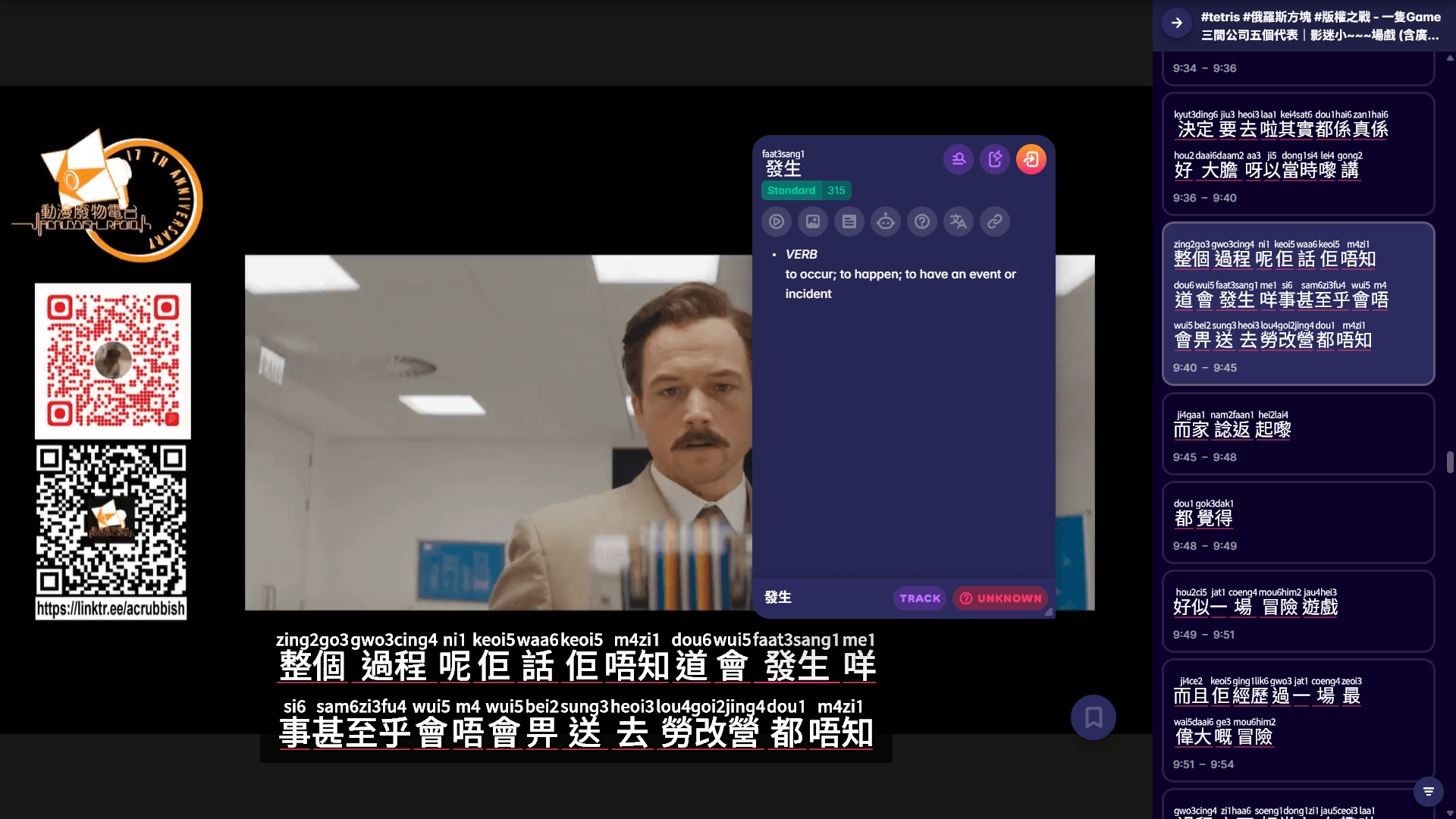
3. [Watch Cantonese content](https://migaku.com/blog/chinese/best-cantonese-shows-for-language-learners) where people discuss their jobs. TV dramas, news interviews, and talk shows frequently feature conversations about work. Pay attention to how native speakers use these terms naturally.
4. [Create flashcards](https://migaku.com/blog/chinese/chinese-character-flashcards) with the Chinese characters on one side and Jyutping plus English on the other. Space out your reviews so you encounter the words multiple times over several days. This repetition helps move vocabulary from short-term to long-term memory.
Anyway, if you want to actually use this vocabulary with real Cantonese content, Migaku's browser extension and app let you look up words instantly while watching Hong Kong dramas or reading local news sites. Makes learning from authentic material way more practical. There's a 10-day free trial if you want to check it out.
 ---
## Resources for memorizing vocabulary lists
Retention comes from repeated exposure and active use. Reading job postings in Cantonese, even if you're not looking for work, exposes you to profession vocabulary in context. Hong Kong job sites use these terms constantly, giving you authentic examples. Cantonese dramas and movies focusing on topics about specific industries, such as journalism, crime, and forensic science, are valuable resources for mining relevant career vocabulary.
> If you consume media in Cantonese, and you understand at least some of the messages and sentences within that media, you will make progress. _Period_.
Better a little each day than a lot once a month.
---
## Resources for memorizing vocabulary lists
Retention comes from repeated exposure and active use. Reading job postings in Cantonese, even if you're not looking for work, exposes you to profession vocabulary in context. Hong Kong job sites use these terms constantly, giving you authentic examples. Cantonese dramas and movies focusing on topics about specific industries, such as journalism, crime, and forensic science, are valuable resources for mining relevant career vocabulary.
> If you consume media in Cantonese, and you understand at least some of the messages and sentences within that media, you will make progress. _Period_.
Better a little each day than a lot once a month.