Cantonese Slang Phrases Used in Hong Kong (2026)
Last updated: March 23, 2026

If you've been learning Cantonese and think you're getting pretty good, wait until you hear actual Hong Kong people talking to each other. The slang will hit you like a wall. Textbooks teach you formal Cantonese, but real conversations are packed with expressions that make zero sense if you translate them literally. I'm talking about phrases that describe someone as "wet" when they're annoying, or calling something "67" when it's sketchy. Let's dig into the slang that actually gets used in Hong Kong today.
Common Cantonese slang words you'll hear everywhere
9up (gau2 aap3)
This one gets used constantly in Hong Kong. It means someone is being pretentious, showing off, or trying too hard to look cool. You'd use this to describe someone who's bragging about their expensive purchases, name-dropping constantly, or putting on airs. Like if someone keeps mentioning they went to an Ivy League school in every conversation, that's peak 9up behavior.
80 (baat3 ling4)
This slang term means "crazy" or "silly." You'll hear this in casual conversations all the time. "You're so 80!" or "Don't be 80 lah" when someone suggests doing something ridiculous.
湿 (sap1)
When Hong Kong people call someone "wet," they mean that person is annoying, irritating, or doing too much. This adjective gets thrown around a lot, especially when describing people who won't stop talking, who make cringy jokes, or who try too hard to be funny.
The literal translation doesn't help you understand it at all. You just have to know that "wet" in Cantonese slang has nothing to do with water and everything to do with being obnoxious.
OT (o1 ti1)
This abbreviation comes from "overtime" and it's unfortunately very relevant in Hong Kong's work culture. People say they're doing OT when they're working late. You'll see this written in text messages and on online forums constantly.
"I have to OT again tonight" is something you'll hear from pretty much anyone working in Hong Kong's demanding corporate environment.
Internet and text slang in Cantonese
Hea (he1)
This word means slacking off, being lazy, or doing something half-heartedly. It's super common in casual conversation and online. "I'm just hea-ing today" means you're not really doing anything productive, just chilling and wasting time.
The beauty of this slang word is that it captures a specific vibe that's hard to express in one word in English. It's not quite "relaxing" because that sounds too positive, and it's not quite "lazy" because that sounds too negative. It's just... hea.
Diu (diu2)
Fair warning: this is probably the most common Cantonese swear word. It's extremely vulgar and means, well, the F-word basically. You'll hear it everywhere in Hong Kong, from construction sites to teenagers arguing to people expressing frustration.
I'm including it here because you need to recognize it when you hear it, but be really careful about using it yourself. It's way harsher than casual swearing in English and can get you in trouble in the wrong context.
加油 (ga1 jau4)
This phrase literally means "add oil" like you'd add gas to a car, but it's used to mean "keep going!" or "you can do it!" It's a super positive, encouraging expression that you'll see written in English as "add oil" even though it comes from Cantonese.
Hong Kong people use this to cheer each other on. Taking an exam? Add oil! Working on a tough project? Add oil! Your friend's going through a breakup? Add oil!
Modern slang from social media and online forums
Hea-ing (he1 ing)
Taking the word "hea" and adding the English "-ing" suffix showcases the Hong Kong bilingual culture. This hybrid slang shows up all over social media and in text messages. People will say they're "hea-ing at home" or "just hea-ing around."
The mixing of Cantonese and English is completely normal in Hong Kong, and the slang reflects that. You'll see this pattern with lots of words where Cantonese terms get English grammar tacked on.
請 (cing2)
This is short for "qing wen" (asking a question) and gets used on online forums when someone wants to ask something. You'll see posts that start with "ching" followed by a question, like "ching, where to buy good dim sum in Mong Kok?"
It's basically like saying "asking for a friend" or "quick question" before you post something. Super common on Hong Kong discussion forums and social media.
咗 (zo2)
In Cantonese internet slang, saying something is "left" means it's gone, finished, or done. Like if a limited edition product sold out, people will comment "left la" meaning it's all gone.
Regional differences in Cantonese slang
Hong Kong Cantonese slang differs quite a bit from Cantonese spoken in Guangzhou or other parts of Guangdong province. Even though they're technically the same language, the slang diverges significantly.
- Hong Kong slang has way more English mixed in, partly because of the city's colonial history and its status as an international business hub.
- Guangzhou Cantonese slang tends to have more Mandarin influence instead.
Some slang terms are unique to Hong Kong and won't be understood by Cantonese speakers from other regions. And vice versa, there's Guangzhou slang that sounds weird or unfamiliar to Hong Kong people.
If you're learning Cantonese specifically for Hong Kong, focus on Hong Kong slang. If you're planning to use it in Guangzhou or other mainland areas, you'll need to learn the local variations.
How to learn and use Cantonese slang terms
Reading about slang is one thing, but actually using it correctly is way harder. Here's what works:
- Watch Hong Kong TV shows, movies, and YouTube channels. Pay attention to how people use slang in context. TVB dramas are packed with everyday slang, and Hong Kong YouTubers use tons of current internet slang.
- Hang out on Hong Kong online forums like LIHKG or Hong Kong Golden Forum. You'll see written slang and internet expressions that people use. Just reading threads helps you pick up the patterns.
- Practice with native speakers if you can. Language exchange partners from Hong Kong will naturally use slang in conversation, and they can tell you if you're using something correctly or if it sounds weird.
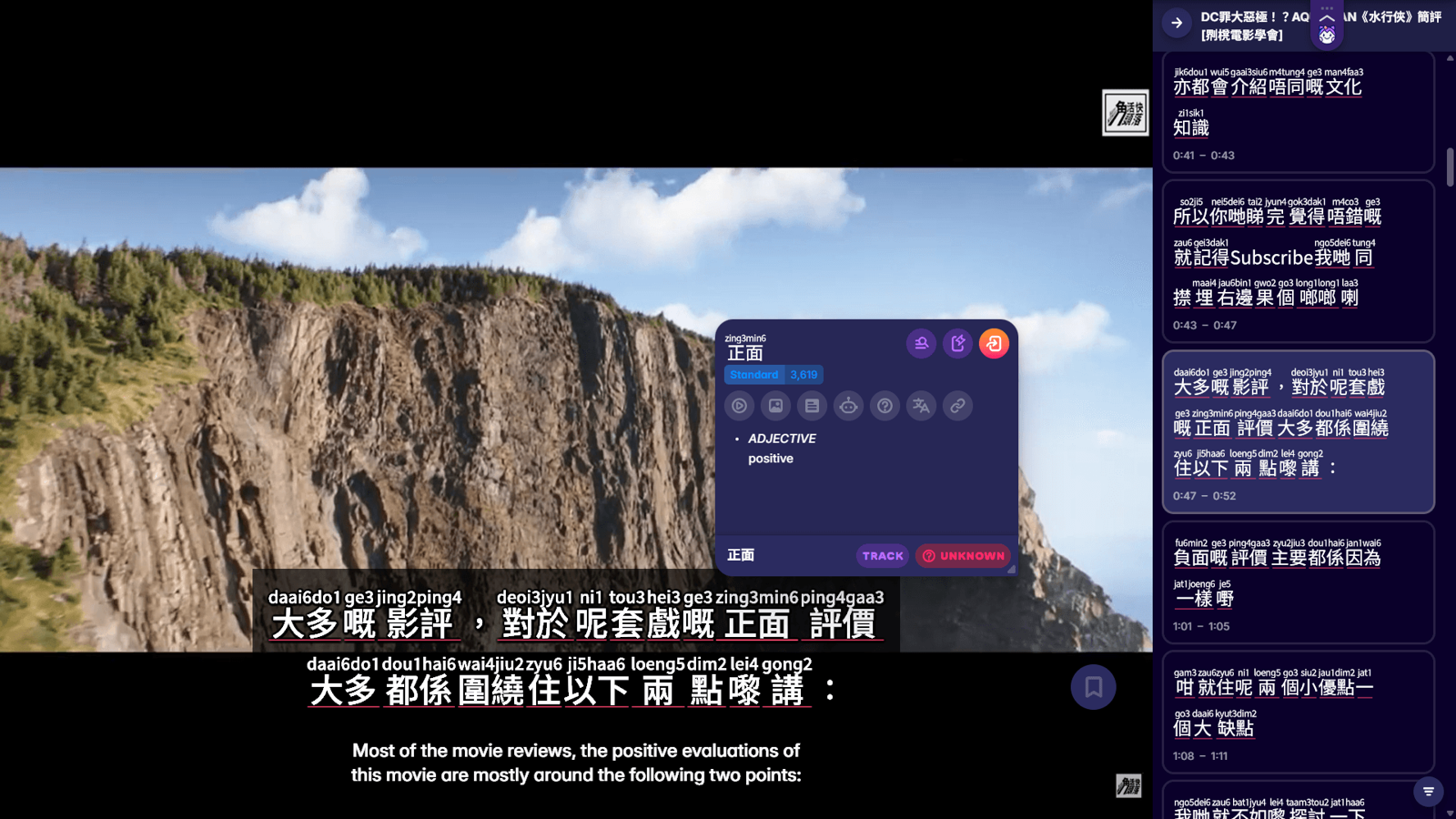
Anyway, if you want to learn Cantonese through real content, Migaku's browser extension and app let you look up words instantly while watching Hong Kong shows or reading articles. Makes it way easier to pick up slang in context. There's a 10-day free trial if you want to check it out.
FAQs
Internet slang is where the culture lives
Cantonese slang tells you how people actually think, what they find funny, and what matters in Hong Kong society right now. When you understand slang, you can finally get the jokes in TVB dramas, follow conversations on online forums, and not feel completely lost when your language exchange partner starts using expressions that aren't in any textbook about Cantonese language.
If you consume media in Cantonese, and you understand at least some of the messages and sentences within that media, you will make progress. Period.
Keep yourself updated with the latest trends!