# Cantonese Verb Tenses: How Cantonese Grammar Works
> Cantonese doesn't conjugate verbs. Learn how aspect markers like 咗, 過, and 緊 express time instead of verb tenses, with practical examples.
**URL:** https://migaku.com/blog/chinese/cantonese-verb-tenses
**Last Updated:** 2026-03-09
**Tags:** fundamentals, conjugation, grammar, verbs
---
If you're [learning Cantonese](https://migaku.com/learn-cantonese) and searching for verb conjugation tables like you'd find in Spanish or French, you're going to be looking for a while. Cantonese doesn't conjugate verbs the way English does. The verb stays the same whether you're talking about yesterday, today, or next year. Instead, Cantonese uses aspect markers and [time words](https://migaku.com/blog/chinese/cantonese-time-expressions) to show when something happens. This system feels weird at first if you're coming from English, but once you get how it works, it's actually pretty logical.
---
## Are there tenses in Cantonese
Here's the deal: Cantonese doesn't have verb tenses in the traditional sense. When we talk about tense in English, we're talking about how verbs change form to show time. "I walk" becomes "I walked" or "I will walk." The verb itself transforms.
Cantonese verbs don't do this. The verb 食 (sik6, to eat) stays as 食 whether you ate breakfast this morning, you're eating lunch right now, or you'll eat dinner tonight. So technically, asking about "Cantonese verb tenses" isn't quite accurate from a linguistic perspective.
What Cantonese does have is **aspect**. Aspect tells you how an action unfolds, whether it's completed, ongoing, repeated, or experienced. The language uses small particles called aspect markers that attach to verbs to show this information. Combined with time words and context, you can express everything English does with tenses, just through a different system.
---
## How Cantonese shows time without verb conjugation
> 💡 How to Tell Time 💡
The Cantonese language relies on three main tools to express when something happens: **aspect markers, time adverbs, and context**.
Let's break down each one.
### Aspect markers: The core system
Aspect markers are short particles that come after the verb to show how an action relates to time. These are the building blocks of expressing time in Cantonese grammar. The four main ones you'll encounter are **咗 (zo2), 過 (gwo3), 緊 (gan2), and 住 (zyu6).**
### 咗 (zo2)
The marker 咗 shows completed action. When you add 咗 after a verb, you're saying the action is done. This is probably the closest thing to a past tense marker in Cantonese.
我食咗飯 (ngo5 sik6 zo2 faan6) means "I ate" or more literally "I have eaten rice." The action of eating is finished.
### 過 (gwo3)
The particle 過 (gwo3) indicates experience. You're saying you've done something at some point in your life. It's about whether you've had that experience, not about a specific time.
我去過香港 (ngo5 heoi3 gwo3 hoeng1 gong2) means "I have been to Hong Kong before." You're not saying when, just that you have that experience under your belt.
### 緊 (gan2)
The marker 緊 shows ongoing action, similar to the "-ing" form in English. It tells you something is happening right now or was happening at a specific time.
我食緊飯 (ngo5 sik6 gan2 faan6) means "I am eating" or "I was eating." The eating is in progress.
### 住 (zyu6)
The particle 住 (zyu6) indicates a continuous state. The action is ongoing and will continue for a while. This one's a bit trickier because it shows something that stays in effect.
佢坐住 (keoi5 co5 zyu6) means "He is sitting" with the implication that he'll remain sitting. It's a sustained state.
### Time words: Making it crystal clear
While aspect markers show how an action unfolds, time adverbs tell you exactly when. Cantonese uses these liberally to remove any ambiguity.
- For past time, you'll hear words like 尋日 (cam4 jat6, yesterday), 上個星期 (soeng6 go3 sing1 kei4, last week), or 之前 (zi1 cin4, before).
- For present time, there's 而家 (ji4 gaa1, now) and 今日 (gam1 jat6, today).
- For future time, you've got 聽日 (ting1 jat6, tomorrow), 下個月 (haa6 go3 jyut6, next month), and 之後 (zi1 hau6, later/after).
These time words usually go at the beginning of the sentence, right after the subject. Sometimes they come at the very start for emphasis.
聽日我去香港 (ting1 jat6 ngo5 heoi3 hoeng1 gong2) means "Tomorrow I go to Hong Kong" or more naturally in English, "I'm going to Hong Kong tomorrow." Notice the verb 去 (heoi3) doesn't change at all.
### Context: The invisible helper
Sometimes Cantonese doesn't use any markers or time words at all. The context of the conversation makes it clear when something happens. If you're telling a story about your childhood, listeners understand you're talking about the past even without 咗 after every verb.
This can feel uncomfortable for English speakers who want everything spelled out. But once you get used to it, you realize how much information comes from the flow of conversation.
---
## Sentence structure in Cantonese
Cantonese follows a Subject-Verb-Object (SVO) word order, just like English. This makes the basic structure pretty familiar.
Subject + Verb + Object is the standard: 我 (I) + 食 (eat) + 飯 (rice).
**When you add time words**, they typically go after the subject but before the verb: Subject + Time + Verb + Object.
- 我聽日食飯 (ngo5 ting1 jat6 sik6 faan6) means "I tomorrow eat rice" or naturally, "I'll eat tomorrow."
- Time words can also come at the very beginning for emphasis: 聽日我食飯 (ting1 jat6 ngo5 sik6 faan6) puts extra focus on "tomorrow."
**Aspect markers** always come immediately after the verb: Subject + Verb + Marker + Object.
- 我食咗飯 (ngo5 sik6 zo2 faan6) shows the eating is completed.
> 💡 Complete Sentence Structure 💡
When you combine everything, you get: **Subject + Time + Verb + Marker + Object**.
我尋日食咗飯 (ngo5 cam4 jat6 sik6 zo2 faan6) means "I ate rice yesterday." You've got the time word (尋日), the verb (食), and the completion marker (咗) all working together.
---
## Cantonese vs. Mandarin grammar rules
### Similarities between Mandarin and Cantonese grammar
If you're learning Cantonese and already [know some Mandarin](https://migaku.com/learn-chinese), you'll notice the systems are similar but not identical. Both languages use aspect markers instead of verb conjugation.
- Mandarin uses 了 (le) for completed action, which is similar to Cantonese 咗.
- Mandarin 過 (guo) works the same as Cantonese 過 (gwo3) for experience.
- Mandarin has 著/着 (zhe) for continuous states, similar to Cantonese 住.
- For ongoing action, Mandarin uses 在 (zai) or 正在 (zhengzai) before the verb, while Cantonese puts 緊 after the verb. This is a structural difference that can trip you up if you're switching between the two.
### Six tones vs. four tones
The pronunciation is obviously different. Cantonese gwo3 and Mandarin guo are the same character (過) but sound distinct. [Cantonese also has more tones](https://migaku.com/blog/language-fun/cantonese-tones) (six to nine depending on how you count) compared to Mandarin's four, which affects how these particles sound.
---
## Learning Cantonese aspect markers effectively
So how do you actually get good at using these markers? Here are some strategies that work.
1. Start with 咗 since you'll use it the most. Practice adding it to common verbs you already know. Take 食 (eat), 去 (go), 買 (buy), 做 (do) and make simple sentences with 咗 after each one.
2. Listen to native speakers and pay attention to when they use each marker. Cantonese dramas, YouTube videos from Hong Kong, or podcasts will give you tons of examples. You'll start noticing patterns in how people actually talk.
3. Don't try to directly translate from English tenses, because technically speaking, there are no Cantonese tenses. Instead, think about the aspect of the action. Is it completed? Ongoing? Experienced? Let that guide which marker you choose.
4. Practice with time words early on. Learn the common ones for yesterday, today, tomorrow, and use them in sentences. This makes the time reference super clear while you're still getting comfortable with aspect markers.
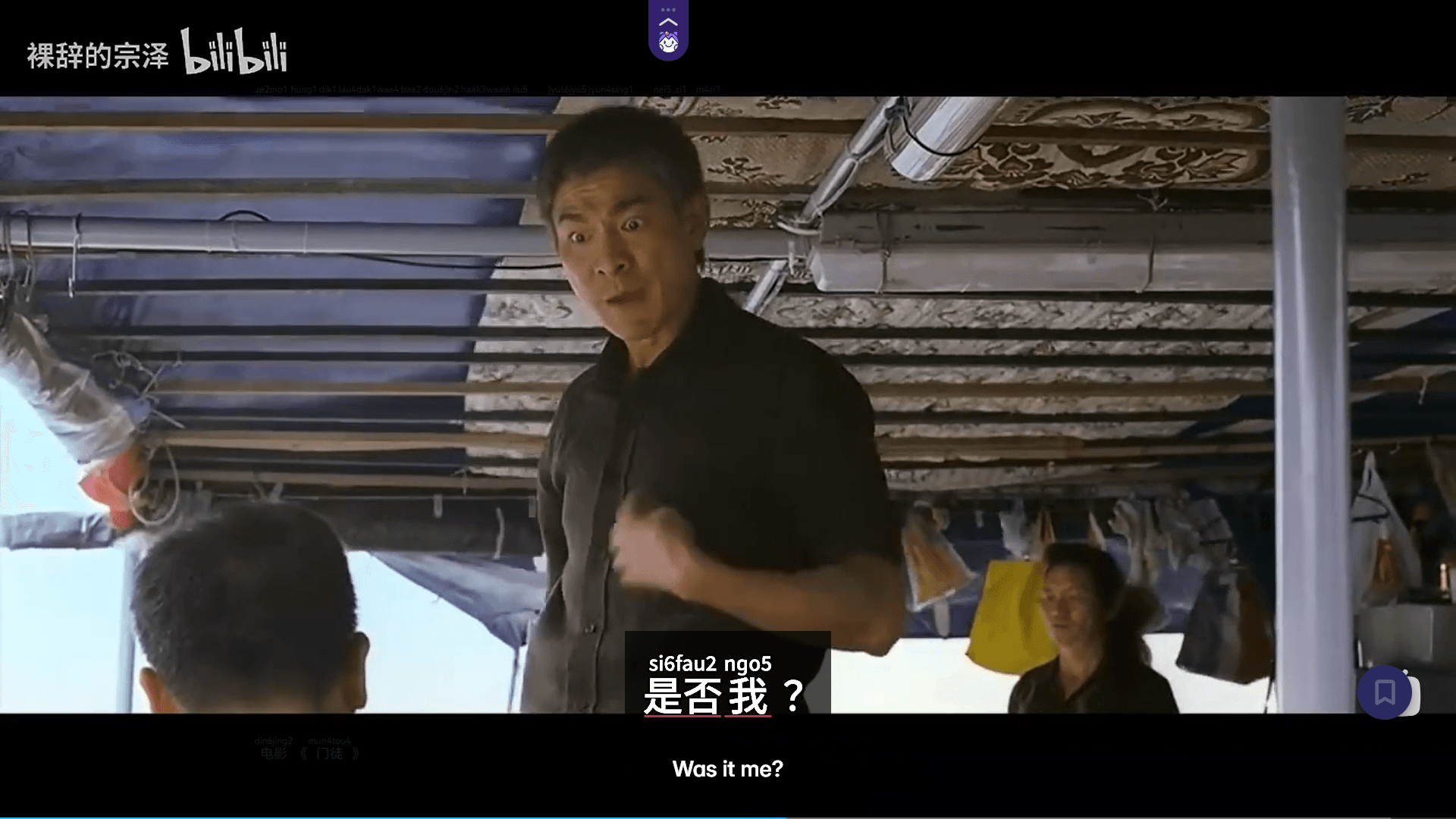
Anyway, if you're serious about learning Cantonese through immersion, Migaku's browser extension and app let you watch Cantonese shows and look up words instantly with hover definitions. You can see aspect markers in real sentences and save them for review. There's a 10-day free trial if you want to check it out.
 ---
## The Cantonese language has a learning curve
It will take some time to change the mindset of conjugating verbs, but the aspect system becomes intuitive once you've heard and used it enough. It's actually pretty elegant compared to memorizing dozens of irregular verb conjugations. If you want to actually learn Cantonese effectively, you need exposure to real content. Textbooks teach you the rules, but hearing these markers in context makes them stick.
> If you consume media in Cantonese, and you understand at least some of the messages and sentences within that media, you will make progress. _Period_.
Grammar rules will eventually become habitual.
---
## The Cantonese language has a learning curve
It will take some time to change the mindset of conjugating verbs, but the aspect system becomes intuitive once you've heard and used it enough. It's actually pretty elegant compared to memorizing dozens of irregular verb conjugations. If you want to actually learn Cantonese effectively, you need exposure to real content. Textbooks teach you the rules, but hearing these markers in context makes them stick.
> If you consume media in Cantonese, and you understand at least some of the messages and sentences within that media, you will make progress. _Period_.
Grammar rules will eventually become habitual.