# Chinese Banking Vocabulary: Guide to Chinese Banking Phrases & Payment Culture
> If you're planning to live in China, it'd be best for you to learn the banking vocabulary for accounts, transfers, and others. Practical terms with pinyin.
**URL:** https://migaku.com/blog/chinese/chinese-banking-vocabulary
**Last Updated:** 2026-03-23
**Tags:** vocabulary, phrases
---
If you're [learning Chinese](https://migaku.com/learn-chinese) and planning to live, work, or do business in China, you'll eventually need to deal with banks. Whether you're opening a bank account, transferring money, or just trying to withdraw cash from an ATM, knowing the right vocabulary makes everything smoother. This guide covers all the essential Chinese banking vocabulary you need, from basic terms to more advanced finance concepts. Pretty useful stuff if you want to avoid awkwardly pointing at things in a Chinese bank.
----
## Basic bank vocabulary in Chinese
Let's start with the fundamental terms you'll use most often.
Bank in Chinese is 银行 (yínháng). You'll see this everywhere. The character 银 means silver, and 行 can mean business or firm. Different banks have specific names:
| Chinese | Pinyin | English |
| - | - | - |
| 中国银行 | Zhōngguó Yínháng | Bank of China |
| 工商银行 | Gōngshāng Yínháng | Industrial and Commercial Bank of China |
| 建设银行 | Jiànshè Yínháng | China Construction Bank |
| 农业银行 | Nóngyè Yínháng | Agricultural Bank of China |
When you walk into a bank, you might need to take a number. The ticket machine is 取号机 (qǔhàojī), and your number is 号码 (hàomǎ). The counter or teller window is 柜台 (guìtái), and the bank teller is 银行职员 (yínháng zhíyuán) or just 柜员 (guìyuán).
----
## Opening a bank account
Opening a bank account (开户 - kāihù) is one of the first things you'll do in China. The process requires specific vocabulary.
A bank account is 银行账户 (yínháng zhànghù) or just 账户 (zhànghù). There are different types:
| Chinese | Pinyin | English |
| - | - | - |
| 储蓄账户 | chǔxù zhànghù | Savings account |
| 活期账户 | huóqī zhànghù | Current account / Checking account |
| 定期账户 | dìngqī zhànghù | Fixed deposit account |
You'll need to bring your passport (护照 - hùzhào) and possibly a residence permit (居留许可 - jūliú xǔkě). The application form is 申请表 (shēnqǐng biǎo). You'll set a password (密码 - mìmǎ), usually a six-digit PIN.
The bank will give you a bank card (银行卡 - yínháng kǎ). This might be a debit card (借记卡 - jièjì kǎ) or credit card (信用卡 - xìnyòng kǎ). Most Chinese banks issue a card that functions as both an ATM card and a payment card.
Your account number is 账号 (zhànghào), and the cardholder is 持卡人 (chíkǎrén). Keep your card safe because replacement (补办 - bǔbàn) can be annoying.
----
## Cash, deposits, and withdrawals
### Cash in Mandarin
Even though China is moving toward cashless payments, you still need cash (现金 - xiànjīn) sometimes. The currency is called 人民币 (rénmínbì), often abbreviated as RMB. Informally, people call money 钱 (qián).
The basic unit is 元 (yuán), though people often say 块 (kuài) in spoken Chinese. Smaller denominations include 角 (jiǎo) or 毛 (máo), and 分 (fēn), though you rarely see those anymore.
### Banking terms for deposit and withdrawal
| Chinese | Pinyin | English |
| - | - | - |
| 存款 | cúnkuǎn | To deposit money (存 means to deposit or save) |
| 取款 | qǔkuǎn | To withdraw money (取 means to withdraw or take out) |
| 余额 | yú'é / cúnkuǎn yú'é | Balance in your account |
| 查询余额 | cháxún yú'é | To check your balance |
| 自动取款机 / 提款机 | zìdòng qǔkuǎn jī / tíkuǎn jī | ATM (Sometimes Chinese speakers say ATM in English directly) |
| 转账 | zhuǎnzhàng | Transfer (ATM screen option) |
| 修改密码 | xiūgǎi mìmǎ | Change password (ATM screen option) |
----
## Essential Chinese words for transfers and payments
Transferring money is super common in China. The general term for transfer is 转账 (zhuǎnzhàng). There are different types:
| Chinese | Pinyin | English |
| - | - | - |
| 银行转账 | yínháng zhuǎnzhàng | Bank transfer |
| 网上转账 | wǎngshàng zhuǎnzhàng | Online transfer |
| 国际转账 | guójì zhuǎnzhàng | International transfer |
| 汇款 | huìkuǎn | Remittance |
Other relevant Chinese vocabulary, including fees and procedures, is:
| Chinese | Pinyin | English |
| - | - | - |
| 收款人姓名 | shōukuǎnrén xìngmíng | Recipient's name |
| 收款账号 | shōukuǎn zhànghào | Recipient's account number |
| 付款人 | fùkuǎnrén | Sender / Payer |
| 付款 / 支付
| fùkuǎn / zhīfù | Payment |
| 移动支付 | yídòng zhīfù | Mobile payment (dominates in China) |
| 二维码支付 | èrwéimǎ zhīfù | QR code payment |
| 手续费 / 转账费 | shǒuxùfèi / zhuǎnzhàng fèi | Transfer fee |
| 处理 | chǔlǐ | To process |
----
## Credit cards and loans
### Common words for credit cards
Credit cards work differently in China compared to Western countries. A credit card is 信用卡 (xìnyòng kǎ), where 信用 means credit or trust.
Key credit card terms include:
| Chinese | Pinyin | English |
| - | - | - |
| 信用额度 | xìnyòng édù | Credit limit |
| 账单 | zhàngdān | Statement or bill |
| 还款 | huánkuǎn | Repayment |
| 最低还款额 | zuìdī huánkuǎn é | Minimum payment |
| 分期付款 | fēnqī fùkuǎn | Installment payment |
| 利息 | lìxī | Interest |
| 年费 | niánfèi | Annual fee |
| 收入证明 | shōurù zhèngmíng | Proof of income |
| 信用记录 | xìnyòng jìlù | Credit history |
### Commonly used words for loans
For loans, the general term is 贷款 (dàikuǎn). Different types include:
| Chinese | Pinyin | English |
| - | - | - |
| 房贷 | fángdài | Mortgage (literally "house loan") |
| 车贷 | chēdài | Car loan |
| 学生贷款 | xuésheng dàikuǎn | Student loan |
| 个人贷款 | gèrén dàikuǎn | Personal loan |
| 利率 | lìlǜ | Interest rate |
| 贷款期限 | dàikuǎn qīxiàn | Loan term / period |
| 申请贷款 | shēnqǐng dàikuǎn | To apply for a loan |
----
## Exchange rates and currency
If you're dealing with international transactions, you need to know currency vocabulary.
| Chinese | Pinyin | English |
| - | - | - |
| 汇率 | huìlǜ | Exchange rate |
| 货币兑换 / 兑换 | huòbì duìhuàn / duìhuàn | Currency exchange |
| 外币 / 外汇 | wàibì / wàihuì | Foreign currency |
| 兑换处 | duìhuàn chù | Exchange counter at a bank |
| 今天的汇率是多少? | Jīntiān de huìlǜ shì duōshao? | What's today's exchange rate? |
| 买入价 | mǎirù jià | Buying rate |
| 卖出价 | màichū jià | Selling rate |
Common currencies you might exchange:
| Chinese | Pinyin | English |
| - | - | - |
| 美元 | měiyuán | US dollar |
| 欧元 | ōuyuán | Euro |
| 英镑 | yīngbàng | British pound |
| 日元 | rìyuán | Japanese yen |
| 港币 | gǎngbì | Hong Kong dollar |
----
## Essential vocabulary for business and finance
If you're working in finance or doing business in China, you'll need more advanced vocabulary. Investment is 投资 (tóuzī), and an investor is 投资者 (tóuzīzhě).
Stock market terms include:
| Chinese | Pinyin | English |
| - | - | - |
| 股票 | gǔpiào | Stock / Share |
| 股市 | gǔshì | Stock market |
| 证券 | zhèngquàn | Securities |
| 交易 | jiāoyì | Transaction / Trading |
| 债券 | zhàiquàn | Bond |
| 基金 | jījīn | Fund |
| 资产 | zīchǎn | Assets |
| 负债 | fùzhài | Liabilities |
Financial statements and accounting terms:
| Chinese | Pinyin | English |
| - | - | - |
| 财务报表 | cáiwù bàobiǎo | Financial statement |
| 资产负债表 | zīchǎn fùzhài biǎo | Balance sheet |
| 利润 | lìrùn | Profit |
| 亏损 | kuīsǔn | Loss |
| 收入 | shōurù | Income / Revenue |
| 支出 | zhīchū | Expenditure |
| 预算 | yùsuàn | Budget |
Business banking vocabulary includes:
| Chinese | Pinyin | English |
| - | - | - |
| 公司账户 | gōngsī zhànghù | Corporate account |
| 商业贷款 | shāngyè dàikuǎn | Business loan |
| 信用证 | xìnyòngzhèng | Letter of credit |
| 支票 | zhīpiào | Check / Cheque |
| 发票 | fāpiào | Invoice or receipt (super important in China for tax purposes) |
----
## Online banking in China
Banking in China happens mostly through mobile apps.
| Chinese | Pinyin | English |
| - | - | - |
| 手机银行 / 移动银行 | shǒujī yínháng / yídòng yínháng | Mobile banking |
| 应用程序 / 应用 | yìngyòng chéngxù / yìngyòng | App |
| 下载 | xiàzài | To download |
| 注册 | zhùcè | To register |
| 手机号码 | shǒujī hàomǎ | Phone number |
| 登录 | dēnglù | Login |
| 退出 | tuìchū | Logout |
| 指纹识别 | zhǐwén shíbié | Fingerprint recognition |
| 面部识别 | miànbù shíbié | Facial recognition |
| 验证码 | yànzhèngmǎ | Verification code |
| 支付宝 | Zhīfùbǎo | Alipay |
| 微信支付 | Wēixìn Zhīfù | WeChat Pay |
----
## How to learn and master this vocabulary
Learning Chinese banking vocabulary takes practice. You can't just memorize a list and call it done. The best approach combines several methods.
1. First, use these terms in context. If you're in China, actually go to a bank and practice. Even if you mess up, bank staff are usually pretty patient, especially if you're clearly trying to speak Chinese. Real-world practice beats [textbook](https://migaku.com/blog/chinese/best-chinese-textbooks) study every time.
2. Second, [watch Chinese videos](https://migaku.com/blog/chinese/best-chinese-shows-for-language-learners) about banking and finance. There are tons of YouTube channels and Chinese platforms like Bilibili where people explain financial concepts in Mandarin. This helps you hear the vocabulary in natural contexts and learn how native speakers use these terms.
3. Third, create your own example sentences. Don't just memorize "转账 means transfer." Make sentences like "我昨天转账给朋友了" (I transferred money to my friend yesterday). This builds language ability, which is what you need when you're standing in a Chinese bank trying to explain a problem.
4. Fourth, group vocabulary by topic. Learn all the credit card terms together, then all the loan terms, then all the currency terms. Your brain remembers connected information better than random isolated words.
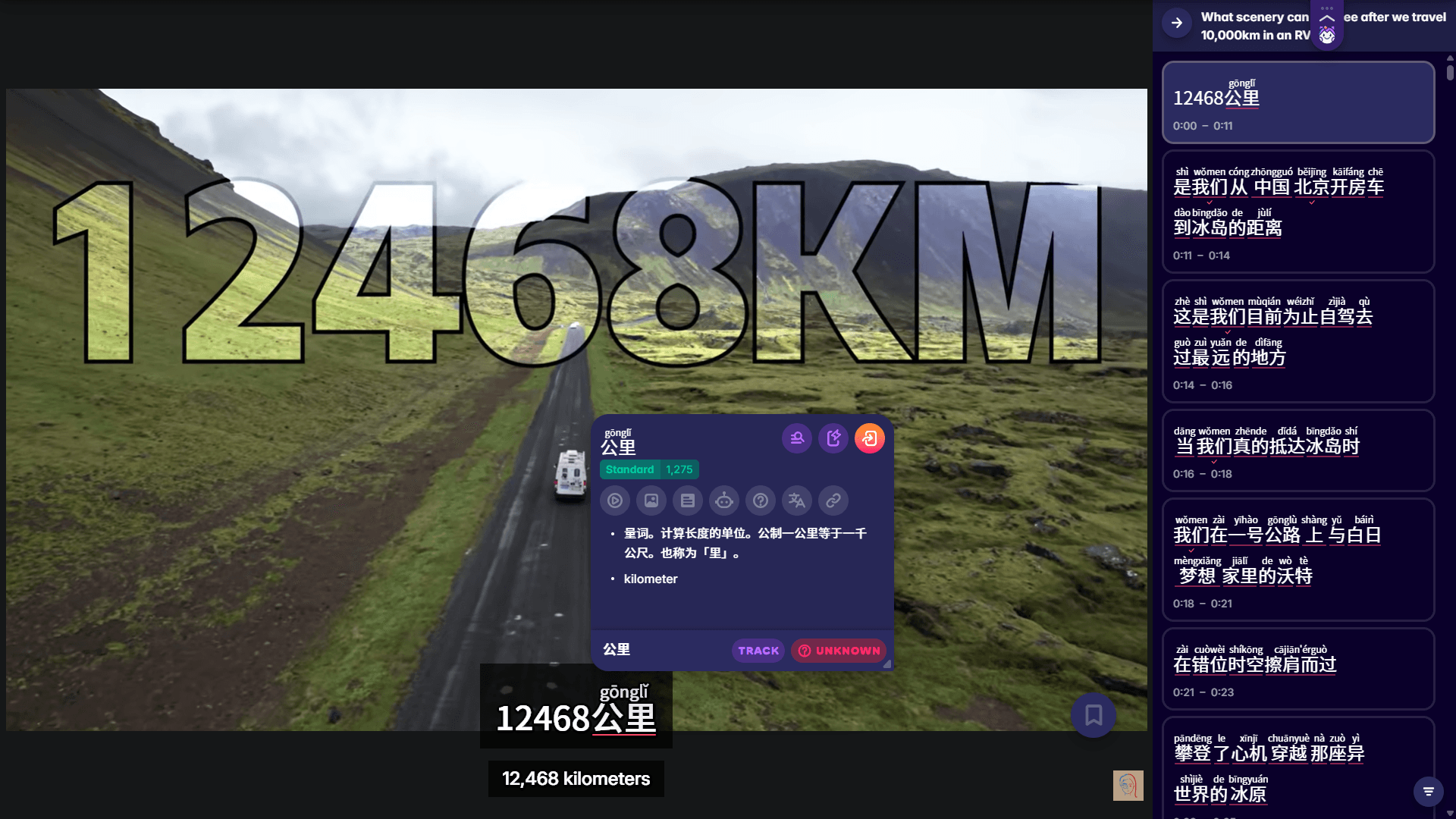
If you want to [learn Chinese](https://migaku.com/blog/chinese/best-chinese-learning-apps) banking vocabulary more effectively, Migaku's browser extension and app let you look up terms instantly while reading Chinese banking websites or watching finance videos. You can save vocabulary directly to your review decks and practice with real content. There's a 10-day free trial if you want to check it out.
 ----
## Chinese banking vocabulary keeps evolving
The digital payment ecosystem has expanded even more since 2020, and by 2026, cash transactions are increasingly rare in major cities. If you're living in China as an expat or student, dealing with landlords, paying utilities, and managing daily expenses requires banking vocabulary and up-to-date banking knowledge. What you can do is to read through Chinese articles and news about banking, and watch vlogs about Chinese payment system. These resources teach you not only the banking words in context, but also the payment culture.
> If you consume media in Chinese, and you understand at least some of the messages and sentences within that media, you will make progress. _Period_.
Learn terms that can make your daily life easier!
----
## Chinese banking vocabulary keeps evolving
The digital payment ecosystem has expanded even more since 2020, and by 2026, cash transactions are increasingly rare in major cities. If you're living in China as an expat or student, dealing with landlords, paying utilities, and managing daily expenses requires banking vocabulary and up-to-date banking knowledge. What you can do is to read through Chinese articles and news about banking, and watch vlogs about Chinese payment system. These resources teach you not only the banking words in context, but also the payment culture.
> If you consume media in Chinese, and you understand at least some of the messages and sentences within that media, you will make progress. _Period_.
Learn terms that can make your daily life easier!