Chinese Internet Abbreviations: Slang Words Like YYDS, XSWL, 520 Explained
Last updated: April 7, 2026

If you've ever tried chatting with Chinese friends online or scrolling through Weibo, you've probably seen stuff like "yyds" or "xswl" and thought, "what the hell does that mean?" Chinese internet slang is very much different compared to the formal Mandarin you are learning. These abbreviations pop up everywhere on Chinese social media, in gaming chats, and basically anywhere Chinese netizens hang out online. The good news? Once you crack the code, this slang actually makes learning Chinese way more fun because you'll finally understand what people are actually saying online.
Number slang that sounds like specific Chinese characters
Chinese number codes are probably the easiest entry point into internet slang. They work because Chinese numbers sound similar to certain words or phrases. When you say them out loud, your brain makes the connection.
520 and 521
The most famous example is 520 (wǔ èr líng). Say it quickly and it sounds like "wǒ ài nǐ" (我爱你 ), which means "I love you." May 20th (5/20) has basically become an unofficial Valentine's Day in China because of this. You'll see couples posting about it all over social media.
The variation 521 works the same way, just sounds slightly different when spoken. Both mean the same thing, so you can use either one to express affection in texts.
666
This one cracks me up because it has nothing to do with Western associations. In Chinese, 666 (liù liù liù) sounds like "溜溜溜 " (liū liū liū), which means smooth or slick. When someone pulls off something impressive in a game or does something skillfully, you spam 666 in the chat. It's basically saying "nice!" or "well done!"
You'll see this constantly in gaming streams and competitive play. A player makes an amazing move? 666 floods the chat immediately.
233
The number 233 comes from an old Chinese forum emoticon numbered 233, which showed someone laughing hysterically. Now people just type 233 (or 2333333 with extra 3s) to indicate they're laughing really hard. The more 3s you add, the harder you're laughing. Think of it like "hahaha" but in number form.
88
Simple one here. 88 (bā bā) sounds like "bye bye" in English, which Chinese speakers have adopted. It's a quick way to say goodbye in chats without typing actual characters.
Pinyin abbreviation shortcuts in Chinese internet slang
This category is where things get interesting. Chinese internet users take common phrases, look at the pinyin romanization, and just use the first letter of each word. You need to know the original Chinese phrase to decode these, which is why they can be confusing at first.
yyds (永远的神)
Probably the most popular abbreviation right now. yyds stands for "yǒng yuǎn de shén" (永远的神 ), which literally translates to "forever god" or "eternal god." In practice, it means someone or something is the GOAT (greatest of all time).
You can use yyds for anything you think is amazing. Your favorite singer? yyds. An incredible meal? yyds. That one friend who always comes through? Definitely yyds.
xswl (笑死我了)
This one means "xiào sǐ wǒ le" (笑死我了 ), literally "laugh to death me." It's the equivalent of "I'm dying laughing" or "lmao" in English. When something is hilarious, you type xswl.
I see xswl everywhere in Chinese online spaces. Someone shares a funny meme? xswl in the comments. Your friend tells an embarrassing story? xswl is the appropriate response.
nsdd (你说得对)
Short for "nǐ shuō de duì" (你说得对 ), meaning "you're right" or "what you said is correct." People use nsdd when they agree with someone's point, sometimes genuinely and sometimes sarcastically depending on context.
zqsg (真情实感)
Stands for "zhēn qíng shí gǎn" (真情实感 ), which means "true feelings" or "genuine emotions." When someone is being real and heartfelt instead of joking around, that's zqsg. You might also see it when fans talk about genuinely caring about a celebrity or show.
u1s1 (有一说一)
This abbreviation comes from "yǒu yī shuō yī" (有一说一 ), meaning "to be honest" or "speaking frankly." It's what you say before dropping some real talk or an honest opinion.
Must-know Chinese internet slang phrases that capture cultural moments
Beyond abbreviations, certain full Chinese phrases have become slang terms because they perfectly describe modern life situations. These often originate from social media trends, TV shows, or viral moments.
内卷 (nèi juǎn)
This term originally meant "involution" in academic contexts, but now it describes the exhausting cycle of competition where everyone works harder but nobody actually gets ahead. Think of students studying longer hours because everyone else is, or employees staying late because it's expected. The phenomenon captures a lot of frustration in Chinese society right now.
躺平 (tǎng píng)
Literally "lying flat," this phrase became huge as a response to 内卷. It means opting out of the rat race and choosing a simpler, less ambitious lifestyle. Instead of grinding yourself to death, you just... lie flat. Don't compete. Do the minimum. The term resonated with tons of young people feeling burned out.
破防了 (pò fáng le)
This gaming term means your defenses have been broken, but people use it when something emotionally gets to them. If a sad video makes you cry or a comment really hurts your feelings, you'd say 破防了. Your emotional shields are down.
一起爬山吗 (yì qǐ pá shān ma)
After the series went viral, memes with the caption 一起爬山吗? (want to go hiking together?) spread everywhere. In the show The Bad Kids, this innocent-sounding question became associated with something sinister. Now people use it jokingly to suggest something suspicious or as a playful threat.
(Clip of the mountain climbing scene in The Bad Kids.)
The world of Chinese internet culture
Understanding slang opens up the whole world of Chinese online communities. You start getting jokes in comment sections. You can participate in conversations without feeling lost. It makes consuming Chinese media way more rewarding because you're catching references that would otherwise fly right over your head.
The world of Chinese internet slang also evolves incredibly fast. New terms pop up constantly based on viral videos, news events, or celebrity moments. What's popular in 2026 might be outdated by 2027. That's actually part of the fun though. Staying current with slang means you're actively engaged with the language as it's actually used.
Chinese slang also reflects cultural values and social commentary in ways formal language doesn't. Terms like 内卷 and 躺平 tell you about real frustrations and attitudes among young people. They're windows into contemporary Chinese society.
How to learn Chinese slang terms as a language student
When you're learning Chinese, incorporating internet slang into your study routine makes everything feel less academic and more real. Instead of just drilling vocabulary lists, you're learning what people actually type to each other.
Try this:
- Pick a Chinese content creator you like on Bilibili or Douyin.
- Watch their videos and read the comments. You'll see the same slang terms popping up repeatedly.
- Note them down. Look up the ones you don't know.
- Then try leaving your own comments using that slang. Native speakers will appreciate that you're making the effort to communicate in their style.
The key is context. Don't just memorize that yyds means "the best." Pay attention to how people actually use it. What situations call for yyds versus other praise? When is xswl appropriate versus 233? You pick this up through exposure, not textbook study.
By the way, if you want to actually practice these terms with real Chinese content, Migaku's browser extension and app let you look up unfamiliar words and slang instantly while watching shows or browsing social media. Makes learning from authentic content way more practical. There's a 10-day free trial if you want to check it out.
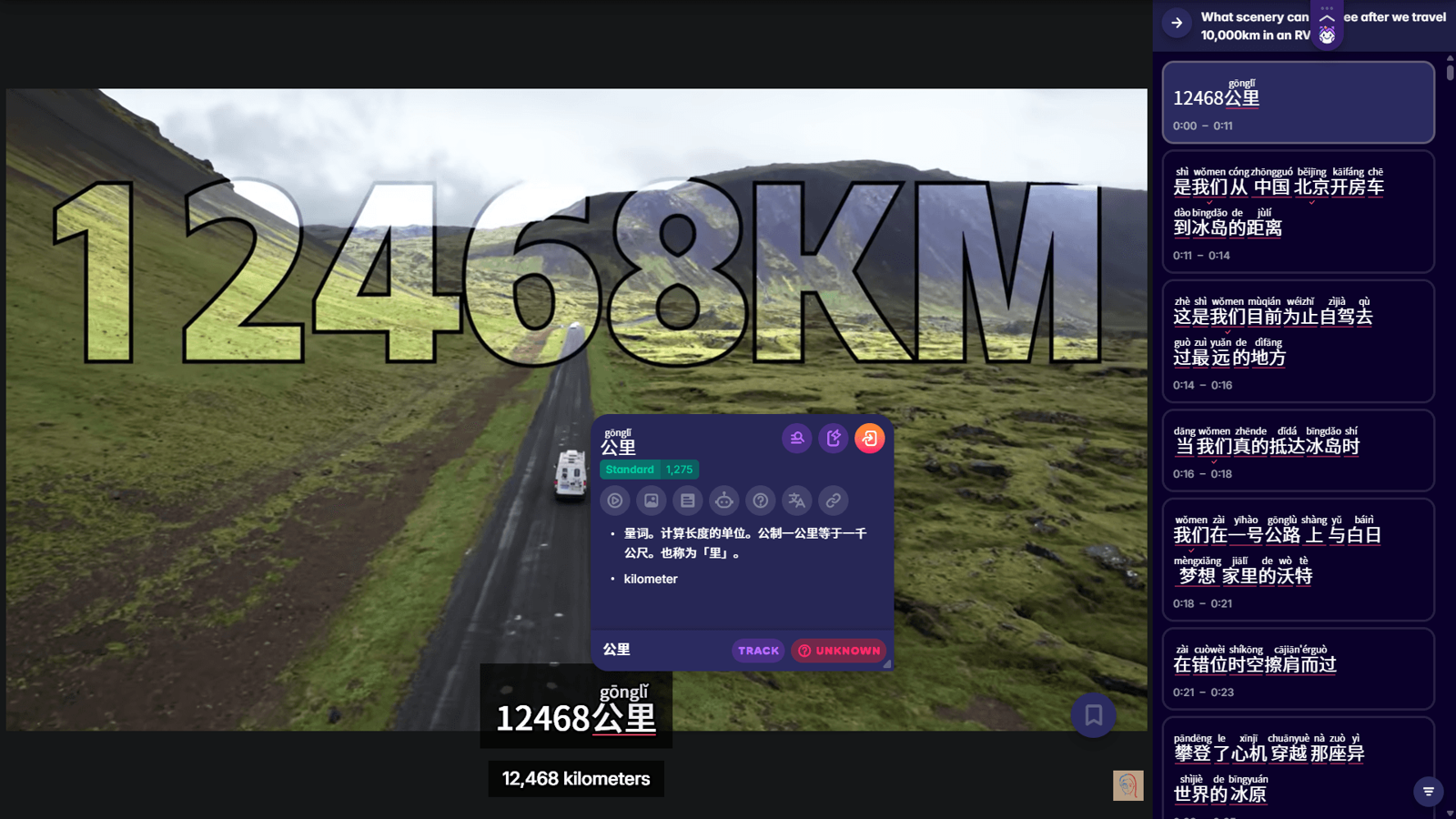
Your gateway into authentic Chinese content
Learning useful Chinese internet slang words gives you the tools to dive into authentic content without feeling completely overwhelmed. You can browse Chinese social media, read comments on videos, follow trending topics, and actually understand what's happening.
If you consume media in Chinese, and you understand at least some of the messages and sentences within that media, you will make progress. Period.
Learn it once. Understand it. Own it.✅