Chinese Job Interview Phrases: Prepare for a Job Interview With This Guide!
Last updated: March 29, 2026

Preparing for a job interview can feel overwhelming for most Chinese learners, especially when you're trying to balance language skills with professional presentation. The good news? You don't need to memorize thousands of phrases to sound competent and professional. Most Chinese job interviews follow predictable patterns, and knowing the right vocabulary and common expressions will help you navigate them confidently. This guide covers the essential phrases, questions, and cultural nuances you need to ace your next interview in Mandarin.
- Common interview questions in Chinese
- Professional greetings and how to introduce yourself properly
- Describing your strengths without sounding arrogant
- Handling Chinese job interview questions about weaknesses
- Career goals and where you see yourself
- Salary negotiation phrases in Mandarin language
- Essential workplace vocabulary you need to know
- Questions you should ask the interviewer
- Cultural differences between Chinese and Western interviews
Common interview questions in Chinese
Chinese job interviews tend to follow a fairly standard format, and interviewers often ask similar questions across industries. Let's start with the most common ones you'll encounter.
The classic opening is "请做一下自我介绍" (qǐng zuò yīxià zìwǒ jièshào), which means "Please introduce yourself." This is your chance to make a strong first impression. A solid response might start with "您好,我叫……" (nínhǎo, wǒ jiào...) meaning "Hello, my name is..." followed by your educational background and relevant experience.
Another frequent question is "你为什么想加入我们公司?" (nǐ wèishénme xiǎng jiārù wǒmen gōngsī?), which translates to "Why do you want to join our company?" Here's where you need to show you've done your homework. Use phrases like "我一直很欣赏贵公司……" (wǒ yīzhí hěn xīnshǎng guì gōngsī...) meaning "I've always admired your company..."
Interviewers in China will also ask "你对这个职位有什么了解?" (nǐ duì zhège zhíwèi yǒu shénme liǎojiě?), or "What do you know about this position?" This tests whether you actually read the job description carefully.
One question that trips up many candidates is "你的期望薪资是多少?" (nǐ de qīwàng xīnzī shì duōshǎo?), asking about your expected salary. We'll cover negotiation phrases later, but the key is to be prepared with a thoughtful response.
Professional greetings and how to introduce yourself properly
First impressions matter everywhere, but Chinese business culture places extra emphasis on proper greetings and respectful language.
When you enter the interview room, a simple "您好" (nínhǎo) is appropriate. Notice the "您" (nín) instead of the casual "你" (nǐ). This formal "you" shows respect and professionalism.
For your self-introduction, structure it clearly. Move into your background introduction: "我毕业于……" (wǒ bìyè yú...) for "I graduated from..." and "我有……年的工作经验" (wǒ yǒu... nián de gōngzuò jīngyàn) for "I have... years of work experience."
When discussing your current or previous role, use "我目前在……工作" (wǒ mùqián zài... gōngzuò) meaning "I currently work at..." or "我之前在……任职" (wǒ zhīqián zài... rènzhí) for "I previously held a position at..."
If you're switching industries, explain with "我希望转行到……" (wǒ xīwàng zhuǎnháng dào...) which means "I hope to transition into..." This shows intentionality rather than desperation.
Describing your strengths without sounding arrogant
Talking about your strengths in Chinese requires a delicate balance. Chinese workplace culture values humility, so you can't just brag like you might in an American interview. When asked "你的优点是什么?" (nǐ de yōudiǎn shì shénme?), meaning "What are your strengths?", frame your response carefully.
Use phrases like "我认为我比较……" (wǒ rènwéi wǒ bǐjiào...) which means "I think I'm relatively..." This softens your statement. Follow it with qualities like "细心" (xìxīn) for "detail-oriented," "有责任心" (yǒu zérènxīn) for "responsible," or "善于沟通" (shànyú gōutōng) for "good at communication."
A great phrase to learn is "我的强项是……" (wǒ de qiángxiàng shì...) meaning "My strong point is..." You can follow this with specific skills: "团队合作" (tuánduì hézuò) for teamwork, "问题解决能力" (wèntí jiějué nénglì) for problem-solving ability, or "学习能力强" (xuéxí nénglì qiáng) for strong learning ability.
When providing examples, use "比如说" (bǐrú shuō) meaning "for example" to introduce concrete situations. Chinese interviewers appreciate specific instances rather than vague claims.
Handling Chinese job interview questions about weaknesses
The dreaded weakness question appears in Chinese interviews too: "你的缺点是什么?" (nǐ de quēdiǎn shì shénme?). The strategy here mirrors what works in English, but the language requires specific vocabulary.
A smart approach is "我有时候……" (wǒ yǒushíhou...) meaning "Sometimes I..." followed by a genuine but manageable weakness. You might say "我有时候对自己要求太高" (wǒ yǒushíhou duì zìjǐ yāoqiú tài gāo), which translates to "Sometimes I'm too demanding of myself."
Always follow up with improvement efforts using "但是我正在努力……" (dànshì wǒ zhèngzài nǔlì...) meaning "But I'm working hard to..." This shows self-awareness and growth mindset, both valued in Chinese professional culture.
Another useful phrase is "我意识到……" (wǒ yìshí dào...) meaning "I've realized..." This demonstrates reflection. For example: "我意识到我需要提高我的公开演讲能力" (wǒ yìshí dào wǒ xūyào tígāo wǒ de gōngkāi yǎnjiǎng nénglì), or "I've realized I need to improve my public speaking ability."
Career goals and where you see yourself
When interviewers ask "你的职业规划是什么?" (nǐ de zhíyè guīhuà shì shénme?), they want to know about your career planning. This question appears in virtually every Chinese job interview.
Structure your response with short-term and long-term goals. Use "短期内" (duǎnqí nèi) for "in the short term" and "长期来看" (chángqī lái kàn) for "in the long term." For example: "短期内,我希望能够……" (duǎnqí nèi, wǒ xīwàng nénggòu...) meaning "In the short term, I hope to be able to..."
Express your desire to grow with phrases like "我希望在这个领域深入发展" (wǒ xīwàng zài zhège lǐngyù shēnrù fāzhǎn), which means "I hope to develop deeply in this field." This shows commitment without sounding like you'll jump ship immediately.
If you're aiming for management, you can say "我的目标是成为……" (wǒ de mùbiāo shì chéngwéi...) meaning "My goal is to become..." followed by your target position. Just make sure it's realistic for the timeline you're discussing.
Salary negotiation phrases in Mandarin language
Discussing money in Chinese requires tact. When you hear "你的期望薪资是多少?" (nǐ de qīwàng xīnzī shì duōshǎo?), don't just blurt out a number. In China, salary negotiations often happen more subtly than in Western countries.
A diplomatic response is "我希望薪资能够与我的能力和经验相匹配" (wǒ xīwàng xīnzī nénggòu yǔ wǒ de nénglì hé jīngyàn xiāng pǐpèi), meaning "I hope the salary can match my abilities and experience." This puts the ball back in their court.
If you need to name a range, use "我期望的薪资范围是……" (wǒ qīwàng de xīnzī fànwéi shì...) meaning "My expected salary range is..." followed by your numbers. In China, monthly salary is standard, so quote in those terms.
For benefits discussion, ask "除了基本工资,还有什么福利?" (chúle jīběn gōngzī, hái yǒu shénme fúlì?), which means "Besides basic salary, what benefits are there?" Common benefits include "五险一金" (wǔ xiǎn yī jīn), the mandatory social insurance and housing fund.
Essential workplace vocabulary you need to know
Beyond phrases, you need solid workplace vocabulary to discuss your experience and the role. Let's cover the most important terms you'll encounter.
For job titles and departments, learn:
Chinese | Pinyin | English |
|---|---|---|
经理 | jīnglǐ | Manager |
主管 | zhǔguǎn | Supervisor |
同事 | tóngshì | Colleague |
下属 | xiàshǔ | Subordinate |
人力资源部 | rénlì zīyuán bù | Human Resources |
市场部 | shìchǎng bù | Marketing |
财务部 | cáiwù bù | Finance |
Common verbs for describing work include:
Chinese | Pinyin | English |
|---|---|---|
负责 | fùzé | To be responsible for |
管理 | guǎnlǐ | To manage |
协调 | xiétiáo | To coordinate |
完成 | wánchéng | To complete |
Questions you should ask the interviewer
At the end of most Chinese interviews, you'll hear "你有什么问题要问我吗?" (nǐ yǒu shénme wèntí yào wèn wǒ ma?), meaning "Do you have any questions for me?" Never say no. Asking thoughtful questions shows genuine interest.
Good questions include "这个职位的主要职责是什么?" (zhège zhíwèi de zhǔyào zhízé shì shénme?), or "What are the main responsibilities of this position?" Even if you know from the job description, this invites them to elaborate.
Ask about team structure with "我会和什么样的团队一起工作?" (wǒ huì hé shénme yàng de tuánduì yīqǐ gōngzuò?), meaning "What kind of team would I be working with?"
For growth opportunities, try "公司为员工提供什么样的培训机会?" (gōngsī wèi yuángōng tígōng shénme yàng de péixùn jīhuì?), or "What kind of training opportunities does the company provide for employees?"
You can also ask about performance evaluation: "公司如何评估员工的表现?" (gōngsī rúhé pínggū yuángōng de biǎoxiàn?), meaning "How does the company evaluate employee performance?"
Cultural differences between Chinese and Western interviews
Understanding cultural nuances can make or break your interview in China. The differences go beyond just language.
- Chinese interviews typically place more emphasis on educational background and credentials than Western ones. Be prepared to discuss your degree, university ranking, and academic achievements in detail. Use "我毕业于..." (wǒ bìyè yú...) and be specific about your major, "我的专业是..." (wǒ de zhuānyè shì...).
- Humility matters more in Chinese professional settings. While American interviews often encourage you to "sell yourself," Chinese culture values modesty. This doesn't mean underselling your skills, but framing them with phrases like "我认为" (wǒ rènwéi, "I think") or "我觉得" (wǒ juéde, "I feel") rather than absolute statements.
- Respect for hierarchy shows through language choices. Always use "您" (nín) instead of "你" (nǐ) when addressing interviewers. Refer to the company as "贵公司" (guì gōngsī, "your esteemed company") rather than just "你们公司" (nǐmen gōngsī, "your company").
- Age and experience carry more weight in China. If you're young, acknowledge it while emphasizing your learning attitude: "虽然我比较年轻,但是我学习能力很强" (suīrán wǒ bǐjiào niánqīng, dànshì wǒ xuéxí nénglì hěn qiáng), meaning "Although I'm relatively young, I have strong learning ability."
If you want to learn Chinese interview phrases from real content instead of just memorizing lists, Migaku's browser extension and app let you look up words and save sentences instantly while watching Chinese career videos or reading professional articles. Makes building your professional vocabulary way more practical. There's a 10-day free trial if you want to check it out.
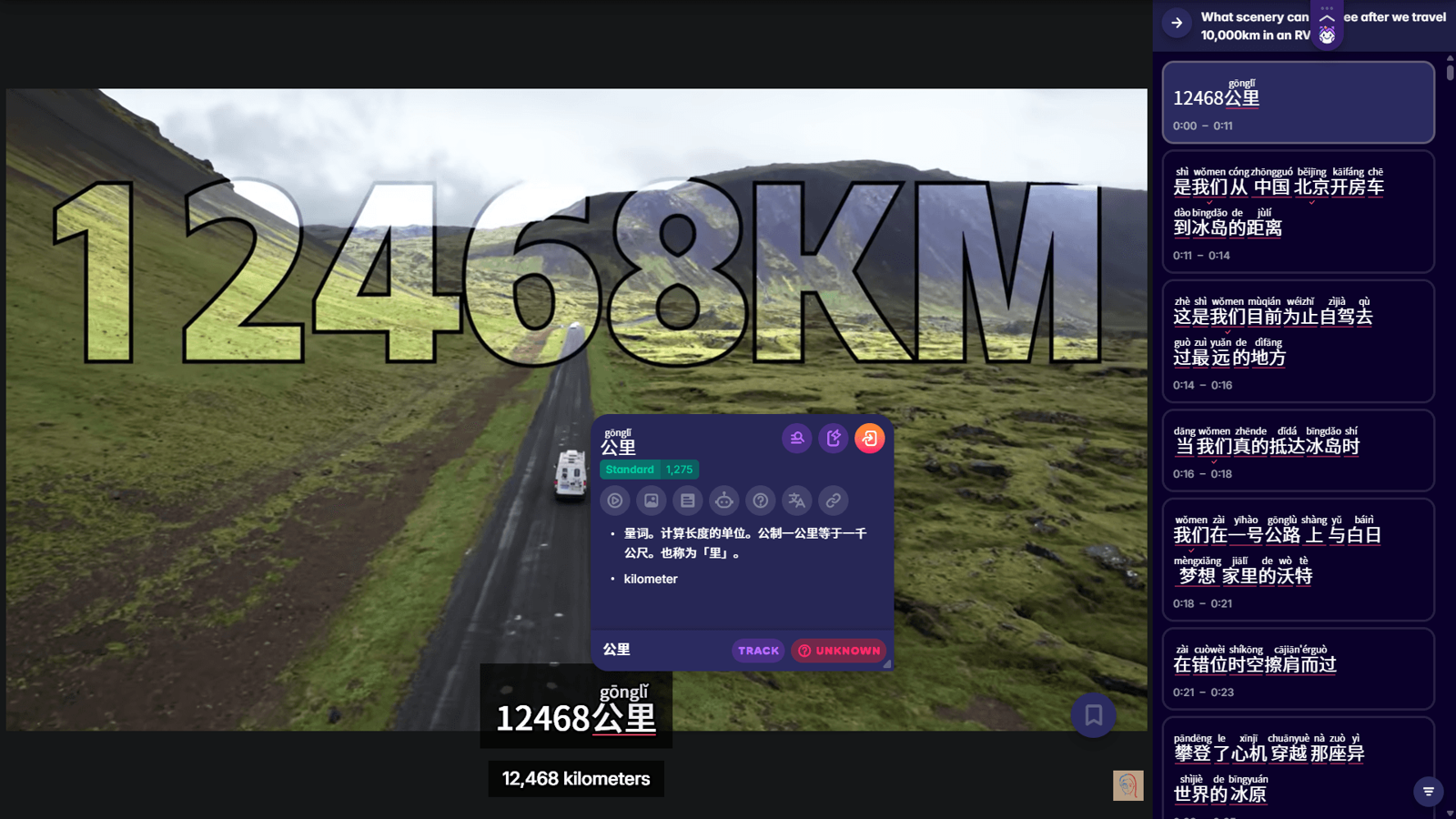
The most effective approach for learning Chinese interview terms?
Immersion with real content. Watch Chinese job interview videos on platforms like Bilibili or YouTube. Chinese career advice shows and workplace dramas give you context for how these phrases sound in natural conversation. You'll pick up pronunciation, tone, and the subtle cultural cues that textbooks miss.
If you consume media in Chinese, and you understand at least some of the messages and sentences within that media, you will make progress. Period.
Your preparation will speak for you. Good luck!