# Chinese Nature Vocabulary: Mountains, Rivers, Weather & More Nature Words for Beginners
> Learn Chinese nature vocabulary with characters, pinyin, and meanings. Master words for landscapes, plants, weather, and environment in Mandarin.
**URL:** https://migaku.com/blog/chinese/chinese-nature-vocabulary
**Last Updated:** 2026-04-06
**Tags:** vocabulary, phrases
---
[Learning Chinese](https://migaku.com/learn-chinese) nature vocabulary opens up a whole new way to describe the world around you. Whether you're planning a trip to China's national parks, watching nature documentaries in Mandarin, or just want to expand your conversational skills, knowing how to talk about mountains, rivers, trees, and [weather](https://migaku.com/blog/chinese/chinese-weather-vocabulary) makes your Chinese feel more natural and complete. Plus, many [Chinese characters](https://migaku.com/blog/chinese/chinese-character-components) for nature are actually based on visual representations of what they describe, which makes them easier to remember than you might think.
----
## Basic elements you'll use every day
Let's start with the fundamental nature words that show up constantly in Chinese conversation and writing. These are the building blocks you'll need before moving on to more specific vocabulary.
| Chinese | English |
| - | - |
| | Sun — literally "great yang" or "extreme brightness";
appears everywhere from weather apps to poetry |
| | Moon — combines the character for
month (with ) and meaning bright |
| | Water |
| | Fire |
| | Earth / Soil |
| | Sky / Heaven |
| | Wind — combine it with other characters
to get words like for typhoon |
| | Stone / Rock |
----
## Mountains, rivers, and landscapes in Chinese vocabulary
Chinese has incredibly specific vocabulary for different types of landscapes, which makes sense given how much Chinese culture and art focus on natural scenery.
- Mountain is , and this character is basically a pictograph. See those three peaks? That's literally what looks like when you write it. The character visually represents three mountain peaks rising from the ground, making it one of the easiest Chinese characters to remember. You'll see this in place names all over China and Taiwan.
- River is , while refers to a larger river.
- Lake is , and sea or ocean is . Notice how all these water-related words have that water radical 氵 on the left side? That's your visual clue that you're dealing with something liquid.
- Forest is , which literally uses the character for tree three times in the first character. Three trees make a forest. Chinese characters can be pretty clever like that. A single tree is just , which you'll use constantly when talking about nature.
- Valley is , combining mountain and valley characters.
- Hill is , literally "small mountain."
- Beach is , and island is .
- Field or farmland is , another pictographic character that looks like divided agricultural plots.
----
## Flowers, trees and plants in Mandarin
When you're describing the natural environment in Chinese, you'll need vocabulary for different types of plant life beyond just the basic word for tree.
| Chinese | English |
| - | - |
| | Grass — you'll see the grass radical 艹
on top of tons of characters related to plants |
| | Flower — appears in countless compound words,
e.g., (flower garden) |
| | Leaf |
| | Branch |
| | Root — also means "origin" or "basis" in other contexts |
| | Seed |
| | Fruit |
| | Bamboo — super important in Chinese culture |
| | Pine tree |
| | Willow tree |
| | Plum blossom — a symbol of resilience |
| | Bush / Shrub |
| | Vine |
| | Lawn / Turf |
----
## Master nature words for weather phenomena and natural events
Weather vocabulary is essential for everyday conversation in Chinese, whether you're checking the forecast or making small talk.
| Chinese | English |
| - | - |
| | Rain |
| | Snow |
| | Cloud |
| | Fog / Mist |
| | Thunder |
| | Lightning |
| | Storm — literally "violent wind rain" |
| | Rainbow — combines "colorful" and "arc" |
| | Dew |
| | Frost |
| | Tide |
| | Wave |
| | Current (water current) |
| | Earthquake — combines "earth" and "shake" |
| | Drought |
| | Flood |
These terms come up frequently in news reports about natural disasters in Chinese-speaking regions.
----
## Learn Mandarin environmental and climate vocabulary
As environmental awareness grows globally, being able to discuss these topics in Chinese becomes increasingly useful.
| Chinese | English |
| - | - |
| | Environment |
| | Nature — literally "self-so" or "of itself" |
| | Climate |
| | Climate change |
| | Pollution |
| | Air quality |
| | Smog — you've probably heard this a lot if you've spent time in major Chinese cities |
| / | Recycling |
| | Renewable energy |
| / | Conservation / Environmental protection |
| | Ecosystem |
| | Biodiversity |
----
## Measure words for nature vocabulary
Here's the thing about Chinese that trips up a lot of learners: you need specific measure words when counting things. Nature vocabulary is no exception.
- For mountains, you use : means "one mountain."
- For rivers, you typically use : means "one river."
- Trees use : means "one tree."
- Flowers can use either for individual blooms or for bouquets.
- Lakes use , the general measure word.
Getting these measure words right makes your Chinese sound way more natural. You don't need to memorize them all at once, but as you learn each nature word, try to pick up its associated measure word too.
----
## Flashcards and other learning strategies for Chinese nature vocabulary
1. [Flashcards work great](https://migaku.com/blog/chinese/chinese-character-flashcards) for this type of vocabulary because you can pair Chinese characters with images of the actual natural elements. When you're making your flashcards, include the character, pinyin, and English meaning on one side, and consider adding a photo on the other side.
2. Chinese nature vocabulary lends itself really well to visual learning. Many of these characters are pictographic or have clear visual components. Take advantage of that.
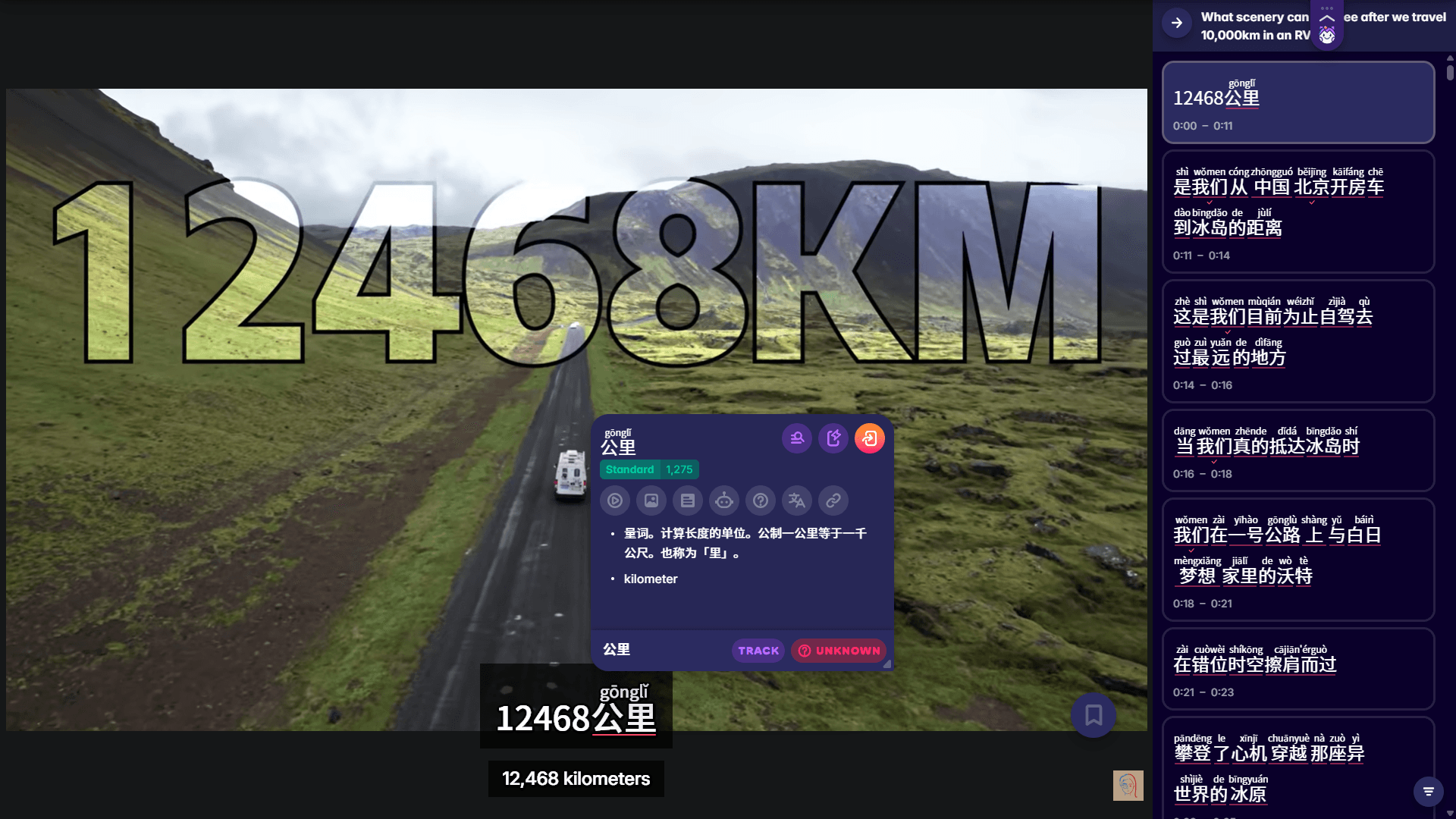
3. For a more immersive experience, why not watch [nature documentaries in Chinese](https://migaku.com/blog/chinese/best-chinese-shows-for-language-learners)? Platforms like [bilibili](https://www.bilibili.com/) have tons of nature content with Chinese subtitles. You'll hear these vocabulary words in context, which helps them stick way better than just memorizing lists.
4. Reading Chinese poetry, even simple classical poems, exposes you to nature vocabulary used beautifully. Tang dynasty poems are full of mountains, rivers, moon, and flowers. You don't need to understand every character to appreciate how these nature words create imagery.
5. Group your vocabulary by theme when studying. Learn all the water-related words together, then all the mountain and landscape words, then plants. Your brain makes connections between related concepts, which speeds up retention.
If you want to learn this vocabulary from actual Chinese content instead of just lists, Migaku's browser extension and app let you save words and sentences directly from videos, articles, and shows you're already watching. Way more effective than drilling random flashcards. There's a 10-day free trial if you want to see how it works.
 ----
## Do you love the natural world?
China has many beautiful and unique landscapes for tourists to explore. Nature vocabulary gives you a solid foundation, but the real magic happens when you start watching Chinese nature documentaries, exploring tourist vlogs and blogs, and browsing through your next hiking destinations. If you are a nature lover, you will find a lot of resources to help you learn the words and explore your next trip options.
> If you consume media in Chinese, and you understand at least some of the messages and sentences within that media, you will make progress. *Period*.
The closer we are to nature, the calmer we become.🗻
----
## Do you love the natural world?
China has many beautiful and unique landscapes for tourists to explore. Nature vocabulary gives you a solid foundation, but the real magic happens when you start watching Chinese nature documentaries, exploring tourist vlogs and blogs, and browsing through your next hiking destinations. If you are a nature lover, you will find a lot of resources to help you learn the words and explore your next trip options.
> If you consume media in Chinese, and you understand at least some of the messages and sentences within that media, you will make progress. *Period*.
The closer we are to nature, the calmer we become.🗻