Chinese Office Vocabulary: Essential Workplace Terms
Last updated: April 5, 2026

Learning Chinese for business is one thing, but actually navigating an office environment in China requires a whole different set of vocabulary. You need to know how to talk about departments, job titles, daily tasks, and all those little workplace interactions that come up constantly. Whether you're preparing for a job in China, working with Chinese partners, or just want to expand your Mandarin beyond textbook basics, getting comfortable with office vocabulary will make your professional life way easier.
- Essential Chinese vocabulary for office departments
- Common job titles and positions in Chinese workplaces
- Daily office tasks and activities
- Office equipment and supplies vocabulary
- Client and partner interactions in China
- Business Chinese vocabulary for time management and deadlines
- Email and written communication in Chinese business culture
- How to learn office vocabulary in Chinese effectively
Essential Chinese vocabulary for office departments
Every company has departments, and knowing how to refer to them correctly in Chinese is fundamental. You'll hear these terms constantly in any professional setting.
Chinese | English |
|---|---|
Human Resources Department (shortened to in casual conversation) | |
Finance Department (for expense reports and budget approvals) | |
Marketing Department | |
Sales Department | |
IT Department (often just called ) | |
Research and Development Department (short for ) | |
Customer Service Department (short for ) | |
Legal Department | |
Administration / General Affairs Department | |
Production Department | |
Logistics Department |
Common job titles and positions in Chinese workplaces
Understanding job titles helps you navigate office hierarchies and know who to contact for different issues. Chinese companies tend to be more hierarchical than Western ones, so titles matter.
Chinese | English |
|---|---|
General manager / CEO | |
Department manager (can be specified, e.g., for marketing manager) | |
/ | Director (depending on company structure) |
Regular employee | |
Colleague | |
/ | Supervisor / Boss ( is more casual) |
Intern | |
Project manager | |
Team leader | |
Assistant | |
Chairman | |
Vice president |
Daily office tasks and activities
These are the verbs and phrases you'll use every single day in a Chinese office environment. They cover the basic actions that make up your work routine.
Chinese | English |
|---|---|
To have a meeting | |
To schedule a meeting | |
To write a report | |
To submit a report | |
To send an email | |
To reply to an email | |
To make a phone call | |
To answer the phone | |
To work overtime (a term you'll hear a lot in China) | |
To take a day off | |
To go on a business trip | |
To work on a project | |
To finish / complete | |
To hand over work / do a handoff |
Office equipment and supplies vocabulary
You need to know how to talk about the physical stuff in your workspace, especially when something breaks or you need supplies.
Chinese | English |
|---|---|
Computer | |
/ | Laptop |
Printer | |
Photocopier | |
Desk | |
/ | Chair |
Meeting room | |
Conference room | |
Office supplies | |
Pen | |
Paper | |
File folder | |
Stapler | |
Projector | |
Whiteboard | |
USB drive |
Client and partner interactions in China
Working with clients and business partners requires more formal language than chatting with colleagues. These phrases help you maintain professional relationships.
Chinese | English |
|---|---|
Client / Customer | |
/ | Business partner |
To cooperate / collaborate | |
Contract | |
To sign a contract | |
Negotiations | |
Price | |
Quotation | |
/ | To give a discount |
To follow up (with a client) | |
Maintaining relationships (super important in Chinese business culture) |
When introducing your company, you might say , meaning "I represent XX company."
Business Chinese vocabulary for time management and deadlines
Deadlines drive everything in office work, so you need to talk about time accurately in Chinese.
Chinese | English |
|---|---|
/ | Deadline |
/ | Urgent |
To rush / hurry | |
Pressed for time | |
On time | |
In advance / early | |
To postpone | |
/ | Late / Running late |
To arrange / To schedule | |
Schedule / Timetable | |
To confirm the time | |
Progress / Schedule (for projects) | |
Behind schedule |
Email and written communication in Chinese business culture
Chinese business emails follow specific conventions. Knowing the standard phrases makes your written communication look professional.
Emails start with a greeting like for formal situations or for colleagues you know well.
When addressing someone by title, use their surname plus title, like for Manager Li.
Common opening lines include meaning "thank you for your email," or meaning "I received your email."
To attach a file, say , which means "please check the attachment." An attachment is .
For closing, is very formal and traditional, though many people now just use or meaning "best wishes." Your signature is .
When forwarding an email, the term is . CC'ing someone is , and BCC is .
How to learn office vocabulary in Chinese effectively
Reading lists of vocabulary is one thing, but actually remembering and using these terms requires a different approach. Here's what actually works.
- Context matters way more than memorization. Instead of drilling individual words, learn them in phrases you'd actually use. For example, don't just memorize (meeting room), learn the full phrase ?(where is the meeting room?) or (the meeting room is already booked).
- If you're already working in a Chinese environment, pay attention to the language around you. Notice which terms your colleagues use most frequently, and focus on those first. Every office has its own commonly used vocabulary that might differ slightly from textbook examples.
- Creating your own example sentences based on your actual work situations helps tremendously. If you work in marketing, make sentences about campaigns and client presentations. If you're in finance, focus on budget and reporting vocabulary.
- Watching Chinese workplace dramas or reality shows set in offices gives you natural exposure to how people actually speak at work. The language in these shows tends to be more authentic than textbook dialogues. You'll hear the casual shortcuts people use, the tone shifts between speaking to bosses versus colleagues, and the flow of workplace conversations.
- Taking a business Chinese course can provide structure, especially if you're starting from scratch with professional vocabulary. Many language schools in China and online platforms offer courses specifically designed for workplace preparation. These lessons typically cover not just vocabulary but also cultural expectations and communication styles.
If you want to pick up workplace vocabulary naturally, Migaku's browser extension and app let you look up Chinese terms instantly while watching office dramas or reading business articles. You can save words directly to your flashcards with full context. There's a 10-day free trial if you want to see how it works.
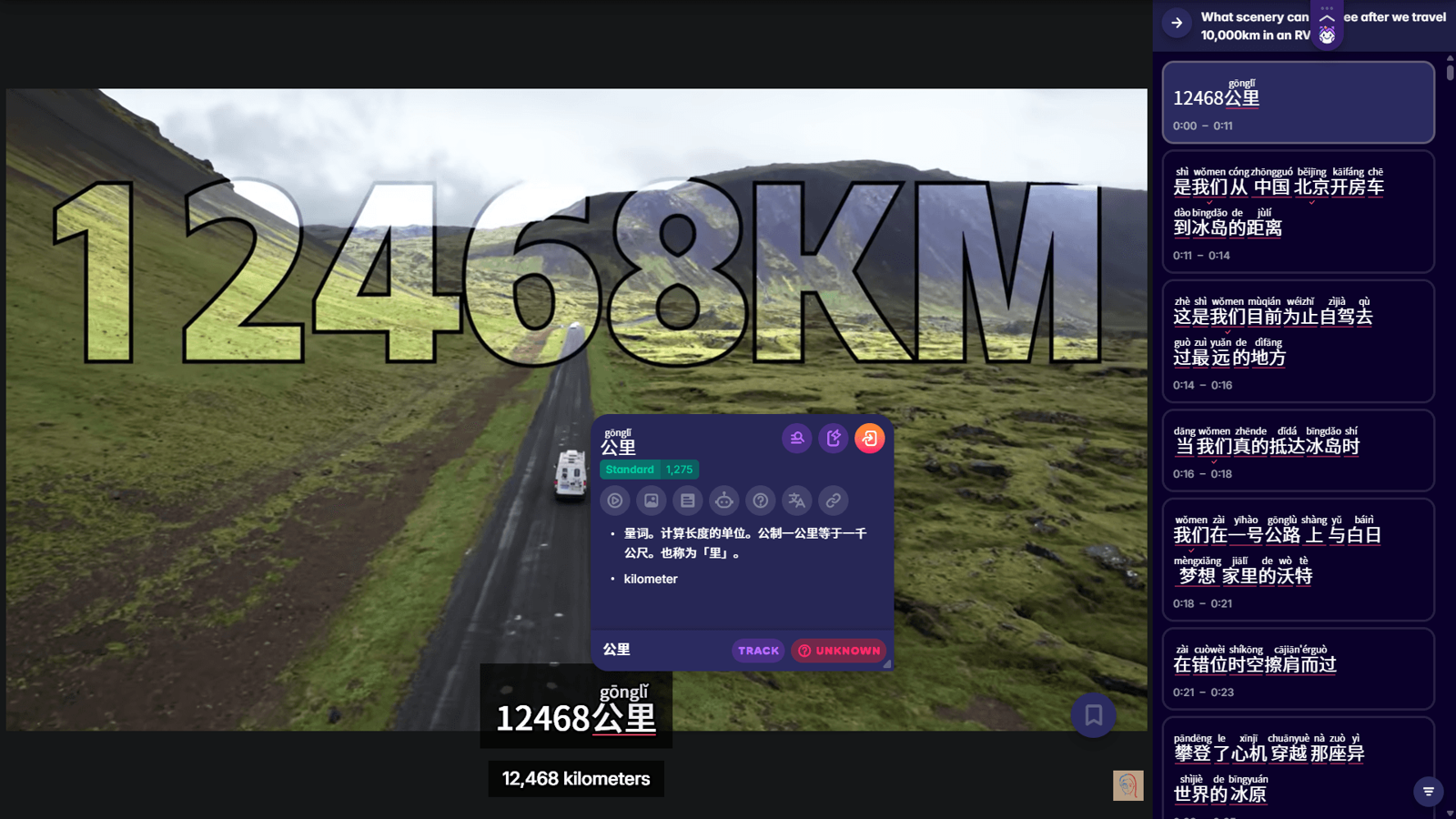
Build from the keywords as you encounter new situations
The real learning happens when you're using the language in context, making mistakes, and adjusting. Textbooks and courses give you the foundation, but real workplace exposure, office series, and career reality shows teach you how Chinese professionals actually communicate.
If you consume media in Chinese, and you understand at least some of the messages and sentences within that media, you will make progress. Period.
Your career deserves the time investment.💪