Chinese Shopping Vocabulary: Complete Guide to Shopping in Chinese
Last updated: April 1, 2026

Shopping in China can feel overwhelming when you just start to learn Chinese. Whether you're browsing a department store in Shanghai, haggling at a local market, or just trying to buy groceries, having the right words and phrases makes everything easier. This guide covers the essential Chinese shopping vocabulary you need to navigate stores, ask about prices, find the right sizes, and actually complete a purchase without pointing at everything like a confused tourist.
- Shopping in Chinese: Why learn this vocabulary
- Store types and where to find them
- Essential words for navigating stores
- Product categories you'll actually use
- Chinese phrases for sizes, colors, and describing what you want
- Prices, discounts, and bargaining phrases
- Payment methods and checkout vocabulary
- Customer service phrases that help
- Learn Chinese through shopping experiences
Shopping in Chinese: Why learn this vocabulary
Here's the thing: you can survive in Chinese cities without knowing shopping vocabulary. Plenty of stores have English signs, and you can always point at what you want. But that's not really learning the language, right?
When you learn Chinese shopping vocabulary, you're picking up words that appear everywhere. The character 买 (mǎi, to buy) shows up on signs, apps, advertisements, and conversations constantly. Same with 卖 (mài, to sell). These aren't just shopping words. They're fundamental to understanding how Chinese people talk about commerce, value, and daily life.
Plus, shopping vocabulary gives you immediate, practical wins. You can actually use these phrases the same day you learn them. That feeling when you successfully ask for a discount in Mandarin and the shopkeeper responds naturally? Pretty motivating.
Most Chinese shopping vocabulary in English resources focuses on beginner needs, which makes sense. But even intermediate learners benefit from reviewing this vocabulary because it connects to so many other areas. Food vocabulary, clothing terms, numbers, measure words, they all intersect when you're shopping.
Store types and where to find them
Chinese cities have distinct shopping environments, and knowing the vocabulary for each helps you navigate better.
Chinese | English |
|---|---|
Supermarket — you'll see this everywhere, from small convenience stores to massive hypermarkets | |
/ | Department store / Mall |
Shopping mall | |
Traditional market — different from modern retail spaces; you'll find fresh produce, meat, seafood, and vendors who expect you to bargain; vocabulary used here differs from what you'd say in a mall | |
Bookstore | |
Pharmacy | |
Clothing store | |
Convenience store (like 7-Eleven) |
Knowing these distinctions matters because Chinese people use different shopping strategies depending on the store type. You bargain at markets but not in malls. Supermarkets have fixed prices. Department stores sometimes have negotiable prices on big-ticket items like furniture or electronics.
Essential words for navigating stores
Once you're inside a store, you need to know how to move around.
Chinese | English |
|---|---|
Entrance — appears on signs everywhere, not just in stores | |
Exit | |
Aisles | |
Shelves | |
Area | |
Checkout counter — literally "receive money platform" | |
First floor | |
Second floor | |
Basement level B1 | |
Basement level B2 | |
/ | Elevator (for regular) / Escalator (automated stairs) — both can be called diàntī, but zìdòng fútī specifically means escalator |
Fitting room / Changing room | |
/ | Restroom / Bathroom |
Product categories you'll actually use
Shopping vocabulary gets specific when you're looking for particular items. Here's what you need for common product categories.
Chinese | English |
|---|---|
Clothing | |
Food | |
Electronics | |
Cosmetics | |
Skincare products | |
Furniture |
Chinese phrases for sizes, colors, and describing what you want
When shopping for clothing in Chinese-speaking environments, you need size vocabulary.
Chinese | English |
|---|---|
Small (S) | |
Medium (M) | |
Large (L) | |
Extra large (XL) |
Chinese sizes sometimes use number systems. You might see sizes like 160, 165, 170, which refer to height in centimeters. Understanding this system helps when shopping for clothes that fit properly.
Colors come up constantly.
Chinese | English |
|---|---|
Red | |
Blue | |
Black | |
White | |
Yellow | |
Green |
Here are some common phrases to talk about sizes and colors:
- 有没有别的颜色/尺寸?
Do you have other colors/sizes? - 太大了。
It's too big. - 太小了。
It's too small. - 正好。
It's just right.
Prices, discounts, and bargaining phrases
The word is Chinese currency or RMB, but people usually just say for yuan and for (one-tenth of a yuan). So 15.50 yuan is .
Expensive is . Cheap is . If you think something costs too much, say , too expensive.
Discount is or just . A 20% discount is , which literally means "eight folds." This confuses people at first because it sounds backwards. Chinese discount percentages tell you what you pay, not what you save. So means you pay 80%, getting 20% off.
Some common expressions are:
- 这个多少钱?
How much is this? - 有没有折扣?
Is there a discount? - 能便宜一点吗?
Can it be a bit cheaper? - 我给你 (amount)。
I'll give you (amount). - 最低 (amount)。
Lowest price is (amount).
Payment methods and checkout vocabulary
Chinese | English |
|---|---|
Cash | |
Credit card | |
WeChat Pay (mobile payment) | |
Alipay (mobile payment) | |
QR code | |
Scan the code | |
Official tax receipt (needed for reimbursement) | |
Regular receipt | |
Plastic bag |
- 需要袋子吗?
Do you need a bag? - 一共多少钱?
How much altogether? - 怎么付款?
How will you pay?
Customer service phrases that help
- 请问……
Excuse me... / May I ask... (start with this when you need help) - 在哪里?
Where is...? (e.g., 洗手间在哪里? Where is the restroom?) - 有没有……?
Do you have...? (works for asking about products, sizes, colors, anything) - 我随便看看。
I'm just looking around. (sales staff will usually leave you alone after this.) - 你推荐什么?
What do you recommend? - 哪个比较好?
Which one is better? - 我买这个。 / 我要这个。
I'll buy this. / I want this. (use when you're ready to buy)
Learn Chinese through shopping experiences
The best way to learn Chinese shopping vocabulary is by shopping. Seriously. You can review flashcards for hours, but nothing compares to the learning that happens when you're standing in a store trying to communicate what you need.
Even if you make mistakes, the context makes the vocabulary stick. You'll remember that 试衣间 means fitting room because you asked for it, found it, and used it. That's different from seeing the word in a list.
If you can't physically shop in a Chinese-speaking environment, the next best thing is immersion through media. Chinese dramas and reality shows feature shopping scenes constantly. You'll hear natural conversations about prices, quality, and preferences.
Watch how characters bargain at markets, browse in malls, or shop online. Pay attention to the specific vocabulary they use in different contexts. Save those sentences and phrases for review.
You can also browse through Chinese social media and pick up slang terms about shopping. Chinese slang phrases related to shopping include (literally "chop hands"), which means buying too much online. means shopping from overseas websites. refers to group buying to get discounts.
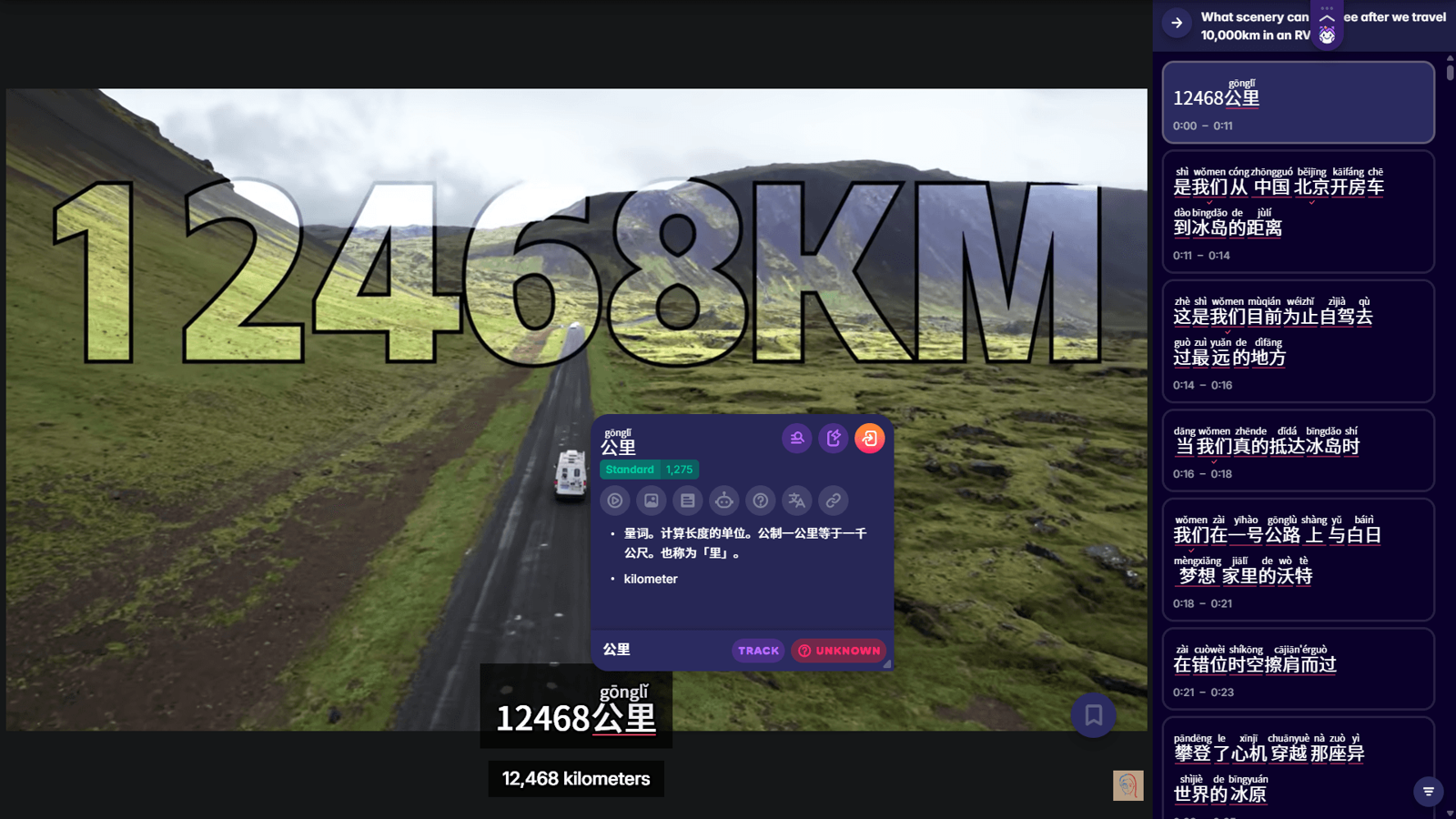
By the way, if you want to pick up shopping vocabulary from actual Chinese content, Migaku's browser extension and app let you save words and phrases directly from videos or articles you're watching. Makes it way easier to build your vocabulary from real contexts instead of boring lists. There's a 10-day free trial if you want to check it out.
Have you tried online shopping in China?
Shopping vocabulary gives you a practical entry point into Mandarin that pays off immediately. Even when you are too lazy or too shy to shop onsite in China, you can still get plenty of practice by shopping online through Taobao or Pinduoduo. Online shopping apps feature more diverse descriptions and slang terms that can level up your Chinese skills effectively. If you haven't tried that yet, it is definitely recommended as a practical method to learn shopping vocab.
If you consume media in Chinese, and you understand at least some of the messages and sentences within that media, you will make progress. Period.
Motivation grows when the language becomes part of daily life.☕