# Congratulations in Chinese: Ways to Say Congratulations for Different Occasions
> Congratulations in Chinese are mostly used for significant events, achievements, or festivals. Unlock these congrats phrases for special occasions!
**URL:** https://migaku.com/blog/chinese/congratulations-in-chinese
**Last Updated:** 2025-12-25
**Tags:** vocabulary, culture, phrases
---
Congratulations! You've found this post to help you [learn Chinese](https://migaku.com/learn-chinese)!👏 Let's get down to business. The truth is, Chinese has a whole universe of congratulatory phrases — some formal, some casual, some carrying with cultural nuance that a simple translation totally misses. So far as making a great impression is concerned, a well-chosen congratulations in Chinese is pure magic. You'll love how it connects you to people in a genuinely meaningful way. Let’s get into it.
---
## The universal congratulations in Chinese: 恭喜 (Gōngxǐ)
When in doubt, start here. is your Swiss Army knife of congratulations. It’s the equivalent of “Congrats!” — suitable for most happy occasions, from a minor personal achievement to a major life event.
You’ll hear it constantly during Chinese New Year, where it transforms into the classic:
。
*Congratulations, get rich!*
But the real beauty of is in its versatility. You can use it alone as a quick, cheerful exclamation. Or, you can build on it to sound more natural and engaged.
1. For instance, you can simply say it with a smile to sound perfectly authentic.:
!
*Congratulations! Congratulations!*
2. To level up, you can attach the object of the congratulations directly:
!
*Congratulations to you!*
The upside to this phrase is its sheer safety; it’s almost impossible to misuse in a positive context. The downside? It can sometimes feel a bit general if you’re aiming for a deeper, more specific compliment. That’s where our next phrases come in.
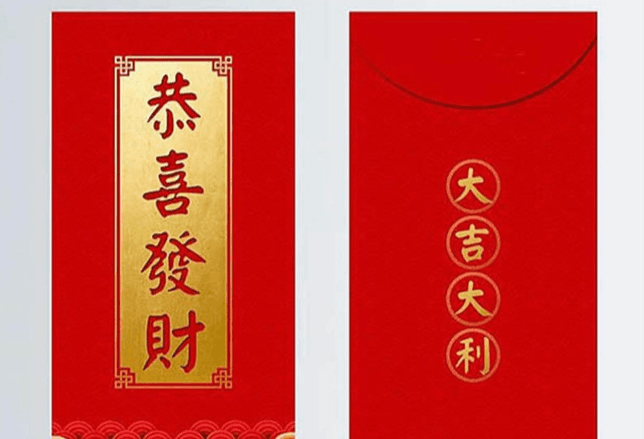
Many Chinese (Red envelopes) during the Spring Festival have printed on.
 ---
## Saying congratulations for achievements: 祝贺 (Zhùhè) and 厉害 (Lìhài)
This is where we split the path between formal recognition and casual, impressed praise.
The word carries a more formal, solemn, and respectful weight than . It’s what you’d see in official awards, diplomatic messages, or written on ceremonial cards. Think of it as “We formally offer our congratulations.” You’d use for monumental, earned achievements—graduating with honors, a huge professional promotion, or a major scientific discovery.
A common structure is:
1. !
---
## Saying congratulations for achievements: 祝贺 (Zhùhè) and 厉害 (Lìhài)
This is where we split the path between formal recognition and casual, impressed praise.
The word carries a more formal, solemn, and respectful weight than . It’s what you’d see in official awards, diplomatic messages, or written on ceremonial cards. Think of it as “We formally offer our congratulations.” You’d use for monumental, earned achievements—graduating with honors, a huge professional promotion, or a major scientific discovery.
A common structure is:
1. !
*We congratulate you!*
2. !
*We express congratulations to you!*
Now, for the moment your friend absolutely crushes their presentation or finally nails that complicated piano piece — that’s the domain of . This word is less about the ceremonial “congratulations” and all about the awestruck “Wow, you’re amazing!”. It translates to “awesome,” “impressive,” or “formidable.” It’s the casual, powerful booster shot of admiration.
1. You’ll often hear it as a standalone exclamation:
!
*Awesome!*
2. Or, to really drive it home:
!
*Too amazing!*
If you’re the type of person who loves giving direct, energetic compliments, you’ll use this one all the time. It acknowledges the skill and effort in a way that feels personal and immediate.
---
## Nailing the way to say congratulations in Chinese on specific occasions
Life’s big events deserve their own specific phrases. Using the generic terms works, but pulling out the perfect situational congratulations shows next-level consideration. Let’s break down a few classics.
For a wedding, is perfectly fine, but you can also say . This poetic phrase means “May you have a harmonious union for a hundred years.” It’s a blessing for lasting happiness.
For a new baby, is again great, but !(Congratulations on becoming mom and dad!) adds that lovely personal touch.
Moving into a new house? Go with !(Congratulations on your move!). These phrases show you recognize the nature of their joy, not just the fact that they’re happy.
And then there’s the New Year. This is where congratulatory culture goes into overdrive. Beyond the famous , you have phrases like:
1.
*Happy New Year*
2.
*May all your wishes be fulfilled.*
3.
*Wish you good health.* (To the elderlies.)
The key here is the act of well-wishing itself. It’s less about a singular achievement and more about ushering in collective good fortune for the year ahead. Basically, you’re not just saying “congrats,” you’re actively hoping good things happen for them.
---
## Want to learn ways to say congratulations immersively?
Immersion is your best friend in learning Mandarin Chinese. What can you do to learn the Chinese expressions for congratulations effectively and immersively? The best choice is to watch TV shows or documentaries about Chinese New Year, or walk through any China Town during Spring Festival!
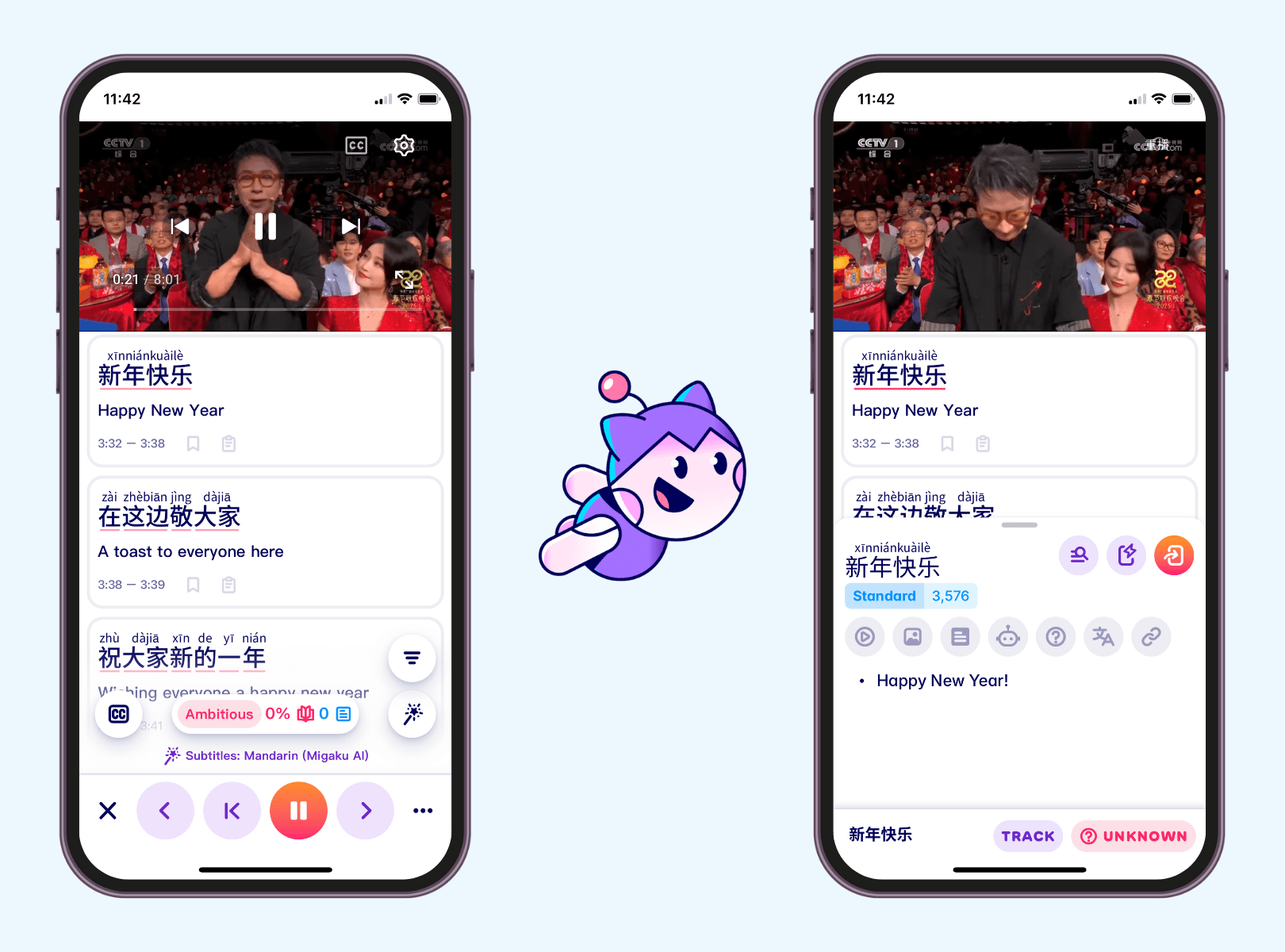
With the videos, Migaku app can help generate Chinese subtitles even when the video does not feature any. For example, Migaku app can generate subtitles for this cut from 2025 (CMG New Year's Gala) with the English translation. You can also click the words or sentences to add them to your flashcard collections and review them later.
The CMG New Year's Gala offers great opportunities for Chinese learners to pick up terms related to congratulations and Spring Festivals. In this cut, you can learn how to congratulate people on the happiness of the New Year!
1. Switch on YouTube and search for Chinese videos with the app.
2. Click "Watch with Migaku", and the magic wand at the lower right corner to generate Chinese subtitles.
3. Click on the new words or sentences in each subtitle and generate flashcards!
 ---
## FAQs
Chinese people say congratulations most commonly with , a versatile phrase for almost any happy occasion. You'll often hear it doubled for extra warmth as ! (Congratulations!). It's the go-to, friendly expression for everything from a personal success to major festivals like the Lunar New Year.
"Gong Xi" is the English spelling for the Chinese word . It directly translates to "Congratulations". This phrase is the fundamental building block for expressing joy for someone's good fortune in Mandarin. It’s an essential, all-purpose term that forms the core of many longer, more specific congratulatory expressions and holiday greetings.
To wish "Gong Xi Fa Cai," you simply say the full phrase: . It literally means "Congratulations, may you get rich". It's the most traditional and popular Lunar New Year greeting, wishing someone prosperity in the coming year. You say it with a smile during festive celebrations.
---
## Smile, and make your congrats sound sincere!
So there you have it. You don't need a vast vocabulary, just a few thoughtful tools. Start with the universal , respect the big moments with , and cheer on skills with . Remember the specific phrases for weddings and new homes, and other occasions. Collect these Chinese vocabulary immersively with shows and documentaries!
> If you consume media in Chinese, and you understand at least some of the messages and sentences within that media, you will make progress. _Period_.
Now go spread some joy!
---
## FAQs
Chinese people say congratulations most commonly with , a versatile phrase for almost any happy occasion. You'll often hear it doubled for extra warmth as ! (Congratulations!). It's the go-to, friendly expression for everything from a personal success to major festivals like the Lunar New Year.
"Gong Xi" is the English spelling for the Chinese word . It directly translates to "Congratulations". This phrase is the fundamental building block for expressing joy for someone's good fortune in Mandarin. It’s an essential, all-purpose term that forms the core of many longer, more specific congratulatory expressions and holiday greetings.
To wish "Gong Xi Fa Cai," you simply say the full phrase: . It literally means "Congratulations, may you get rich". It's the most traditional and popular Lunar New Year greeting, wishing someone prosperity in the coming year. You say it with a smile during festive celebrations.
---
## Smile, and make your congrats sound sincere!
So there you have it. You don't need a vast vocabulary, just a few thoughtful tools. Start with the universal , respect the big moments with , and cheer on skills with . Remember the specific phrases for weddings and new homes, and other occasions. Collect these Chinese vocabulary immersively with shows and documentaries!
> If you consume media in Chinese, and you understand at least some of the messages and sentences within that media, you will make progress. _Period_.
Now go spread some joy!