# How to Introduce Yourself in Mandarin (Phrases + Examples)
> Introduce yourself in Chinese with essential phrases, pronunciation tips, and real conversation examples for both casual and formal situations.
**URL:** https://migaku.com/blog/chinese/how-to-introduce-yourself-in-chinese
**Last Updated:** 2026-03-02
**Tags:** vocabulary, phrases
---
How to introduce yourself when [learning Chinese](https://migaku.com/learn-chinese) is probably the most practical thing you'll learn as a beginner. Seriously, whether you're planning a trip to China, starting a language exchange, or just want to impress your Chinese-speaking friends, nailing your self-introduction opens so many doors. The good news? Chinese introductions follow pretty straightforward patterns once you know the basic building blocks. In this guide, I'll walk you through everything from casual greetings to formal business introductions, complete with the phrases you'll need and how to string them together naturally.
---
## Basic greeting phrases to start your introduction
Before you jump into talking about yourself, you need to know how to say hello.
- The most common greeting you'll hear everywhere is , which literally means "you good" but translates to "hello." Pretty simple, right?
- For more formal situations, especially in business settings, you'd use . The 您 is a respectful form of "you," so this is your go-to when meeting someone older, a boss, or anyone you want to show extra respect to.
Here's something cool: Chinese people don't really say "nice to meet you" the way we do in English. Instead, they say , which means "very happy to know you." You'll hear this a lot in first meetings.
If you're greeting multiple people, just change 你好 to . The 们 makes it plural. Easy enough.
---
## How to introduce yourself in Chinese with your name
Alright, here's where things get interesting. When Chinese people introduce themselves, they follow a specific pattern that feels backwards to English speakers at first.
> The most common way to introduce yourself is: + your name.
This literally means "I am called" and it's super casual and friendly. For example, 我叫 Sarah. You can just plug your English name right in there.
> For a slightly more formal approach, use + your name.
This translates to "my name is" and works great in professional settings or when you want to sound a bit more polished.
> Here's the thing about Chinese names though. In Chinese culture, **the family name comes first, then the given name**.
So if you meet someone named , 王 is their last name and 明 is their first name. When introducing yourself with a Chinese name, remember this order matters.
If you want to be extra polite or formal (like in a job interview), you can say + your family name, then follow up with your full name. For example: . This pattern is common in business introductions.
---
## Talking about where you're from
After your name, people usually want to know where you're from. The sentence structure here is super straightforward.
> For nationality, use: + country name + .
The 人 means "person," so you're literally saying "I am (country) person." Examples:
- 。
*I'm American.*
- 。
*I'm British.*
- 。
*I'm Canadian.*
- 。
*I'm Australian.*
> If you want to mention your hometown specifically, say: + city name.
This means "I come from." For example, means "I come from New York."
> You can also use + place + , which also means "I come from."
So works just as well.
---
## Describing your profession and what you do
Talking about your job or studies is usually the next part of any introduction.
> The basic pattern is + occupation.
Common professions you might need:
- 。
*I'm a student.*
- 。
*I'm a teacher.*
- 。
*I'm a doctor.*
- 。
*I'm an engineer.*
- 。
*I'm a lawyer.*
> For students, you'll often want to mention what you're studying. Use: + subject.
For example, means "I study Chinese."
> If you work at a specific company, say: + company name + .
The 在 means "at" and 工作 means "work." So means "I work at Google."
---
## Sharing personal details and hobbies
Once you've covered the basics, you might want to share a bit more about yourself. This makes conversations feel more natural and friendly.
> To talk about your age (though Chinese people are way more comfortable asking about age than we are in Western cultures), use: + age + .
For example, means "I'm 25 years old."
> For hobbies, the phrase is: + activity. This means "I like." Some examples:
- 。
*I like reading.*
- 。
*I like sports.*
- 。
*I like traveling.*
- 。
*I like music.*
You can string multiple hobbies together with , which means "and." Like: .
---
## Formal vs casual introduction patterns
The context really matters when you introduce yourself in Chinese. What works at a party with friends won't fly in a business meeting.
**For casual situations** (meeting friends, language exchange partners, social gatherings), keep it simple and warm:
-
This relaxed pattern feels natural and friendly. You can even drop some parts if the conversation flows that way.
**For formal situations** (job interviews, business meetings, academic settings), add more structure and use polite vocabulary:
-
Notice the 您 instead of 你? That's the formal "you" that shows respect. Also, ending with 很高兴认识您 (very happy to meet you) adds a professional polish.
**In business contexts**, you might also want to mention your position more specifically:
-
The 的 here shows possession, like "I am (company)'s (position)."
---
## Putting it all together with conversation scripts
Let's look at some real conversation examples so you can see how these pieces fit together naturally.
**Casual introduction at a language exchange**:
- A:
*Hello! I'm Tom. What's your name?*
- B:
*Hi! I'm Li Ming. What nationality are you?*
- A:
*I'm American, I'm from San Francisco. How about you?*
- B:
*I'm Chinese. I'm studying English.*
- A:
*That's great! I'm studying Chinese.*
**Formal business introduction**:
- A: 。
*Hello! I'm Sarah Johnson. I'm Canadian. I work at Microsoft. Nice to meet you.*
- B: 。
*Hello! I'm Wang Wei. I'm the manager of this company. Nice to meet you.*
**Student introduction in class**:
-
*Hello everyone! I'm Emma. I'm British, I'm from London. I'm 22 years old. I study Chinese at university. I really like Chinese culture. I also like traveling and watching movies. Nice to meet everyone!*
---
## Common phrases to wrap up your introduction
After you introduce yourself, you'll want some phrases to keep the conversation going or politely close things out.
- is a super useful phrase that means "please take care of me" or "I look forward to working with you." It's humble and polite, perfect for business settings or when meeting someone you'll interact with regularly.
- means "I hope we can become friends." This works great in casual settings when you want to express friendliness.
- If someone asks you a question and you want to return it, just add ? at the end. This means "how about you?" or "and you?"
- To express that you're still learning Chinese, say: , which means "my Chinese isn't very good." People appreciate the humility and will usually be more patient with you.
---
## Practice makes perfect with real conversations
1. The best way to get comfortable with Chinese introductions is to practice them out loud. Seriously, talking to yourself in the mirror feels silly but actually helps your brain process the sentence patterns.
2. Try recording yourself giving your introduction and listening back. You'll catch pronunciation issues and awkward pauses that you can smooth out.
3. Language exchange apps and online tutoring platforms give you chances to practice with real people. The first few times will feel awkward, but that's totally normal. Every Chinese learner has stumbled through their first self-introduction.
4. If you're in a Chinese class, volunteer to go first when practicing introductions. Getting the nervousness out of the way early helps, and you'll remember the phrases better after using them in front of people.
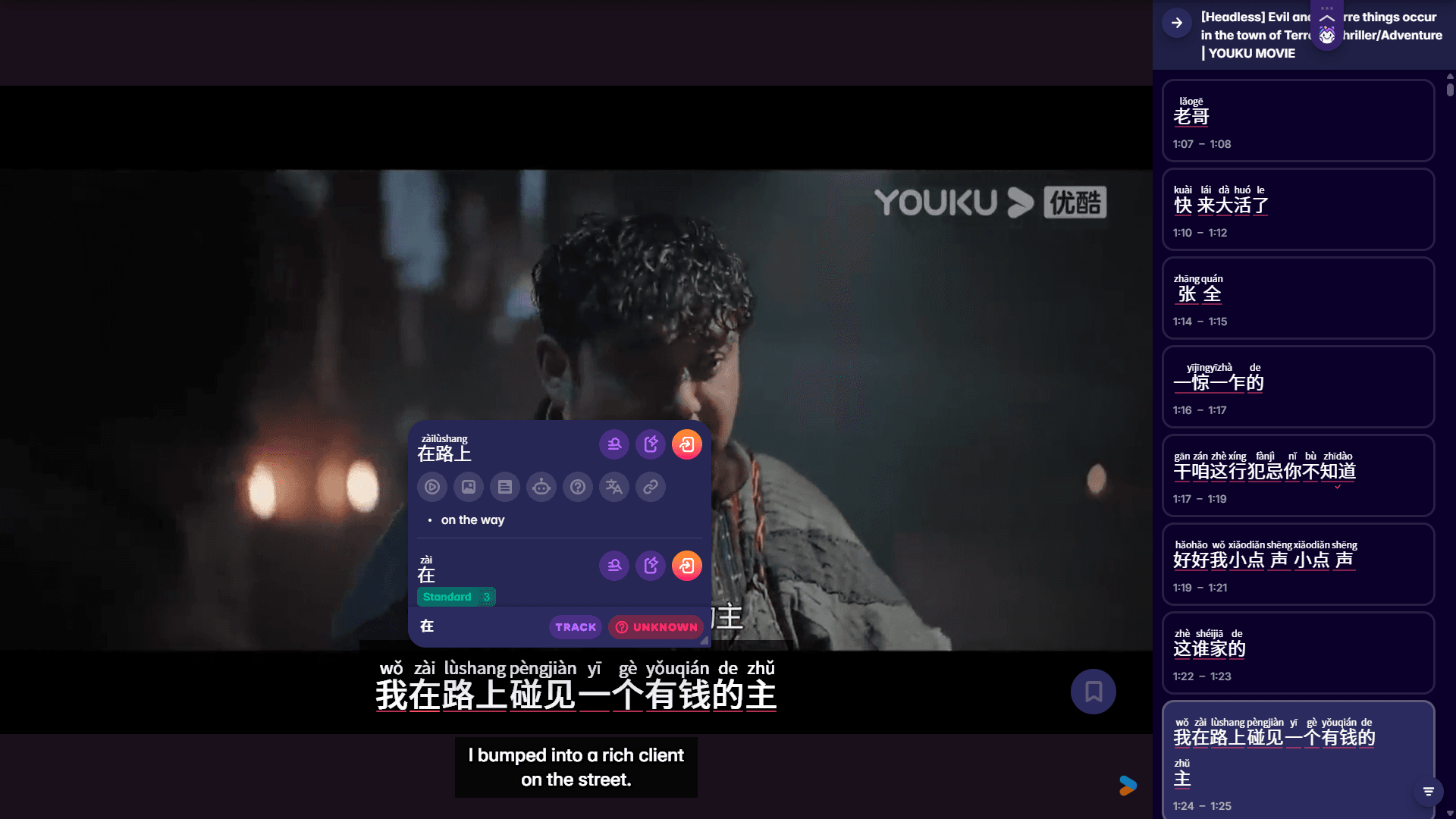
Anyway, if you want to level up your Chinese learning beyond just introductions, Migaku's browser extension and app let you learn vocabulary from real Chinese content like shows, movies, and articles. You can look up words instantly and create flashcards automatically from stuff you actually want to watch or read. There's a 10-day free trial if you want to check it out.
 ---
## Introduce yourself in Mandarin, adding a personal touch
You don't have to follow the online templates of self-introduction. In fact, adding your personal touch to a self-introduction can leave a better and deeper impression on your audience. For example, try adding something more specific about what you enjoy in Chinese culture, which can be (Chinese historical costumes), (Chongqing hotpots), (*Empresses in the Palace*), etc. Chinese people will find it more relatable. And there is no better way to explore your personal interests than media consumption, in which you can explore all the engaging Chinese culture!
> If you consume media in Chinese, and you understand at least some of the messages and sentences within that media, you will make progress. _Period_.
Culture lives in media.
---
## Introduce yourself in Mandarin, adding a personal touch
You don't have to follow the online templates of self-introduction. In fact, adding your personal touch to a self-introduction can leave a better and deeper impression on your audience. For example, try adding something more specific about what you enjoy in Chinese culture, which can be (Chinese historical costumes), (Chongqing hotpots), (*Empresses in the Palace*), etc. Chinese people will find it more relatable. And there is no better way to explore your personal interests than media consumption, in which you can explore all the engaging Chinese culture!
> If you consume media in Chinese, and you understand at least some of the messages and sentences within that media, you will make progress. _Period_.
Culture lives in media.