HSK 5 Guide: Complete Guide for the Chinese Proficiency Test
Last updated: March 2, 2026
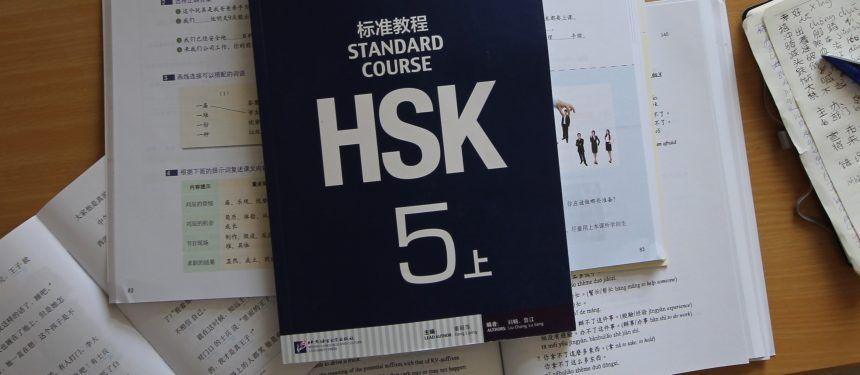
So you're thinking about taking the HSK 5 exam? Good choice. This level sits right in the middle of the Chinese proficiency ladder and proves you can handle Mandarin in real situations, not just order dumplings or ask for directions. The test covers around 2,500 vocabulary words and expects you to understand fairly complex passages, both written and spoken. Whether you're aiming for university admission in China, job opportunities, or just want to validate your Chinese skills, this guide breaks down everything you need to know about preparing for and passing HSK 5.
What is HSK 5
HSK 5 represents the second-highest level in the traditional HSK 2.0 system (the framework most test centers still use as of early 2026). When you pass this level, you can read Chinese newspapers and magazines, watch Chinese films and TV shows with decent comprehension, and give a full-length speech in Mandarin.
The Hanyu Shuiping Kaoshi (HSK) system was created to standardize Chinese language testing for non-native speakers. HSK 5 specifically targets intermediate to advanced learners who've already worked through HSK 4 and are ready to tackle more sophisticated content.
Here's the thing: HSK 5 asks you to know 2,500 words total (including the 1,200 from HSK 4). That might sound like a lot, but it's actually where Chinese starts getting genuinely useful for consuming native content.
New HSK 3.0 changes coming in 2026
Big changes are rolling out after 31st January 2026. The HSK system is expanding from 6 levels to 9 levels under the new HSK 3.0 framework. HSK 3.0 Level 7-9 expects around 11,000 words.
The test format is also evolving. HSK 3.0 adds more emphasis on practical communication skills and real-world language use. There's greater integration of speaking and writing tasks, plus some digital testing options.
Has HSK 5 guidelines changed already? As of early 2026, most test centers still administer the HSK 2.0 version. The full rollout of HSK 3.0 happens mid-2026, but both versions will likely coexist for a transition period.
Should you wait for HSK 3.0 or take HSK 5 now? If you're ready to test in the first half of 2026, go ahead with the current HSK 5. The certificate remains valid and recognized. If you're planning to test after July 2026, you'll probably want to prepare for the new format instead.
Official syllabi and sample tests for HSK 3.0 are available on the China Education Exchange website. The structure looks similar but with expanded content and higher vocabulary targets.
HSK 5 test structure and format
The exam has three main sections: listening, reading, and writing. Total test time runs about 125 minutes, and you'll answer 100 questions.
Listening section (45 questions, 30 minutes)
- Part 1 gives you 20 brief dialogues. You hear each one once, then pick the correct answer from four options. These conversations happen fast, so you need solid comprehension skills.
- Part 2 presents 25 longer passages, also played once. The topics get more abstract here: news reports, interviews, short lectures. You'll answer one or multiple questions per passage from four multiple-choice options.
The listening section trips up a lot of people because the speakers talk at natural speed. No slow, carefully enunciated textbook Chinese here.
Reading section (45 questions, 45 minutes)
- Part 1 has 15 questions where you match sentence fragments or fill in blanks. You're testing grammar patterns and vocabulary in context.
- Part 2 gives you 10 short passages (100-200 characters each) with questions.
- Part 3 presents 20 questions based on longer reading passages. These texts run 600-1,000 characters and cover topics like culture, science, social issues, and daily life. The questions test whether you actually understood the main ideas and details.
Writing section (10 questions, 40 minutes)
- Part 1 asks you to complete eight sentences using provided words. You're given 5-6 words and need to arrange them into grammatically correct sentences that make sense.
- Part 2 is the essay. You write the first essay with the provided five words, and the second essay with the provided picture. This tests whether you can produce coherent written Chinese on the spot.
HSK 5 vocabulary requirements
You need to master 2,500 words for HSK 5. That includes all 1,200 words from HSK 4, plus 1,300 new ones.
The vocabulary at this level gets way more interesting. You're moving beyond basic conversational stuff into words for abstract concepts, emotions, social issues, and specialized topics. Words like (abstract), (efficiency), and (predict) show up regularly.
Grammar patterns also level up significantly. You'll encounter advanced structures like (not only... but also), (no matter... all), and various complement structures that add nuance to your sentences.
The official HSK 5 vocabulary list is publicly available, and most study materials organize words by frequency and topic. I'd recommend learning vocabulary in context rather than isolated word lists. When you see how words actually get used in sentences and passages, they stick way better.

Scoring and passing requirements
The test is scored out of 300 points total: 100 for listening, 100 for reading, 100 for writing.
To pass HSK 5, you need 180 points overall (60% correct). You don't need to hit 60% in each individual section, just across the whole exam. So if you're stronger at reading than listening, that can balance out.
Your certificate stays valid for two years from the test date. Some universities and employers accept older certificates, but official validity runs for 24 months.
Scoring happens pretty quickly. Results usually come out about a month after your test date, and you can check them online before the physical certificate arrives.
Best study materials and resources to pass the HSK 5 exam
Which HSK 5 guide is best? A few resources consistently get recommended.
- The official HSK Standard Course textbooks (published by Beijing Language and Culture University Press) remain the gold standard. HSK Standard Course 5 covers all required vocabulary and grammar with practice exercises that mirror the actual test format.
- For vocabulary building, the HSK 5 word lists on apps like Pleco, Anki, or Skritter help with systematic memorization. Spaced repetition makes a huge difference when you're tackling 1,300+ new words.
- Practice tests matter more than you'd think. The official HSK 5 mock tests show you exactly what to expect. Do at least 3-5 full practice tests under timed conditions before your exam date.
- For listening practice, ChinesePod's intermediate and upper-intermediate lessons work well. Chinese podcasts like (Slow Chinese) bridge the gap between textbook audio and native-speed content.
- Reading practice should include real Chinese content: news sites like (People's Daily) simplified articles, short stories, and blog posts. The more authentic material you consume, the better prepared you'll be for the reading section.
Study plan and preparation tips for passing the HSK 5
Here's a practical approach that works for most people preparing for HSK 5.
- Month 1-2: Focus on vocabulary acquisition. Learn 20-30 new words daily using spaced repetition. Review HSK 4 vocabulary to ensure your foundation is solid.
- Month 3-4: Add grammar patterns and start consuming longer content. Read one article or short passage daily. Listen to intermediate Chinese podcasts during commutes or workouts.
- Month 5-6: Intensive practice test phase. Take one full mock test weekly. Review wrong answers carefully to identify weak areas. Practice writing essays on common topics.
Common mistakes to avoid
- Don't skip the writing practice. So many Chinese learners focus entirely on listening and reading, then bomb the writing section. You need to produce Chinese regularly to prepare for the HSK 5.
- Time management kills people on this exam. The reading section especially moves fast. Practice mock exams within time limits so you don't run out of time on test day.
- Relying purely on textbook Chinese is another trap. The exam uses natural language that sometimes differs from textbook examples. Consuming authentic content so nothing on the test surprises you is one of the essential preparation strategies.
- Cramming HSK exam vocabulary the week before doesn't work at this level. You need time for words to move from short-term to long-term memory. Consistent daily study beats marathon weekend sessions.
- Ignoring your weak areas feels comfortable but hurts your score. If listening is your weakness, spend extra time there even though it's less fun than reading.
Taking the test: Practical tips
- Register early. Test seats fill up fast in major cities, especially before university application deadlines. Book your spot at least 1 month in advance.
- On test day, bring your passport or ID, admission ticket, and several pencils. You'll also need an eraser. Most test centers don't allow electronic devices in the testing room.
- The listening section plays audio only once. Pay close attention to the instructions for each section. Take notes during listening passages if it helps you remember details.
- For the reading section, skim questions before reading the passage. This helps you know what information to look for.
- On the writing section, spend a few minutes outlining your essay before you start writing. A clear structure makes your response way more coherent.
Anyway, if you want to build your Chinese grammar and vocabulary with real content while prepping for HSK 5, Migaku's browser extension and app let you look up words instantly while reading articles or watching videos. Makes immersion learning way more practical than bouncing between textbooks and dictionaries. There's a 10-day free trial if you want to check it out.

FAQs
After passing the HSK exam: What's next?
Passing HSK 5 opens up real opportunities. You qualify for many Chinese university programs, especially at the undergraduate level. Some graduate programs accept HSK 5, though competitive ones often want HSK 6. The best part about passing HSK 5 level? You can finally enjoy Chinese content without constant dictionary lookups. Movies, novels, podcasts, all become genuinely accessible. That's where language learning gets really rewarding.
If you consume media in Chinese, and you understand at least some of the messages and sentences within that media, you will make progress. Period.
Understanding more makes learning rewarding.