Does Mandarin Have an Alphabet? The Truth About Chinese Characters and Pinyin
Last updated: April 27, 2026
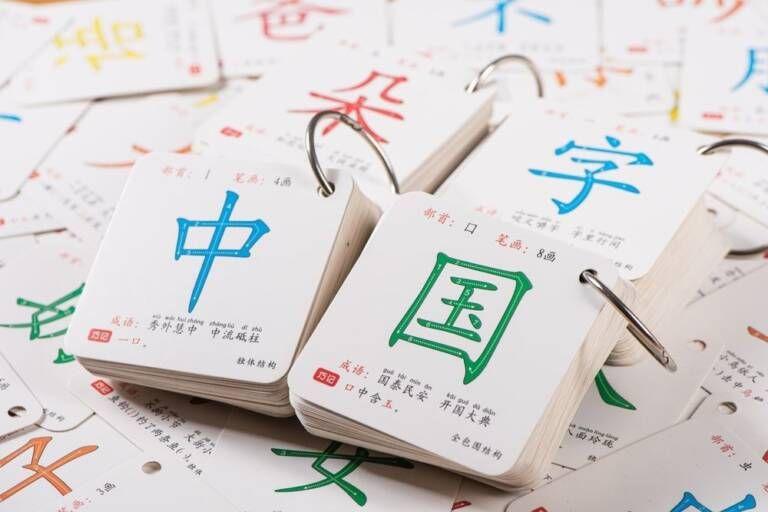
Interested in learning Chinese and wondering about the Mandarin alphabet? Here's the thing: Mandarin doesn't actually have an alphabet in the way English does. There are no letters you can string together to form words. Instead, the Chinese writing system uses thousands of individual characters, each representing a meaning or syllable. Let me walk you through exactly how the Mandarin writing system functions, why there's no Chinese alphabet, and how learners actually tackle this unique writing system.
- Understanding the Chinese writing system
- The historical evolution of Chinese characters
- Simplified vs Traditional Chinese characters
- How characters are constructed: Radicals and components
- Stroke order rules
- Chinese pinyin: The phonetic system for Mandarin Chinese
- Learning to read and write Chinese
- Practical tips for learning Chinese characters
- FAQs
Understanding the Chinese writing system
The Chinese language uses what linguists call a logographic or morphosyllabic writing system. Each Chinese character represents a morpheme, which is the smallest unit of meaning in a language. Unlike an alphabet where letters represent individual sounds, characters in Chinese represent entire concepts or syllables with meaning attached.
For example, the character 人 (rén) means "person." You can't break it down into smaller sound units like you would with the English word "person" (p-e-r-s-o-n). The entire character 人 functions as one complete unit representing both the sound "rén" and the meaning "person."
This fundamental difference is why searching for a "Mandarin alphabet" leads to confusion. The writing system simply operates on different principles than alphabetic languages like English, Spanish, or Arabic.
How many characters exist
Here's where things get wild. Comprehensive Chinese dictionaries contain over 50,000 characters accumulated throughout history. Before you panic, though, you definitely don't need to know all of them. Most Chinese speakers use around 3,000 to 4,000 characters in daily life. To achieve basic literacy and read a newspaper, you need roughly 2,500 to 3,000 characters.
The HSK (Chinese proficiency test) requires about 11,000 characters for the highest level. So while the total number sounds massive, the practical number you need to learn is much more manageable.
The historical evolution of Chinese characters
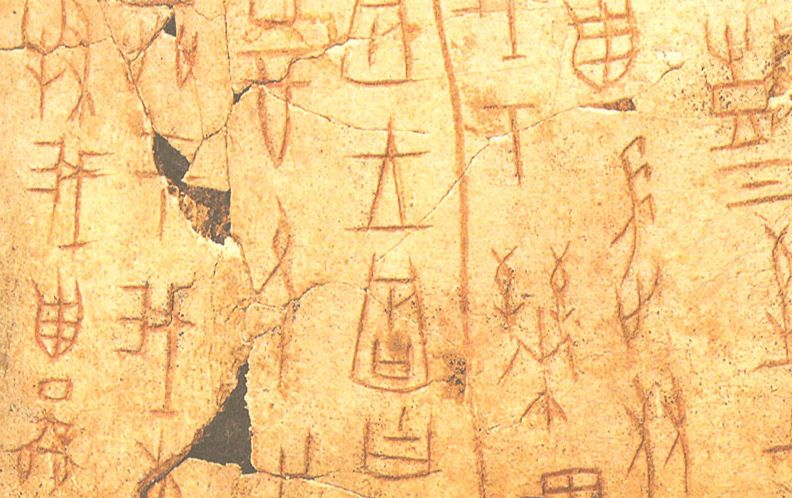
Chinese characters have an incredibly long history, dating back over 3,000 years. The earliest confirmed Chinese writing comes from oracle bones (甲骨文 , jiǎgǔwén) from the Shang Dynasty (around 1200 BCE). Ancient Chinese people would inscribe questions on turtle shells or animal bones, heat them until they cracked, and interpret the cracks as answers from ancestors or gods.
These early characters were pictographic, meaning they literally looked like what they represented. The character for "sun" 日 (rì) started as a circle with a dot in the middle. The character for "mountain" 山 (shān) resembled mountain peaks. Over thousands of years, these pictographs evolved and became more stylized and abstract.
By the time we get to modern Chinese, most characters combine multiple elements. They're no longer simple pictures but complex symbols built from component parts called radicals.
Simplified vs Traditional Chinese characters
In the 1950s, the Chinese government implemented a major reform to improve literacy rates. They introduced simplified Chinese characters (简体字 , jiǎntǐzì) to make writing easier to learn and faster to write. This involved reducing the number of strokes in many complex characters.
For example:
- Traditional: 學 (to learn)
- Simplified: 学
The simplified version has 8 strokes instead of 16. Much faster to write by hand.
Mainland China and Singapore primarily use simplified characters today. Hong Kong, Taiwan, and many overseas Chinese communities continue using traditional Chinese characters (繁體字 , fántǐzì). Both systems use the same spoken Mandarin (with some vocabulary differences), but the written forms look different.
If you're just starting to learn Chinese, simplified characters are generally easier and more widely used. Most learning resources focus on simplified Chinese first.
How characters are constructed: Radicals and components
Even though Chinese doesn't have an alphabet, characters aren't random drawings. They follow logical construction principles using building blocks called radicals (部首 , bùshǒu).
Radicals are fundamental components that appear across multiple characters. There are 214 traditional radicals, though you'll encounter about 100 frequently. Radicals often provide clues about a character's meaning or pronunciation.
For example, the radical 氵(three drops of water) appears in characters related to water:
- 河 (hé) means "river"
- 海 (hǎi) means "sea"
- 湖 (hú) means "lake"
Some characters combine a meaning radical with a phonetic component that hints at pronunciation. The character 妈 (mā) meaning "mother" combines the radical 女 (woman) with 马 (mǎ, horse) as a phonetic hint. The horse part doesn't mean the character has anything to do with horses, it just suggests the pronunciation "ma."
Understanding radicals makes learning characters way more systematic. You start recognizing patterns instead of memorizing thousands of random symbols.
Stroke order rules
Chinese characters must be written following specific stroke order rules. This matters more than you might think. Proper stroke order makes characters look balanced, helps with handwriting speed, and makes it easier to count strokes when looking up characters in a dictionary.
The basic stroke order principles are:
- Top to bottom
- Left to right
- Horizontal before vertical when strokes cross
- Outside before inside
- Inside before closing strokes
Getting stroke order right from the beginning builds good habits. When you write characters correctly, they naturally look more authentic, and you'll recognize them more easily when reading handwritten Chinese.
Chinese pinyin: The phonetic system for Mandarin Chinese
Okay, so if there's no Chinese alphabet, how do Chinese children learn to read? How do you type Chinese on a keyboard? How do foreigners learn to pronounce Chinese words?
The answer is pinyin (拼音 , pīnyīn), which literally means "spell sound." Pinyin is a romanization system that uses the Latin alphabet to represent Mandarin pronunciation. It was developed in the 1950s and officially adopted in 1958.
Pinyin gives every Chinese character a phonetic spelling using letters you already know. For example:
- 你好 is written as "nǐ hǎo" (hello)
- 谢谢 is written as "xièxie" (thank you)
- 中国 is written as "Zhōngguó" (China)
Here's the important part: pinyin is a learning tool, not the actual writing system. Chinese speakers don't write in pinyin for regular communication. It's used for teaching pronunciation, typing on computers and phones, and helping foreigners learn Mandarin.
How pinyin works
Pinyin represents each Chinese syllable using consonants and vowels from the Latin alphabet, plus tone marks.
💡Every Mandarin syllable follows a pattern: an optional initial consonant, a required vowel or vowel combination (called the final), and a tone.
Mandarin has four main tones plus a neutral tone. The tone is marked above the vowel:
- First tone (ā): high and flat
- Second tone (á): rising
- Third tone (ǎ): falling then rising
- Fourth tone (à): sharp falling
- Neutral tone (a): unmarked, short and light
The same syllable with different tones means completely different things:
- mā (妈 ) means "mother"
- má (麻 ) means "hemp" or "numb"
- mǎ (马 ) means "horse"
- mà (骂 ) means "to scold"
Pinyin pronunciation doesn't always match English pronunciation of the same letters. The pinyin "x" sounds like "sh" in "sheep," "q" sounds like "ch" in "cheese," and "zh" sounds like "j" in "jump." You need to learn these specific pinyin sounds to pronounce Mandarin correctly.
Learning to read and write Chinese
So how do people actually learn Chinese without an alphabet? Chinese children spend years in school learning characters through repetition and practice. They learn stroke order, practice writing characters hundreds of times, and gradually build their character vocabulary.
Literacy in Chinese requires memorizing the visual form, pronunciation, and meaning of thousands of individual characters. It's a different cognitive process than learning an alphabetic system where you can sound out new words based on letter combinations.
For Chinese speakers, achieving full literacy takes longer than for speakers of alphabetic languages. Elementary education in China heavily emphasizes character learning. Students continuously add to their character knowledge throughout their schooling.
The literacy rate in mainland China is around 97%, which is impressive given the complexity of the writing system. Singapore, which also uses simplified Chinese, has similarly high literacy rates among Chinese speakers.
Practical tips for learning Chinese characters
Learning thousands of characters sounds overwhelming, but here are strategies that actually work:
- Start with high-frequency characters. The most common 1,000 characters cover about 90% of everyday written Chinese. Focus on these first rather than trying to learn obscure characters you'll rarely encounter.
- Learn radicals early. Understanding the 100 most common radicals gives you a framework for breaking down complex characters. You'll start seeing familiar components everywhere.
- Use spaced repetition. Flashcard apps that use spaced repetition algorithms help move characters from short-term to long-term memory efficiently. Reviewing characters at optimal intervals makes a huge difference.
- Practice writing by hand. Even though most typing is digital now, physically writing characters reinforces memory. The motor memory helps you remember character structure.
- Learn words, not just individual characters. Most Chinese words combine two or more characters. Learning 学 (xué, to learn) and 生 (shēng, to give birth/student) separately is useful, but learning them together as 学生 (xuésheng, student) teaches you how characters combine into actual vocabulary.
- Read extensively. Once you know a few hundred characters, start reading simple texts with pinyin support. Seeing characters in context helps them stick way better than isolated flashcard study.
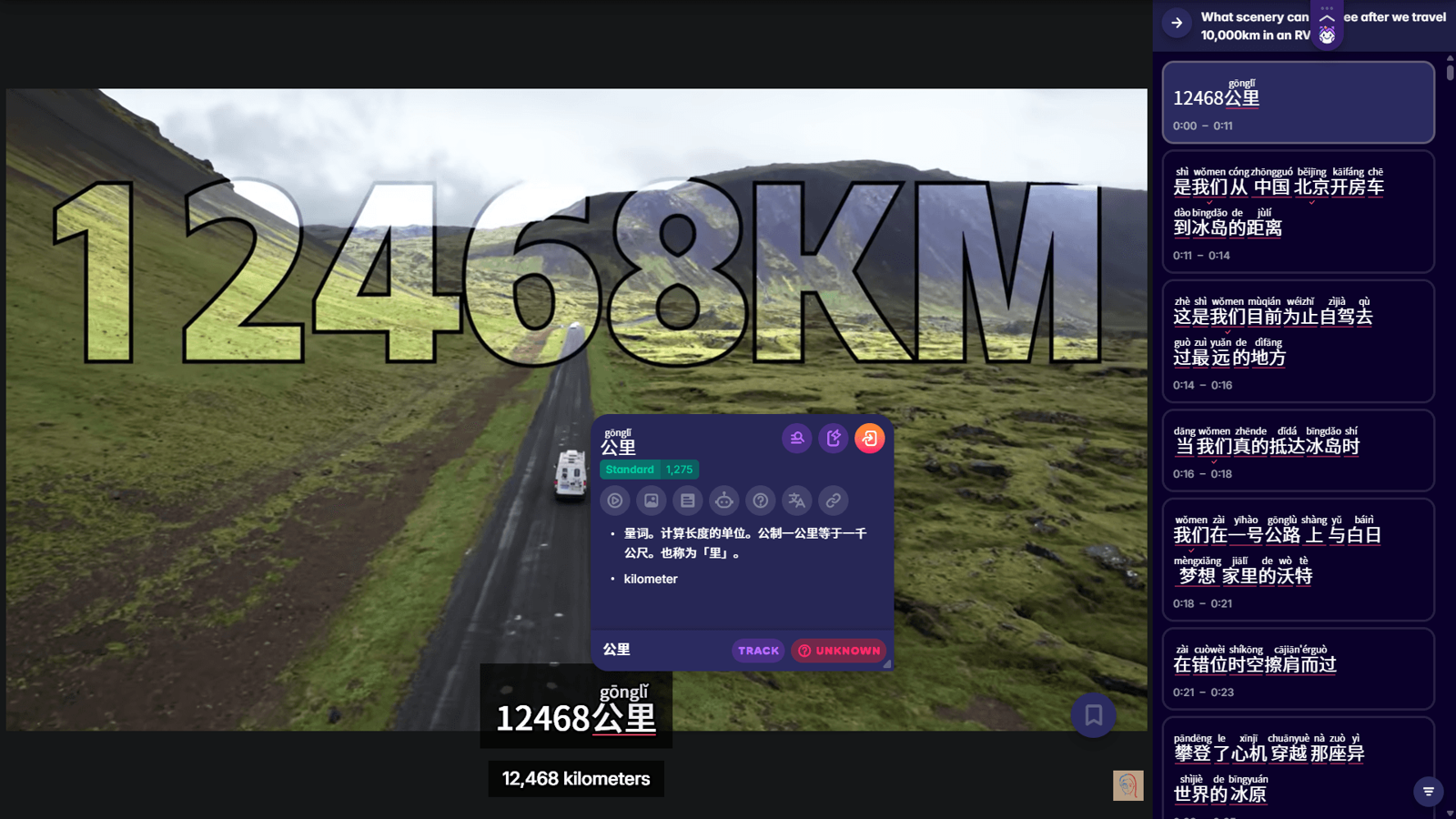
Anyway, if you want to actually learn Mandarin through immersion with real Chinese content, Migaku's browser extension and app let you look up characters and words instantly while watching shows or reading articles. You can see pinyin, definitions, and save vocabulary without interrupting your flow. There's a 10-day free trial if you want to check it out.
FAQs
The writing system is the biggest hurdle. Learning thousands of characters with no alphabet to fall back on requires sustained effort and good memory techniques.
The tonal nature of Mandarin also trips up many English speakers at first, since English doesn't use tones to distinguish word meanings.
However, Mandarin grammar is actually pretty straightforward. There are no verb conjugations, no gendered nouns, no plural forms, and relatively simple sentence structure. Once you get past the characters and tones, the language has some learner-friendly features.
Getting started with Mandarin
If you're ready to learn Mandarin despite the lack of an alphabet, start with pinyin to get comfortable with pronunciation and tones. Begin learning high-frequency characters alongside basic vocabulary and grammar. Use a mix of reading, writing, listening, and speaking practice. Immersion through media (shows, podcasts, videos) helps tremendously once you have a foundation.
If you consume media in Chinese, and you understand at least some of the messages and sentences within that media, you will make progress. Period.
No shortcuts. Just steady steps.