Basic Japanese Phrases Every Beginner Should Know
Last updated: April 29, 2026

So you're heading to Japan or just want to learn some basic Japanese phrases? Smart move. Knowing even a handful of common expressions can transform your experience from awkward pointing and Google Translate fumbling to actual human interaction. I'm going to walk you through the most useful Japanese expressions you'll hear and use constantly, organized by situation so you can remember them when it counts.
Greetings and hellos basics in Japanese language
Let's start with the obvious stuff. Greetings in Japan follow specific patterns depending on the time of day and level of formality. You'll use these every single day.
- おはようございます (Ohayou gozaimasu) means "good morning" and you'll hear it everywhere before about 10 AM. The casual version is just おはよう (Ohayou), which works fine with friends or family.
- こんにちは (Konnichiwa) is your standard "hello" or "good afternoon." This one gets used a lot by tourists because it works in most daytime situations. Locals use it too, especially when greeting someone they don't know well.
- こんばんは (Konbanwa) means "good evening" and you'd use it once the sun starts going down. Pretty straightforward.
- おやすみなさい (Oyasuminasai) is "good night" when you're actually heading to bed. Don't confuse this with konbanwa, which is more like an evening greeting when you arrive somewhere.
- When you're leaving, you've got さようなら (Sayonara), but honestly, Japanese people don't use this as much as you'd think. It feels pretty final, like you won't see that person for a while. More common is じゃあね (Ja ne) or またね (Mata ne) for casual "see you later" vibes.
Useful phrases for politeness and thank you
Japanese culture puts huge emphasis on politeness, so these phrases come up constantly. You'll sound way more natural if you use them appropriately.
- ありがとうございます (Arigatou gozaimasu) is your formal "thank you." The casual version is just ありがとう (Arigatou). Add どうも (Domo) in front for extra emphasis: どうもありがとうございます (Domo arigatou gozaimasu).
- すみません (Sumimasen) is incredibly versatile. It means "excuse me," "sorry," and "thank you" depending on context. Need to get someone's attention at a restaurant? Sumimasen. Accidentally bumped into someone on the train? Sumimasen. Someone held the door for you? Also sumimasen. This phrase will become your best friend in Japan.
- ごめんなさい (Gomen nasai) is a more direct apology when you've actually done something wrong. The casual version is ごめん (Gomen). Use this when sumimasen feels too light for the situation.
- お願いします (Onegaishimasu) roughly means "please" but it's more like "I humbly request this." You'll use it when asking for something or making a request. At a restaurant, after ordering, you might say this to confirm your order.
- どうぞ (Douzo) means "please go ahead" or "here you are" when offering something to someone. Super useful when holding doors or passing items.
Useful Japanese phrases for getting around
Navigation is where knowing some Japanese phrases really pays off. Not everyone in Japan speaks English, especially outside major tourist areas in Tokyo or Osaka.
- これはどこですか (Kore wa doko desu ka) means "where is this?" Point to something on a map or your phone and locals will usually help you out.
- 駅はどこですか (Eki wa doko desu ka) asks "where is the train station?" Replace 駅 (eki) with whatever you're looking for: トイレ (toire) for bathroom, レストラン (resutoran) for restaurant, ホテル (hoteru) for hotel.
- いくらですか (Ikura desu ka) means "how much is it?" Essential for shopping at places without clear price tags.
- 英語が話せますか (Eigo ga hanasemasu ka) asks "do you speak English?" The が (ga) particle here marks the subject. Sometimes just asking this question prompts someone who does speak English to come help you.
- わかりません (Wakarimasen) means "I don't understand." Pair this with すみません (sumimasen) and people will usually try to help you figure things out.
- もう一度お願いします (Mou ichido onegaishimasu) is "one more time please" when you need someone to repeat something. Super helpful when you're still training your ear to catch spoken Japanese.
Essential Japanese phrases for dining
Food is a huge part of traveling to Japan, and knowing restaurant phrases makes the whole experience smoother.
- いただきます (Itadakimasu) is what you say before eating. It's like expressing gratitude for the meal. Everyone says this, and you'll hear it constantly.
- ごちそうさまでした (Gochisousama deshita) is what you say after finishing a meal, thanking whoever prepared it. The casual version is ごちそうさま (Gochisousama).
- おいしい (Oishii) means "delicious." Say this while eating and the chef or server will appreciate it. Add とても (Totemo) in front for "very delicious."
- おすすめは何ですか (Osusume wa nan desu ka) asks "what do you recommend?" This works great when you can't read the menu or want to try something local.
- これください (Kore kudasai) means "this please." Point at a menu item or a dish someone else is eating and use this phrase. Simple and effective.
- お水ください (Omizu kudasai) asks for water. 水 (Mizu) is water, and the お (O) prefix makes it polite. Replace 水 (mizu) with ビール (Biiru) for beer or お茶 (Ocha) for tea.
- お会計お願いします (Okaikei onegaishimasu) means "check please." You'll need this because in Japan, you typically don't get the bill until you ask for it.
Emergency phrases and important questions
Hopefully you won't need these, but knowing emergency phrases gives you peace of mind when traveling.
- 助けて (Tasukete) means "help!" In a serious emergency, yell this and people will come running.
- 病院はどこですか (Byouin wa doko desu ka) asks "where is the hospital?" 病院 (Byouin) is hospital.
- 薬はありますか (Kusuri wa arimasu ka) means "do you have medicine?" The は (wa) particle marks the topic of your sentence. Useful at pharmacies.
- 警察を呼んでください (Keisatsu o yonde kudasai) means "please call the police." 警察 (Keisatsu) is police.
- 大丈夫です (Daijoubu desu) means "I'm okay" or "it's fine." You can also use this as a polite refusal when someone offers you something you don't want.
- わかります (Wakarimasu) means "I understand." The opposite of わかりません (wakarimasen) I mentioned earlier.
Practical tips for using these Japanese words
- Start with the greetings and politeness phrases. Master ありがとうございます, すみません, and こんにちは before anything else. These three alone will carry you through tons of interactions.
- Practice the pronunciation before your trip. Japanese pronunciation is pretty consistent once you learn the basics. Each syllable gets equal stress, and vowels sound the same every time. The "u" at the end of words like です and ます is often barely pronounced, almost silent.
- Don't stress about particles like は and が too much. Yes, they're important for proper grammar, but if you mess them up, people will still understand you from context. Focus on getting the main words right first.
- Combine phrases as you get more comfortable. Once you know すみません and 駅はどこですか, you can naturally string them together: "すみません, 駅はどこですか?" for "Excuse me, where is the train station?"
- Listen to how locals use these phrases and copy their rhythm and intonation. You'll pick up on subtle things like when to bow slightly while saying ありがとうございます or how to make すみません sound more apologetic versus attention-getting.
Anyway, if you want to move beyond basic phrases and actually learn Japanese through immersion, Migaku's browser extension and app let you look up words instantly while watching Japanese shows or reading articles. Makes learning from real content way more practical. There's a 10-day free trial if you want to check it out.
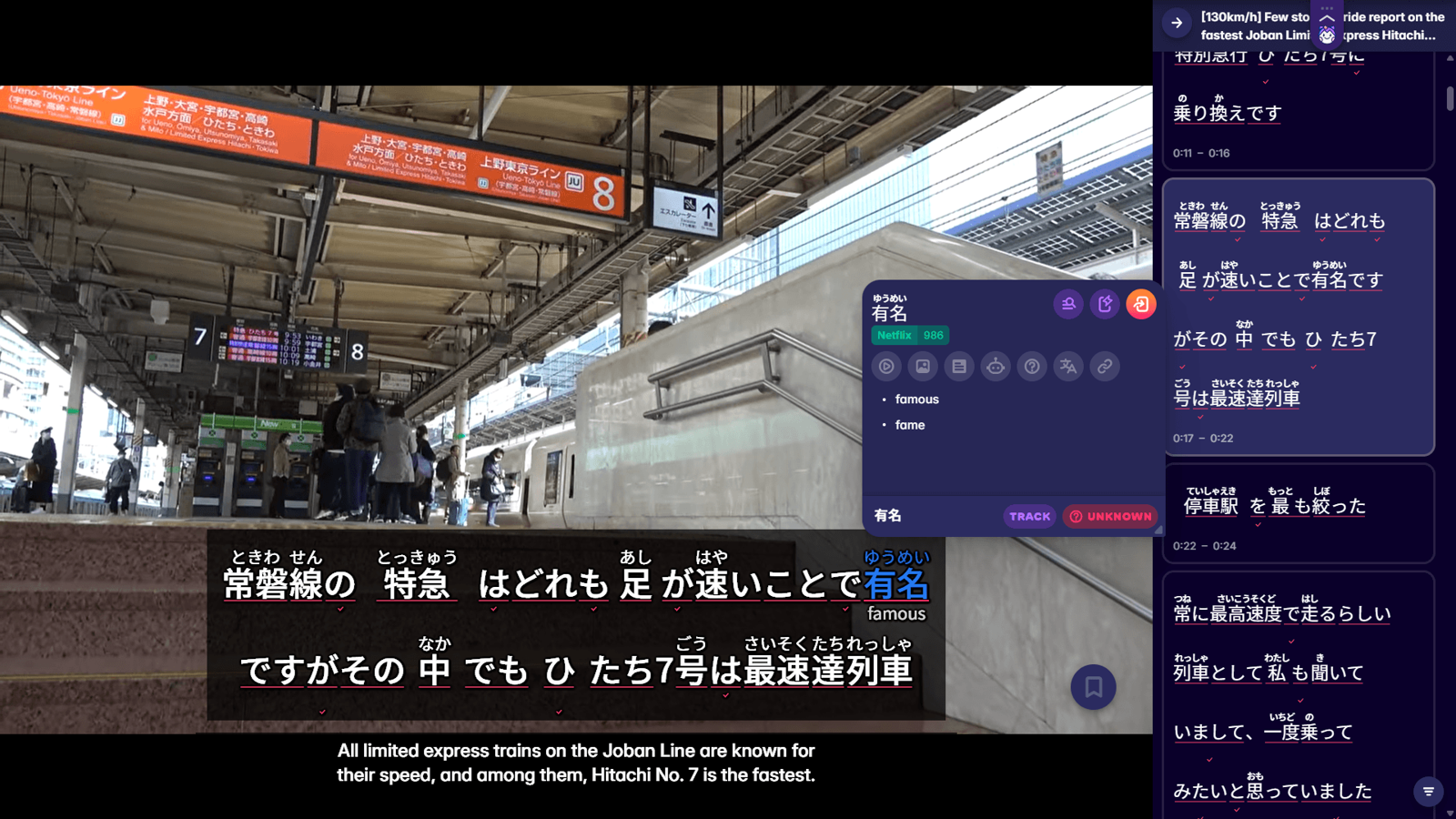
Learning these common phrases gives you a solid foundation for communication in Japan
You won't be fluent, but you'll be functional, which is what matters when you're traveling or just starting to learn the language. The phrases I've covered here represent what you'll actually hear, not just in Japan, but in Japanese media too. They're practical, common, and proven to work in real-world situations. Whether you're travelling to Japan or just enjoying Japanese media, these expressions have you covered for most basics.
If you consume media in Japanese, and you understand at least some of the messages and sentences within that media, you will make progress. Period.
Start easy. Build confidence. Then go further.☕📖