Complete Japanese Hiragana and Katakana Chart (Stroke Order + Romaji)
Last updated: April 29, 2026
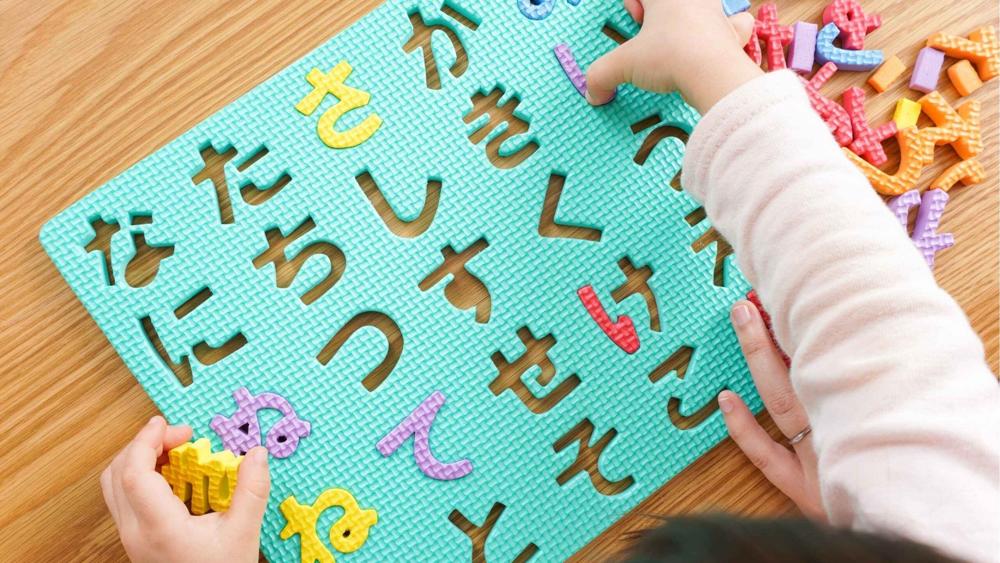
Before you dive into anime without subtitles or start reading manga, you need to master the Japanese basics: hiragana (ひらがな) and katakana (カタカナ). These two writing systems are your gateway to reading anything in Japanese, and honestly, they're way easier to learn than you might think. I'm going to walk you through everything you need, from basic pronunciation to those tricky combined sounds that trip up beginners.
Understanding Japanese writing systems
Japanese uses three writing systems together: hiragana, katakana, and kanji (漢字). Yeah, three different scripts in one language. Sounds intense, but each one has a specific purpose.
- Hiragana is the foundational phonetic script you'll use for native Japanese words, grammatical particles, and verb endings. It's curvy and flowing, and you'll see it everywhere. Every Japanese sentence needs hiragana.
- Katakana is the angular cousin of hiragana. It represents the exact same sounds but looks completely different. Japanese people use it primarily for foreign loanwords, onomatopoeia, and emphasis (kind of like italics in English). Words like "coffee" become kohi (コーヒー) in katakana.
- Kanji are the complex Chinese characters that represent whole words or concepts. There are thousands of them, and you'll need to know around 2,000 to read comfortably. But you can't even start learning kanji until you know your kana.
Differences between hiragana and katakana and which to learn first
Both hiragana and katakana represent the same 46 basic sounds. The character あ (hiragana) and ア (katakana) both make the "a" sound. They're just written differently.
Most teachers recommend learning hiragana first because it's more common and you'll use it constantly. Once you've got hiragana down, katakana becomes way easier because you already know the sounds. You're just learning new shapes for familiar pronunciations.
That said, some people learn them simultaneously. I'd suggest focusing on hiragana for the first few days, then adding katakana once hiragana feels comfortable. You'll naturally encounter both when you start reading actual Japanese content.
The basic hiragana chart (Gojūon)
The gojūon (五十音) chart organizes Japanese kana into rows and columns. Despite the name meaning "fifty sounds," there are actually 46 basic characters in modern Japanese.
Here's the complete basic hiragana chart with romaji pronunciation:
Row | Hiragana | Romaji |
|---|---|---|
A-row | あ, い, う, え, お | a, i, u, e, o |
K-row | か, き, く, け, こ | ka, ki, ku, ke, ko |
S-row | さ, し, す, せ, そ | sa, shi, su, se, so |
T-row | た, ち, つ, て, と | ta, chi, tsu, te, to |
N-row | な, に, ぬ, ね, の | na, ni, nu, ne, no |
H-row | は, ひ, ふ, へ, ほ | ha, hi, fu, he, ho |
M-row | ま, み, む, め, も | ma, mi, mu, me, mo |
Y-row | や, ゆ, よ | ya, yu, yo |
R-row | ら, り, る, れ, ろ | ra, ri, ru, re, ro |
W-row | わ, を, ん | wa, wo/o, n |
Notice how the Y-row and W-row have fewer characters. That's normal. The character を is technically pronounced "wo" but sounds almost identical to お (o) in modern Japanese. You'll use を exclusively as a grammatical particle marking direct objects.
Pronunciation guide: Getting the sounds right
Japanese pronunciation is actually pretty straightforward compared to English. Each character represents one sound, and those sounds stay consistent. No weird spelling rules where "ough" can be pronounced seven different ways.
Vowels form the foundation:
- あ (a) sounds like "ah" in "father"
- い (i) sounds like "ee" in "see"
- う (u) sounds like "oo" in "food" (but shorter and with less lip rounding)
- え (e) sounds like "eh" in "bed"
- お (o) sounds like "oh" in "boat"
A few pronunciation tips that'll save you headaches:
- The し (shi) and ち (chi) sounds don't follow the pattern perfectly. You might expect "si" and "ti," but Japanese doesn't quite work that way.
- The つ (tsu) sound trips up English speakers constantly. It's like the "ts" in "cats," but it starts the syllable. Practice saying "cats" and then just the "ts" part.
- The ふ (fu) isn't quite "foo." Your lips barely touch, making it sound somewhere between "fu" and "hu."
- The Japanese R-sound (ら, り, る, れ, ろ) falls between an English "R" and "L." Your tongue taps the roof of your mouth lightly, similar to the American pronunciation of the double-t in "butter."
Dakuten and handakuten: Voiced sounds
Once you've got the basic chart down, you add dakuten (濁点) marks to create voiced consonants. These are the little quotation-mark-looking symbols (゛) that change the sound.
Row | Hiragana | Romaji |
|---|---|---|
G-row (from K) | が, ぎ, ぐ, げ, ご | ga, gi, gu, ge, go |
Z-row (from S) | ざ, じ, ず, ぜ, ぞ | za, ji, zu, ze, zo |
D-row (from T) | だ, ぢ, づ, で, ど | da, ji, zu, de, do |
B-row (from H) | ば, び, ぶ, べ, ぼ | ba, bi, bu, be, bo |
The handakuten (半濁点) is a little circle (゜) that only applies to the H-row, turning it into P-sounds:
P-row (from H): ぱ (pa), ぴ (pi), ぷ (pu), ぺ (pe), ぽ (po)
Note that ぢ (ji) and じ (ji) sound identical in modern Japanese, as do づ (zu) and ず (zu). You'll rarely see ぢ and づ except in specific words.
Yoon: Combined sounds
Yoon (拗音) are combinations where you take a character from the I-column (き, し, ち, etc.) and add a small や (ya), ゆ (yu), or よ (yo). This creates sounds like "kya," "shu," and "cho."
Some common combinations:
Row | Hiragana | Romaji |
|---|---|---|
K-combinations | きゃ, きゅ, きょ | kya, kyu, kyo |
S-combinations | しゃ, しゅ, しょ | sha, shu, sho |
C-combinations | ちゃ, ちゅ, ちょ | cha, chu, cho |
N-combinations | にゃ, にゅ, にょ | nya, nyu, nyo |
H-combinations | ひゃ, ひゅ, ひょ | hya, hyu, hyo |
M-combinations | みゃ, みゅ, みょ | mya, myu, myo |
R-combinations | りゃ, りゅ, りょ | rya, ryu, ryo |
G-combinations | ぎゃ, ぎゅ, ぎょ | gya, gyu, gyo |
And so on. The pattern applies to all the I-column characters, including their dakuten and handakuten versions. Words like "Tokyo" (東京) are actually written Toukyou (とうきょう) in hiragana.
Stroke order rules and why they matter
Stroke order isn't just some arbitrary rule teachers made up to torture students. Writing characters in the correct order helps them look balanced and makes your handwriting flow naturally. Plus, when you're looking up kanji later by drawing them, stroke order matters for recognition software.
Basic stroke order principles:
- Top to bottom: Write the top parts before the bottom parts
- Left to right: Write left strokes before right strokes
- Horizontal before vertical: When strokes cross, usually the horizontal comes first
- Center before sides: For symmetrical characters, write the center stroke first
- Enclosures last: If a stroke encloses others, the closing stroke comes last
Let's look at some specific examples:
- The character あ (a) has three strokes. You start with the horizontal-ish stroke across the top, then the curved stroke on the left, and then the right.
- The character き (ki) has four strokes. Start with the horizontal line at top, then the second horizontal line, and finally the vertical line together with the curving stroke on the left.
- The character す (su) has two strokes. The first is the horizontal stroke, and the second is the vertical stroke with a little loop on the left.
You can find detailed stroke order diagrams online or in a good hiragana chart pdf. Watching someone write the characters really helps. There are tons of videos showing proper stroke order for every kana character.
The complete katakana chart
Katakana follows the exact same sound structure as hiragana. Same 46 basic characters, same dakuten additions, same yoon combinations. Just different shapes.
Basic katakana:
Row | Katakana | Romaji |
|---|---|---|
A-row | ア, イ, ウ, エ, オ | a, i, u, e, o |
K-row | カ, キ, ク, ケ, コ | ka, ki, ku, ke, ko |
S-row | サ, シ, ス, セ, ソ | sa, shi, su, se, so |
T-row | タ, チ, ツ, テ, ト | ta, chi, tsu, te, to |
N-row | ナ, ニ, ヌ, ネ, ノ | na, ni, nu, ne, no |
H-row | ハ, ヒ, フ, ヘ, ホ | ha, hi, fu, he, ho |
M-row | マ, ミ, ム, メ, モ | ma, mi, mu, me, mo |
Y-row | ヤ, ユ, ヨ | ya, yu, yo |
R-row | ラ, リ, ル, レ, ロ | ra, ri, ru, re, ro |
W-row | ワ, ヲ, ン | wa, wo/o, n |
Katakana stroke order follows the same principles as hiragana. The characters are generally more angular and use straighter lines.
How to memorize Japanese hiragana and katakana chart fast
You can absolutely memorize all hiragana and katakana in one week if you study consistently. Here's what actually works:
- Practice writing by hand. Typing doesn't cut it. The physical act of writing each character multiple times helps your brain remember the shapes. Get some practice sheets or just use grid paper.
- Use mnemonics for tricky characters. The character ぬ (nu) looks like a noodle. The character め (me) looks like an eye (me means "eye" in Japanese, actually). Making up silly stories helps characters stick.
- Study in small chunks. Don't try to memorize all 46 characters in one sitting. Learn five characters, practice them until they're solid, then add five more. The A-row and K-row first, then keep building.
- Read real Japanese immediately. Even if you only know ten characters, start trying to read simple words. Seeing kana in context makes them meaningful instead of abstract shapes.
- Write words, not just individual characters. Once you know a few kana, write actual Japanese words. Writing さくら (sakura) teaches you three characters in a meaningful way.
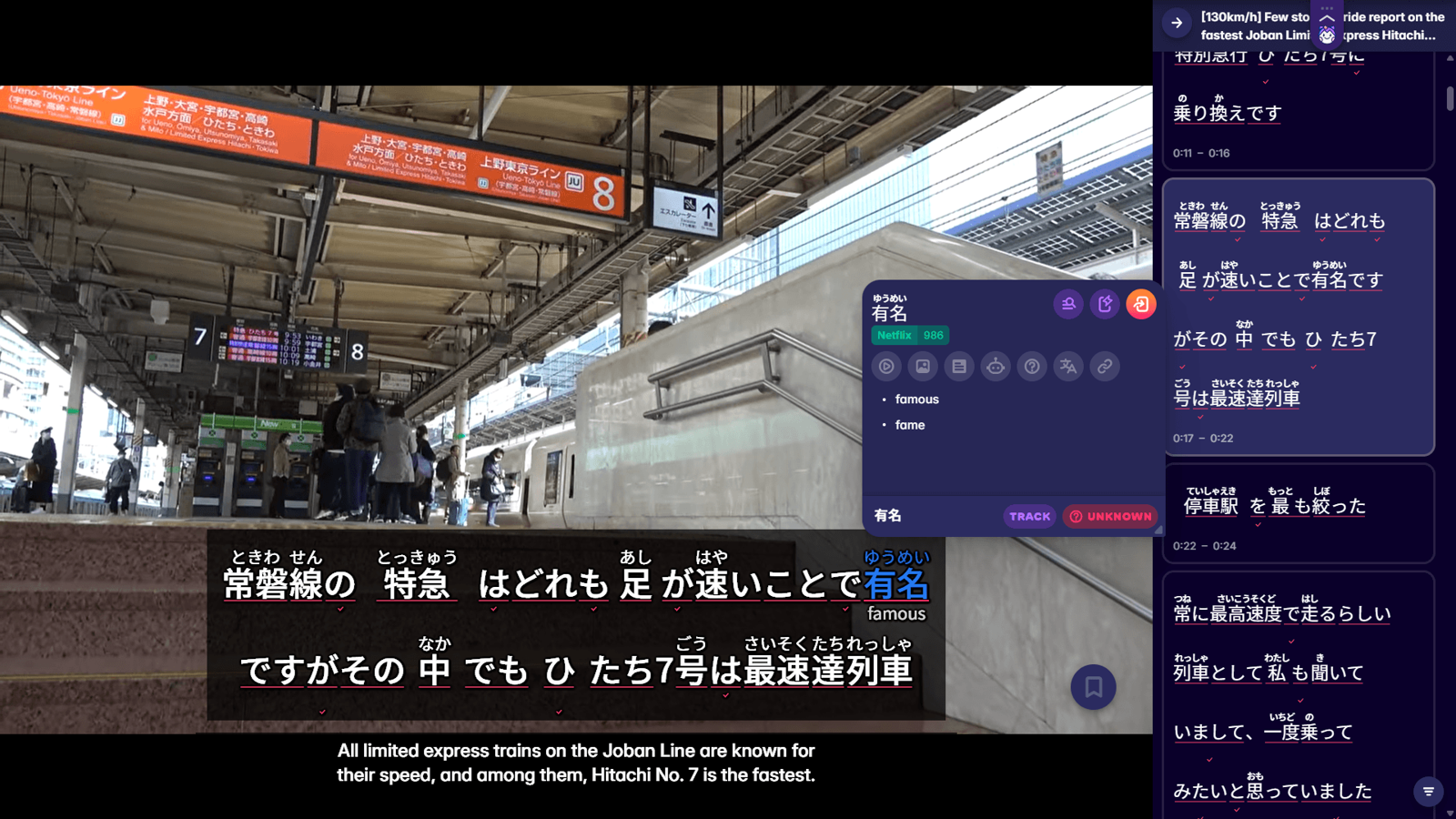
Anyway, if you want to level up your Japanese learning with real content, Migaku's browser extension and app let you look up words instantly while watching shows or reading articles. Makes immersion way more practical since you're learning from actual Japanese instead of just textbook examples. There's a 10-day free trial if you want to check it out.
Your next steps after mastering the charts
Once you've got both hiragana and katakana down solid, you're ready to start learning Japanese properly. You can begin studying basic grammar, building vocabulary, and tackling kanji. You can also start consuming native content. Watching Japanese shows with Japanese subtitles becomes possible once you can read kana quickly. You won't understand everything, but you can start picking out words and getting used to natural Japanese.
If you consume media in Japanese, and you understand at least some of the messages and sentences within that media, you will make progress. Period.
Start well, stay driven!