How to Learn Japanese in 2026: A Realistic Routine
Last updated: May 1, 2026
Japanese has a reputation for being hard, and parts of it deserve that reputation. Two syllabaries, a few thousand kanji, a grammar that inverts almost everything you know from English. But the actual work of getting to a comfortable intermediate level is less mysterious than the forums suggest. What follows is a concrete routine for 2026, with specific tools, specific content, and specific milestones, aimed at learners who want to read a novel, watch an unsubbed drama, or pass JLPT N2.
- Why the stakes for Japanese changed in 2026
- Start with the scripts, then stop obsessing about them
- Build a vocabulary base before chasing grammar
- Common mistakes that slow learners down
- Move to native content early and badly
- Cultural context that changes how you study
- Make lookup and retention automatic
- A realistic 12-month plan
- What a typical study day looks like at each stage
Why the stakes for Japanese changed in 2026
If your goal with Japanese is eventually living or working in Japan, the goalposts moved this year. As of April 15, 2026, the "Engineer/Specialist in Humanities/International Services" visa requires CEFR B2 proficiency, which in practice means a JLPT N2 certificate or a BJT score of 400+. That is a meaningful bar. N2 assumes roughly 1,000 kanji, 6,000 vocabulary items, and the ability to follow news broadcasts and read newspaper columns.
Naturalization tightened too. Starting April 1, 2026, the residency requirement doubled to 10 consecutive years, and applicants now submit two years of tax and social insurance records plus five years of tax certificates. None of this is language policy exactly, but it signals that Japan expects long-term foreign residents (now a record 4.1 million people, 3.36% of the population) to integrate more deeply. Language is the load-bearing part of that integration.
The practical takeaway: if you are starting Japanese in 2026 with any ambition toward living in Japan, plan backward from N2. That gives every study decision a target. Vague goals produce vague routines. Even learners with no Japan plans benefit from treating N2 as the aspirational ceiling, because the skills it demands (reading unadapted prose, following unscripted speech, producing extended written responses) map cleanly onto what most adults actually want out of a second language.
Start with the scripts, then stop obsessing about them
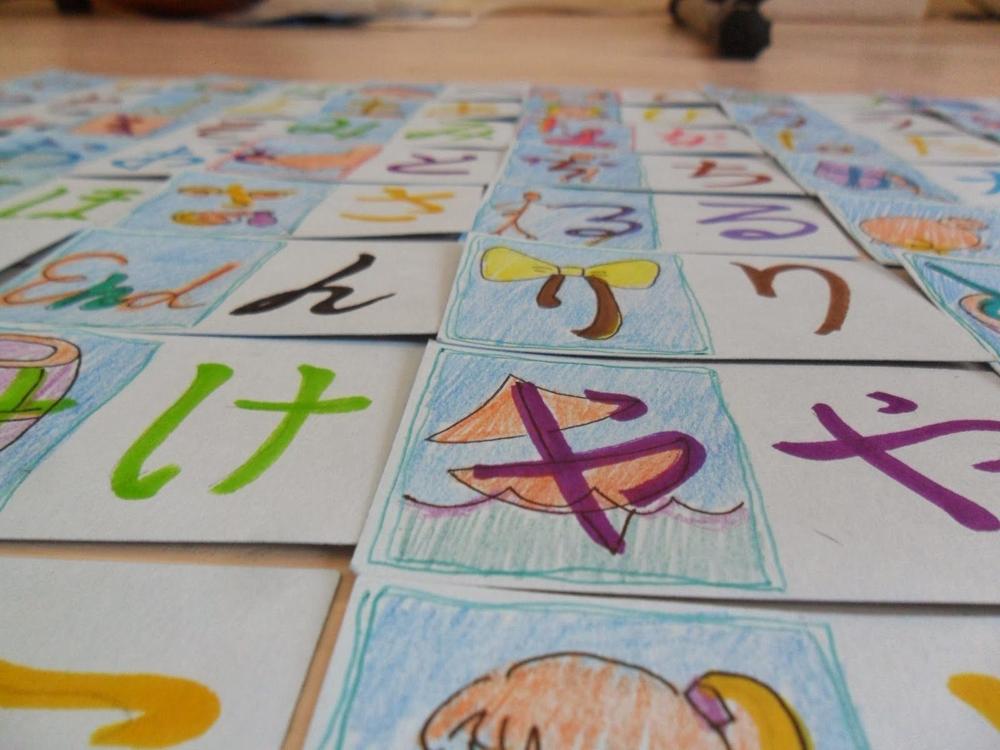
Hiragana and katakana are non-negotiable and quick. Most learners can read both within two weeks at 20 minutes a day. Drill them with Anki or a dedicated app, write each character a few times so the shapes stick in motor memory, and then move on. A hiragana and katakana chart on your desk is enough reference while you transition to reading real text.
The mistake is lingering. Learners spend a month perfecting katakana recognition before touching a sentence, and then discover that katakana only really sticks once you see it in context (メニュー on a menu, コーヒー on a sign, スマホ in a text message). Get to 90% recognition, then start reading. The last 10% comes from exposure, from seeing the characters used in real text.
Kanji is different. Do not try to front-load 2,000 kanji in isolation with the Heisig method unless you genuinely enjoy that kind of work. Most learners in 2026 learn kanji inside vocabulary, which means you learn 食べる (taberu, to eat) as a word, and 食 accumulates meaning through the other compounds it shows up in: 食事 (shokuji, meal), 朝食 (choushoku, breakfast), 食品 (shokuhin, food product). This is slower per-kanji but faster to actual reading ability.
Build a vocabulary base before chasing grammar
The first 1,000 most-frequent Japanese words cover roughly 70% of typical conversation. The standard starting point is the Core 2k/6k deck, which orders vocabulary by frequency and includes example sentences with audio. Twenty new cards a day, with reviews, takes about 30 minutes. In 100 days you have 2,000 words, which is roughly the vocabulary of a Japanese first-grader and enough to start parsing simple native content.
While you build that base, pick up common Japanese phrases for beginners so you have something to actually say. Phrases like よろしくお願いします (yoroshiku onegaishimasu, used when meeting someone or asking a favor) and お疲れ様です (otsukaresama desu, said to coworkers) are social units you memorize whole, since they are not grammar points you can derive.
Grammar in the first few months should stay light. Genki I and II, or Tae Kim's Guide, give you enough to parse sentences. The deep grammar work happens later, once you have enough vocabulary that a sentence like 彼は行かなかったらしい (kare wa ikanakatta rashii, apparently he didn't go) has only one unknown (らしい) instead of five.
Common mistakes that slow learners down
After watching enough self-study journeys, the same failure modes repeat. Recognizing them early saves months.
Overstudying romaji. Romaji is a crutch that feels like progress for the first week and then actively harms you. Once you can read hiragana, drop romaji entirely, even in your flashcards. Learners who keep romaji in their cards hit a ceiling around 500 words because their brain never fully commits to reading kana natively.
Treating grammar like math. Japanese grammar has patterns, with plenty of exceptions. Trying to derive every sentence from first principles leads to paralysis. Read a lot, notice what appears often, and let patterns settle through exposure. When a construction like ~ておく or ~てしまう starts feeling obvious, that is the grammar sticking through exposure rather than through a memorized formula.
Skipping pitch accent forever. You do not need to drill pitch accent on day one, but pretending it does not exist is a mistake. From month three onward, listen for it. Apps that mark pitch on flashcards help. Otherwise you get the classic gaijin intonation that is comprehensible but immediately marks you as a beginner after two years of study.
Only using anime for input. Anime dialogue is stylized, often rude, and full of speech patterns nobody uses in real life. It is fine as one input among many, but your 猫 (neko, cat) should come from someone describing their actual cat, not from a catgirl. Mix dramas, variety shows, podcasts, and YouTube vlogs to get a realistic spread of registers.
Avoiding speaking until you feel ready. You will never feel ready. Book an iTalki session at month four with 2,000 words in your head and a handful of phrases. You will be terrible. You will also improve faster in the next month than in the previous three.
Chasing every new method. Method hopping is the other side of app hopping. Every few months a new YouTube polyglot promises the real way to learn Japanese. Pick one vocabulary approach, one grammar source, and one listening source, and run the system for at least three months before judging it.
Move to native content early and badly
This is where most self-study routines fall apart. Learners stay in textbook land for a year, hit some invisible wall, and quit. The fix is to move into native content the moment you can semi-parse a sentence, even if "semi-parse" means you look up every third word.
For listening, start with Comprehensible Japanese on YouTube. Yuki speaks slowly, uses drawings, and scales from absolute beginner to upper-intermediate. Pick a 10-minute clip at the "complete beginner" or "beginner" level. Watch it twice with subtitles. Watch it once without. Then move to the next one. Nihongo con Teppei is the podcast equivalent, with hundreds of episodes at graded difficulty.
For reading, graded readers from Ask Publishing are fine for the first month. After that, jump to easy manga (よつばと! is the traditional recommendation, and it deserves it) or NHK Easy News. Manga is often easier than prose because furigana (small hiragana above kanji) is printed for all characters in shounen titles, and the pictures carry half the meaning.
For TV, Terrace House, Midnight Diner, and Old Enough (はじめてのおつかい) are the standard intermediate recommendations because the speech is natural but not rapid-fire. Each has a different register worth studying: Terrace House for casual young-adult conversation, Midnight Diner for slower adult speech with emotional weight, Old Enough for family and child-directed language.
Cultural context that changes how you study
Japanese is a linguistic system that also encodes a social hierarchy English mostly ignores, and ignoring that in your study will produce sentences that are grammatically correct and socially wrong.
Keigo (敬語, honorific language) is the obvious example. There are three registers: teineigo (polite, ~ます/~です forms), sonkeigo (respectful, used for the other person), and kenjougo (humble, used for yourself when talking to someone above you). A part-time job at a Japanese convenience store uses all three constantly. Beginners do not need to produce keigo in month one, but by month six you should recognize いらっしゃいませ and ご覧になる as keigo forms rather than mystery vocabulary.
Uchi-soto (inside-outside) thinking shapes which verbs you use. You give (あげる) to people outside your group and receive (くれる) from them, but the logic flips when talking about someone inside your group talking to someone outside it. This is a worldview more than a grammar point you can memorize. The faster you start noticing it in dramas, the faster your output stops sounding like a translated English speaker.
Then there is the cultural vocabulary that has no clean English equivalent. 遠慮 (enryo, restraint or holding back out of consideration), 甘える (amaeru, depending on another's goodwill), 建前 (tatemae, the public face you show) versus 本音 (honne, what you actually think). You cannot translate these cleanly, so do not try. Learn them from scenes where you watch the concept happen.
Regional variation is worth knowing about too, even if you study standard Tokyo Japanese. Kansai-ben (Osaka, Kyoto, Kobe) shows up constantly in comedy, variety shows, and anime, and it is structurally different enough that a Tokyo learner will initially miss half of what is said. You do not need to produce Kansai-ben, but learning to recognize おおきに (ookini, thanks), ちゃう (chau, that's not right), and the rising sentence intonation prevents confusion when a drama cuts to a Kyoto scene.
Make lookup and retention automatic
The thing that kills immersion for most Japanese learners is lookup friction. You are watching a drama, you hear a word you don't know, you pause, open a dictionary app, type the reading (which you probably don't know), get the wrong word, and lose the thread of the scene. Do this five times and you close the laptop.
The solution is hover-based lookup. You see the word, hover over it, get the reading and meaning without breaking flow, and if you want, one-click it into a flashcard with the sentence and audio included. This is what turns 90 minutes of Netflix into 90 minutes of study without the study feeling like study. It is also what lets you retain words you encountered in real context, which is far more durable than words memorized cold from a list.
The SRS side matters too. Reviews should be short, daily, and tied to cards you made from content you actually consumed. A card for 面倒くさい (mendoukusai, a pain, annoying) sticks far better if you can remember the exact scene where the character sighed it at their coworker. That emotional and visual hook is what textbook decks lack.
For a fuller breakdown of routines, tools, and study schedules at each level, the best way to learn Japanese article covers the 2026 version of this workflow in depth, including time estimates and progression milestones.
A realistic 12-month plan
Months 1-2: Hiragana, katakana, first 500 words from Core 2k, basic grammar through Genki I chapters 1-6. Start watching Comprehensible Japanese complete beginner clips. Daily time: 60-90 minutes.
Months 3-5: Push vocabulary to 2,000 words. Finish Genki I, start Genki II. Begin reading NHK Easy News daily, even if each article takes 20 minutes. Add one episode of a slow drama or one chapter of easy manga per week. Daily time: 90-120 minutes.
Months 6-8: Finish Genki II. Vocabulary around 3,500-4,000. Switch primary input to native content: one drama episode or manga chapter per day, mined for 10-15 new flashcards. Grammar shifts from textbook to reference (Dictionary of Basic Japanese Grammar used on demand). Take a practice JLPT N4, aim to pass.
Months 9-12: Vocabulary 5,000+. Start N3 grammar via Shin Kanzen Master or Bunpro. Read your first full novel (よつばと! volumes, or Kiki's Delivery Service in prose). Conversation practice with iTalki tutors, 2-3 sessions per week. Take JLPT N3 in December; most learners on this schedule pass.
From there, N2 is roughly another 12-18 months of the same work at higher volume. N1 is another two years beyond that for most people. These are honest timelines rather than fast ones, based on what consistent learners actually achieve with 90-120 minutes a day.
What a typical study day looks like at each stage
Abstract plans are easy to nod along to and hard to execute. Here is what an actual Tuesday looks like at three different points.
Month 2 (beginner). 15 minutes of kana review through a dedicated app. 20 minutes of Core 2k/6k flashcards (20 new cards, 60 reviews). 15 minutes of Genki I, working through one grammar point and the associated exercises. 10 minutes watching a Comprehensible Japanese clip with subtitles. Total: 60 minutes. The goal at this stage is consistency, not intensity.
Month 6 (lower intermediate). 25 minutes of SRS reviews on a deck that now mixes Core 6k with sentence cards mined from manga. 30 minutes reading one chapter of よつばと!, looking up 5-10 words and sentence-mining three of them. 30 minutes watching a Terrace House episode with Japanese subtitles, pausing to mine two or three sentences. 15 minutes skimming one NHK Easy News article. Total: 100 minutes. Textbook time has shrunk to nearly zero.
Month 11 (upper intermediate, pre-N3). 30 minutes of SRS, almost entirely sentence cards from recent content. 45 minutes reading a light novel or essay, no English translation open. 30 minutes of drama or a podcast like Bilingual News. 30 minutes of conversation practice twice a week with an iTalki tutor. Total: 105-135 minutes. Grammar study is now reactive, triggered by sentences you did not understand rather than scheduled.
Frequently asked questions
How long does it really take to learn Japanese?
The FSI categorizes Japanese as a Category IV language requiring about 2,200 class hours for professional proficiency in English speakers. For self-study with 90 minutes a day, plan on roughly 18 months to N3 (comfortable conversation, easy manga), 3 years to N2 (newspapers, unsubbed drama), and 5+ years to N1 (novels, academic text). These numbers assume consistent daily work. Two years at 30 minutes a day will not produce the same result as one year at 60 minutes.
Should I learn to write kanji by hand?
For most learners in 2026, no. Handwriting is a separate skill that adds hundreds of hours for limited benefit when almost all adult Japanese communication is typed. Focus on recognition and reading. If you plan to live in Japan and fill out paper forms regularly, learn to handwrite the 300 or so kanji used in names, addresses, and basic forms. Otherwise, typing and recognition will cover 99% of what you need.
Are gamified language apps enough to learn Japanese?
No. They are fine for maintaining a daily habit in the first month, but they will not take you past beginner. The content trees are shallow for Japanese compared to Spanish or French, the sentences are disconnected from natural speech, and there is no path from those apps into native content. Use them alongside real resources if you want, but do not treat them as your main course.
Do I need a tutor, or can I learn Japanese alone?
You can reach high reading and listening levels alone. Speaking is harder to build without a partner, because you need feedback on pronunciation, pitch, and naturalness of phrasing. A tutor once or twice a week from around month four, even for 30-minute sessions, makes a large difference. iTalki and Preply both have Japanese tutors at a range of price points.
What order should I learn things in if I only have 30 minutes a day?
With limited time, cut the textbook work and double down on vocabulary plus listening. Twenty minutes of SRS reviews, 10 minutes of Comprehensible Japanese or Nihongo con Teppei. Grammar can come from context and occasional reference lookups. You will progress slower than a 90-minute-a-day learner, but the ratio of time-to-retained-Japanese is still good because you are spending all of it on high-leverage activities.
Is it worth starting Japanese if I cannot move to Japan?
Yes, and most learners never relocate. Japanese opens a media landscape (literature, film, games, music, YouTube) that is only partially translated and almost always flattened when it is. If your motivation is reading Murakami in the original, finishing a game in Japanese voice with Japanese text, or watching a drama the week it airs instead of a year later, those goals are reachable in 2-3 years of serious study without ever booking a flight.
The single biggest variable is how much time you spend inside real Japanese content versus inside apps about Japanese. The ratio should tilt toward content from month three onward, and by month six, textbooks should be reference material, not your main activity. Migaku is built around exactly that shift: turning the dramas, manga, and YouTube videos you already want to watch into the substrate of your study, so that lookup and flashcards happen inside the content instead of pulling you away from it.