Japan 2026 Visa Rules and Japanese Language Requirements: What Learners Need to Know
Last updated: May 1, 2026
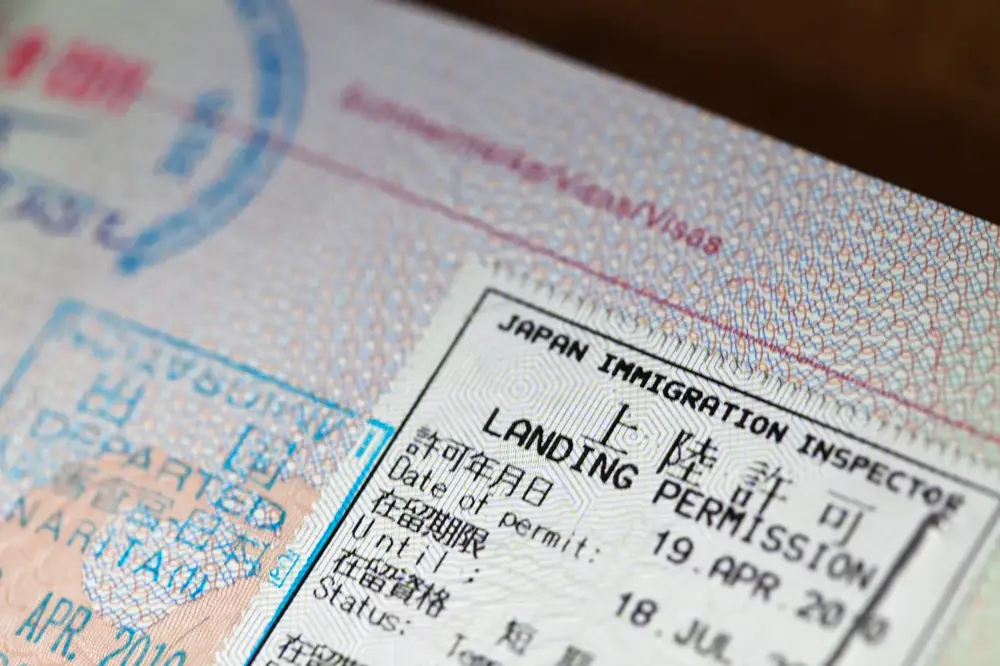
If you're learning Japanese with Japan in mind, the landscape shifted significantly in 2026. New visa rules, tightened naturalization requirements, and stricter student visa standards all hinge on one thing: your Japanese proficiency. This article breaks down exactly what changed, what level you need, and how to build toward it through the kind of immersion that actually sticks.
- Why Japan's 2026 Rule Changes Matter for Language Learners
- What the New Student Visa Rules Mean If You're Enrolling in a Language School
- The Proficiency Levels You're Actually Aiming For
- Common Mistakes Japanese Learners Make When Preparing for Japan
- How to Read a JLPT Score Report and What It Actually Tells You
- Cultural Context: What Living in Japan Actually Demands Linguistically
- Building the Japanese That Actually Transfers to Real Life in Japan
- How to Structure Your Study Around the Japan Timeline
Why Japan's 2026 Rule Changes Matter for Language Learners
Japan's foreign resident population crossed 4 million for the first time at the end of 2025, reaching 4,125,395, a 9.5% increase year-on-year and the fourth consecutive record high. The largest groups were Chinese residents at 930,428, Vietnamese at 681,100, and South Koreans at 407,341. That sustained growth has pushed the Japanese government to formalize what was previously informal: if you want to live and work in Japan long-term, your Japanese proficiency needs to be documentable and verifiable.
Starting April 15, 2026, certain applicants for the "Engineer/Specialist in Humanities/International Services" visa (the second most common residence status in Japan, with 475,790 holders as of end-2025) now need to prove language proficiency at CEFR B2 level if their work involves language skills. That translates to JLPT N2 or a BJT score of 400 or higher. This is a meaningful bar. N2 means you can read newspaper articles with moderate difficulty, follow nuanced conversation, and write coherent formal emails. It requires sustained study over months, not a weekend cram session.
On the naturalization side, Japan doubled its residency requirement from 5 to 10 consecutive years effective April 1, 2026, and expanded screening of tax and social insurance records. If you're thinking about permanent roots in Japan, you now need a decade of consistent residency, plus 2 years of payment records and 5 years of tax certificates. The implicit message: Japan is raising the bar for long-term commitment, and language is central to that commitment.
What the New Student Visa Rules Mean If You're Enrolling in a Language School
If you're planning to go to Japan specifically to study Japanese at a language school, the rules tightened here too. Japan's Immigration Services Agency announced that stricter language verification rules for student (ryugaku) visa holders apply to students enrolling from October 2026 onward.
Here's what that means in practice. Students without university degrees must now submit formal test certificates, specifically JLPT or NAT-Test results, alongside a school-administered exam or interview. Arriving at a language school with zero documented Japanese makes a smooth visa process significantly harder. Language schools are also required to conduct check-ins every three months to verify each student's employer names and daily work hours, with violations reported directly to Immigration.
This matters even if you're years away from applying. It signals that Japanese language ability needs to be built systematically over time, with verifiable milestones. Learners who have been doing consistent immersion and SRS review for 12 to 18 months before applying will be in a very different position than those who try to sprint to N4 or N3 in six weeks.
If you're still at the foundation stage, getting solid on the hiragana and katakana writing systems is the first real milestone, and it's one most people can hit in two to four weeks with daily practice.
The Proficiency Levels You're Actually Aiming For
The JLPT has five levels, N5 through N1, with N5 being the most basic and N1 the most advanced. Here's a realistic breakdown of what each level means for living in Japan:
- N5 and N4 are enough to handle basic transactions, read hiragana, katakana, and around 300 kanji, and have simple conversations. They won't satisfy any visa requirement, but they're where you prove to yourself that you can actually learn this language.
- N3 is conversational survival. You can follow most everyday interactions, read simple news headlines, and handle yourself in a convenience store or at a city hall counter without a translator. Many language school programs target this level for year-one students.
- N2 is the new professional threshold. As of April 2026, this is what the Japanese government considers sufficient for work that involves language skills under the Engineer/Humanities visa category. It requires reading comprehension of complex texts, listening to native-speed audio, and producing coherent written Japanese. Realistically, most learners need 18 months to 3 years to reach N2 from zero, depending on study intensity.
- N1 is near-native reading and listening comprehension. Useful for roles requiring Japanese-medium work, academic study in Japanese, or naturalization contexts where you want to demonstrate beyond-the-minimum ability.
For learners aiming at Japan for professional reasons, N2 is the target. Set your study plan around it, building toward the proficiency level rather than toward the visa application date.
Common Mistakes Japanese Learners Make When Preparing for Japan
Even motivated learners with clear Japan goals make the same avoidable mistakes. Knowing them in advance saves months of wasted effort.
Studying only for the test format. The JLPT has no speaking or writing component. Learners who spend all their time on multiple-choice grammar drills often arrive in Japan and find they can't hold a basic conversation. The test is a useful milestone, but it should sit inside a broader study routine that includes speaking practice, output, and real listening. Visa officers and future employers will assess your spoken ability directly, regardless of what a certificate says.
Ignoring pitch accent early on. Japanese is a pitch accent language, meaning the rise and fall of your voice changes word meaning. The word 「橋」(hashi, bridge) and 「箸」(hashi, chopsticks) are spelled identically in romaji but distinguished entirely by pitch. Most beginner resources skip this entirely, which means learners build pronunciation habits that are difficult to correct later. Even a basic awareness of pitch accent patterns from the start makes a noticeable difference in how natural you sound to native speakers. Resources that include audio from native speakers and mark pitch in their dictionaries are worth prioritizing from the beginning.
Treating kanji as a separate subject. Many learners study kanji in isolation using stroke order lists or radical-only methods, then struggle to recognize the same characters inside actual sentences. Kanji learned in context, inside words and phrases you've already heard or read, stick far better than characters memorized from a chart. Aim to encounter each kanji in at least three to five different words before considering it learned. The N2 exam alone requires knowledge of around 1,000 kanji, and the only reliable way to retain that many is through repeated exposure in real reading material.
Underestimating how long N2 actually takes. The Foreign Service Institute estimates Japanese requires around 2,200 hours of study for English speakers to reach professional working proficiency. N2 sits below that ceiling but still demands serious time investment. Learners who plan their Japan timeline around an optimistic 12-month N2 target often end up delaying visa applications or submitting without the required documentation. Build in buffer time, and treat any estimate you find online as a floor rather than a ceiling.
Skipping the informal register entirely. Textbooks teach polite Japanese (desu/masu forms) almost exclusively. Daily life in Japan involves a large amount of casual speech, especially with coworkers, neighbors, and friends. Learners who haven't practiced plain form conversation will sound stiff in contexts where formality is unnecessary, and will struggle to follow conversations between native speakers talking naturally. This gap becomes especially obvious in the first weeks after arriving in Japan, when the Japanese you've studied and the Japanese you're hearing feel like two different languages.
How to Read a JLPT Score Report and What It Actually Tells You
Many learners pass or fail the JLPT without fully understanding what their score report means or how to use it to guide their next study phase. The JLPT does not report a single total score. Instead, it reports subscores across three sections: Language Knowledge (vocabulary and grammar), Reading, and Listening. Each section has its own passing threshold, and you must clear all three to pass the level overall, even if your total score looks strong.
This structure reveals something useful. A learner who scores high on Language Knowledge but low on Listening has a clear signal: their reading and grammar study is working, but their exposure to spoken Japanese is insufficient. A learner who scores well on Listening but struggles with Reading likely needs more time with written native content, news articles, and longer texts. Treat the subscore breakdown as a diagnostic that tells you exactly where to redirect your study hours before the next sitting.
The JLPT is offered twice a year in Japan, in July and December, and in many overseas locations on the same schedule. If you're targeting a visa application or school enrollment with a specific deadline, work backward from the exam date, then the application date. Results are released approximately two months after the exam, which means a December sitting produces results in February, and a July sitting produces results in September. Factor that lag into your planning so you're not caught without documentation when you need it.
For learners outside Japan who want to track progress between official sittings, the NAT-Test is offered more frequently and is accepted as an equivalent credential for the student visa documentation requirement introduced in October 2026. It follows a similar level structure and can serve as a useful intermediate checkpoint.
Cultural Context: What Living in Japan Actually Demands Linguistically
Language requirements on paper and language demands in daily life are two different things. Understanding the cultural context helps you study smarter.
Japanese communication relies heavily on implication and shared context. The concept of 「空気を読む」(kuuki wo yomu, literally "reading the air") refers to the ability to pick up on unspoken social cues and respond appropriately. A technically correct Japanese sentence delivered at the wrong moment, in the wrong register, or with the wrong level of formality can still cause friction. This is a reason to expose yourself to real Japanese social situations through native content as early as possible, so you develop a feel for register and context alongside vocabulary and grammar.
Workplace Japanese (keigo, or honorific language) is its own layer on top of standard polite Japanese. If you're planning to work in a Japanese company environment, you'll encounter set phrases and grammatical structures that are rarely taught in standard courses. Phrases like 「お世話になっております」(osewa ni natte orimasu, a standard business greeting with no direct English equivalent) and 「ご確認のほどよろしくお願い申し上げます」(a formal request for confirmation) appear constantly in professional emails and calls. Exposure to business Japanese content, even passively through workplace dramas or business podcasts, builds familiarity with these patterns before you need them under pressure.
Regional variation also matters more than most learners expect. Standard Japanese (hyojungo) is what you learn from textbooks and what you'll hear on NHK news. Osaka-ben, Kyoto-ben, Hakata-ben, and other regional dialects differ meaningfully in vocabulary, intonation, and grammar. If you're moving to Osaka and your entire listening diet has been Tokyo-accent content, the first few weeks will involve an adjustment period. Mixing in some Kansai-dialect content during your study phase reduces that shock considerably. Even recognizing that a dialect exists and that it sounds different from standard Japanese is enough to prevent the disorienting experience of feeling like you've studied the wrong language entirely.
For the kind of informal language you'll encounter constantly in Japan, including on social media, in messages, and in casual speech, it helps to get familiar with Japanese texting slang and expressions alongside your formal study. For a structured reference covering the phrases that come up most in daily interaction, the common Japanese phrases for beginners guide is a useful anchor for the early stages.
Building the Japanese That Actually Transfers to Real Life in Japan
Passing a test and functioning in Japan are related but distinct goals. The JLPT is a reading and listening exam with no speaking or writing component. Passing N2 while studying in a purely test-focused way can still leave you freezing up in real conversation.
The learners who transition most smoothly into life in Japan are the ones who've spent significant time with native Japanese content before they arrive. That means Japanese TV, YouTube, podcasts, manga, novels, and news. Native content exposes you to the full range of how Japanese is actually spoken and written, including register shifts, filler expressions, regional patterns, and the informal contractions that textbooks often skip.
For example, textbooks teach 「どうぞよろしくお願いします」 as the standard polite greeting. In actual conversation you'll hear 「よろしく」, 「よろしくお願いします」, 「よろしくっす」, and variations that depend entirely on context. Learners who have only practiced the textbook version will understand the formal one and miss the rest. Native content closes that gap by exposing you to all of these variations in the situations where they naturally occur, so you develop intuition rather than just memorized rules.
Start building vocabulary from real sources early. A good anchor is the first 1,000 to 2,000 most frequent Japanese words, which cover the bulk of everyday conversation and most of what you'll encounter in beginner-to-intermediate native content. Once you have that base, you can start watching shows or reading articles and picking up vocabulary from context, which is faster and more durable than drilling isolated word lists.
How to Structure Your Study Around the Japan Timeline
If you have a concrete Japan goal, whether that's a student visa, a work visa, or eventually naturalization, backward planning from the language requirement is the most efficient approach.
For a student visa with October 2026 enrollment, you need documented proof now. If you don't have JLPT results yet, the next available testing windows and your school's own entrance assessment are your immediate deadlines. The July 2026 sitting is the last opportunity to have results in hand before October enrollment, and registration for that sitting closes months in advance.
For a work visa under the Engineer/Humanities category where language skills are part of the role, N2 is the floor. If you're currently at N3, a focused 6 to 12 month push combining structured grammar review, heavy listening input, and regular reading is realistic. The NHK Web Easy news service (written in simplified Japanese) and podcasts like Nihongo con Teppei for Beginners are good listening anchors at the N3-to-N2 transition. Pairing those with a grammar reference that covers N2-level structures and reading at least one longer native text per week will move your comprehension forward faster than grammar drills alone.
For naturalization, the timeline is now 10 years minimum. That's good news for language learning: you have time to build deep, natural fluency rather than rushing to a test score. The learners who reach N1 or near-native ability are almost always the ones who spent years consuming Japanese content they genuinely enjoyed, building steadily rather than cramming in the final year before an exam.
One practical structure: dedicate the first 30 minutes of each study session to SRS review (flashcards from content you've already encountered), then spend 45 to 60 minutes on native content with a grammar reference nearby. That ratio keeps vocabulary retention high while building the real listening and reading comprehension that tests and daily life both demand.
Frequently Asked Questions
Do I need to pass the JLPT before applying for a Japanese work visa?
For the Engineer/Specialist in Humanities/International Services visa where language skills are central to the role, JLPT N2 (or equivalent BJT score of 400+) is now required as of April 2026. If your job role does not explicitly involve language skills, the requirement may not apply, but immigration officers have discretion in how they assess applications. Having documented proof of proficiency always strengthens your case regardless of the specific role.
How long does it realistically take to reach JLPT N2 from zero?
For English speakers studying consistently, reaching N2 typically takes between 18 months and 3 years. The wide range reflects differences in study intensity, method quality, and how much time you spend with native content versus textbook materials. Learners who combine structured grammar study with daily immersion in real Japanese content tend to progress faster than those relying on textbooks alone. Expecting to reach N2 in under a year from zero is possible but requires very high daily study hours and is not the typical experience.
Can I get a student visa for a Japanese language school without any prior Japanese knowledge?
From October 2026 onward, students without university degrees must submit formal Japanese proficiency test results (JLPT or NAT-Test) as part of the student visa application. Students with university degrees may have more flexibility depending on the school's requirements, but language schools are now required to conduct regular check-ins on enrolled students. Arriving with zero documented Japanese ability will make the visa process significantly harder than it was before 2026.
Is JLPT N2 enough to actually function in a Japanese workplace?
N2 is the official threshold for visa purposes, but workplace functionality depends on more than a test score. Business Japanese (keigo) involves specific honorific structures and set phrases that the JLPT does not directly test. Many N2 holders find the first few months in a Japanese workplace challenging because of the gap between test Japanese and professional spoken Japanese. Supplementing JLPT preparation with exposure to business Japanese content, including workplace dramas, business podcasts, and professional email examples, closes that gap considerably.
What happens if my Japanese proficiency improves significantly after I arrive in Japan?
Improving your Japanese after arrival is both possible and expected. Living in Japan provides constant immersion that accelerates progress in ways that studying abroad cannot replicate. The key is to stay active about it: seek out native speakers, consume Japanese media, and continue structured study rather than assuming that passive exposure alone will carry you. Many long-term residents plateau at a conversational level because they operate primarily within English-speaking expat communities. Intentional engagement with Japanese-language environments is what separates learners who reach N1 fluency from those who remain comfortable at N3 indefinitely.
If you want to apply this in your own immersion routine, Migaku handles the lookup and flashcard side so you can focus on the content itself, whether you're working toward an N2 certificate, a student visa, or just the ability to navigate Tokyo without pulling out your phone every thirty seconds.