Common Japanese Abbreviations: Words and Abbreviations That Japanese People Love to Use
Last updated: March 30, 2026

If you've spent any time learning Japanese, you've probably noticed that the language loves to abbreviate things. From tech gadgets to convenience stores, Japan has a knack for taking long words (especially borrowed English ones) and chopping them down into bite-sized chunks. Understanding these abbreviations is pretty crucial if you want to sound natural in conversation or even just read signs around Tokyo without getting confused. Let's dive into the most common Japanese abbreviations you'll encounter in daily life.
- Why Japanese abbreviations matter for learners
- How the Japanese abbreviate words
- Tech and gadget abbreviations you'll use daily
- Food and shopping shortcuts
- Work and business slang abbreviations
- Pop culture and internet words and abbreviations
- Place names and brand contractions in Japanese language
- Building your vocabulary on Japanese abbreviated and contracted words
Why Japanese abbreviations matter for learners
Here's the thing: Japanese people use abbreviations constantly in everyday speech. You can study textbook Japanese for years and still get thrown off when someone mentions going to (McDonald's, in Kansai dialect) or asks if you have a (smartphone).
The Japanese language has a natural tendency to shorten longer words, especially loanwords from English. This happens partly because Japanese syllable structure makes foreign words really long when written in katakana. "Personal computer" becomes , which is a mouthful. So people just say (pasokon) instead.
These shortcuts aren't just slang either. You'll see them on official signs, in business settings, and in formal writing. Knowing when Japanese abbreviations are used helps you understand the context better and pick up on cultural nuances.
How the Japanese abbreviate words
Most Japanese abbreviations follow predictable patterns once you know what to look for.
💡The most common method takes the first two syllables (or mora) of each word in a compound.
For English loanwords, you typically grab the first two katakana characters from each part of the compound word. (Starbucks) becomes (sutaba). (convenience store) gets shortened to .
💡Japanese also loves to abbreviate compound words made from kanji. These often take one kanji character from each word and create a new compound.
The word (mobile phone) becomes (keitai), though these days people just say anyway.
Tech and gadget abbreviations you'll use daily
Technology terms get abbreviated constantly in Japan because the full English versions are ridiculously long in katakana.
- (pasokon) comes from "personal computer" and you'll hear this everywhere. Computer shops, office conversations, your Japanese friends talking about gaming setups.
- (sumaho) is short for "smartphone" and has completely replaced in most conversations among younger people.
- (rimokon) means remote control, from "remote controller."
- (eakon) is air conditioner. You'll definitely need to know this one during Japan's brutal summers.
- (dejikame) stands for digital camera, though this term is becoming less common as everyone just uses their sumaho now.
Food and shopping shortcuts
Walk into any Japanese convenience store and you're entering abbreviation central. The word itself comes from .
- (sutaba) for Starbucks is probably the most famous example. Every major chain gets this treatment.
- (makudo) or (makku) both refer to McDonald's, depending on which region of Japan you're in. Kansai uses makudo, while Tokyo and eastern Japan prefer makku.
- (suupaa) is already an abbreviation of "supermarket" but you'll hear it constantly. Sometimes further shortened in speech to just in casual contexts.
- (famima) is Family Mart, one of Japan's biggest convenience store chains.
- (aisu) technically means ice cream, shortened from "ice cream" obviously, though Japanese also has for the full version.
Work and business slang abbreviations
Japanese work culture has developed tons of abbreviations for common workplace situations.
- (shuukatsu) comes from (job hunting activities). This is a huge deal in Japan, where students do coordinated job searches in their final year.
- (konkatsu) is marriage hunting, from . Shows how the pattern gets reused.
- (pawahara) stands for power harassment, and (sekuhara) is sexual harassment. These abbreviated forms are actually the standard way to discuss these issues in Japanese.
- (risutora) comes from "restructuring" but specifically means corporate layoffs in Japanese.
Pop culture and internet words and abbreviations
Japanese internet culture and pop culture generate new abbreviations constantly. Some stick around, others fade fast.
- (anime) itself is an abbreviation of "animation," though it's become its own word globally now.
- (otaku) originally came from a formal way of saying "you" but evolved into meaning someone obsessed with a hobby, especially anime and manga.
- (kosupure) is short for "costume play."
- (Pokemon) comes from (Pocket Monsters).
- (purikura) stands for "print club," those photo booth stickers that are everywhere in Japan.
Place names and brand contractions in Japanese language
Japan loves to shorten place names and brand names into cute, manageable chunks.
- (Dizunii) for Disney often becomes (dizuni) in casual speech.
- (Uniqlo) is already the abbreviated brand name, shortened from "Unique Clothing Warehouse."
- (muji) comes from (Mujirushi Ryohin), meaning "no-brand quality goods."
University names get abbreviated too.
- (Tokyo University) becomes (Toudai).
- (Waseda University) turns into (Soudai).
Building your vocabulary on Japanese abbreviated and contracted words
- Start with the most common ones you'll actually use. The tech terms (pasokon, sumaho), food and shopping words (konbini, sutaba), and basic place names will cover a huge percentage of daily conversations.
- Don't try to memorize giant lists. Pick up abbreviations naturally as you encounter them in context. When you hear a word you don't recognize, look it up and see if it's a shortened form of something.
- Create flashcards for the ones you keep hearing but can't remember. Seeing パソコン and connecting it back to "personal computer" helps cement the pattern in your brain.
- Listen for abbreviations in Japanese media. Anime, dramas, and YouTube videos use these constantly. You'll start recognizing the patterns and predicting what longer words might get shortened to.
The more you expose yourself to natural Japanese, the more these abbreviations will just click. They follow logical patterns once you've seen enough examples.
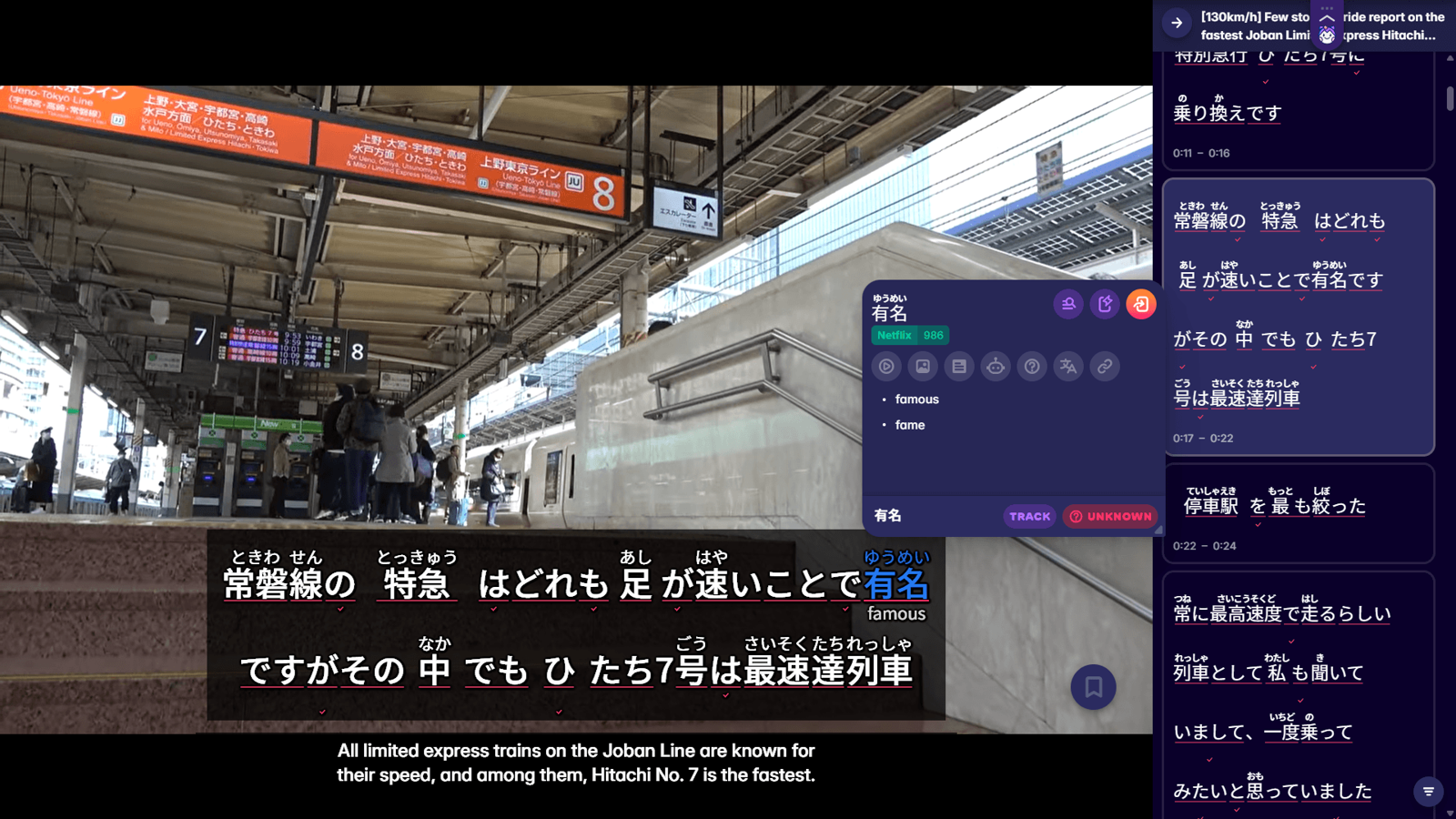
If you want to pick up these abbreviations naturally from actual Japanese content, Migaku's browser extension and app let you look up any word instantly while watching shows or reading articles. Makes learning from immersion way more practical. There's a 10-day free trial if you want to check it out.
Your shortcut to natural Japanese speech in everyday life
Understanding Japanese abbreviations bridges the gap between classroom learning and real-world fluency. Textbooks teach you , but everyone just says . You need both. Keep building your abbreviation vocabulary through immersion and active study. The more you encounter these in real contexts, the more automatic they become.
If you consume media in Japanese, and you understand at least some of the messages and sentences within that media, you will make progress. Period.
Languages evolve around efficiency!