Japanese Apartment Vocabulary: Essential Terms for Renting a Home in Japan
Last updated: March 20, 2026

Looking for an apartment in Japan can feel overwhelming when you're staring at rental listings filled with unfamiliar terms and kanji you've never seen before. Whether you're moving to Tokyo for work or studying in Osaka, knowing the right Japanese apartment vocabulary makes the whole process way less stressful. This guide covers everything from talking to real estate agents to understanding what those fees actually mean, so you can navigate apartment hunting without constantly pulling out your phone to translate every single word.
- Understanding apartment types in Japan
- Decoding Japanese room layouts and floor plans
- Japanese real estate terms for room types and features
- Working with real estate agents
- Financial terms and upfront costs
- Contract and lease vocabulary
- Japanese vocabulary for utilities and building amenities
- Address and location terms
- Making the vocabulary stick
Understanding apartment types in Japan
The first thing you'll notice when browsing rental sites is that not all apartments are called the same thing in Japanese. There are three main categories you'll encounter.
- An (apaato) typically refers to a wooden or light steel-frame building, usually two or three stories tall without an elevator. These tend to be older and cheaper, with thinner walls. You'll hear your neighbors pretty clearly in most apaato buildings.
- A (manshon) sounds like "mansion" but means a concrete apartment building. These are sturdier, have better soundproofing, and often come with elevators and auto-locking entrance doors. They cost more to rent than apaato but offer better quality overall.
- Finally, (ikkodate) means a detached single-family house. These are less common for renters but worth knowing about if you're searching for more space.
Decoding Japanese room layouts and floor plans
Japanese apartments use a specific numbering system that confused me for weeks when I first started looking. The format looks like 2LDK or 1K, and once you understand it, everything makes sense.
The number indicates bedrooms or private rooms. The letters tell you what other spaces exist.
- K means (kitchen).
- D means (dining area).
- L means (living room).
So a 2LDK apartment has two bedrooms plus a combined living, dining, and kitchen area. A 1K has one room with a separate small kitchen. A 3LDK gives you three bedrooms with a spacious living-dining-kitchen combo. Pretty straightforward once you get the pattern.
Room sizes in Japan are measured in (jou), which refers to tatami mat units. One tatami mat is roughly 1.6 square meters. When you see a room listed as 6畳, that means it fits six tatami mats and is about 9.6 square meters. Older apartments and traditional Japanese-style rooms often have actual tatami mats on the floor, while western-style rooms use the measurement system but have regular flooring.
Japanese real estate terms for room types and features
Japanese apartments mix traditional and modern elements, so you'll see both (washitsu, Japanese-style room) and (youshitsu, western-style room) in listings.
Washitsu rooms have tatami mats on the floor and sliding (fusuma) doors. You'll usually find a (oshiire) closet for bedding storage. These rooms feel pretty cool and traditional, but remember you can't put heavy furniture directly on tatami since it damages the mats.
Western-style rooms have wooden or vinyl flooring and regular doors. Most modern apartments lean heavily toward Western-style layouts, especially in cities.
Every apartment has a (genkan), the entrance area where you take off your shoes before stepping up into the main living space. This isn't optional in Japanese culture; it's just how apartments work.
The bathroom setup often surprises foreigners. The (yokushitsu, bathroom) and (toire, toilet) are usually separate rooms. The bath area is completely waterproof because Japanese bathing culture involves washing outside the tub before soaking. The toilet gets its own tiny room.
You'll also see (barukoni, balcony) in most listings. These are primarily for hanging laundry since most people don't have dryers.
Working with real estate agents
When you start apartment hunting seriously in Japan, you'll work with a (fudousan-ya, real estate agent). The formal term is (fudousan chuukai gyousha), but most people just say fudousan.
Major rental sites include Suumo, LIFULL HOME'S, and Chintai. You can browse online, but you'll eventually visit an agency office for viewings. The agent is called a (tantousha).
When you find an apartment in Japan you like, you'll request a (naiken, property viewing). The agent will schedule a time to show you the place.
The property owner is the (ooya-san, landlord). You probably won't meet them directly during the search process since everything goes through the estate agent.
Financial terms and upfront costs
Here's where apartment hunting in Japan gets expensive. The upfront costs can easily total four to six months of rent, which shocked me when I first moved here.
- (yachin) means monthly rent. Simple enough. But then come the additional fees.
- (shikikin) is your security deposit, usually one to two months of rent. You should get most of this back when you move out if you haven't damaged anything, though landlords often deduct cleaning fees.
- (reikin) translates to "key money" or "gratitude money." This is a non-refundable payment to the landlord, typically one to two months of rent. Yeah, you're basically giving the landlord a gift for letting you rent their place. It's a traditional practice that many foreigners find frustrating, but it's still common in 2026.
- (chuukai tesuuryou) is the real estate agent's commission, usually one month's rent plus tax.
- (kanrihi) or (kyouekihi) are monthly maintenance fees for common areas, separate from your base rent.
- Most landlords require a (hoshounin, guarantor), someone who agrees to pay your rent if you can't. Foreigners often don't have Japanese guarantors, so you'll use a (hoshou gaisha, guarantor company) instead. These companies charge fees, usually 50-100% of one month's rent initially, then annual renewal fees.
- You'll also pay (kasai hoken, fire insurance), which is mandatory and costs around 15,000-20,000 yen for two years.
Contract and lease vocabulary
- When you decide to rent an apartment, you'll sign a (chintai keiyaku, rental contract). Standard lease terms are two years.
- The (keiyaku koushin, contract renewal) happens every two years and comes with a (koushinryou, renewal fee), typically one month's rent. Yes, you pay again just to keep living there.
- (nyuukyobi) is your move-in date.
- (taikyo) means moving out. When you move out, there's a (taikyo tachiai, move-out inspection) where the landlord or management company checks for damage.
- Most contracts require (ikkagetsu mae yokoku, one month advance notice) before moving out.
Japanese vocabulary for utilities and building amenities
Understanding utility vocabulary helps when setting up your new place.
Japanese | English |
|---|---|
Electricity | |
Gas | |
Water | |
Internet | |
Fiber optic | |
Elevator | |
Auto-lock entrance | |
Delivery box for packages | |
Parking | |
Bicycle parking |
Address and location terms
Japanese addresses work differently from Western ones, and understanding the format helps when apartment hunting.
The 〒 symbol (yuubin) indicates postal code. Every address starts with a seven-digit postal code.
Addresses go from largest to smallest: prefecture, city, ward, district, block number, building number. For example, Tokyo addresses often include (ku, ward) like (Shibuya-ku).
The phrase (eki chika) means "near the station," a huge selling point in listings. Distance is measured in 〇 (toho ~ fun), meaning "~ minutes on foot." Real estate listings calculate this at 80 meters per minute, though actual walking time varies.
Making the vocabulary stick
The best way to learn Japanese apartment vocabulary is by actually using it.
- Browse Japanese rental sites like Suumo with a dictionary handy. You'll start recognizing patterns in how listings are written.
- Visit real estate agent offices even if you're not immediately moving. Many agents are happy to explain terms, especially if you show genuine interest in learning.
- Create a personal reference sheet with terms relevant to your specific needs. If you have a pet, prioritize pet-related vocabulary. If you're looking for family housing, focus on larger apartment layouts and school proximity terms.
Anyway, if you're learning Japanese and want to practice reading real apartment listings, Migaku's browser extension and app let you look up unfamiliar kanji and vocabulary instantly while browsing rental sites. Makes the whole process less frustrating when you can click words for definitions without switching tabs constantly. There's a 10-day free trial if you want to check it out.
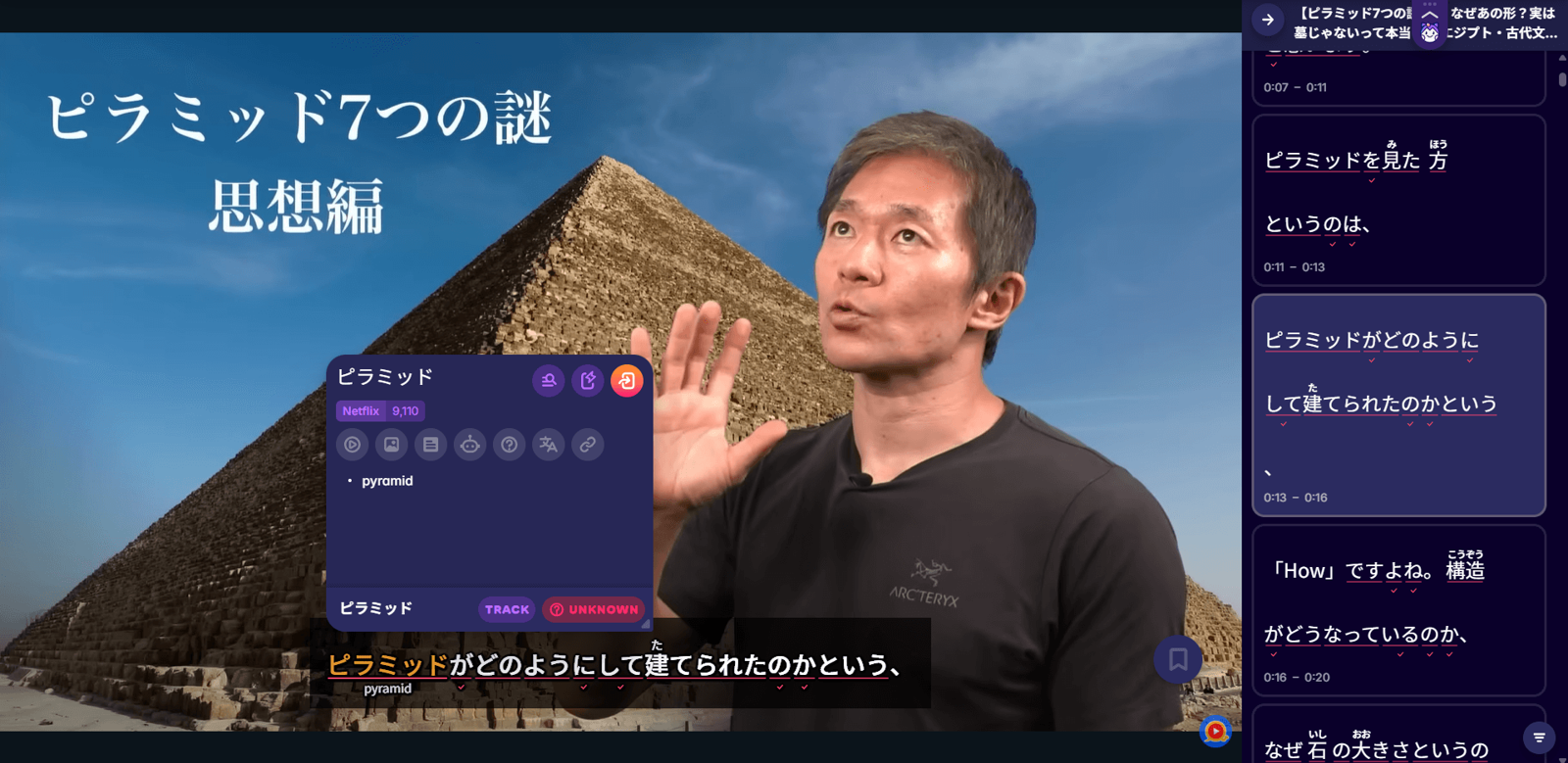
Make vocabulary learning part of your daily life
The vocabulary becomes way more memorable when you're learning it through media consumption. Abstract memorization doesn't work nearly as well as practical application when you're reading through listings, watching home tour videos, or listening to house-hunting tips on podcasts.
If you consume media in Japanese, and you understand at least some of the messages and sentences within that media, you will make progress. Period.
Prepare yourself before diving into actual house hunting!🏘️🔍