# Japanese Banking Vocabulary: Terms You Need for Visiting Japanese Banks
> Master Japanese banking vocabulary for ATMs, accounts, and transactions. Learn terms you'll use at banks in Japan with practical examples.
**URL:** https://migaku.com/blog/japanese/japanese-banking-vocabulary
**Last Updated:** 2026-04-03
**Tags:** vocabulary, phrases
---
Walking into a Japanese bank for the first time can feel overwhelming. You're staring at forms filled with [kanji](https://migaku.com/blog/japanese/japanese-alphabet-guide-hiragana-katakana-kanji), trying to figure out which button to press on the ATM, and wondering if you should bow to the teller. [Learning Japanese](https://migaku.com/learn-japanese) banking [vocabulary](https://migaku.com/blog/japanese/how-to-learn-japanese-vocabulary) helps you handle everyday financial tasks without relying on English-speaking staff or pointing at random buttons hoping for the best. This guide covers the essential terms you'll use at banks, ATMs, and during financial transactions in Japan.
----
## Essential bank vocabulary you'll use constantly
Let's start with the words you'll encounter most frequently.
- The word (ginkou) means bank. You'll see this on signs everywhere.
- (kouza) means account, and it's the foundation of all your banking activities in Japan.
- When you open a bank account, you'll need a (tsuuchou), which is your passbook. Japanese banks still love physical passbooks. You insert it into machines to update your transaction history, and honestly, it's pretty satisfying to watch the printer update all your recent activity.
- Your (kyasshu kaado) is your cash card for ATM use. Some banks issue combination cards that work as both a cash card and debit card, called (debitto kaado).
----
## ATM vocabulary that saves you time
ATM machines in Japan are very common, but they have quirky operating hours. Some actually close at night or on weekends. The word for ATM is simply (eetiiemu) or sometimes (genkin jidou azuke barai ki), though nobody actually says that mouthful.
When you approach an ATM, you'll typically see these options:
- (ohikidashi) means withdrawal. This is what you'll press to withdraw cash from your account.
- (oazuke ire) means deposit. Japanese ATMs let you deposit cash directly without envelopes, which is convenient.
- (zandaka shoukai) means balance inquiry. Press this to check how much money you have without making a withdrawal.
- (furikomi) is transfer, used when sending money to another account.
- The ATM will ask for your (anshou bangou), which is your PIN number. Make sure you remember this because Japanese banks take security seriously.
----
## Common transaction vocabulary
Understanding transaction types helps you navigate banking forms and statements.
- (nyuukin) means incoming payment or deposit. You'll see this on your passbook when money enters your account.
- (shukkin) means outgoing payment or withdrawal.
- (soukin) is another word for remittance or money transfer, often used for international transfers.
- (tesuuryou) means fee or commission. Japanese banks charge fees for various services, especially for using ATMs outside business hours or at different bank networks.
- (ryougae) means currency exchange. If you need to exchange foreign currency for yen, you'll look for the exchange counter at larger bank branches. Smaller banks often don't offer this service.
----
## Practical phrases for bank visits
Beyond individual vocabulary words, knowing a few complete phrases helps when you visit a bank branch.
- (kouza wo hirakitai no desu ga) means "I would like to open an account." This phrase gets you started when opening your first Japanese bank account.
- (ATM wa doko ni arimasu ka) means "Where is the ATM?" You'll use this when searching for cash machines in unfamiliar areas. Most bank staff will point you in the right direction or explain the nearest location.
- (ryougae wo onegai shimasu) means "I would like to exchange currency, please." Larger bills can be broken into smaller denominations, or you can exchange foreign currency at banks that offer this service.
----
## Account types and related vocabulary
Different account types come with specific terminology.
- Your standard savings account is (futsuu yokin kouza). This is what most people open first and use for daily transactions.
- (sougou kouza) means comprehensive account. This type combines regular savings with automatic overdraft protection linked to a time deposit. It gives you flexibility if you temporarily need more funds than your balance.
- For business purposes, you might encounter (houjin kouza), which means corporate account. The requirements and documentation differ significantly from personal accounts.
----
## Documents and paperwork vocabulary
Opening an account or conducting certain transactions requires specific documents.
- (honnin kakunin shorui) means identification documents. You'll need to present valid ID when opening accounts.
- (zairyuu kaado) is your residence card if you're a foreign resident. Banks require this along with your (inkan) or registered seal. Yes, Japan still uses personal seals for official documents, though some banks now accept signatures.
- (todokede in) specifically refers to the registered seal you file with the bank. This seal authorizes transactions and must match exactly when you conduct certain banking operations.
----
## Useful Japanese words for numbers and amounts
Handling [numbers](https://migaku.com/blog/japanese/japanese-numbers-kanji-guide) in Japanese banking requires familiarity with how amounts are expressed.
- (en) means yen, the Japanese currency. Larger amounts use (man) for ten thousand and (sen) for one thousand.
For example, 50,000 yen is expressed as (go man en), literally five ten-thousands yen. This counting system takes practice but becomes intuitive once you understand the pattern.
ATMs display amounts using both kanji and Arabic numerals, making it easier to confirm you're withdrawing or transferring the correct sum. The combination of visual and textual information reduces errors.
----
## Time-related banking vocabulary
Banking hours and transaction timing use specific terms.
- (eigyou jikan) means business hours. Most Japanese banks operate from 9 AM to 3 PM on weekdays, which feels restrictive compared to other countries.
- (jikan gai) means outside business hours. Using ATMs during these times often incurs an additional fee.
- (heijitsu) means weekday, while (kyuujitsu) means holiday. Fees and available services vary depending on when you conduct transactions.
- Some ATMs close completely at night or on certain holidays. You might encounter a message saying (riyou jikan gai), meaning outside operating hours. This surprised me the first time I tried withdrawing cash late at night.
----
## How Japanese banking vocabulary evolves
Banking vocabulary in Japan stays relatively stable compared to other fields. The core terms like , , and haven't changed in decades. This makes sense because financial systems require consistency and clarity.
New technology brings new terms though. Mobile payment systems introduced words like (denshi manee) for electronic money and (QR koodo kessai) for QR code payments. These coexist with traditional banking vocabulary rather than replacing it.
The adoption of contactless payments brought (tacchi kessai), literally touch payment. But your basic ATM operations and account management still use the same terminology from years ago.
----
## Cultural context behind Japanese words for banking
The language used in Japanese banks reflects the culture's emphasis on politeness and precision.
**Many banking terms use the honorific prefix** (o), like and . This adds a level of formality appropriate for financial transactions.
**The continued use of physical passbooks** reflects Japan's preference for tangible records. While online banking exists and functions well, many people still update their passbooks regularly. The word (kichou) means passbook update, and you'll see dedicated machines for this purpose at every bank branch.
**Cash remains king in Japan despite technological advances.** The term (genkin) for cash appears frequently because many establishments still prefer or only accept cash payments. This explains why ATMs are so ubiquitous and why people withdraw money regularly.
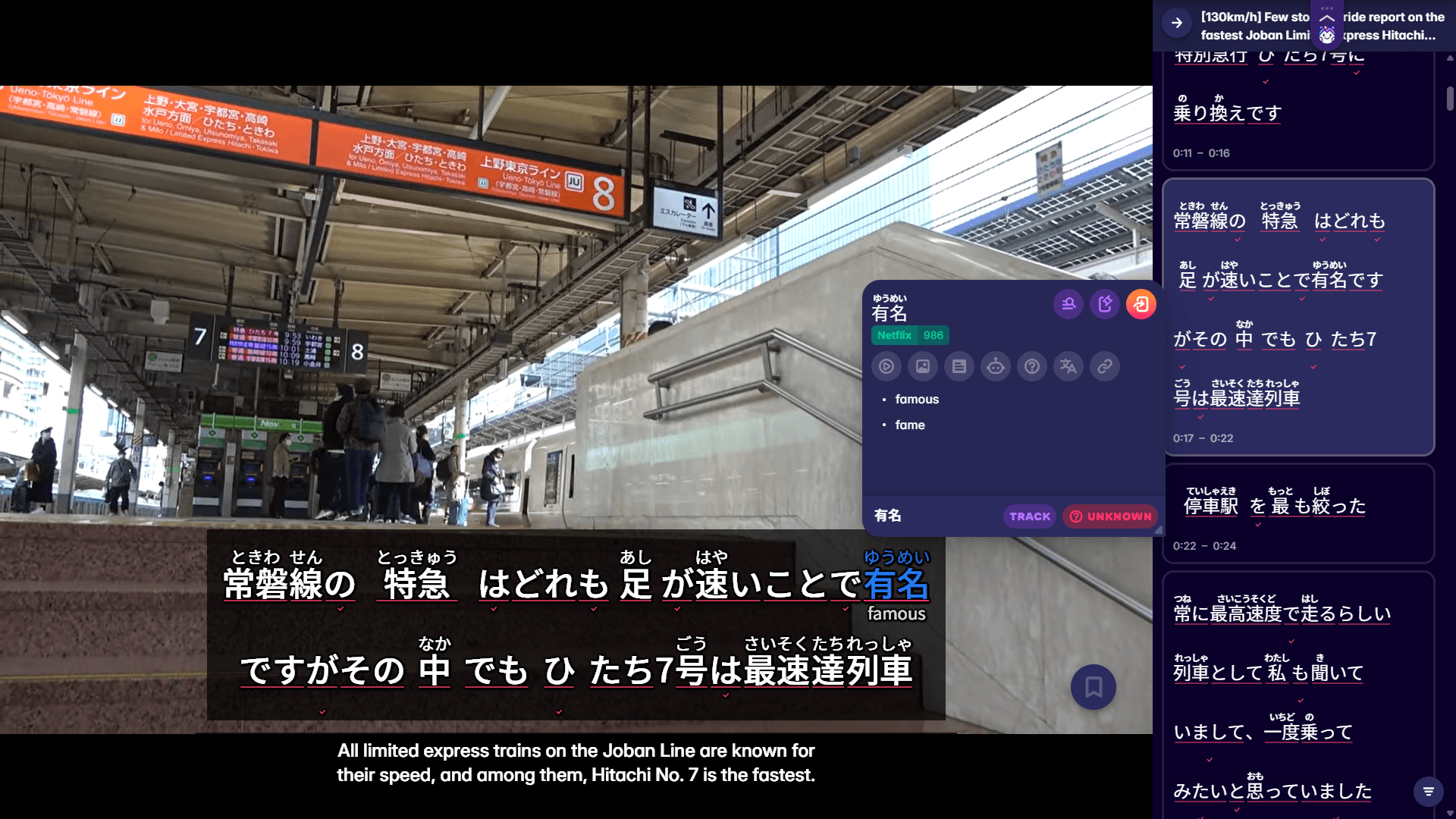
If you want to [build your Japanese vocabulary](https://migaku.com/blog/japanese/best-japanese-learning-apps) through content you enjoy and explore more Japanese banking culture, Migaku's browser extension and app let you look up banking terms and any other words instantly while watching Japanese shows or reading articles. There's a 10-day free trial if you want to check it out.
 ----
## Your financial independence in Japan starts with this list
Learning Japanese banking vocabulary transforms you from a confused foreigner pointing at screens into someone who handles finances confidently. The investment of time to memorize maybe 30 to 40 core words pays off every single time you need to withdraw cash, transfer money, or manage your account. Moreover, these words can help you understand more financial talks on the news, TV shows, and podcasts as well.
> If you consume media in Japanese, and you understand at least some of the messages and sentences within that media, you will make progress. *Period*.
Few things are more useful than banking vocabulary!
----
## Your financial independence in Japan starts with this list
Learning Japanese banking vocabulary transforms you from a confused foreigner pointing at screens into someone who handles finances confidently. The investment of time to memorize maybe 30 to 40 core words pays off every single time you need to withdraw cash, transfer money, or manage your account. Moreover, these words can help you understand more financial talks on the news, TV shows, and podcasts as well.
> If you consume media in Japanese, and you understand at least some of the messages and sentences within that media, you will make progress. *Period*.
Few things are more useful than banking vocabulary!