Japanese Classroom Phrases: Navigate the School Life With Ease
Last updated: March 28, 2026

If you're planning to study Japanese in a classroom environment, you'll want to know the essential phrases that teachers and students use every day. These aren't just random vocabulary words. They're the expressions you'll hear from the moment you step into a Japanese language course until the bell rings. Getting familiar with these classroom phrases before your first day will make you feel way more confident and help you follow along without constantly asking, "Wait, what did sensei just say?"
Common Japanese phrases every student needs to know
Let's start with the phrases you'll use most often as a student. These are the bread-and-butter expressions that'll get you through any lesson in Japan or in a Japanese-language classroom anywhere in the world.
- When you want to ask a question, you'll say (shitsumon ga arimasu), which means "I have a question."
- If you didn't catch something the teacher said, (mou ichido onegai shimasu) is your best friend. It means "one more time, please."
- If you don't understand something, be honest and say (wakarimasen), meaning "I don't understand." Teachers appreciate when students speak up instead of pretending to follow along. And when you do understand, a simple (wakarimashita) lets them know you got it.
- When you need to leave the room for the bathroom, you'd say (toire ni ittemo ii desu ka), literally asking "is it okay if I go to the toilet?"
Politeness matters a lot. You'll want to use (sumimasen) to get the teacher's attention, which works like "excuse me" in English.
Teacher instructions you'll hear constantly
Now for the phrases coming from the other side of the classroom. These are the commands and instructions teachers use to keep the lesson moving smoothly.
Starting the class
The classic start to any class involves (kiritsu), which means "stand up," followed by (rei), meaning "bow." Then comes (chakuseki) or the more casual (suwatte), both meaning "sit down." This ritual happens at the beginning and end of most classes in Japan, creating a clear boundary between class time and break time.
During the lesson
During the lesson, you'll hear (kyoukasho wo hiraite kudasai), which means "please open your textbooks." The teacher might specify a page with (nan peiji). When it's time to practice, (kurikaeshite kudasai) means "please repeat."
Teachers often say (shizuka ni shite kudasai) when the classroom gets too noisy. It means "please be quiet." And when they want you to look at the board, you'll hear (kokuban wo mite kudasai).
Homework assignments
For homework assignments, the phrase is (shukudai). A teacher might say (shukudai wo dashite kudasai), meaning "please turn in your homework." When reviewing previous material, you'll hear (fukushuu), which means "review."
Core vocabulary for school life
Beyond just phrases, you'll need some core vocabulary to navigate conversations about school.
Different subjects have their own names.
Japanese | Reading | English |
|---|---|---|
suugaku | Mathematics | |
eigo | English | |
rekishi | History | |
kagaku | Science | |
nihongo | Japanese language |
School supplies come up all the time.
Japanese | Reading | English |
|---|---|---|
enpitsu | Pencil | |
pen | Pen | |
keshigomu | Eraser | |
nooto | Notebook | |
chooku | Chalk | |
kokuban | Blackboard |
Basic phrases for classroom interactions
As you progress beyond beginner level, classroom language gets more nuanced.
When presenting in front of the class, you might start with (happyou shimasu), meaning "I will present." To introduce your topic, use (kyou no teema wa), or "today's theme is."
During discussions, (iken) means "opinion." You can share yours by saying (watashi no iken de wa), which translates to "in my opinion." To politely disagree, learners often use (demo), meaning "but" or "however."
When asking for clarification on grammar points, you might say (kono bun no bunpou wo setsumei shite kudasai), asking the teacher to explain the grammar of a particular sentence. Being specific about what confuses you helps teachers give better explanations.
Making classroom phrases stick in your memory
The best way to learn these expressions involves actually using them, even if you're studying alone.
- Try narrating your own study sessions in Japanese. When you open your textbook, say (kyoukasho wo hirakimasu) out loud. When you finish a practice exercise, tell yourself (owarimashita).
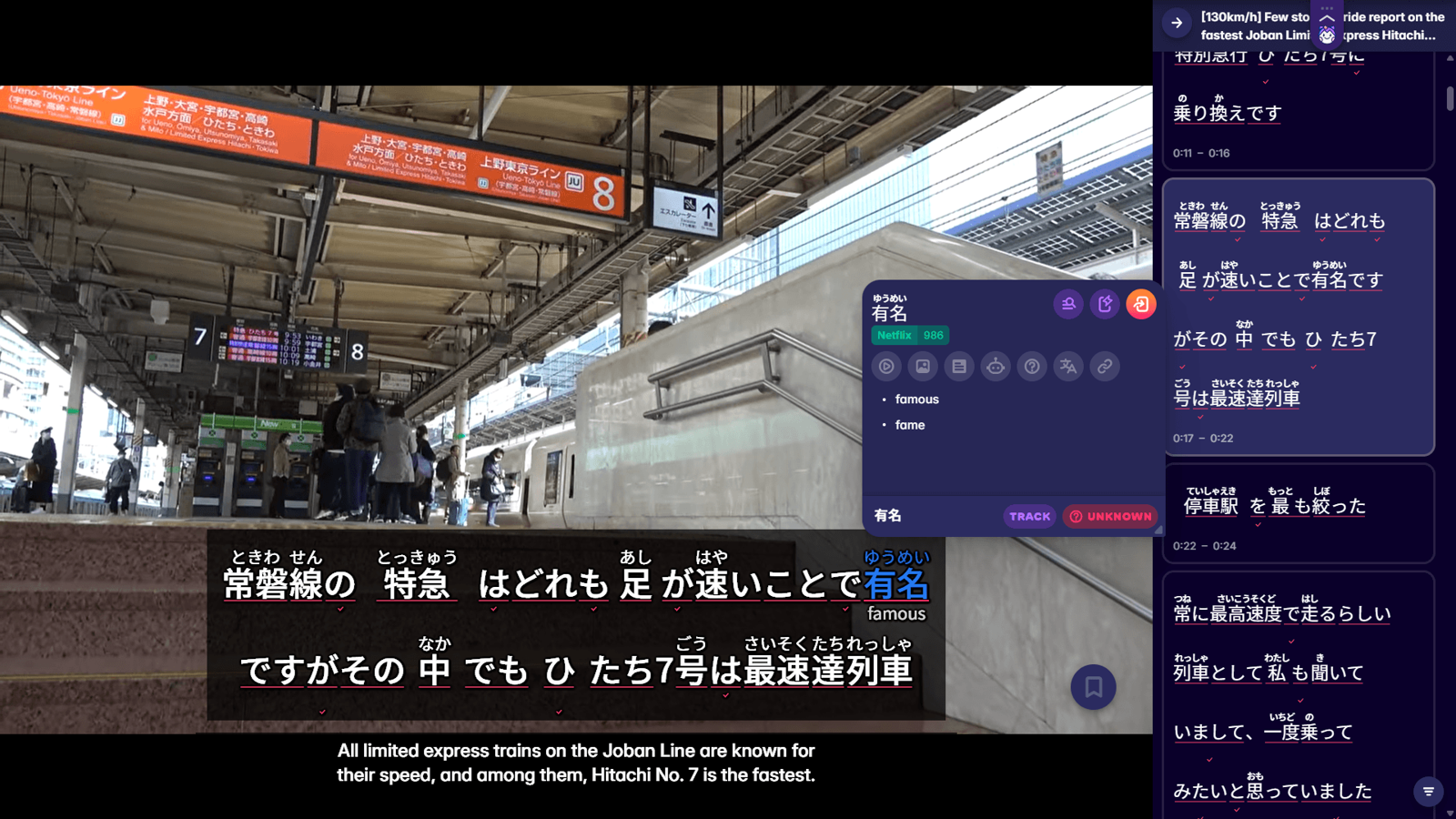
- Watching Japanese content set in schools gives you natural context for these phrases. School anime and dramas use classroom language constantly, letting you hear proper pronunciation and see when each phrase gets used. You'll pick up on the rhythm and flow of classroom interactions way faster than memorizing a list.
- Creating your own flashcards with these phrases helps too, especially if you include example sentences showing how each phrase works in context. Seeing (shitsumon ga arimasu) in isolation is less memorable than seeing it in a full sentence like (sensei, shitsumon ga arimasu), meaning "teacher, I have a question."
If you're serious about picking up Japanese from real content like those school anime or Japanese dramas, Migaku's browser extension and app let you look up words and save phrases instantly while watching. Makes the whole immersion learning process way smoother. There's a 10-day free trial if you want to check it out.
FAQs on Japanese classroom expressions
Even for self-learners, classroom phrases teach you fundamental grammar patterns and vocabulary that extend beyond school. The polite request form (kudasai) works in restaurants, shops, and offices. Verbs like "open," "close," "read," and "write" that appear in classroom instructions are everyday words you'll need anyway.
Getting the most from your classroom experience
Japanese classroom phrases give you the language tools to participate fully in structured learning environments. The phrases used here are practical, high-frequency expressions that reflect important cultural practices around education in Japan. Whether you're preparing for your first class or just want to understand school scenes in Japanese media better, this Japanese vocabulary forms an essential part of the language.
The key is treating them as living language, not just vocabulary to memorize. Use them actively, listen for them in context, and pay attention to the situations where each phrase appears. That's how you'll move from knowing the phrases to actually owning them as part of your Japanese ability.
If you consume media in Japanese, and you understand at least some of the messages and sentences within that media, you will make progress. Period.
Learn the words, and participate better!🏫👩🏫