# Japanese Convenience Store Phrases: Vocabulary You Should Know Before You Enter
> Shop at a Japanese konbini and speak with staff using essential convenience store vocabulary: questions, answers, and slang for real-life situations.
**URL:** https://migaku.com/blog/japanese/japanese-convenience-store-phrases
**Last Updated:** 2026-03-21
**Tags:** vocabulary, phrases
---
Walking into a Japanese convenience store for the first time can feel pretty intimidating if you don't [speak the language](https://migaku.com/learn-japanese). The staff will greet you, ask you questions at the register, and you'll probably just smile and nod awkwardly. Here's the thing though: you only need a [handful of phrases](https://migaku.com/blog/japanese/basic-japanese-phrases) to handle 99% of convenience store interactions. Once you've got these down, grabbing a quick bento or paying your bills at the konbini becomes super easy.
----
## What you'll hear when you walk in
The moment you step into any Japanese convenience store, you'll hear (irasshaimase). This is the standard greeting that literally means "welcome" or "please come in." You don't need to respond to this at all. Seriously, just ignore it and go about your shopping. The staff doesn't expect a reply.
Sometimes you'll also hear (konnichiwa) during daytime hours, which is just a casual "hello." Again, no response needed unless you want to be friendly and say it back.
----
## The basic phrases you absolutely need
If there's only one phrase you learn, make it (kore o kudasai). This means "this one, please" and works for basically everything. Point at what you want and say this. Done.
You can also use (onegaishimasu), which means "please" in a more general sense. Both work fine. The kudasai version is slightly more direct, but honestly, convenience store staff hear both all day long.
----
## Questions that the cashier may ask you
Here's where most people panic. The convenience store staff will ask you several questions at the register, and if you don't understand them, you'll just stand there frozen. Let me break down the most common ones.
- (fukuro wa irimasuka) means "do you need a bag?" Since 2020, plastic bags in Japan cost around 3 to 5 yen, so they always ask. If you want a bag, say (hai) or (onegaishimasu). If you don't need one, say (daijoubu desu), which means "I'm fine" or "no thanks."
- Another common question is (atatamemasuka), which means "should I heat this up?" This comes up when you're buying bento boxes, onigiri, or anything that could be microwaved. Say (hai) if you want it heated, or (iie) if you want it cold.
- The point card question is probably the most frequent: (pointo kaado wa arimasuka) or sometimes just (kaado wa arimasuka). They're asking if you have a loyalty point card. If you don't, just say (nai desu) or shake your head. They'll move on immediately.
----
## Paying and finishing up
When you're ready to pay, the cashier will tell you the total. You'll hear (en desu) after the number. The yen amount will be displayed on the register screen anyway, so even if you don't catch the spoken number, you're good.
If you want to pay with a specific method, you can say (kaado de) for credit card, or (genkin de) for cash. Most places now accept IC cards like Suica or Pasmo, so you can just tap and go without saying anything.
After paying, you'll hear (arigatou gozaimashita), which means "thank you very much." You can respond with (arigatou) or just nod and leave. Nobody expects a full formal response.
----
## Special requests at the konbini register
Sometimes you need chopsticks, a spoon, or a straw. The magic word here is (kudasai) again. Just say (hashi o kudasai) for chopsticks, (supuun o kudasai) for a spoon, or (sutoroo o kudasai) for a straw.
If you want separate bags for cold and hot items, you can say (betsubetsu ni), which means "separately." Point at the items you want separated, and they'll get it.
Want extra sauce packets or napkins? Say (mou sukoshi kudasai), which means "a little more, please." Works every time.
----
## When you need help finding something
Looking for the bathroom? Ask (toire wa doko desuka). Most konbini have public restrooms, and the staff will point you in the right direction.
If you're searching for a specific item, you can say (sumimasen) to get their attention, then ask (doko desuka) while showing them a picture on your phone or saying the item name. They'll walk you right to it.
The ATM question comes up a lot too. Say (eetiiemu wa doko desuka). Most convenience stores have ATMs that accept international cards, usually near the entrance.
----
## Understanding what the convenience store staff says
You'll often hear (shou shou omachi kudasai), which means "please wait a moment." This comes up when they need to check something in the back, process a payment service, or help another customer first. The desu at the end of many sentences is just a polite ending particle that makes statements formal.
When they're bagging your items, you might hear (kochira de yoroshii desuka), which roughly means "is this okay?" They're usually confirming how they've arranged your items or asking if the bagging method works for you. Just nod or say (hai).
----
## Learn essential Japanese convenience store phrases
Next time you walk into a Japanese convenience store, you'll know exactly what to expect. The staff greets you with irasshaimase. You grab your stuff. At the register, they ask about bags, heating, and point cards. You answer with simple yes or no responses. You pay. They thank you. You leave.
That's the whole interaction. Maybe 30 seconds of actual speaking, most of it just listening and nodding. The phrases I've covered here will handle everything you need.
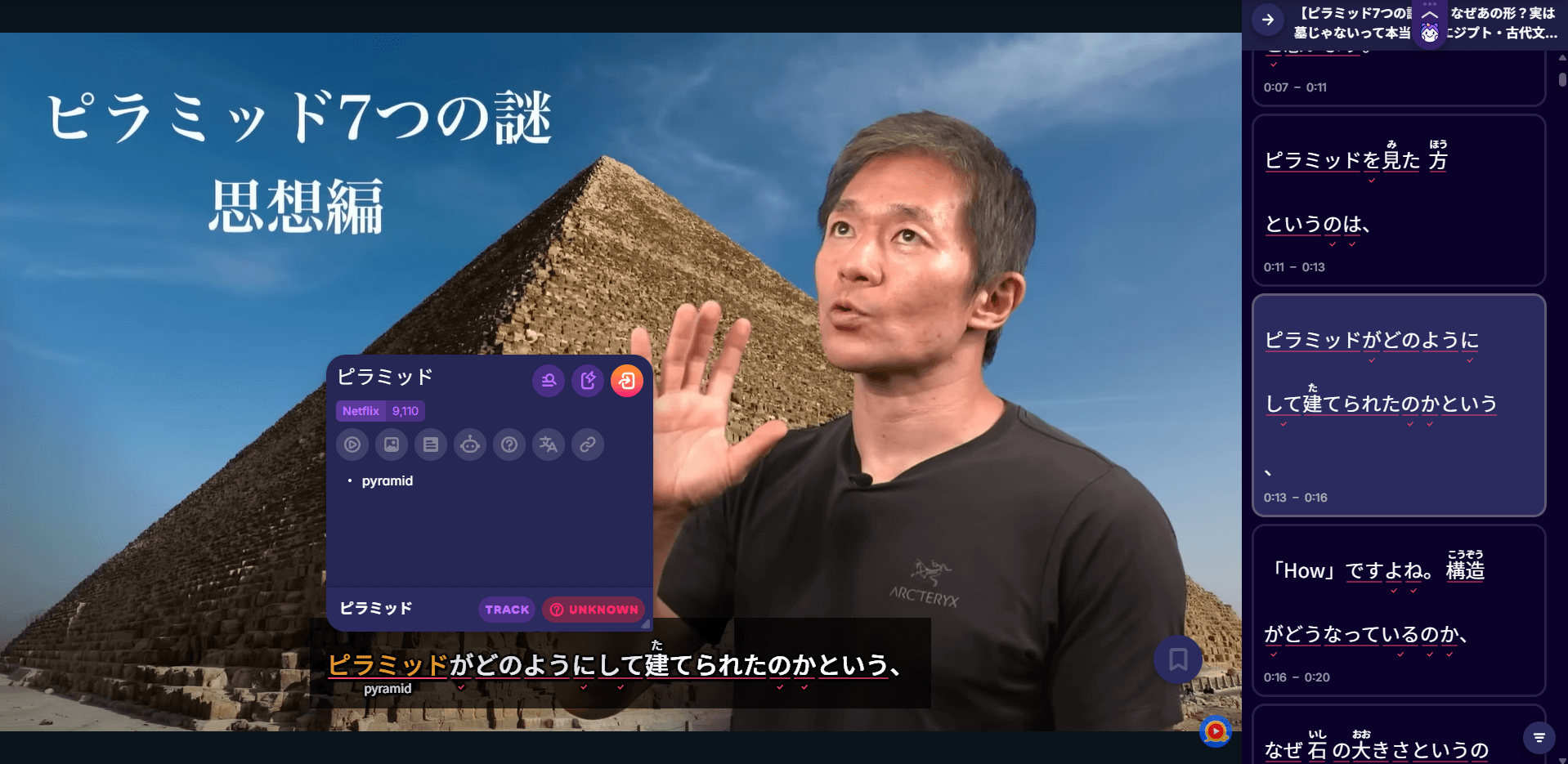
Anyway, if you want to level up your Japanese beyond convenience store basics, Migaku's browser extension and app let you [learn from real content](https://migaku.com/blog/japanese/best-japanese-software) like YouTube videos and news articles. You can look up words instantly and create flashcards from actual native material. There's a 10-day free trial if you want to check it out.
 ----
## Use Japanese phrases even if you're not confident
Most convenience store staff in Japan don't speak much English, especially outside major tourist areas. They deal with the same routine questions hundreds of times per day, so they'll understand you even if your accent is terrible. Many Japanese dramas, movies, and shows include scenes happening at convenience stores. Pause whenever you encounter these scenes, and mine relevant sentences and words for your study! Practicing these simple phrases builds your confidence for more complex conversations later.
> If you consume media in Japanese, and you understand at least some of the messages and sentences within that media, you will make progress. _Period_.
The first try is always the hardest.
----
## Use Japanese phrases even if you're not confident
Most convenience store staff in Japan don't speak much English, especially outside major tourist areas. They deal with the same routine questions hundreds of times per day, so they'll understand you even if your accent is terrible. Many Japanese dramas, movies, and shows include scenes happening at convenience stores. Pause whenever you encounter these scenes, and mine relevant sentences and words for your study! Practicing these simple phrases builds your confidence for more complex conversations later.
> If you consume media in Japanese, and you understand at least some of the messages and sentences within that media, you will make progress. _Period_.
The first try is always the hardest.