Japanese Interview Keigo: Prepare for Your Japanese Job Interviews With Honorifics & Etiquette
Last updated: March 22, 2026

Preparing for a job interview in Japan means learning way more than just basic Japanese. You need to master keigo, the formal honorific language that shows respect and professionalism. Getting this right can make or break your interview, especially at traditional Japanese companies where etiquette matters just as much as your qualifications. This guide covers the essential keigo phrases, common interview questions with proper responses, and the cultural expectations you need to nail your Japanese job interview.
- Different types of keigo in Japanese
- Essential keigo phrases for greetings and self-introduction
- Common interview questions with proper keigo responses
- How to use keigo with the interviewer
- Closing the interview and thank-yous
- Business Japanese vocabulary you need to know
- Learn Japanese interview etiquette
- Practicing keigo for real Japanese job interviews
Different types of keigo in Japanese
Keigo refers to the honorific language system in Japanese that expresses different levels of politeness and respect. The word itself combines (respect) and (language).
Keigo splits into three main categories, and you need to understand each one for job interviews:
- Teineigo is the polite form you probably already know. It uses and endings. This is your baseline politeness level for interviews.
- Sonkeigo is respectful language that elevates the person you're talking about. You use this when referring to the interviewer or the company. For example, instead of saying う (to say), you'd use る.
- Kenjougo is humble language that lowers yourself. You use this when talking about your own actions to show modesty. Instead of る (to see), you'd say する.
The balance between these three types determines whether you sound appropriately professional or awkwardly stiff. Most foreigners learning Japanese struggle with this because there's no real equivalent in English.
Essential keigo phrases for greetings and self-introduction
Walking into that interview room requires specific phrases. You can't just wing it with casual Japanese.
Start with your entrance greeting. When you enter, bow slightly and say: します (Excuse me for interrupting). This shows you understand basic etiquette.
Your self-introduction should follow this pattern: はなおをいただき、ありがとうございます。(Your name)とします。どうぞよろしくおいいたします。
Notice the verb す instead of う. That's kenjougo in action, humbling yourself when stating your name.
When asked to sit, wait for permission. The interviewer will say ってください or どうぞ. You respond with します before sitting. Seems formal, but Japanese companies expect this level of politeness.
Common interview questions with proper keigo responses
Let me walk you through the questions that come up in basically every Japanese job interview, with the keigo you actually need.
Previous experience
When asked about your previous experience (についてえてください), structure your answer like this:
- では、(company name)で(number) 、(position)として めておりました。 な は(describe duties)でございました。
The verb めておりました uses kenjougo to humbly describe your work. Same with でございました instead of でした.
Strengths and weaknesses
For strengths and weaknesses, you need to frame everything carefully. When discussing strengths (み):
- の みは(strength)でございます。 の では、この を かして(specific achievement)いたしました。
Notice instead of . The reading changes to sound more formal. These details matter.
Weaknesses require even more care. You want to show self-awareness without sounding incompetent:
- としましては、(weakness)がございます。しかし、(improvement effort)することで に めております。
Motivation
The motivation question () is another commonly asked question. This is where you explain why you want to work in Japan at this specific company:
- を した は、(specific reason)でございます。 の を かし、 できると じております。
Use (your company) when speaking, never which is for writing. Also, じる is the humble form of う (to think).
How to use keigo with the interviewer
How you address the interviewer directly shows your understanding of honorific language in practice.
- When the interviewer asks you a question, acknowledge it with いたしました (I understand) or simply はい before answering. Don't just jump into your response.
- If you need clarification, use: れりますが、もうおきしてもよろしいでしょうか。This translates to "I'm sorry to trouble you, but may I ask you to repeat that once more?" The phrase れりますが is incredibly useful for any request that might inconvenience someone.
- When referring to what the interviewer said or asked, use sonkeigo verbs. If they asked you something, say った (what you said earlier), not った.
- If you need time to think, don't just sit in silence. Say: そうですね、or おちください (please wait a moment). This keeps the conversation flowing naturally.
Closing the interview and thank-yous
How you end the interview matters just as much as how you started it.
When the interviewer indicates the interview is ending, respond with: はなおをいただき、にありがとうございました。
If you want to emphasize your interest, add: ともでかせていただきたいとっております。
This means "I very much hope to have the opportunity to work at your company." Shows enthusiasm without sounding desperate.
Stand up after the interviewer does, never before. Bow, collect your belongings, and move to the door. At the door, turn back, bow again, and say いたします.
After leaving, send a thank-you email within 24 hours. Use formal written Japanese with phrases like: のをいただき、ありがとうございました。
Business Japanese vocabulary you need to know
Beyond keigo grammar, specific business vocabulary separates beginners from people ready for professional environments.
Japanese | English |
|---|---|
Experience — used constantly when discussing your background | |
Practical work experience | |
Work duties / Operations — essential when describing what you did at previous jobs | |
Previous job | |
Changing jobs | |
/ | Job hunting |
する | To be in charge of something |
Sales representative | |
Planning staff | |
Your company (for writing, e.g., in your application) | |
Your company (for speaking during the interview) | |
Ability | |
Qualification | |
Special skill |
Learn Japanese interview etiquette
The Japanese language matters, but so does how you physically conduct yourself. Etiquette can sink your chances even if your keigo is perfect.
- Timing is critical. Arrive 10 minutes early, but don't enter the building more than 15 minutes before your appointment. If you're running late for any reason, call immediately and apologize profusely using phrases like 申しございません.
- Bowing happens at specific moments. When you enter the room, bow at about 30 degrees. When introducing yourself, bow again. When leaving, bow at the door and say はありがとうございました. The depth and duration of your bow communicates respect.
- Posture matters more than you'd think. Sit with your back straight, hands folded in your lap (men) or on your thighs (women). Don't cross your legs. Don't lean back. Look attentive and engaged.
- Business cards () require their own protocol. Receive them with both hands, look at them carefully, and place them on the table in front of you during the meeting. Never stuff them in your pocket immediately or write on them in front of the person.
- Your appearance needs to match Japanese business standards. Conservative suit (black, navy, or dark gray), white shirt, minimal accessories. For women, natural makeup and hair tied back. This isn't the time to express your personal style.
Practicing keigo for real Japanese job interviews
Learning this stuff from a blog helps, but you need actual practice to internalize keigo patterns.
- Record yourself answering common interview questions. Listen back and check if you're using the right honorific forms. Are you elevating the company and interviewer while humbling yourself? Are you maintaining consistent politeness levels?
- Find a language exchange partner or tutor who can conduct mock interviews. Native speakers will catch mistakes you don't even realize you're making. They'll also tell you if something sounds unnatural or overly stiff.
- Watch Japanese interview preparation videos on YouTube. Pay attention to the specific phrases people use, their tone, and their body language. You can learn business Japanese formally, but seeing it in context makes a huge difference.
- Study real job interview transcripts if you can find them. The patterns repeat across industries. Once you recognize the structure, you can adapt it to your own situation.
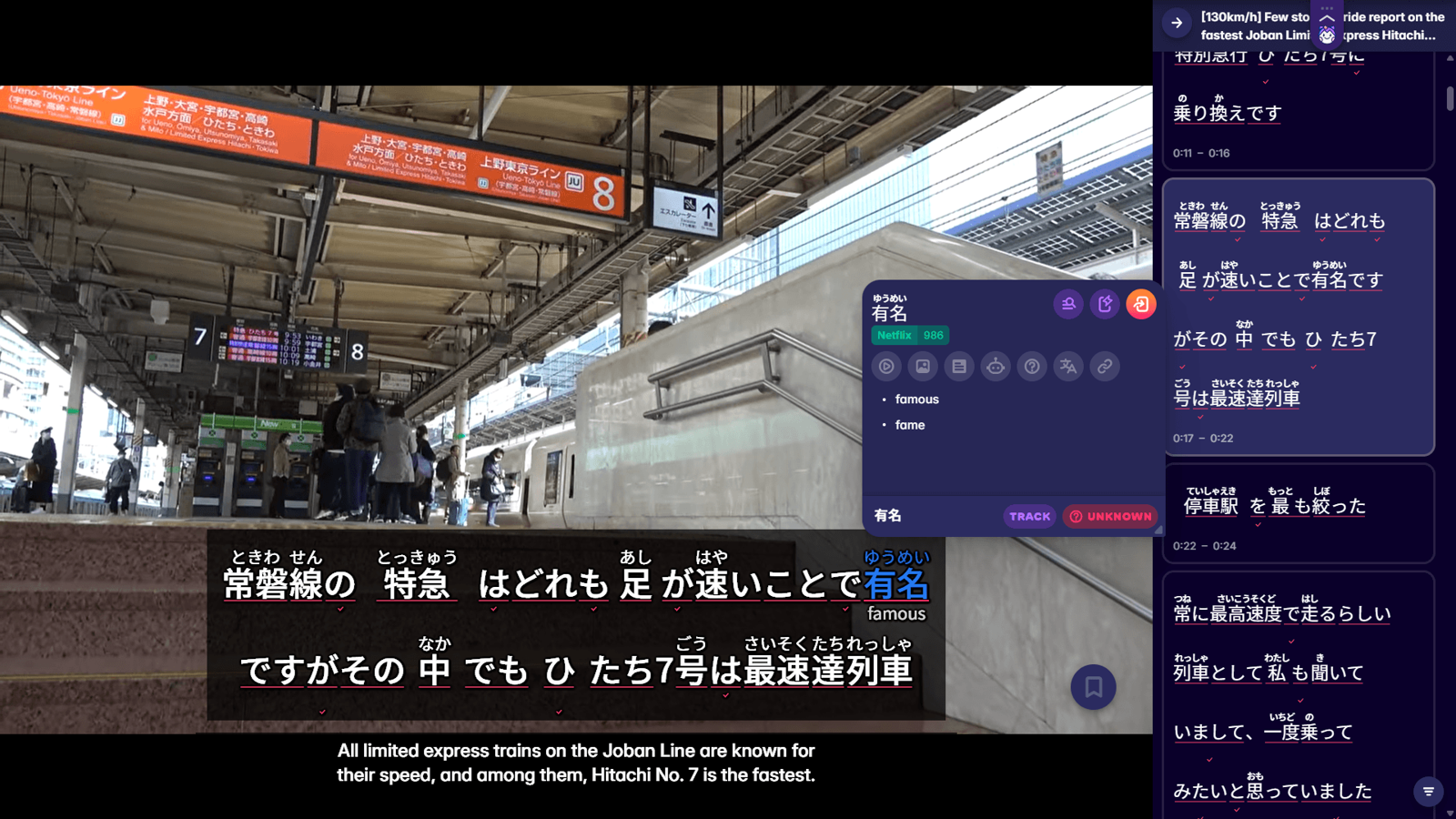
Anyway, if you want to level up your Japanese with real content, Migaku's browser extension and app let you look up words and phrases instantly while watching Japanese shows or reading articles. Makes learning business vocabulary and keigo patterns way more practical than just drilling flashcards. There's a 10-day free trial if you want to check it out.
Japanese keigo demonstrates cultural understanding beyond just language ability
It shows how you can respect Japanese business culture and navigate social hierarchies. These things matter in Japanese work environments where harmony and proper relationships keep everything running smoothly. Reading about keigo helps you understand the concepts, but you need immersion in actual business Japanese to really internalize these patterns. Watching Japanese business dramas, interview videos, and professional content gives you the repetition your brain needs to make these forms automatic.
If you consume media in Japanese, and you understand at least some of the messages and sentences within that media, you will make progress. Period.
Learn the culture, and not just the language!