# Japanese Office Vocabulary: Japanese Business Vocabulary for Foreign Professionals
> Learn essential Japanese office vocabulary for working in Japan. Job titles, keigo, business phrases, and workplace culture terms you actually need.
**URL:** https://migaku.com/blog/japanese/japanese-office-vocabulary
**Last Updated:** 2026-03-20
**Tags:** vocabulary, phrases
---
If you're planning to work in Japan or have already landed a job at a Japanese company, you'll quickly realize that [casual Japanese](https://migaku.com/blog/japanese/basic-japanese-phrases) won't cut it in the office. The workplace has its own vocabulary, hierarchy-based language, and cultural expressions that you just don't encounter in textbooks. I've seen [Japanese learners](https://migaku.com/learn-japanese) struggle with this transition because office Japanese feels like learning a whole new language on top of what they already know. This guide covers the essential Japanese office vocabulary you need to actually function in a professional environment, from job titles to cultural concepts.
----
## Understanding the hierarchy through job titles
Japanese companies run on strict hierarchy, and the vocabulary reflects this reality. You can't just call everyone by their name and move on. Every job title matters because it determines how you speak to someone and how they speak to you.
- The top of the food chain is the (shachō), which means company president or CEO.
- Then you've got (fuku-shachō) for vice president.
- Below that, you'll find (buchō), the department head or general manager. This person runs an entire department and has serious decision-making power.
- Moving down, there's (kachō), the section chief who manages a smaller team within a department.
- Then (kakarichō), a subsection chief who oversees an even smaller group.
- Regular employees are called (shain), while new employees fresh out of university are (shinnyū shain).
- Part-time workers have their own terms too. (arubaito), often shortened to (baito), refers to part-timers, usually students or temporary workers.
- Contract employees are (keiyaku shain).
Here's the thing about these titles: you use them when addressing people. Instead of saying "Mr. Tanaka," you'd say "Tanaka-buchō" if he's a department head. The title becomes part of how you refer to your superior in conversation.
----
## Essential office items and spaces in business Japanese vocabulary
Walk into any Japanese office, and you'll need vocabulary for the physical stuff around you.
| Japanese | English |
| - | - |
| | Meeting room |
| | Desk |
| | Desk setup (including chair and space) |
| | Documents / Paperwork |
| | Business card |
| | Report |
| | Contract |
| | Pen |
| / | Mechanical pencil |
| | Stapler |
| | Paper clip |
| | Copy machine |
| | Printer |
| | Computer |
----
## Work verbs and daily phrases in business vocabulary
Learning how to talk about work itself requires specific verbs.
| Japanese | English |
| - | - |
| | To work |
| | I'm employed at |
| | To attend a meeting |
| | To hold a meeting |
| | To give a presentation |
| | To submit documents / reports |
| | To check / verify |
| | To take a day off |
| | To formally request leave |
| | Overtime work |
| | To do overtime |
----
## Keigo and honorific language
Here's where [business Japanese](https://migaku.com/blog/japanese/anime-manga-business-japanese) gets tricky. Keigo is the system of honorific language that you absolutely need in the workplace. It has three main types:
1. (sonkeigo) for showing respect to superiors,
2. (kenjōgo) for humbling yourself,
3. and (teineigo) for general politeness.
The verb **"to say"** changes completely depending on who's saying it.
1. When your superior says something, you use (ossharu).
2. When you're saying something to a superior, you humble yourself with (mōsu) or (mōshi ageru).
**"To do"** follows the same pattern.
1. Your superior "does" something using (nasaru),
2. while you humble your own actions with (itasu).
When asking someone **to look** at something, you don't use the regular (miru).
1. Instead, you say (goran ni naru) when your superior is looking,
2. or (haiken suru) when you're looking at something they showed you.
The word for **"to know"** shifts too.
1. (gozonji desu ka) asks if a superior knows something,
2. while (zonjite orimasu) means you know something, using humble language.
----
## Japanese business culture concepts
Some vocabulary only makes sense within Japanese business culture.
| Japanese | English | Explanation |
| - | - | - |
| | Hōrensō | Crucial concept combining three kanji: 報告 (hōkoku, reporting), 連絡 (renraku, informing), and 相談 (sōdan, consulting). Means constantly keeping superiors informed about what you're doing. |
| | Nemawashi | Literally "going around the roots." Informal consensus-building before official meetings. Talking to key people individually, getting buy-in, smoothing out objections before formal decision-making. Japanese companies rely heavily on this. |
| | Senpai | Someone senior to you (not necessarily by job title but by years at the company). Affects how you speak and interact. |
| | Kōhai | Someone junior to you. Affects how you speak and interact. |
| | Nomikai | Drinking parties after work. Pretty much mandatory for building relationships with colleagues. Refusing can hurt career progression, though nobody says this explicitly. |
| | Chōrei | Morning assembly where teams gather to discuss the day's tasks. |
| | Rajio taisō | Radio exercises done before work starts (in some companies). |
----
## Japanese phrases for phone and email communication
Phone vocabulary is super specific in Japanese business settings.
- When you answer the phone, you say (o-denwa arigatō gozaimasu), thanking them for calling.
- To ask who's calling, you use (shitsurei desu ga, dochira-sama deshō ka).
- When transferring a call, you say (shōshō omachi kudasai), asking them to wait a moment.
- If the person isn't available, you might say (tadaima, seki wo hazushite orimasu), meaning they're away from their desk.
Business emails follow strict formatting.
- You start with (osewa ni natte orimasu), a set phrase acknowledging your ongoing business relationship.
- The subject line is (kenmei).
- Ending an email uses phrases like (yoroshiku onegai itashimasu), which doesn't translate directly but expresses something like "I humbly ask for your favorable consideration."
- You might also see (nanitozo yoroshiku onegai itashimasu) for extra formality.
----
## Preparing for a job interview
Job interview vocabulary deserves its own attention if you're trying to land a position at Japanese companies.
- The interview itself is (mensetsu).
- Your resume is (rirekisho), which follows a specific format in Japan, completely different from Western resumes.
- When introducing yourself, you'll use (jiko shōkai). A common opening is (honjitsu wa ojikan wo itadaki, arigatō gozaimasu), thanking them for their time today.
- They'll ask about your motivation with (shibō dōki). Your strengths are (chōsho) and weaknesses are (tansho). Previous work experience is (shokureki).
- When the interview ends, you bow and say (honjitsu wa arigatō gozaimashita).
The thank-you email you send afterward can make or break your chances, so you should [learn Japanese](https://migaku.com/blog/japanese/how-long-does-it-take-to-learn-japanese) business email etiquette thoroughly.
----
## Modern workplace terms
The Japanese language has adapted to include modern work concepts.
| Japanese | English |
| - | - |
| / | Remote work |
| | Working from home |
| / | Video conference |
| | Webcam |
| | To mute yourself |
| | Project deadline |
| | Project |
| / | Team (班 is for smaller work groups) |
| | Work-life balance |
| / | Burnout |
----
## Common mistakes learners make
Most people [learning Japanese vocabulary](https://migaku.com/blog/japanese/best-japanese-anki-decks) for the office make predictable errors.
1. They use casual forms with superiors, which can seriously damage relationships. Saying (wakatta) instead of (shōchi shimashita) when acknowledging an instruction sounds rude and unprofessional.
2. People also struggle with when to use which level of keigo. You don't need maximum honorific language with colleagues at your level, but you absolutely need it with clients and upper management. The context determines the appropriate level, and this takes time to internalize.
3. Not understanding the cultural concepts behind certain vocabulary causes problems too. You might know the word (zangyō) means overtime, but if you don't understand that refusing overtime can be seen as not being a team player, you'll miss the cultural weight the word carries.
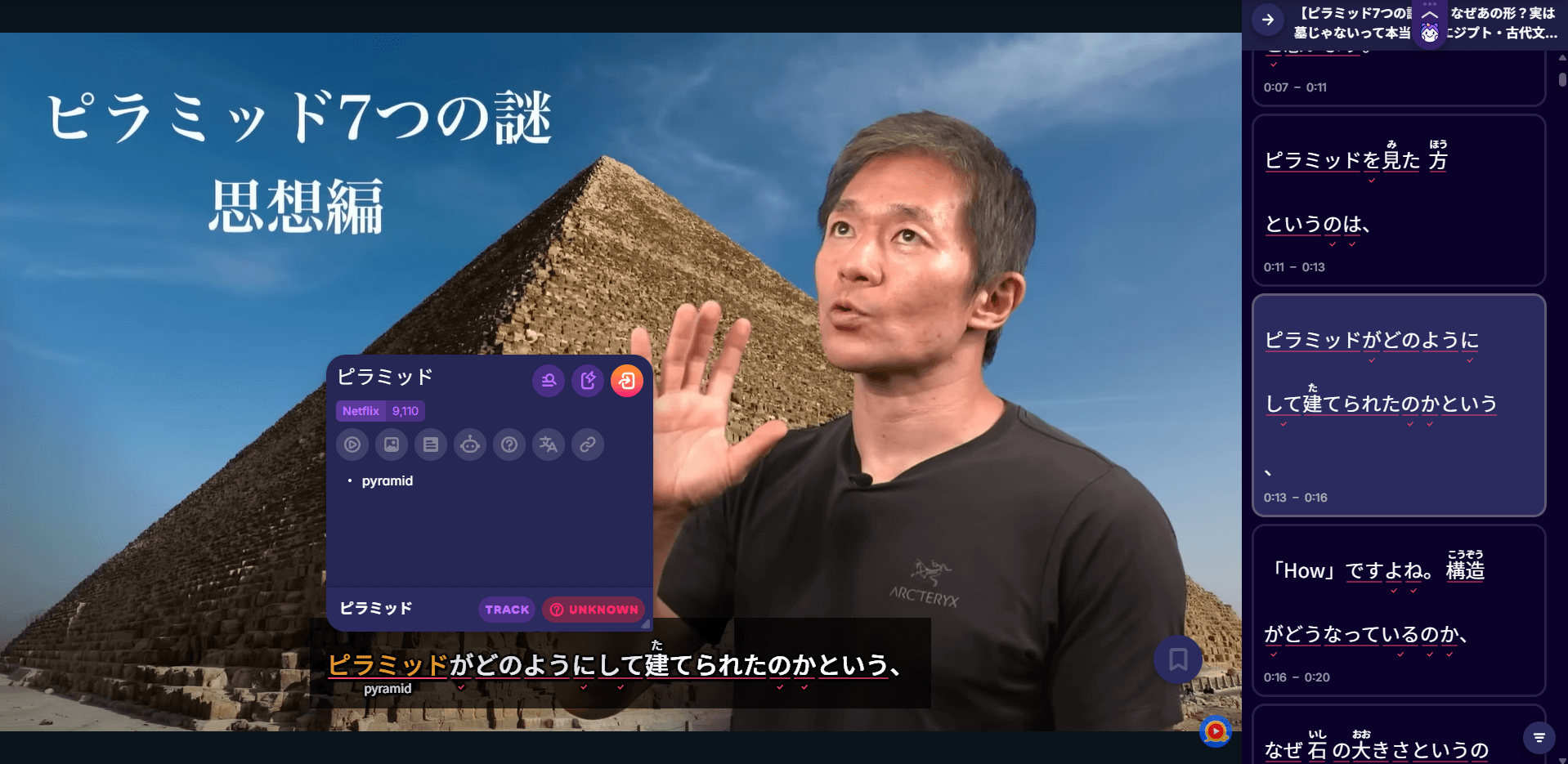
Anyway, if you want to learn Japanese vocabulary in context rather than isolated lists, Migaku's browser extension and app let you look up words instantly while watching Japanese content or reading business articles. You can save words directly into your study deck and review them with spaced repetition. There's a 10-day free trial if you want to check it out.
 ----
## Improve your language proficiency with immersion
Watching Japanese business dramas gives you realistic examples of how people actually speak in offices. Shows set in corporate environments use this vocabulary constantly, and you'll hear the hierarchy and keigo in action. Notice which phrases the characters use repeatedly. Japanese business communication relies heavily on set phrases, so once you learn them, you can plug them into different situations.
> If you consume media in Japanese, and you understand at least some of the messages and sentences within that media, you will make progress. _Period_.
Repeat. Remember. Retain.
----
## Improve your language proficiency with immersion
Watching Japanese business dramas gives you realistic examples of how people actually speak in offices. Shows set in corporate environments use this vocabulary constantly, and you'll hear the hierarchy and keigo in action. Notice which phrases the characters use repeatedly. Japanese business communication relies heavily on set phrases, so once you learn them, you can plug them into different situations.
> If you consume media in Japanese, and you understand at least some of the messages and sentences within that media, you will make progress. _Period_.
Repeat. Remember. Retain.