# Japanese Transport Vocabulary: Essential Transportation Vocabulary for Travel
> Read this guide and navigate Japan's transportation system with confidence. Learn Japanese transport vocabulary for trains, buses, and stations.
**URL:** https://migaku.com/blog/japanese/japanese-transport-vocabulary
**Last Updated:** 2026-03-03
**Tags:** vocabulary, phrases
---
If you're planning a trip to Japan or just want to learn how to talk about buses, trains, and other ways to get around, you're in the right place. Japan has one of the most efficient public transportation systems in the world, and knowing the right vocabulary makes everything easier. Whether you're navigating Tokyo's subway system or catching a shinkansen to Kyoto, having these words and phrases ready will save you from a lot of confusion. Let's get into the [essential Japanese](https://migaku.com/learn-japanese) transport vocabulary you'll actually use. 🚅
---
## Why Japanese transport vocabulary matters
Here's the thing: you can visit Japan if you only speak English, but you'll have a way better time if you know some [basic Japanese transportation terms](https://migaku.com/blog/japanese/basic-japanese-phrases). Major stations in Tokyo and other big cities have English signs, sure, but once you're buying tickets, asking for directions, or trying to figure out which platform you need, [Japanese vocabulary](https://migaku.com/blog/japanese/how-to-learn-japanese-vocabulary) becomes super helpful.
The train system in Japan is incredibly punctual and complex. There are different train types, multiple rail companies, and stations that feel like underground cities. Having the right words ready means you can ask questions, read signs faster, and actually understand what's happening around you.
Plus, learning this vocabulary gives you insight into how Japanese people think about [travel](https://migaku.com/blog/japanese/japanese-travel-phrases) and movement. The language reflects the cultural importance of public transportation in Japan.
---
## Learn Japanese basic vehicle vocabulary
Let's start with the fundamental words for different types of transportation. These are the building blocks you'll use constantly.
- (densha) means "train" and it's probably the word you'll use most often. When people in Japan talk about taking the train, this is the word they use.
- (chikatetsu) is "subway" or "metro." Tokyo's subway system is massive, and you'll see this word everywhere in underground stations.
- (basu) is "bus." Pretty straightforward since it's borrowed from English. Buses are super common for local travel and getting to areas trains don't reach.
- (takushii) means "taxi." Again, borrowed from English. Taxis in Japan are clean and reliable but expensive compared to trains.
- (jitensha) is "bicycle." Many Japanese people bike everywhere, and you'll see rental bikes available in most cities.
- (kuruma) means "car." While trains dominate in cities, you'll need a car to explore rural Japan properly.
- (hikouki) is "airplane." Essential vocabulary if you're flying between Japanese cities or arriving at an airport.
- (fune) means "ship" or "boat." Useful for ferry rides to islands or scenic boat tours.
---
## Train types you need to know
Japan has different categories of trains based on speed and the number of stops they make. Understanding these distinctions helps you choose the right train and avoid accidentally taking a slow local train when you're in a hurry.
- (shinkansen) is the famous bullet train. These high-speed trains connect major cities across Japan and are incredibly fast. The shinkansen is a point of pride in Japan and honestly lives up to the hype.
- (tokkyuu) means "limited express." These trains make fewer stops than regular express trains and usually require a special ticket or surcharge.
- (kyuukou) is "express." These skip some stations to get you there faster than local trains.
- (kaisoku) means "rapid." Similar to express but the exact stopping pattern varies by line.
- (kakueki teisha) or just (futsuu) means "local train." These stop at every single station. They're slower but sometimes necessary to reach smaller stations.
Knowing these distinctions matters because you might be standing on a platform when a rapid train blows past the station you need. Always check which type of train stops where you're going.
---
## Airport and flight vocabulary
If you're flying into Japan or taking domestic flights, these terms come in handy at the airport.
- (kuukou) means "airport." Tokyo has two main airports: (Narita) and (Haneda).
- (kokusaisen) means "international flight."
- (kokunaisen) is "domestic flight."
- (toujouken) means "boarding pass."
- (tenimotsu) is "baggage" or "luggage."
- (touchaku) means "arrival."
- (shuppatsu) means "departure."
- (toujouguchi) is "boarding gate."
---
## Bus-specific Japanese words
Buses work a bit differently than trains in Japan, so these terms are worth knowing.
- (basutei) means "bus stop."
- (unchin) means "fare." Many buses in Japan charge based on distance, so you take a ticket when you board and pay the corresponding fare when you exit.
- (seiriken) is the numbered ticket you take when boarding a bus. The number corresponds to the fare you'll pay.
- ボタン (kousha botan) means "stop button." You press this to signal you want to get off at the next stop.
- からる (mae kara noru) means "board from the front." Some buses have specific boarding procedures.
- ろからりる (ushiro kara oriru) means "exit from the rear."
---
## Japanese vocabulary for station navigation
Japanese train stations can be enormous and confusing. Tokyo Station has over 200 exits. Yeah, 200. Having the right vocabulary to navigate these places is essential.
- (eki) simply means "station." You'll see this everywhere.
- (kaisatsu) is the "ticket gate" where you scan your ticket or IC card to enter and exit the station area.
- (hoomu) means "platform." Borrowed from English "home," this is where you wait for trains.
- (deguchi) means "exit." Stations have numbered exits, so you'll see signs like (higashiguchi, "east exit").
- (iriguchi) is "entrance."
- (norikae) means "transfer" or "connection." You'll use this constantly when changing from one train line to another.
- (kippu) is "ticket." Though many people use IC cards now, you'll still need to know this word.
- (teikiken) means "commuter pass." If you're staying in Japan for a while, these monthly passes save money.
- (jikokuhyou) is "timetable" or "schedule." Japanese trains run on incredibly precise schedules, so these are actually useful.
---
## Seating and ticketing terms
Understanding the different ticket and seat types helps you avoid accidentally sitting in reserved seats or buying the wrong ticket class.
- (shiteiseki) means "reserved seat." On shinkansen and limited express trains, you can pay extra for a guaranteed seat with a specific number.
- (jiyuuseki) is "non-reserved seat" or "unreserved seat." These are first-come, first-served and cheaper than reserved seats.
- (guriin sha) means "green car," which is like first class on Japanese trains. More spacious seats and quieter atmosphere.
- (katamichi) means "one-way ticket."
- (oufuku) is "round-trip ticket."
- (joushuken) means "boarding ticket" or "fare ticket." This is the basic ticket that gets you on the train.
- (tokkyuuken) is "limited express ticket." For some trains, you need both a basic fare ticket and this surcharge ticket.
- (yuusenseki) means "priority seating." These seats near the doors are reserved for elderly people, pregnant women, and people with disabilities. Don't sit here during rush hour unless you really need to.
---
## IC cards and digital ticketing in the transportation system
While this isn't traditional vocabulary, knowing these terms helps you navigate modern Japanese transportation. IC cards have basically replaced paper tickets for most daily travel.
- (Suica) and (Pasmo) are the two main rechargeable smart cards used in the Tokyo area. You tap them at the ticket gates and the fare is automatically deducted.
- (chaaji) means "to charge" or "add money to" your IC card. You'll see this option at ticket machines.
- (zandaka) means "balance." Ticket gates display your remaining balance after you tap your card.
These cards work on basically all trains, subways, and buses in major Japanese cities. They even work at convenience stores and vending machines. Pretty convenient.
---
## Time-related transportation vocabulary in Japanese
Knowing time expressions helps you catch trains and plan your travel schedule.
- (jikan) means "time" or "hour."
- (fun/pun) means "minute." The pronunciation changes depending on the number before it.
- (ima) means "now."
- (ato) means "after" or "later."
- (mae) means "before."
- (saishuu densha) means "last train." This is super important in Japan because trains stop running around midnight, and you don't want to be stranded.
- (shihatsu) means "first train" of the day.
- (okure) means "delay." Japanese trains are famously punctual, so when there's a delay, it's actually noteworthy.
---
## Essential travel phrases for getting around Japan
Vocabulary lists are great, but you need phrases to actually communicate. Here are the most practical ones for getting around Japan.
- (~wa doko desu ka?) means "Where is ~?" This is probably the most useful phrase for travelers. Just plug in what you're looking for: はどこですか (eki wa doko desu ka, "Where is the station?").
- のは? (tsugi no eki wa?) means "What's the next stop?" Super helpful when you're on a train and not sure if your station is coming up.
- (~ni ikitai desu) means "I want to go to ~." Use this when buying tickets or asking for directions.
- (ikura desu ka?) means "How much is it?" Essential for buying tickets or paying for taxis.
- (sumimasen) means "excuse me" or "sorry." You'll use this constantly to get someone's attention or apologize for bumping into people in crowded trains.
- (orimasu) means "I'm getting off." Say this when you need to squeeze past people on a crowded bus or train.
- はどこですか (norikae wa doko desu ka) means "Where is the transfer?" Crucial for navigating complex station transfers.
---
## Practical tips for using this vocabulary
Learning vocabulary from a list is one thing, but actually using it in Japan is different. Here's what helped me when I was learning this stuff.
1. Start by learning to read the [kanji](https://migaku.com/blog/japanese/kanji-onyomi-vs-kunyomi) for your most common destinations. If you're staying in Tokyo and visiting places like (Shibuya), (Shinjuku), or (Akihabara), being able to recognize these characters on signs and train maps makes navigation way easier.
2. Practice the question phrases before you go. The "where is" pattern with はどこですか gets you surprisingly far. People in Japan are generally helpful if you can ask a basic question.
3. Pay attention to announcements on trains. Even if you don't understand everything, you'll start recognizing patterns. Conductors announce the next station, whether doors open on the left or right, and transfer information. The more you listen, the more you'll pick up.
4. Use the vocabulary in context with apps like Google Maps set to Japanese. Seeing the Japanese names for stations and routes while also seeing the English helps reinforce the connections.
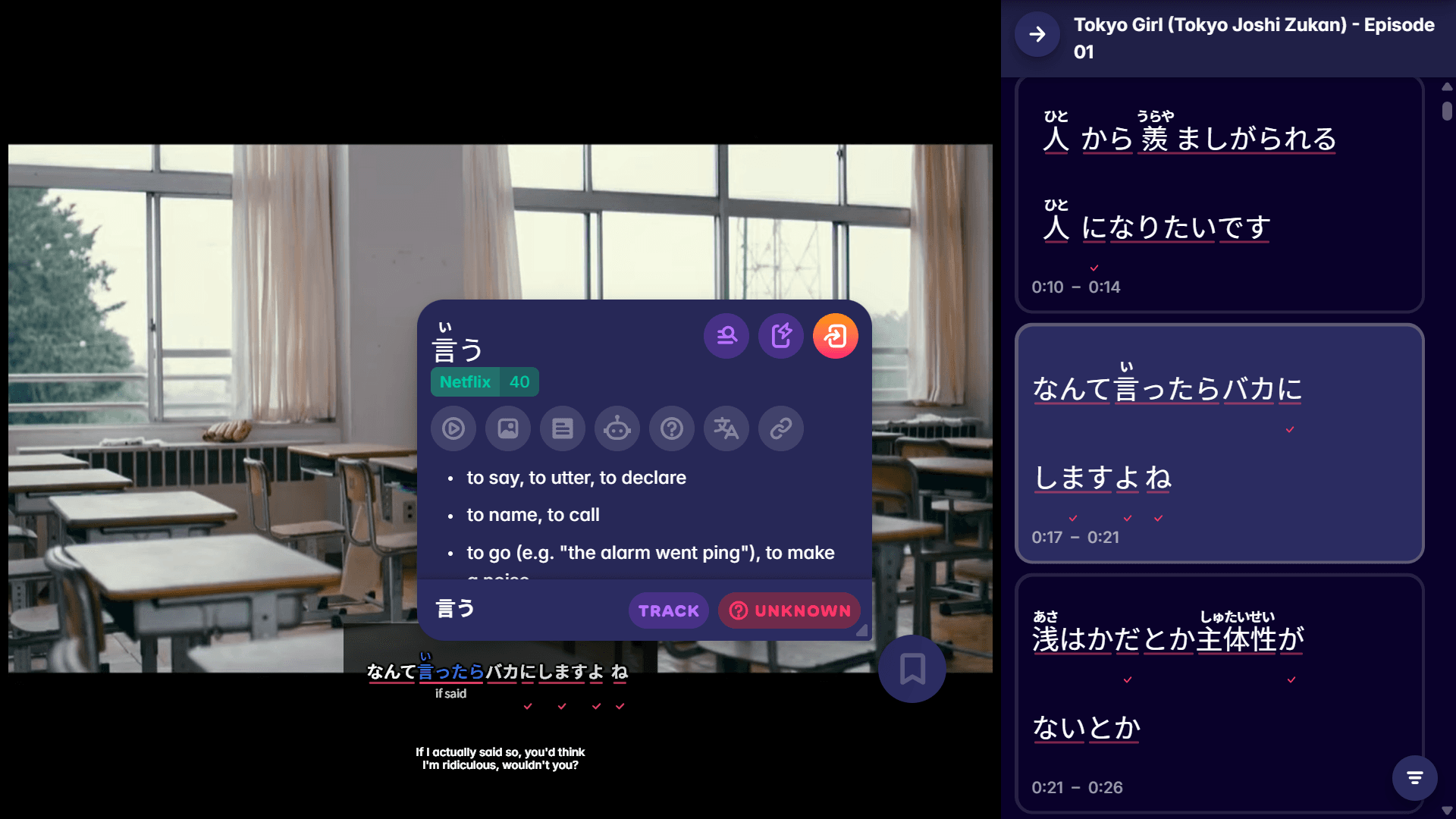
Anyway, if you want to actually absorb this vocabulary through real content, Migaku's browser extension and app let you look up words instantly while watching videos or reading articles in Japanese. You can save words directly to your flashcard deck and see them in actual context. There's a 10-day free trial if you want to check it out.
 ---
## Is there any easy way to memorize so many lists?
Here's the thing about learning Japanese transport vocabulary: you can memorize lists all day, but if you want it to actually stick, you need to engage with real content. Watch Japanese YouTube videos about traveling in Japan, read blog posts by Japanese people about their commutes, or follow Japanese Twitter accounts that complain about train delays.
> If you consume media in Japanese, and you understand at least some of the messages and sentences within that media, you will make progress. _Period_.
The best learning happens when you forget you're studying at all.😃
---
## Is there any easy way to memorize so many lists?
Here's the thing about learning Japanese transport vocabulary: you can memorize lists all day, but if you want it to actually stick, you need to engage with real content. Watch Japanese YouTube videos about traveling in Japan, read blog posts by Japanese people about their commutes, or follow Japanese Twitter accounts that complain about train delays.
> If you consume media in Japanese, and you understand at least some of the messages and sentences within that media, you will make progress. _Period_.
The best learning happens when you forget you're studying at all.😃