Japanese Weather Vocabulary Guide for Learners
Last updated: April 7, 2026
You're scrolling through your phone in Tokyo, checking tomorrow's plans, when you realize the weather app is entirely in Japanese. You catch and think "rain," but what about all those other symbols and terms? Learning Japanese weather forecasts opens up a whole new level of independence when you're living in or visiting Japan. Whether you're planning a weekend trip, deciding what to wear, or just trying to follow along with the morning news, knowing weather vocabulary makes daily life way smoother.
Basic weather in Japanese you'll hear constantly
Let's start with the essentials you'll encounter every single day. These are the bread and butter terms that show up in every weather forecast, app notification, and casual conversation about the day ahead.
The most common condition words are pretty straightforward.
- (hare) means sunny or clear weather. You'll see this paired with (tenki), which just means weather. So is sunny weather.
- When it's cloudy, you'll hear (kumori).
- Rain is (ame).
- Snow is (yuki).
Here's the thing though. Japanese weather forecasts love to get specific about conditions.
You won't just hear "rainy." You might hear (kosame) for light rain, (ooame) for heavy rain, or (niwakaame) for sudden showers.
Same goes for sunny weather. (kaisei) means perfectly clear skies, while (hare tokidoki kumori) means sunny with occasional clouds.
Wind gets its own vocabulary too. (kaze) is the basic word for wind, but you'll also encounter (kyoufuu) for strong winds. When the weather is hot, you'll hear (atsui), and when it's cold, that's (samui).
Talk about the weather, temperature and seasons
Japanese weather forecasts follow pretty consistent patterns once you know what to listen for. The phrase (Ashita no tenki wa dou desu ka?) means "How's the weather tomorrow?" and you'll definitely hear variations of this in everyday conversation.
Weather forecasts typically start with the date and region, then move into the main conditions.
For temperature, you'll hear (saikou kion) for maximum temperature and (saitei kion) for minimum temperature. The kanji here is actually pretty useful to recognize because means "highest" and means "lowest."
Probability of precipitation shows up as (kousui kakuritsu). You'll see this as a percentage, like 50%.
When forecasters talk about atmospheric pressure, they use (kiatsu). High pressure is (koukiatsu) and low pressure is (teikiatsu).
Weather fronts come up a lot too. A cold front is (kanrei zensen) and a warm front is (ondan zensen). These terms show up constantly during season transitions when weather systems move across Japan.
Time-related phrases help you understand when conditions will change. (asa) means morning, (hiru) is afternoon, (yoru) is night. You'll hear (tokidoki) for "sometimes" and (nochi) for "later" or "followed by." So means "cloudy, later rain."
Seasonal weather words specific to Japan
Japan has some pretty unique seasonal weather phenomena that you won't find in many other places. Understanding these terms is super useful because they dominate weather conversations during certain times of year.
The rainy season, called (tsuyu), hits most of Japan from early June through mid-July. During this season, you'll hear the phrase (tsuyu-iri) when the rainy season begins and (tsuyu-ake) when it ends. The kanji for tsuyu literally means "plum rain" because it coincides with plum ripening season. Weather forecasts during this period constantly reference the (tsuyu zensen), the seasonal rain front.
Typhoon season runs from summer through early fall. The word for typhoon is (taifuu), and these get numbered sequentially each year. You'll hear phrases like (taifuu nana-gou) for "Typhoon Number 7." When a typhoon approaches, forecasts use (sekkin) for "approaching" and (jouriku) for "making landfall."
Summer brings intense heat, and you'll hear about (mousho), meaning intense heat or heat wave. The term (manatsu-bi) refers to days when the temperature exceeds 30°C, while (mousho-bi) means days over 35°C. These aren't just weather words, they're survival information during Japanese summer.
Winter vocabulary includes (ooyuki) for heavy snow and (fubuki) for snowstorm or blizzard. In regions that get serious snow, you'll hear (sekisetsu) referring to snow accumulation.
Warnings and disaster-related Japanese words
Japan takes weather warnings seriously, and understanding these terms can literally keep you safe. The general word for warning is (keihou), while (chuuihou) means advisory or watch, which is less severe.
- Heavy rain warnings show up as (ooame keihou).
- Strong wind warnings are (kyoufuu keihou).
- During typhoon season, you'll definitely encounter (boufuu keihou) for storm warnings.
Flood-related terms come up frequently.
- (kouzui) means flood.
- (shinsui) refers to inundation or water damage.
- You might see (dosha saigai) for landslide disasters, which become a real concern during heavy rain.
- Tsunami warnings use (tsunami), a word that's made it into English. The warning levels include (tsunami chuuihou) for tsunami advisory and (tsunami keihou) for tsunami warning.
Heat-related warnings matter too.
- (necchuu-shou) means heatstroke, and during summer you'll see (necchuu-shou keikai alert), literally "heatstroke vigilance alert."
Which Japanese weather vocabulary to start with
Honestly, start with the basics and build from there.
- If you're just visiting Japan for a week or two, knowing (sunny), (rain), (cloudy), and temperature terms will get you through most situations. Add (typhoon) if you're traveling during summer or fall.
- For longer stays or if you're trying to learn Japanese more seriously, expand into forecast-specific vocabulary like (probability of precipitation) and time-related phrases. These make weather apps and TV forecasts actually comprehensible instead of just looking at icons.
- Living in Japan long-term? You'll want the warning vocabulary and seasonal terms. Understanding (warning) versus (advisory) matters when severe weather hits. Knowing rainy season and typhoon terminology helps you plan your life around Japan's weather patterns.
Want to learn weather vocabulary from actual Japanese content? Migaku's browser extension and app let you look up words instantly while watching Japanese weather forecasts or reading news sites. You can save terms directly to your flashcard deck and practice them with spaced repetition. There's a 10-day free trial if you want to check it out.
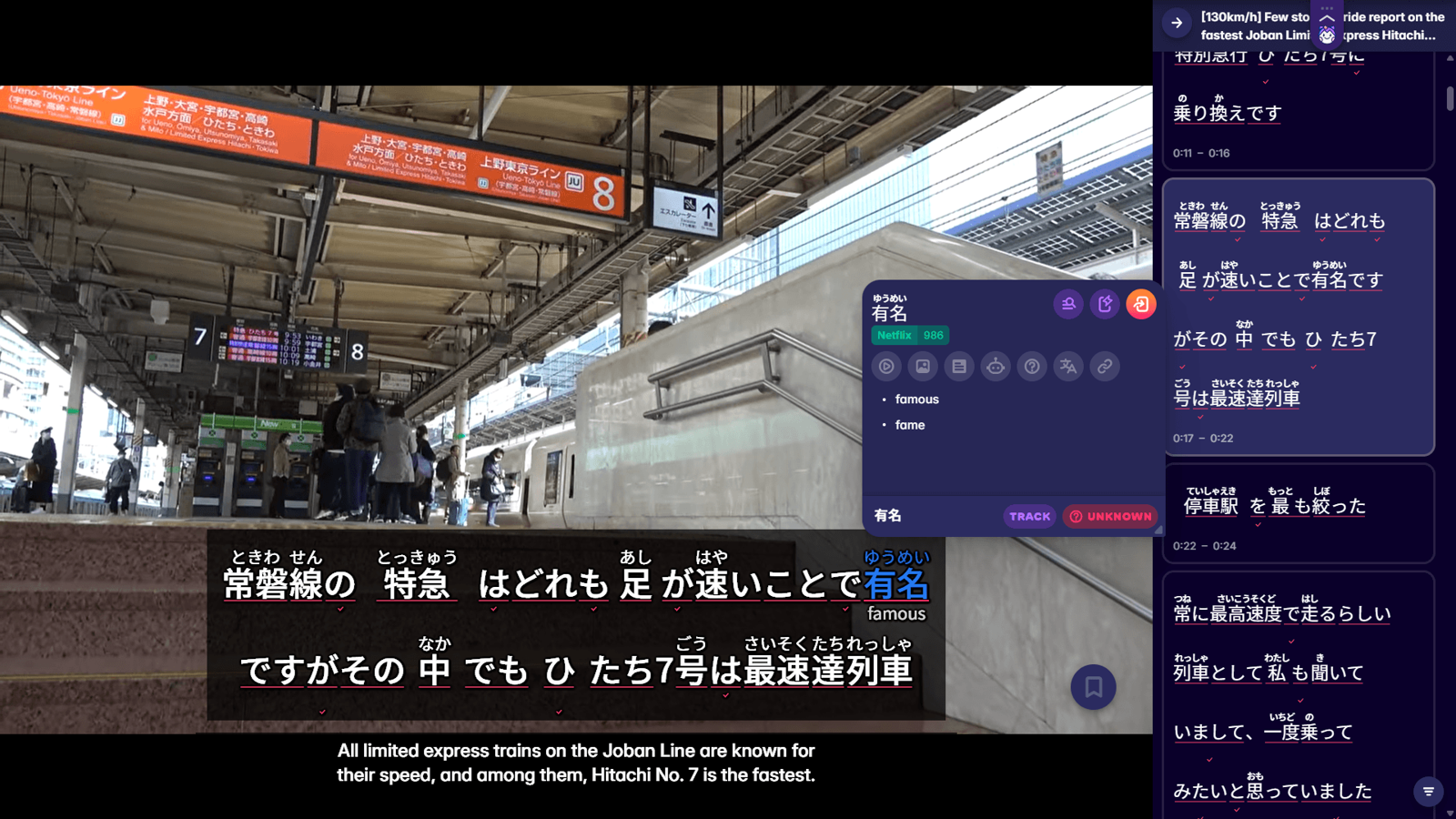
Japanese weather words open up more than just forecast comprehension☔
You can follow news reports about seasonal events, participate in office small talk, plan outdoor activities with confidence, and understand emergency alerts that could keep you safe. Start building your vocabulary by watching Japanese weather forecasts with subtitles, checking weather apps in Japanese daily, and noting which terms appear most frequently in your region. Different parts of Japan emphasize different weather phenomena. Hokkaido forecasts focus heavily on snow vocabulary, while Okinawa barely mentions it but constantly discusses typhoons.
If you consume media in Japanese, and you understand at least some of the messages and sentences within that media, you will make progress. Period.
Learn the words, feel the seasons!