# Japanese Weather Phrases for Daily Conversation
> Learn common Japanese weather phrases for everyday conversations. Master essential vocabulary like sunny, rainy, and temperature descriptions with examples.
**URL:** https://migaku.com/blog/japanese/japanese-weather-phrases-daily-conversation
**Last Updated:** 2026-04-08
**Tags:** vocabulary, phrases
---
If you're learning Japanese, you've probably noticed that talking about the weather is one of the easiest ways to start a conversation. Japanese people use weather small talk constantly, whether they're chatting with coworkers, neighbors, or even strangers at the bus stop. The good news? You don't need advanced grammar to jump into these conversations. Just a handful of essential phrases will get you pretty far. This guide covers the most common Japanese weather phrases you'll actually hear in daily life, from basic sunny day comments to rainy season complaints.

<toc></toc>

## Weather in Japanese: the basics you need first

The word for weather in Japanese is <typo lang="ja" syntax="天気[てんき;h]"></typo> (tenki). You'll hear this word everywhere, especially in the phrase <typo lang="ja" syntax="今日[きょう;h]"></typo>は<typo lang="ja" syntax="天気[てんき;h]"></typo>がいいですね (kyou wa tenki ga ii desu ne), which means "The weather is nice today." That little particle <typo lang="ja" syntax="が[が;h]"></typo> (ga) marks tenki as the subject of the sentence, and you'll see it pop up constantly when discussing weather conditions.

Here's the thing about weather vocabulary in Japanese. Most of the core weather words use [pretty straightforward kanji](https://migaku.com/blog/japanese/learn-kanji) that even beginners can recognize. <typo lang="ja" syntax="晴[は;a]れ[れ;a]"></typo> (hare) means sunny or clear weather. <typo lang="ja" syntax="雨[あめ;h]"></typo> (ame) means rain. <typo lang="ja" syntax="曇[くも;a]り[り;a]"></typo> (kumori) means cloudy. Once you've got these three down, you can handle most basic weather conversations.

The weather forecast on TV typically uses these terms in their noun forms, but in conversation, you'll often hear them with です (desu) attached: <typo lang="ja" syntax="晴[は;a]れ[れ;a]です[です;h]"></typo> (hare desu) for "it's sunny," <typo lang="ja" syntax="雨[あめ;h]です[です;h]"></typo> (ame desu) for "it's rainy," and <typo lang="ja" syntax="曇[くも;a]り[り;a]です[です;h]"></typo> (kumori desu) for "it's cloudy."

## Common weather conditions you'll actually use

Let me break down the most practical weather words you'll encounter. These aren't just textbook terms. They're what you'll hear in actual conversations and weather forecasts.

<typo lang="ja" syntax="晴[は;a]れ[れ;a]"></typo> (hare) covers sunny and clear conditions. When you want to say "It's sunny," you'd say <typo lang="ja" syntax="晴[は;a]れ[れ;a]ています[ています;h]"></typo> (harete imasu). The kanji <typo lang="ja" syntax="晴[はれ;a]"></typo> literally includes the sun radical, which makes it pretty easy to remember.

<typo lang="ja" syntax="雨[あめ;h]"></typo> (ame) is your go-to rain word. A rainy day is <typo lang="ja" syntax="雨[あめ;h]の[の;h] 日[ひ;h]"></typo> (ame no hi). If it's currently raining, you'd say <typo lang="ja" syntax="雨[あめ;h]が[が;h] 降[ふ;a]っています[っています;h]"></typo> (ame ga futte imasu). The verb <typo lang="ja" syntax="降[ふ;a]る[る;a]"></typo> (furu) means "to fall," and it works for both rain and snow.

<typo lang="ja" syntax="曇[くも;a]り[り;a]"></typo> (kumori) describes cloudy weather. You might hear someone say <typo lang="ja" syntax="今日[きょう;h]は[は;h] 曇[くも;a]りです[りです;h]ね[ね;h]"></typo> (kyou wa kumori desu ne), which translates to "Today is cloudy, isn't it?" That final ね (ne) is super common in weather talk because it invites agreement.

<typo lang="ja" syntax="雪[ゆき;h]"></typo> (yuki) means snow. In winter regions, you'll definitely hear <typo lang="ja" syntax="雪[ゆき;h]が[が;h] 降[ふ;a]っています[っています;h]"></typo> (yuki ga futte imasu) for "It's snowing."

<typo lang="ja" syntax="風[かぜ;h]"></typo> (kaze) means wind. When it's windy, people say <typo lang="ja" syntax="風[かぜ;h]が[が;h] 強[つよ;a]いです[いです;h]"></typo> (kaze ga tsuyoi desu), literally "the wind is strong."

## Temperature phrases for hot and cold days

Temperature descriptions come up constantly in Japanese weather conversations. Here are the phrases that'll carry you through all four seasons.

For hot weather, the most common phrase is <typo lang="ja" syntax="暑[あつ;a]い[い;a]です[です;h]"></typo> (atsui desu). This means "it's hot" and refers specifically to air temperature. You'll hear this nonstop during Japanese summers. When it's really scorching, people might say <typo lang="ja" syntax="とても[とても;h] 暑[あつ;a]いです[いです;h]"></typo> (totemo atsui desu) or <typo lang="ja" syntax="すごく[すごく;h] 暑[あつ;a]いです[いです;h]"></typo> (sugoku atsui desu), both meaning "very hot."

For cold weather, you use <typo lang="ja" syntax="寒[さむ;a]い[い;a]です[です;h]"></typo> (samui desu). Same structure, different temperature. <typo lang="ja" syntax="今日[きょう;h]は[は;h] 寒[さむ;a]いですね[いですね;h]"></typo> (kyou wa samui desu ne) means "Today is cold, isn't it?"

Now here's something that trips up learners. Japanese has a separate word for warm (as opposed to hot): <typo lang="ja" syntax="暖[あたた;a]かい[かい;a]です[です;h]"></typo> (atatakai desu). This describes those pleasant spring or fall days. Similarly, <typo lang="ja" syntax="涼[すず;a]しい[しい;a]です[です;h]"></typo> (suzushii desu) means "cool" in a refreshing way, not uncomfortably cold.

Humidity deserves its own mention because Japanese summers get incredibly humid. The word is <typo lang="ja" syntax="蒸[む;a]し[し;a] 暑[あつ;a]い[い;a]です[です;h]"></typo> (mushiatsui desu), which literally combines "steamy" and "hot." You'll hear this phrase constantly from June through September.

## Talk about the weather like a local

Small talk about weather in Japan follows some pretty predictable patterns. The beauty of these phrases is that they work in almost any casual conversation.

The most versatile opener is <typo lang="ja" syntax="今日[きょう;h]は[は;h] 天気[てんき;h]が[が;h]いいですね[いいですね;h]"></typo> (kyou wa tenki ga ii desu ne), meaning "The weather is nice today, isn't it?" You can swap out いい (ii/good) for other adjectives depending on conditions: <typo lang="ja" syntax="悪[わる;a]い[い;a]です[です;h]ね[ね;h]"></typo> (warui desu ne) for bad weather, <typo lang="ja" syntax="暑[あつ;a]いですね[いですね;h]"></typo> (atsui desu ne) for hot, and so on.

When the weather suddenly changes, you might hear <typo lang="ja" syntax="急[きゅう;h]に[に;h] 寒[さむ;a]くなりましたね[くなりましたね;h]"></typo> (kyuu ni samuku narimashita ne), which means "It suddenly got cold, didn't it?" The grammar pattern なりました (narimashita) indicates a change in state.

For complaining about bad weather (which Japanese people definitely do), try <typo lang="ja" syntax="嫌[いや;a]な[な;a] 天気[てんき;h]ですね[ですね;h]"></typo> (iya na tenki desu ne), meaning "What unpleasant weather." This works for rainy days, typhoons, or any generally miserable conditions.

If you want to ask about tomorrow's weather, say <typo lang="ja" syntax="明日[あした;h]の[の;h] 天気[てんき;h]は[は;h]どうですか[どうですか;h]"></typo> (ashita no tenki wa dou desu ka). This translates to "How's the weather tomorrow?" or "What's the weather like tomorrow?"

## Rainy season and seasonal weather patterns

Japan has distinct seasonal weather patterns that come with their own vocabulary. The rainy season, called <typo lang="ja" syntax="梅雨[つゆ;h]"></typo> (tsuyu), hits most of Japan from early June through mid-July. During this time, you'll hear phrases like <typo lang="ja" syntax="梅雨[つゆ;h]に[に;h] 入[はい;a]りました[りました;h]"></typo> (tsuyu ni hairimashita), meaning "We've entered the rainy season."

The rainy season brings weeks of drizzle and downpours. People might complain by saying <typo lang="ja" syntax="毎日[まいにち;h] 雨[あめ;h]ばかりですね[ばかりですね;h]"></typo> (mainichi ame bakari desu ne), which means "It's nothing but rain every day, isn't it?" The word ばかり (bakari) emphasizes that something is excessive or constant.

Typhoons (<typo lang="ja" syntax="台風[たいふう;h]"></typo>, taifuu) typically arrive in late summer and early fall. When a typhoon approaches, you'll see warnings like <typo lang="ja" syntax="台風[たいふう;h]が[が;h] 来[き;a]ています[ています;h]"></typo> (taifuu ga kite imasu), meaning "A typhoon is coming." These storms bring heavy rain and strong winds, so weather conversations get pretty serious during typhoon season.

Winter brings snow to northern regions and mountains. A common phrase is <typo lang="ja" syntax="雪[ゆき;h]が[が;h] 積[つ;a]もっています[もっています;h]"></typo> (yuki ga tsumotte imasu), meaning "Snow has accumulated" or "There's snow on the ground."

## Weather forecast vocabulary you'll encounter

Understanding weather forecasts in Japanese opens up a whole new level of comprehension. Japanese weather forecasts use some specific terminology that's worth knowing.

The phrase <typo lang="ja" syntax="天気[てんき;h] 予報[よほう;h]"></typo> (tenki yohou) means weather forecast. You'll see this on TV, apps, and websites. Forecasts often use percentage chances for precipitation: <typo lang="ja" syntax="降水[こうすい;h] 確率[かくりつ;h]"></typo> (kousui kakuritsu) means "chance of precipitation."

Weather forecasts describe conditions using phrases like <typo lang="ja" syntax="晴[は;a]れ[れ;a]のち[のち;h] 曇[くも;a]り[り;a]"></typo> (hare nochi kumori), which means "sunny, later cloudy." The word のち (nochi) indicates a sequence: first one condition, then another. Similarly, <typo lang="ja" syntax="曇[くも;a]り[り;a]のち[のち;h] 雨[あめ;h]"></typo> (kumori nochi ame) means "cloudy, later rainy."

Another common connector is ときどき (tokidoki), meaning "sometimes" or "occasionally." <typo lang="ja" syntax="晴[は;a]れ[れ;a]ときどき[ときどき;h] 曇[くも;a]り[り;a]"></typo> (hare tokidoki kumori) translates to "sunny with occasional clouds."

For thunderstorms, the word is <typo lang="ja" syntax="雷[かみなり;h]"></typo> (kaminari), which literally means thunder. A thunderstorm might be described as <typo lang="ja" syntax="雷[かみなり;h]を[を;h] 伴[ともな;a]う[う;a] 雨[あめ;h]"></typo> (kaminari wo tomonau ame), meaning "rain accompanied by thunder."

## Describing weather intensity and duration

Japanese has some great words for describing how intense or long-lasting weather conditions are. These add nuance to your weather conversations.

For light rain, you can say <typo lang="ja" syntax="小雨[こさめ;h]"></typo> (kosame). For heavy rain, use <typo lang="ja" syntax="大雨[おおあめ;h]"></typo> (ooame). The kanji make these pretty intuitive: <typo lang="ja" syntax="小[しょう;a]"></typo> means small, <typo lang="ja" syntax="大[だい;a]"></typo> means big.

When rain is pouring down, you might hear <typo lang="ja" syntax="土砂降[どしゃぶ;a]り[り;a]"></typo> (doshaburi), which describes a downpour or torrential rain. This word has a much more dramatic feel than just saying <typo lang="ja" syntax="大雨[おおあめ;h]"></typo>.

For drizzle or light rain, <typo lang="ja" syntax="霧雨[きりさめ;h]"></typo> (kirisame) works well. The kanji literally means "mist rain," which captures the feeling perfectly.

Duration matters too. <typo lang="ja" syntax="一日中[いちにちじゅう;h] 雨[あめ;h]でした[でした;h]"></typo> (ichinichijuu ame deshita) means "It was rainy all day long." The word <typo lang="ja" syntax="一日中[いちにちじゅう;h]"></typo> (ichinichijuu) indicates the entire day.

If rain just started, you'd say <typo lang="ja" syntax="雨[あめ;h]が[が;h] 降[ふ;a]り[り;a] 始[はじ;a]めました[めました;h]"></typo> (ame ga furi hajimemashita). If it stopped, <typo lang="ja" syntax="雨[あめ;h]が[が;h] 止[や;a]みました[みました;h]"></typo> (ame ga yamimashita).

## Putting it all together in real conversations

Let me show you how these phrases actually flow in natural dialogue. Imagine you're chatting with a coworker on a rainy Monday morning.

Coworker: <typo lang="ja" syntax="今日[きょう;h]は[は;h] 雨[あめ;h]ですね[ですね;h]"></typo> (Kyou wa ame desu ne.)
"It's rainy today, isn't it?"

You: <typo lang="ja" syntax="そうですね[そうですね;h]。[。;h]朝[あさ;h]から[から;h] 降[ふ;a]っています[っています;h]"></typo> (Sou desu ne. Asa kara futte imasu.)
"Yes, it is. It's been raining since morning."

Coworker: <typo lang="ja" syntax="明日[あした;h]も[も;h] 雨[あめ;h]みたいですよ[みたいですよ;h]"></typo> (Ashita mo ame mitai desu yo.)
"It looks like rain tomorrow too."

You: <typo lang="ja" syntax="梅雨[つゆ;h]だから[だから;h] 仕方[しかた;h]ないですね[ないですね;h]"></typo> (Tsuyu dakara shikata nai desu ne.)
"Can't be helped since it's rainy season."

Here's another scenario for a hot summer day:

Friend: <typo lang="ja" syntax="暑[あつ;a]いですね[いですね;h]！[！;h]"></typo> (Atsui desu ne!)
"It's hot, isn't it!"

You: <typo lang="ja" syntax="本当[ほんとう;h]に[に;h]！[！;h] 蒸[む;a]し[し;a] 暑[あつ;a]くて[くて;h] 大変[たいへん;h]です[です;h]"></typo> (Hontou ni! Mushiatsukute taihen desu.)
"Really! It's so humid, it's terrible."

Friend: <typo lang="ja" syntax="天気[てんき;h] 予報[よほう;h]によると[によると;h]、[、;h]明日[あした;h]は[は;h] 涼[すず;a]しくなるそうです[しくなるそうです;h]"></typo> (Tenki yohou ni yoru to, ashita wa suzushiku naru sou desu.)
"According to the weather forecast, it'll get cooler tomorrow."

These conversations show how Japanese weather phrases naturally include those little particles like ね (ne), よ (yo), and から (kara) that make speech feel conversational rather than robotic.

## When Japanese weather phrases start mattering

You might wonder when you should actually start learning these weather phrases. Honestly, pretty early. Weather vocabulary sits at that sweet spot where it's simple enough for beginners but useful enough that you'll keep using it forever.

[Most Japanese textbooks](https://migaku.com/blog/japanese/best-japanese-textbooks) introduce basic weather words within the first few months of study because they combine simple grammar with practical application. The phrases use present tense, [basic adjectives](https://migaku.com/blog/japanese/japanese-verb-conjugation), and common particles like が (ga), は (wa), and を (wo). This makes them perfect for practicing fundamental grammar patterns.

Are Japanese weather phrases different from English weather talk? Not really in function, but the cultural context matters. Japanese small talk relies heavily on weather discussions because they're safe, neutral topics that help build rapport without getting too personal. You'll find that weather comments serve as social lubricant in ways that feel more structured than casual English weather chat.

## What you really need to remember

The core weather vocabulary boils down to maybe 15-20 essential words and phrases. Learn <typo lang="ja" syntax="晴[は;a]れ[れ;a]"></typo> (hare), <typo lang="ja" syntax="雨[あめ;h]"></typo> (ame), <typo lang="ja" syntax="曇[くも;a]り[り;a]"></typo> (kumori), <typo lang="ja" syntax="暑[あつ;a]い[い;a]"></typo> (atsui), and <typo lang="ja" syntax="寒[さむ;a]い[い;a]"></typo> (samui). Master the basic sentence pattern of [weather word] + です (desu). Add ね (ne) at the end to make it conversational.

From there, you can build up to more specific terms like <typo lang="ja" syntax="梅雨[つゆ;h]"></typo> (tsuyu) for rainy season, <typo lang="ja" syntax="台風[たいふう;h]"></typo> (taifuu) for typhoon, and <typo lang="ja" syntax="蒸[む;a]し[し;a] 暑[あつ;a]い[い;a]"></typo> (mushiatsui) for humid heat. These seasonal terms make your Japanese sound much more natural because they show you understand the rhythm of Japanese weather patterns.

The kanji for weather words tend to be pretty logical. <typo lang="ja" syntax="雨[あめ;h]"></typo> looks like rain falling. <typo lang="ja" syntax="雪[ゆき;h]"></typo> includes the rain radical plus a component suggesting white flakes. <typo lang="ja" syntax="晴[はれ;a]"></typo> combines sun and blue/clear. Learning the kanji actually helps reinforce the meanings.

## Your next steps for mastering weather talk

Practice these phrases by actually using them. Check the Japanese weather forecast each morning and describe what you see. When you watch Japanese shows or videos, pay attention to how characters discuss weather. You'll notice these phrases pop up constantly in slice-of-life content.

Try keeping a simple weather journal in Japanese. Just one sentence per day: <typo lang="ja" syntax="今日[きょう;h]は[は;h] 晴[は;a]れ[れ;a]でした[でした;h]"></typo> (Kyou wa hare deshita). This builds the habit of thinking about weather in Japanese rather than translating from English.

The real test comes when you start having actual conversations with Japanese speakers. Weather small talk gives you an easy entry point into dialogue. You can start with a simple observation about the current weather, and that often leads naturally into other topics.

## Learn Japanese weather words through real content

Weather phrases matter most when you encounter them in context. You could [memorize vocabulary lists](https://migaku.com/blog/japanese/how-to-learn-japanese-vocabulary) all day, but hearing <typo lang="ja" syntax="今日[きょう;h]は[は;h] 暑[あつ;a]いですね[いですね;h]"></typo> in an actual conversation or TV show makes it stick way better. That's where immersion learning really shines.

> If you consume media in Japanese, and you understand at least some of the messages and sentences within that media, you will make progress. Period.

Learn it once. Understand it. Own it.

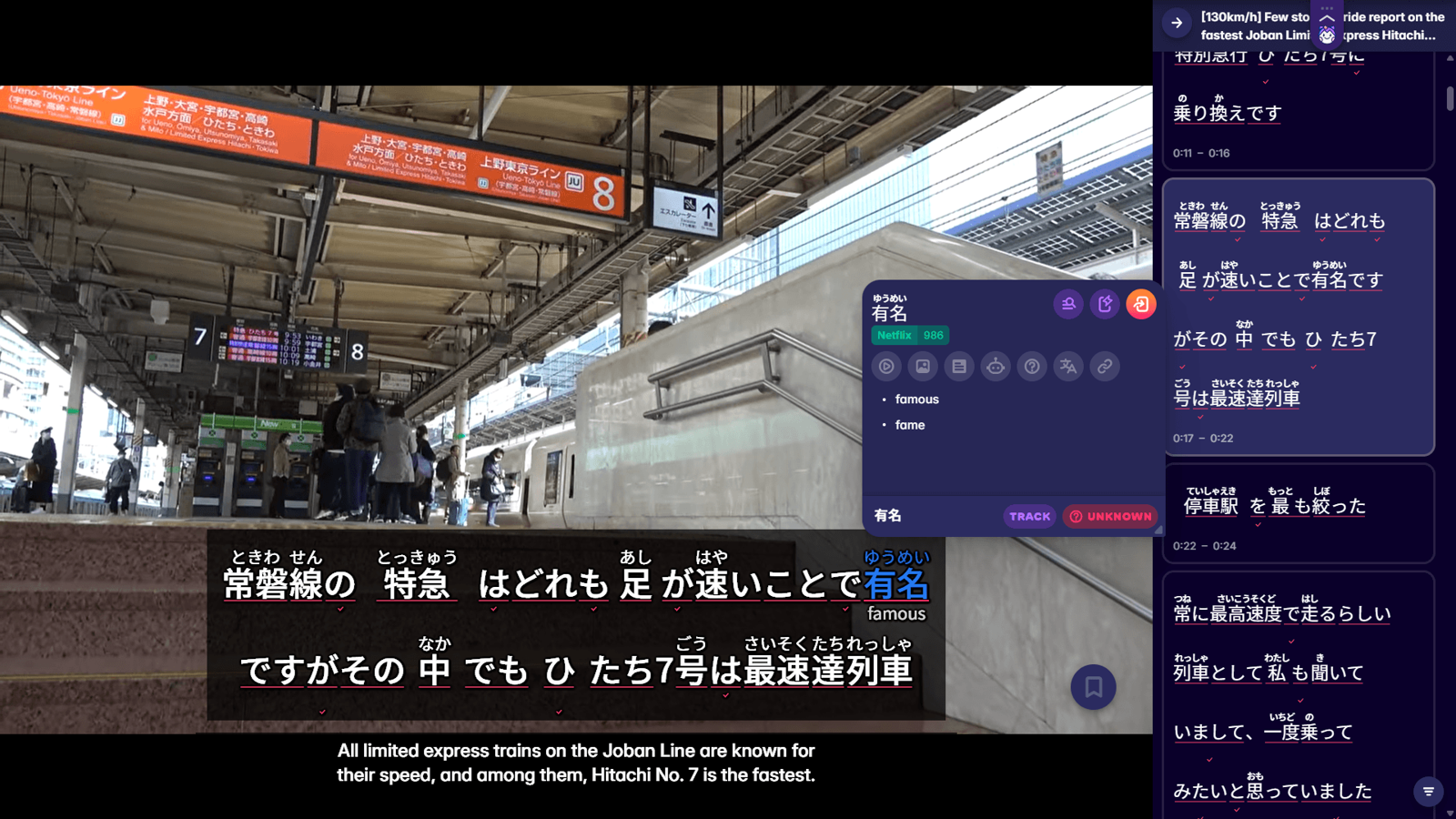
If you want to catch these weather phrases in real Japanese content, Migaku's browser extension lets you look up vocabulary instantly while watching shows or reading articles. You can save weather expressions straight to your flashcards when you encounter them naturally. There's a 10-day free trial if you want to see how it works with actual Japanese media.
<prose-button href="/learn-japanese" text="Learn Japanese with Migaku"></prose-button>