Japanese Writing Systems Explained: Hiragana, Katakana & Kanji
Last updated: April 15, 2026

So you want to learn Japanese? Cool. But here's the thing: Japanese doesn't use just one writing system. It uses three. At the same time. In the same sentence. Sounds complicated, right? But once you understand how hiragana, katakana, and kanji work together, it actually makes sense. Each system has its own job, and Japanese speakers mix them naturally without even thinking about it. Let me break down what these three Japanese writing systems are, how they work, and which one you should tackle first.
- What is Japanese writing called
- Understanding the three writing systems
- Hiragana: The foundation
- Katakana: The angular alphabet
- Kanji: The complex characters
- Which Japanese writing system should I learn first
- Writing direction: Tategaki and yokogaki
- Combination in modern texts
- Japanese punctuation
- Learning tips for beginners
- FAQS
What is Japanese writing called
The Japanese writing system as a whole is called kanji kana majiri bun (), which literally means "text with a mixture of kanji and kana." The term "kana" refers to both hiragana and katakana, the two phonetic alphabets.
When you look at a page of Japanese text, you'll see curvy characters (that's hiragana), angular characters (that's katakana), and complex characters that look like they have a million strokes (that's kanji). All three appear together in modern Japanese writing.
Understanding the three writing systems
Before we dig into each system individually, here's the basic breakdown:
- Hiragana is the foundational phonetic alphabet with 46 basic characters. Japanese kids learn this first, and you should too. It represents all the sounds in Japanese and can technically write any Japanese word.
- Katakana is the second phonetic alphabet, also with 46 basic characters. It represents the exact same sounds as hiragana but looks completely different. Think of it like how we have both print and cursive in English, except katakana serves a specific purpose: writing foreign loanwords, emphasis, and scientific terms.
- Kanji are the complex Chinese-derived characters. There are thousands of them. Each one represents a meaning and usually has multiple pronunciations. You need to know about 2,000 to read a newspaper comfortably.
Hiragana: The foundation
Origins and development
Hiragana developed during the Heian period (794-1185 CE) from simplified cursive forms of kanji. Court women originally used it because they weren't allowed formal education in Chinese characters. They called it onnade (), meaning "women's hand." Pretty cool that what started as a workaround became the foundation of modern Japanese writing.
The name "hiragana" itself means "ordinary kana" or "simple kana." Each character represents one syllable sound, making it a syllabary rather than a true alphabet.
What hiragana looks like
Hiragana characters have rounded, flowing shapes. Here are the first five vowels:
- a (あ)
- i (い)
- u (う)
- e (え)
- o (お)
The writing looks smooth and cursive-like. When you see those curvy characters in Japanese text, that's hiragana doing its job.
How Japanese uses hiragana
Hiragana serves several grammatical functions in modern Japanese:
- Grammatical particles: Words like wa (は), ga (が), wo (を), and ni (に) that show the relationship between words in a sentence. These are always written in hiragana.
- Verb endings: The conjugating parts of verbs. For example, taberu () means "to eat." The kanji 食 represents the core meaning "eat," while べる is written in hiragana and changes based on tense and politeness level.
- Native Japanese words without kanji: Some Japanese words either never had kanji or their kanji fell out of common use. Words like kawaii (かわいい), meaning "cute," are typically written entirely in hiragana.
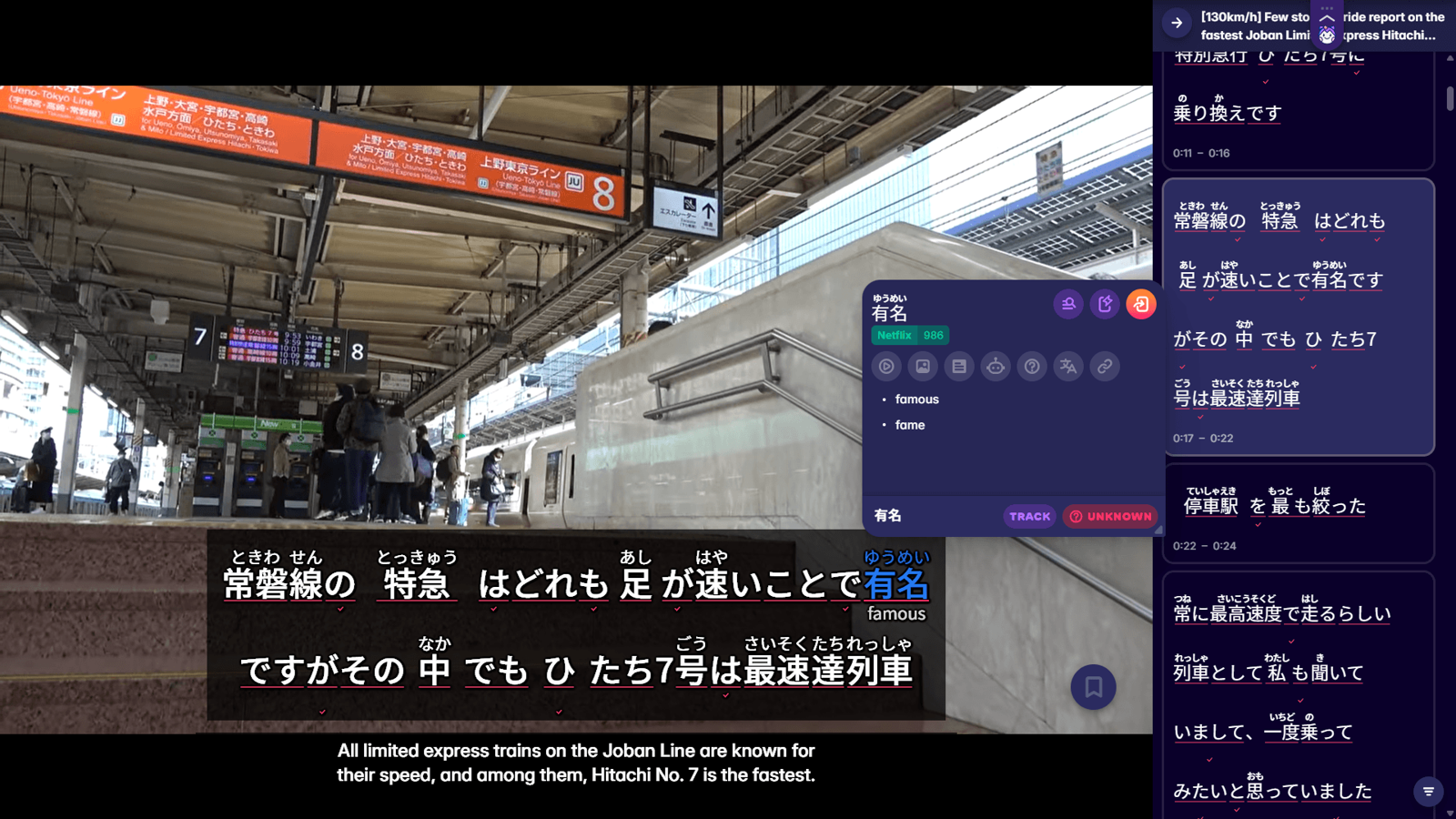
- Furigana: Small hiragana written above or beside kanji to show pronunciation. You'll see this in children's books, manga, and learning materials.
The pronunciation of hiragana is straightforward. Each character makes one sound, and those sounds rarely change. This phonetic consistency makes hiragana the perfect starting point for beginners.
Katakana: The angular alphabet
Origins and purpose
Katakana also developed during the Heian period, but from a different source. Buddhist monks created it by taking fragments of kanji characters to make notes and annotations. The name "katakana" means "fragmentary kana."
The characters look angular and geometric compared to hiragana's curves. Same sounds, totally different appearance.
What katakana looks like
Here are those same five vowels in katakana:
- a (ア)
- i (イ)
- u (ウ)
- e (エ)
- o (オ)
See the difference? Angular, straight lines. Much more rigid-looking than hiragana.
When Japanese uses katakana
Katakana has specific jobs in modern Japanese:
- Foreign loanwords: This is the big one. Any word borrowed from another language gets written in katakana. Koohii (コーヒー) means "coffee." Konpyuutaa (コンピューター) means "computer." Thousands of English words have been absorbed into Japanese this way.
- Foreign names: Your name gets written in katakana when written in Japanese. Mine would be something like Maiku (マイク) if my name were Mike.
- Emphasis: Like how we use italics or ALL CAPS in English. If you want a word to stand out, write it in katakana.
- Onomatopoeia: Sound effects often use katakana. Wan wan (ワンワン) is a dog barking. Goro goro (ゴロゴロ) is the sound of thunder.
- Scientific terms: Plant and animal names in scientific contexts often use katakana.
The pronunciation rules for katakana are identical to hiragana since they represent the same sounds. The only difference is when they're used and how they look.
Kanji: The complex characters
Historical development from Chinese characters
Kanji means "Han characters," referring to China's Han dynasty. These characters came to Japan around the 5th century CE through Korean peninsula intermediaries. Japanese had no writing system before this, so they borrowed Chinese characters.
Here's where it gets interesting. Chinese and Japanese are completely different languages with different grammar and pronunciation. The Japanese had to figure out how to use Chinese characters for their own language. They came up with a clever solution: keep both the Chinese pronunciation and add the Japanese pronunciation.
Meanings and readings
This is what makes kanji tricky. Most kanji have at least two ways to read them: on'yomi (音読み) and kun'yomi (訓読み).
- On'yomi is the Chinese-derived reading. When kanji appear in compound words (two or more kanji together), you usually use the on'yomi pronunciation.
- Kun'yomi is the native Japanese reading. When a kanji stands alone or has hiragana attached to it, you often use the kun'yomi pronunciation.
Take the kanji 山, which means "mountain":
- On'yomi: san
- Kun'yomi: yama
In the word kazan (), meaning "volcano" (literally "fire mountain"), you use the on'yomi: ka + zan (the 'n' changes to 'z' for phonetic reasons).
But when you say the Japanese word for mountain by itself, you say yama (やま), using the kun'yomi. Often it's written as 山 alone or with the hiragana particle after it.
Some kanji have multiple on'yomi or kun'yomi readings. The kanji 生 has at least 10 different pronunciations depending on context. Yeah, it's a lot.
How many kanji do you need
The Japanese government designates 2,136 kanji as jouyou kanji (), meaning "regular-use kanji." These are what you learn in school and what newspapers limit themselves to. Knowing these gets you to functional literacy.
But there are thousands more kanji beyond that. Educated Japanese people might recognize 3,000 to 4,000. Specialists in fields like medicine or law know even more specific kanji.
Each kanji represents a meaning or concept. When you use kanji in writing, you pack more information into less space. The Japanese word for "electricity" is denki (). Those two kanji mean "electric" and "energy/spirit." You can see the meaning just by looking at the characters, even if you forgot the pronunciation.
Kanji in modern Japanese texts
In any Japanese sentence, kanji typically represent the core meaning words: nouns, verb stems, and adjective stems. The hiragana fills in around them for grammar.
Here's an example sentence:
- Watashi wa nihongo wo benkyou shiteimasu.
- "I am studying Japanese."
Breaking it down:
- (kanji): watashi, "I"
- は (hiragana): wa, subject particle
- (kanji): nihongo, "Japanese language"
- を (hiragana): wo, object particle
- (kanji): benkyou, "study"
- しています (hiragana): shiteimasu, verb ending showing continuous present tense
See how they work together? Kanji carries the meaning, hiragana handles the grammar.
Which Japanese writing system should I learn first
💡Start with hiragana. No question.
Hiragana is the foundation. You can write anything in Japanese using only hiragana if you really wanted to (though it would look childish and be harder to read). Every Japanese kid learns hiragana first, usually around age 5 or 6.
Once you're solid with hiragana (which should take a week or two of focused practice), move to katakana. It uses the same sounds, so you're really just learning new shapes for sounds you already know. Another week or two and you'll have it down.
After you're comfortable with both kana systems, start learning kanji gradually. Begin with the simplest, most common ones. Kanji takes years to master. Japanese students learn them progressively throughout elementary, middle, and high school.
Don't try to learn all three at once. That's a recipe for confusion and burnout.
Writing direction: Tategaki and yokogaki
Traditional Japanese writing flows vertically from top to bottom, with columns progressing from right to left. This is called tategaki (), meaning "vertical writing." You'll see this in novels, manga, and formal documents.
Modern Japanese also uses horizontal writing, called yokogaki (), which flows left to right like English. This appears in textbooks, websites, and scientific papers.
Both directions are common today. The writing systems themselves don't change based on direction, just the flow of text on the page.
Combination in modern texts
Real Japanese text mixes all three systems fluidly. Pick up any Japanese book, website, or sign, and you'll see hiragana, katakana, and kanji working together.
A menu might have:
- コーヒー (katakana): koohii, "coffee"
- (kanji): koucha, "black tea"
- (kanji + hiragana): ocha, "green tea"
The katakana signals that coffee is a foreign loanword. The kanji efficiently conveys meaning. The hiragana お is an honorific prefix that adds politeness.
This mixing serves practical purposes. Kanji makes reading faster because you can scan for meaning visually. The kana provides pronunciation help and grammatical structure. Katakana immediately identifies foreign words and emphasis.
Japanese punctuation
Japanese uses some punctuation marks similar to English but with different shapes:
- 。is the Japanese period (called maru)
- 、is the Japanese comma (called ten)
- 「」are quotation marks (kakko)
Japanese doesn't use spaces between words like English does. The mixture of writing systems actually helps readers identify word boundaries. When you see kanji followed by hiragana followed by more kanji, your brain naturally chunks them into words.
Learning tips for beginners
- Practice writing by hand: The stroke order matters in Japanese. Writing characters correctly helps with recognition and memorization.
- Learn kana in groups: The kana charts organize characters by consonant rows and vowel columns. Learning them in this structure helps the patterns stick.
- Use mnemonics for kanji: Create visual stories connecting the character's shape to its meaning. These memory tricks actually work.
- Read real Japanese early: Even as a beginner, try reading simple material. Children's books, manga with furigana, or graded readers expose you to how the writing systems combine naturally.
Anyway, if you're serious about learning to read Japanese, Migaku's browser extension and app let you look up words instantly while reading real Japanese content online. You can hover over any word to see the reading and meaning without breaking your flow. There's a 10-day free trial if you want to check it out.
FAQS
The Japanese scripts look intimidating at first
Three different scripts, thousands of characters, multiple readings for each kanji. But millions of people learn it successfully, including non-native speakers. The key is taking it step by step. Master hiragana, add katakana, then gradually build up your kanji knowledge. As you consume Japanese media, you will see more and more of all three scripts being put together. Hiragana and katakana will become automatic pretty soon.
If you consume media in Japanese, and you understand at least some of the messages and sentences within that media, you will make progress. Period.
Small progress counts. It all adds up.