Best Korean Podcasts for Language Learners in 2026: From Beginner to Advanced
Last updated: March 31, 2026

Looking for the best Korean podcasts to boost your language learning? You're in the right spot. Korean podcasts have exploded in popularity over the past few years, and there's now a massive range of options for every level, from absolute beginner to advanced learners who want to sound like native speakers. I've spent way too much time testing these out, and I'm going to share the ones that actually helped me (and thousands of other learners) improve listening comprehension, pick up natural phrases, and understand Korean grammar without falling asleep.
- Why Korean podcasts are perfect for language learning
- Best podcasts to learn Korean for beginners
- Korean podcast options for intermediate learners
- Advanced Korean podcasts for immersion
- Finding Korean podcasts on different platforms
- How to use transcripts effectively
- Choosing the right podcast for your level
- FAQs
Why Korean podcasts are perfect for language learning
Here's the thing: podcasts let you learn Korean while doing literally anything else. Commuting, cooking, walking your dog, whatever. You get exposure to natural speech patterns, different accents from across South Korea, and real conversational Korean that textbooks just can't replicate.
The best part? Most Korean podcasts are completely free on platforms like Spotify, Apple Podcasts, and YouTube. You can listen as much as you want without spending a cent, which beats expensive tutoring sessions or language courses that cost hundreds of dollars.
Podcasts also let you hear the same phrases and grammar patterns repeated in different contexts. This repetition is exactly what your brain needs to move vocabulary from short-term to long-term memory. Plus, you can replay tricky sections as many times as needed until that intermediate grammar point finally clicks.
Best podcasts to learn Korean for beginners
Talk To Me In Korean (TTMIK)
This is probably the most famous Korean podcast for learners, and for good reason. Talk To Me In Korean has been around since 2009 and has helped millions of people learn Korean from scratch. The hosts are native Korean speakers who explain everything in English, making it super accessible for beginners.
Each episode focuses on specific grammar points, common phrases, or cultural topics. They break down complex concepts into digestible chunks, usually around 10-15 minutes per episode. You can find TTMIK on Spotify, their website, and YouTube.
The podcast comes with free PDF transcripts for most episodes, which is honestly a game changer. You can read along while listening, which reinforces both your listening and reading skills at the same time.
KoreanClass101
KoreanClass101 covers beginner through advanced levels, but their beginner content is particularly strong. Each episode teaches practical vocabulary and phrases you'd actually use in real conversations. The format usually includes a dialogue between native speakers, followed by detailed explanations in English.
They release new episodes regularly, and you can access them on Spotify or through their website. The podcast is free, but they also offer premium subscriptions with extra materials like line-by-line transcripts, flashcards, and grammar notes.
One thing I really like about KoreanClass101 is how they contextualize everything. They don't just teach you random words. They show you exactly when and how to use each phrase in real situations, whether you're ordering food in Korea or chatting with Korean friends.
Learn Korean with GO! Billy Korean
Billy Go is a fluent Korean speaker who breaks down grammar in a way that actually makes sense. His podcast episodes are conversational and easy to follow, perfect for beginners who get intimidated by overly formal teaching styles.
Billy focuses heavily on practical, everyday Korean. He explains why certain grammar patterns work the way they do, which helps you understand the logic behind the language instead of just memorizing rules. His episodes are available on YouTube and various podcast platforms.
The podcast often includes cultural insights about Korea, which gives you context for why people say certain things in specific situations. Understanding culture and language together makes everything stick better in your memory.
Korean podcast options for intermediate learners
IYAGI by Talk To Me In Korean
Once you've moved past the beginner stage, IYAGI is where things get interesting. This is an intermediate podcast from the same team behind Talk To Me In Korean, but it's conducted almost entirely in Korean with minimal English explanations.
The conversations are natural and unscripted, covering topics like Korean food, relationships, travel, and daily life. The speakers talk at a normal pace (not the slow, exaggerated pace you hear in beginner materials), which is exactly what intermediate learners need to level up their listening skills.
Each episode comes with a transcript, which you can use to review vocabulary and phrases you missed during your first listen. The intermediate level means you'll encounter more complex grammar structures and vocabulary, but in a way that feels organic rather than forced.
Advanced Korean podcasts for immersion
그것은 알기 싫다 (We Don't Want to Know)
This is a 100% Korean podcast with no English explanations, perfect for advanced learners who want full immersion. The hosts discuss random topics, share stories, and joke around like actual Korean friends hanging out.
The conversational style means you'll hear tons of colloquial expressions, slang, and natural speech patterns that you won't find in textbooks. Fair warning: the humor can be very Korean-specific, so you might miss some jokes until you're more familiar with Korean pop culture and comedy.
You can find this podcast on most major platforms including Spotify. There are no transcripts, which makes it challenging but also forces you to really focus on your listening skills.
Finding Korean podcasts on different platforms
Best Korean podcasts on Spotify
Spotify has become one of the best platforms for finding Korean podcasts. You can search "Korean learning" or "learn Korean" and find dozens of options across all levels. Most of the podcasts I've mentioned are available there, including Talk To Me In Korean, KoreanClass101, and IYAGI.
The Spotify app lets you download episodes for offline listening, which is perfect for studying during commutes or flights. You can also adjust playback speed if you need to slow things down or speed them up.
Best Korean podcasts on YouTube
YouTube is amazing for Korean podcasts because you often get visual elements along with the audio. Some podcasts include Korean subtitles, which helps you connect spoken and written Korean simultaneously.
Channels like GO! Billy Korean, Korean Unnie, and Talk To Me In Korean post regular podcast content with helpful visuals. The comment sections are also useful because you can see what other learners are struggling with and how they're using the content.
Korean podcasts Reddit recommendations
The Korean language learning subreddit (r/Korean) has tons of threads discussing the best Korean podcasts. Users share their personal experiences, which podcasts helped them pass TOPIK exams, and which ones they found most engaging.
Reddit recommendations are valuable because they're honest. People will tell you straight up if a podcast is overhyped or if the audio quality sucks. You'll also find recommendations for lesser-known podcasts that don't show up in typical "best of" lists.
How to use transcripts effectively
Transcripts are seriously underrated tools for language learning. When a podcast offers transcript access, grab it. Here's how I use them:
- First, listen to the episode without looking at the transcript. Try to understand as much as possible using just your ears.
- Then, listen again while reading the transcript. Circle or highlight words and phrases you didn't catch the first time. This shows you exactly where your listening comprehension needs work.
- Finally, review the transcript on its own. Look up unfamiliar vocabulary, study the grammar patterns, and maybe even add useful phrases to your flashcard deck. This three-step process turns a 10-minute podcast into a comprehensive study session.
Some podcasts provide free PDF transcripts. Others might require a paid subscription, but it's usually worth it if you're serious about improving.
Choosing the right podcast for your level
Don't make the mistake I made when I started: jumping straight into advanced content because I thought it would help me learn faster. It doesn't work that way. You'll just get frustrated and quit.
- Start with beginner podcasts that use lots of English explanations, even if it feels too easy. Build your foundation with basic grammar and common vocabulary. Once you can understand about 70-80% of beginner content without rewinding constantly, move up to intermediate.
- Intermediate podcasts should challenge you but not overwhelm you. If you're understanding less than 50% of what you hear, drop back down a level. There's no shame in taking your time. Language learning isn't a race.
- Advanced podcasts are for when you can handle native-level content with minimal confusion. You should be able to follow conversations, understand cultural references, and catch most vocabulary without constantly pausing to look things up.
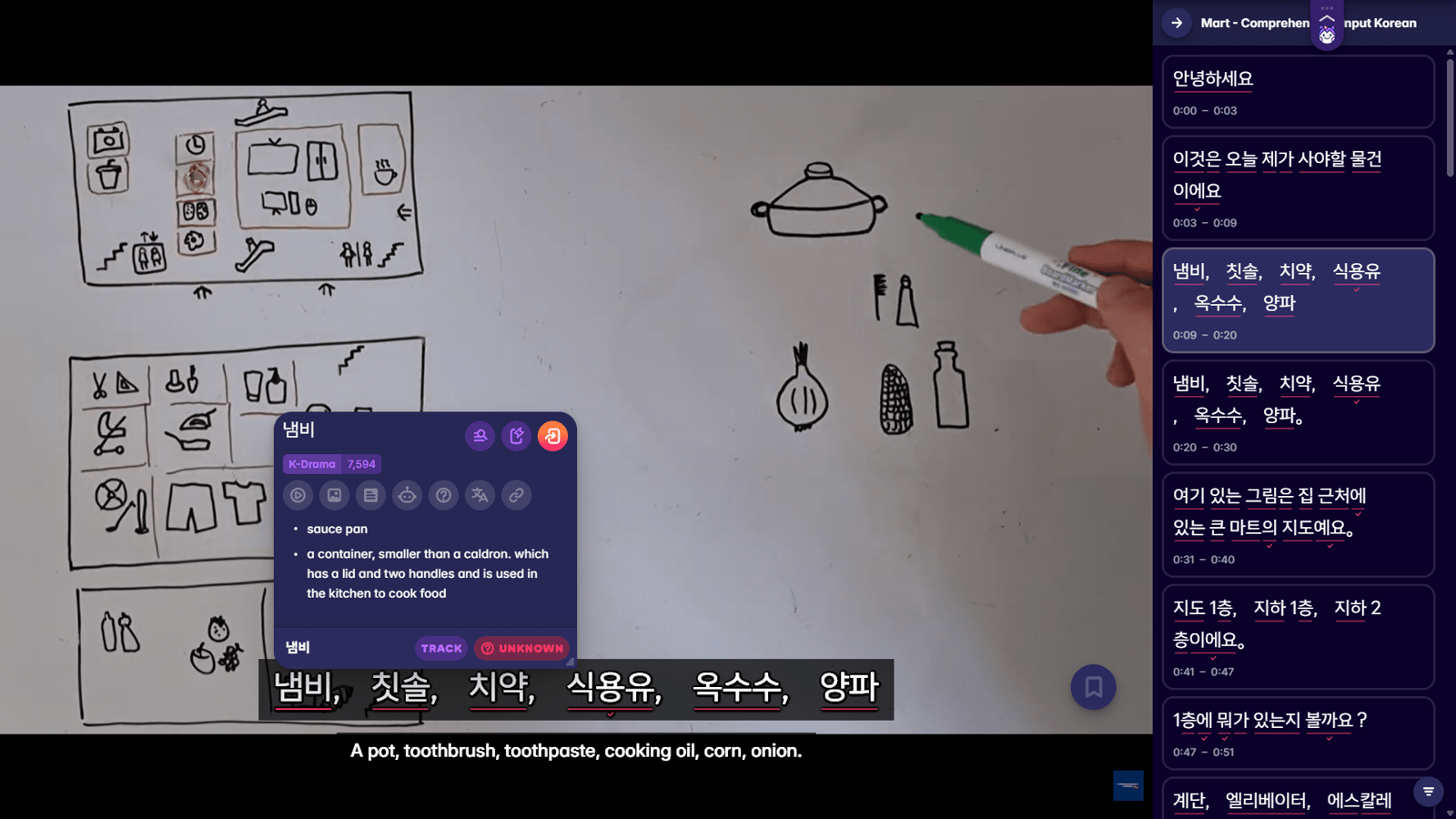
Anyway, if you want to level up your Korean learning even more, Migaku's browser extension and app let you look up words instantly while watching Korean shows or reading Korean articles. It makes immersion learning way more practical than pausing every two seconds to check your dictionary. There's a 10-day free trial if you want to check it out.
FAQs
Using multiple resources can help you learn better
You can mix different types of podcasts to keep things interesting. Combine structured lessons from Talk To Me In Korean with natural conversations from IYAGI. Throw in some K-culture content to stay motivated. The variety keeps your brain engaged and exposes you to different vocabulary domains.
If you consume media in Korean, and you understand at least some of the messages and sentences within that media, you will make progress. Period.
One resource is never enough!🎧