# How to Say Excuse Me in Korean: Different Ways to Grab Attention
> Situation-specific phrases for restaurants, crowds, and apologies with pronunciation tips. Learn excuse me in Korean with 실례합니다, 저기요, and more.
**URL:** https://migaku.com/blog/korean/excuse-me-in-korean
**Last Updated:** 2026-03-30
**Tags:** vocabulary, phrases
---
Learning how to say excuse me in Korean can save you from a lot of awkward situations, whether you're trying to get someone's attention at a restaurant, squeezing through a crowded subway in Seoul, or apologizing for bumping into someone. The thing is, Korean has several different phrases for "excuse me" depending on what you're trying to do and who you're talking to. This guide breaks down all the essential phrases you [need to learn in Korean](https://migaku.com/learn-korean), when to use each one, and how to pronounce them properly so you can navigate Korea with confidence.
----
## Understanding the different ways to say excuse me
Korean doesn't have one single phrase that covers every "excuse me" situation like English does. Instead, you'll use different expressions depending on whether you're getting someone's attention, apologizing, or trying to pass through a crowd.
The most common phrases you'll encounter are 실례합니다 (sillyehamnida), 저기요 (jeogiyo), 잠시만요 (jamsimanyo), and 죄송합니다 (joesonghamnida). Each serves a specific purpose, and using the right one shows you understand [Korean social etiquette](https://migaku.com/blog/korean/korean-formal-vs-informal-speech).
Here's the thing: Koreans pay close attention to formality levels and context. Using a casual phrase in a formal situation can come across as rude, while being overly formal with friends sounds stiff and awkward. Getting comfortable with these variations takes some practice, but once you understand the basic patterns, it becomes pretty natural.
----
## 실례합니다 (sillyehamnida) for formal apologies and interruptions
**실례합니다 ** (sillyehamnida) literally means "I'm being rude" or "I'm committing a rudeness." This is your go-to formal phrase when you need to interrupt someone, enter a room, or politely get past someone.
You'd use this phrase when walking into someone's office, interrupting a conversation to ask a question, or when you need to squeeze past someone in a narrow space. It acknowledges that you're about to do something that might inconvenience the other person.
The pronunciation breaks down as "sil-lyeh-ham-ni-da" with the stress fairly even across syllables. The "ll" sound is somewhere between an L and R sound, which can take some practice for English speakers.
In Korea, you'll hear this phrase constantly in professional settings, stores, and anywhere formal interaction happens. It's respectful without being overly stiff, making it safe to use when you're unsure about the appropriate formality level.
----
## Getting attention with 저기요 (jeogiyo) and 여기요 (yeogiyo)
When you need to get someone's attention, especially service staff at restaurants or stores, 저기요 (jeogiyo) is what you want. This phrase literally means something like "over there" but functions as "excuse me" to call someone.
**저기요 ** works in most situations where you're calling someone who's at a bit of a distance. Pronounce it "jeo-gi-yo" with three distinct syllables. You'll use this when flagging down a waiter, getting a store clerk's attention, or calling out to someone across a room.
There's also **여기요 ** (yeogiyo), which means "over here." The difference is subtle, but 여기요 is slightly more direct since you're essentially saying "here" rather than "there." Both work fine in restaurants and casual service situations.
Some people also use **이봐요 ** (ibwayo), but this can sound a bit abrupt or even rude depending on the context and your tone. Stick with 저기요 or 여기요 when you're learning, and you'll be fine.
----
## 잠시만요 (jamsimanyo) when you need someone to wait
**잠시만요 ** (jamsimanyo) translates to "just a moment" or "wait a second," but it functions as "excuse me" when you need to get through a crowd or need someone to hold on briefly.
This phrase is super useful on public transportation in Korea. When you're trying to get off a packed subway car and need people to move, 잠시만요 works perfectly. Say it with a slight apologetic tone, and people will usually shift to let you through.
The pronunciation is "jam-shi-man-yo" with four syllables. The "shi" sound is like the English "she" but shorter and crisper.
You can also use this when you're in line and need to grab something you forgot, or when you need someone to pause what they're doing for a second. It's polite but casual enough for everyday situations.
----
## 죄송합니다 (joesonghamnida) for sincere apologies
**죄송합니다 ** (joesonghamnida) is a formal apology that means "I'm sorry." While it's technically an apology rather than "excuse me," Koreans use it in situations where English speakers might say "excuse me," especially when you've made a mistake or genuinely inconvenienced someone.
If you accidentally bump into someone, step on someone's foot, or make any kind of actual mistake, 죄송합니다 is the appropriate response. It's more serious than 실례합니다 and shows genuine regret.
Pronounce it "joe-song-ham-ni-da" with five syllables. The "joe" rhymes with "go," and "song" is like the English word "song."
This phrase also works when you need to interrupt someone for something important or when you're asking for a significant favor. The formality level shows respect and acknowledges that you're aware you're imposing.
----
## Informal ways to say excuse me in Korean
When you're with friends or people younger than you, the formal phrases can sound too stiff. For casual situations, you have several options.
**잠깐만 ** (jamkkanman) is the informal version of 잠시만요. Drop this when you need a friend to wait a second or when you're moving through a crowd of peers. It's pronounced "jam-kkan-man" and sounds much more relaxed.
**미안 ** (mian) or **미안해 ** (mianhae) works as a casual "sorry" or "excuse me" with friends. These are the informal versions of 죄송합니다. You'd use these when you bump into a friend or need to interrupt a casual conversation.
For getting attention informally, you might just say **야 ** (ya), but be careful with this one. It's very casual and can sound rude if used with the wrong person. Only use it with close friends or people younger than you.
----
## Cultural context and politeness levels
Korean culture places huge importance on [hierarchy and respect](https://migaku.com/blog/korean/korean-honorifics). The phrase you choose reflects your understanding of social dynamics.
Age, social status, and relationship all factor into which version of "excuse me" you should use. When in doubt, go more formal. Using 실례합니다 (sillyehamnida) or 죄송합니다 (joesonghamnida) when you could have used something more casual is fine. Going too casual with someone you should respect, however, can create an awkward situation.
Bowing while saying these phrases adds to the politeness. A slight head nod works for casual situations, while a deeper bow from the waist shows more respect and sincerity.
Context matters too. In a loud, busy market, people might not even hear your perfectly pronounced 실례합니다. Sometimes a gentle touch on the shoulder combined with the phrase works better than just words alone.
----
## Video resources for learning pronunciation
Since pronunciation is so important, watching video demonstrations helps immensely.
1. YouTube has countless Korean language channels where native speakers demonstrate these exact phrases. Look for videos that show the mouth position and tongue placement for Korean sounds. This visual element helps you understand how to produce sounds that don't exist in English.
2. Korean variety shows and dramas also provide great real-world examples. Pay attention to how characters say 저기요 when calling waiters, or how they use 죄송합니다 in different situations. The context helps you understand not just the words but the appropriate tone and body language.
3. Language exchange apps often have video features where you can practice with native speakers who can correct your pronunciation in real time. Getting feedback from actual Koreans beats just mimicking videos because they can tell you specifically what needs adjustment.
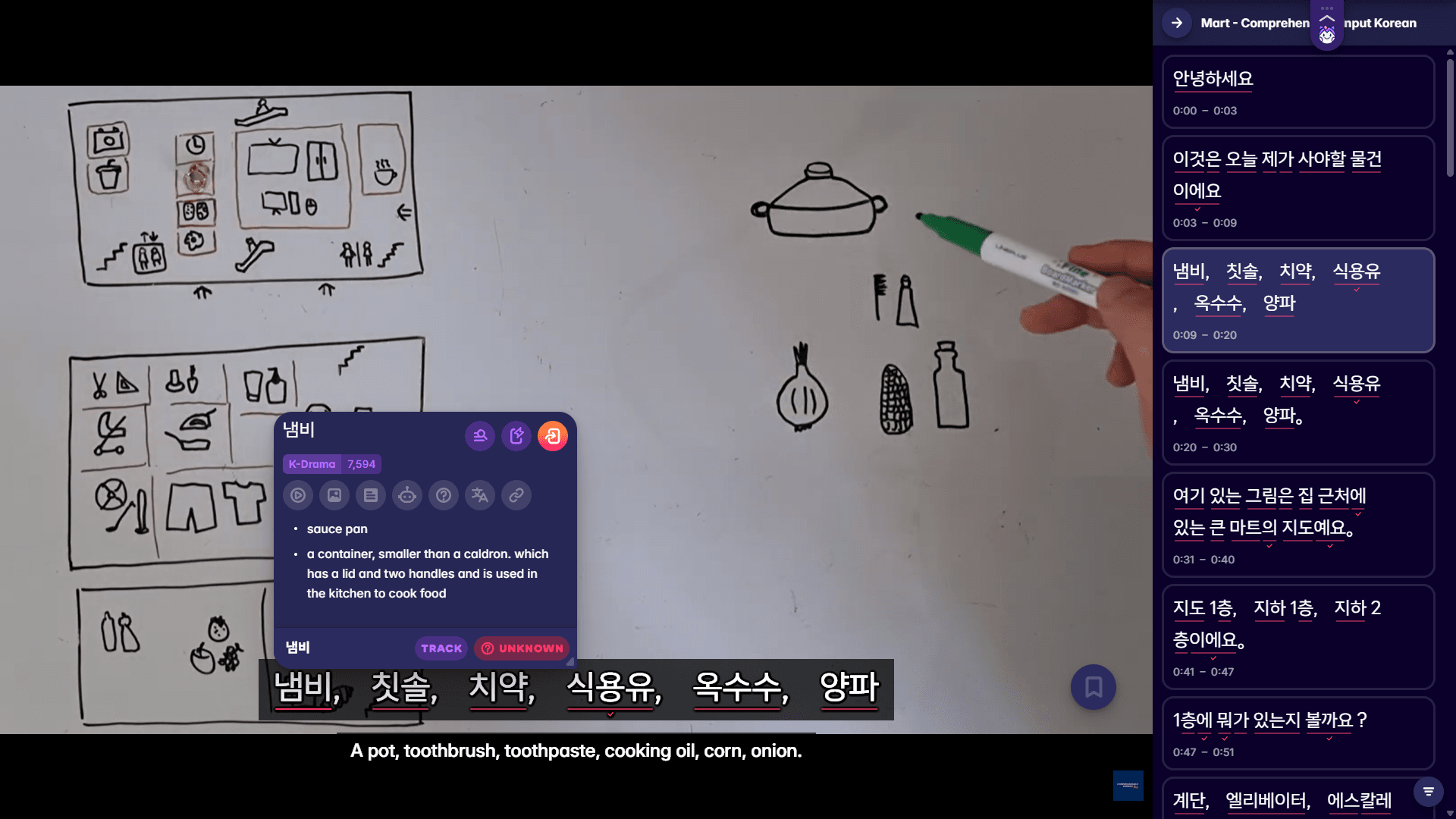
If you're serious about picking up Korean through actual content you enjoy, Migaku's browser extension and app let you look up words and save phrases while watching Korean shows or reading articles. Makes learning from real Korean media way more practical. There's a 10-day free trial if you want to check it out.
 ----
## Learn not just the words, but also the situations of when to use them
Whether you go with 실례합니다 for formal interruptions, 저기요 for getting attention, 잠시만요 for navigating crowds, or 죄송합니다 for sincere apologies, you now have the phrases you need to be polite in Korean. The key is matching the phrase to the situation and the person you're addressing. Practice these in real situations, pay attention to how native speakers use them in real life and media content, and you'll develop a natural feel for Korean politeness pretty quickly.
> If you consume media in Korean, and you understand at least some of the messages and sentences within that media, you will make progress. Period.
A well-timed "excuse me" reflects both language skill and respect.
----
## Learn not just the words, but also the situations of when to use them
Whether you go with 실례합니다 for formal interruptions, 저기요 for getting attention, 잠시만요 for navigating crowds, or 죄송합니다 for sincere apologies, you now have the phrases you need to be polite in Korean. The key is matching the phrase to the situation and the person you're addressing. Practice these in real situations, pay attention to how native speakers use them in real life and media content, and you'll develop a natural feel for Korean politeness pretty quickly.
> If you consume media in Korean, and you understand at least some of the messages and sentences within that media, you will make progress. Period.
A well-timed "excuse me" reflects both language skill and respect.