# Korean Comparatives: Guide to Comparatives and Superlatives in Korean Grammar
> Make comparisons in Korean using 보다, 더, and 덜. Simple grammar lesson with examples, practice tips, and superlatives explained clearly.
**URL:** https://migaku.com/blog/korean/korean-comparatives-how-to-make-comparisons
**Last Updated:** 2026-03-26
**Tags:** fundamentals, grammar
---
[Learning Korean](https://migaku.com/learn-korean) comparisons is way easier than you'd expect. Unlike English, where you have to deal with all those irregular forms like "good, better, best," Korean keeps things refreshingly simple. You basically just need to learn a few particles and adverbs, and you're set. This lesson will walk you through everything you need to know about Korean comparatives, from basic structures to superlatives, with plenty of examples to practice with.
----
## The basic structure of Korean comparatives
Here's the thing about [Korean adjectives](https://migaku.com/blog/korean/korean-adjectives-guide): they don't actually have comparative forms. You won't find anything like "bigger" or "smaller" built into the words themselves. Instead, Korean uses a particle-based system that's honestly pretty straightforward once you get the hang of it.
> 💡The main structure for making comparisons looks like this: **A + 이/가 + B + 보다 + 더 + adjective/verb**
Let me break that down. The particle 보다 (boda) means "than," and it comes after whatever you're comparing to. The adverb 더 (deo) means "more," and it goes right before the adjective or verb you're using to compare.
So if you want to say "A is bigger than B," you'd structure it as: A is B than more big. Sounds weird in English, but it makes perfect sense in [Korean grammar](https://migaku.com/blog/korean/korean-particles).
Here's a real example:
- 사과가 오렌지보다 더 커요.
*The apple is bigger than the orange.*
Breaking this down: 사과 (apple) + 가 (subject particle) + 오렌지 (orange) + 보다 (than) + 더 (more) + 커요 (is big).
Pretty cool how it all fits together, right?
----
## Using 보다 (than) in comparative sentences
The particle 보다 is your best friend when making comparisons in Korean. It literally translates to "than" and attaches directly to whatever noun you're comparing against.
You can use 보다 with pretty much any adjective or verb to create comparative sentences. The word order stays consistent, which makes it way easier to remember than English comparative rules.
Here are some practical examples:
- 한국이 일본보다 더 추워요.
*Korea is colder than Japan.*
- 저는 커피보다 차를 더 좋아해요.
*I like tea more than coffee.*
- 오늘이 어제보다 더 바빠요.
*Today is busier than yesterday.*
Notice how 보다 consistently marks the comparison point? That's the pattern you want to lock into your brain.
One thing that trips up beginners: you might be tempted to skip 더 because it feels redundant. Sometimes Koreans do drop it in casual speech, but when you're learning, it's safer to include it. The sentence "사과가 오렌지보다 커요" (without 더) is technically correct, but adding 더 makes the comparison crystal clear.
----
## The role of 더 (more) in making comparisons
The adverb 더 does the heavy lifting in Korean comparative sentences. Since Korean adjectives don't change form like English ones do, 더 is what signals that you're making a comparison.
Think of 더 as the equivalent of adding "er" to English adjectives or putting "more" in front of them. But here's what makes Korean easier: you use 더 the same way every single time. No irregular forms to memorize.
You can use 더 with adjectives:
- 이 가방이 저 가방보다 더 비싸요.
*This bag is more expensive than that bag.*
And you can use it with verbs too:
- 저는 형보다 더 빨리 달려요.
*I run faster than my older brother.*
The position of 더 stays consistent right before the adjective or adverb you're modifying. This consistency is honestly one of the best things about Korean grammar.
----
## Comparing with 덜 (less)
While 더 means "more," the adverb 덜 (deol) means "less." It works exactly the same way structurally, just in the opposite direction.
> 💡The sentence pattern stays identical: **A + 이/가 + B + 보다 + 덜 + adjective/verb**
Here are some examples:
- 이 문제가 저 문제보다 덜 어려워요.
*This problem is less difficult than that problem.*
- 저는 동생보다 덜 먹어요.
*I eat less than my younger sibling.*
- 겨울이 여름보다 덜 습해요.
*Winter is less humid than summer.*
You'll probably use 더 way more often than 덜 in everyday conversation. That's just how people tend to frame comparisons. But 덜 is super useful when you want to soften a statement or make a negative comparison without sounding too harsh.
----
## Making superlative comparisons with 가장 and 제일
Superlatives in Korean are even simpler than comparatives. You just add 가장 (gajang) or 제일 (jeil) before your adjective or verb. Both mean "most" or "the most," and they're basically interchangeable, though 제일 sounds a bit more casual.
> 💡Here's the structure: **Subject + 이/가 + 가장/제일 + adjective/verb**
No 보다, no complex grammar. Just drop in 가장 or 제일 and you're done.
Examples:
- 이 영화가 가장 재미있어요.
*This movie is the most interesting.*
- 저는 여름을 제일 좋아해요.
*I like summer the most.*
- 한국어가 제일 어려워요.
*Korean is the most difficult.*
You can also combine superlatives with specific groups by adding a noun before 가장 or 제일:
- 우리 반에서 지수가 제일 키가 커요.
*Jisu is the tallest in our class.*
The phrase 우리 반에서 (in our class) sets the scope for the superlative comparison.
----
## Using comparatives with different parts of speech
Korean comparatives work with more than just adjectives. You can compare using verbs, nouns, and even adverbs, which gives you tons of flexibility in how you express yourself.
**With verbs, the structure stays the same:**
- 저는 언니보다 더 열심히 공부해요.
*I study harder than my older sister.*
The adverb 열심히 (diligently/hard) gets modified by 더 to show the comparison.
**You can also make comparisons about quantities using nouns:**
- 저는 친구보다 책을 더 많이 가지고 있어요.
*I have more books than my friend.*
Here, 많이 (a lot/many) acts as the comparative element.
**Sometimes you'll want to compare actions or states without using 보다. In those cases, you can just use 더 on its own:**
- 더 빨리 가세요!
*Go faster!*
- 조금 더 주세요.
*Please give me a little more.*
This flexibility makes Korean comparatives really practical for everyday conversation.
----
## Common mistakes to avoid
1. One mistake I see all the time is putting 더 or 덜 in the wrong position. Remember, they always go right before the adjective or adverb you're modifying, not floating around somewhere else in the sentence.
2. Another common issue is forgetting the subject or object particles. While Koreans sometimes drop particles in super casual speech, including them makes your sentences clearer and more grammatically correct.
----
## Practice tips for mastering comparison in Korean
The best way to get comfortable with comparative sentences is to make them about things you actually care about. Compare your favorite foods, your daily routines, the weather in different cities, whatever feels relevant to your life.
1. Try creating sentence pairs that flip the comparison: 커피가 차보다 더 쓰다. (Coffee is more bitter than tea.) 차가 커피보다 덜 쓰다. (Tea is less bitter than coffee.) This helps you internalize both 더 and 덜 while reinforcing the basic structure.
2. You can also practice by describing your preferences using comparative structures. Every time you choose one thing over another, that's an opportunity to use 보다.
3. Listen for comparatives in [Korean content](https://migaku.com/blog/korean/best-korean-shows-for-learning) too. K-dramas are full of characters comparing things, and you'll start noticing the patterns everywhere once you know what to listen for.
4. Writing out worksheets with fill-in-the-blank exercises can help too. Create sentences with missing particles or adverbs and practice completing them until the structure becomes automatic.
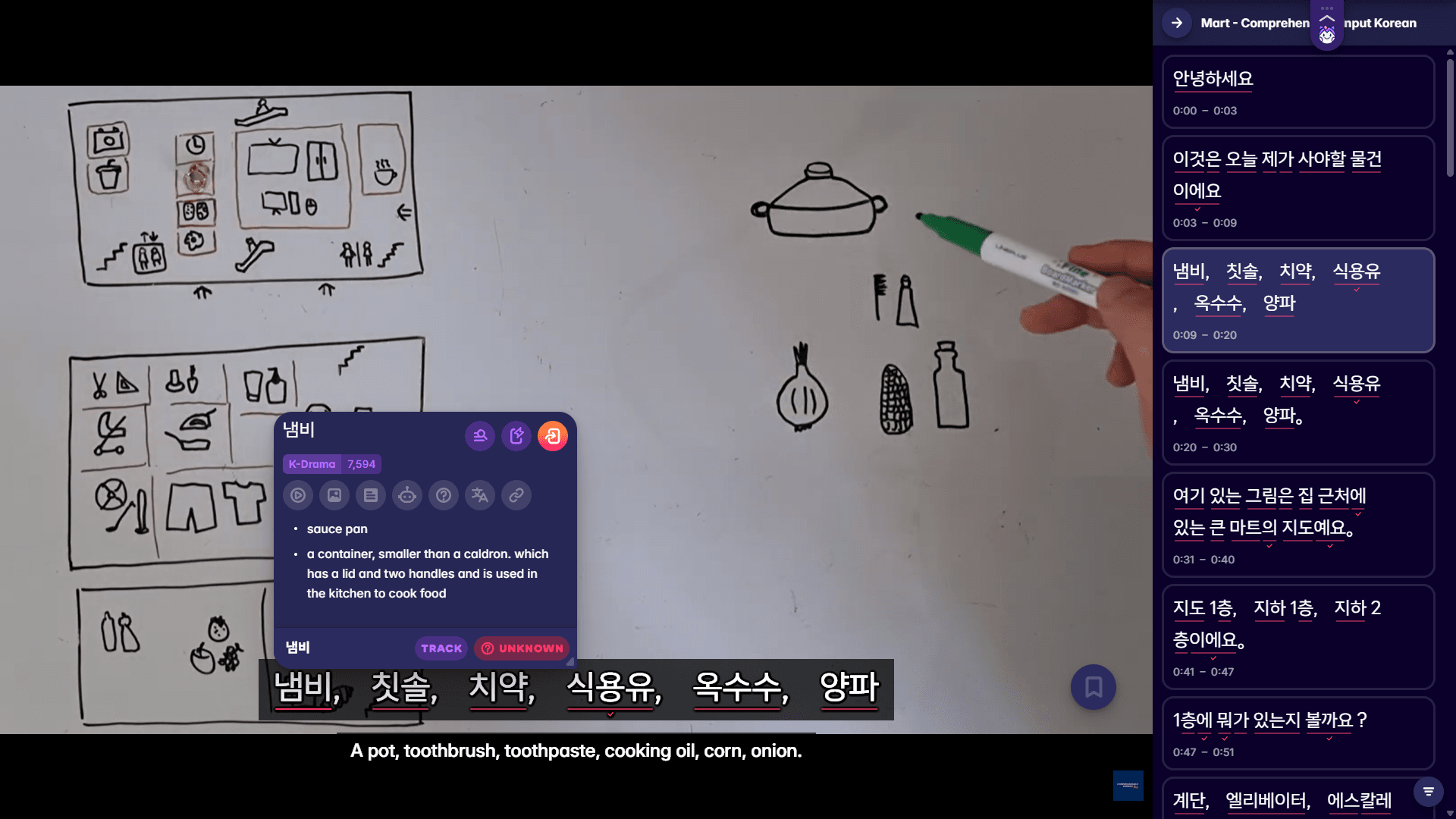
Anyway, if you want to practice these grammar patterns with real Korean content, Migaku's browser extension and app let you look up words and save sentences while watching shows or reading articles. Makes it way easier to see how comparatives work in actual context. There's a 10-day free trial if you want to check it out.
 ----
## Comparatives in Korean aren't as complicated as some grammar guides make them seem
You've got 보다 for "than," 더 for "more," 덜 for "less," and 가장 or 제일 for superlatives. Master those elements, and you can compare pretty much anything. The key is practice. Start simple with basic comparisons about everyday things, then gradually work up to more complex sentences as you get comfortable with the patterns. The more you try to understand the comparative sentences in Korean podcasts, articles, and videos, the more natural they'll feel.
> If you consume media in Korean, and you understand at least some of the messages and sentences within that media, you will make progress. _Period_.
The rules aren't really complicated — they just seem that way at first.
----
## Comparatives in Korean aren't as complicated as some grammar guides make them seem
You've got 보다 for "than," 더 for "more," 덜 for "less," and 가장 or 제일 for superlatives. Master those elements, and you can compare pretty much anything. The key is practice. Start simple with basic comparisons about everyday things, then gradually work up to more complex sentences as you get comfortable with the patterns. The more you try to understand the comparative sentences in Korean podcasts, articles, and videos, the more natural they'll feel.
> If you consume media in Korean, and you understand at least some of the messages and sentences within that media, you will make progress. _Period_.
The rules aren't really complicated — they just seem that way at first.