Korean Conditional Forms: How to Form Conditional Sentences in Korean Grammar
Last updated: March 23, 2026

Learning how to express "if" and "when" in Korean opens up a whole new level of communication. You'll go from simple statements to actually discussing possibilities, hypothetical situations, and conditions. The main tool for this is the ~(으)면 conditional form, and honestly, once you get the hang of it in your Korean learning, you'll use it constantly in everyday conversations. Let me walk you through everything you need to know about Korean conditional forms, from basic formation rules to tense usage and common patterns.
- Understanding Korean conditional sentences
- How to form ~(으)면 with verb stems
- Example sentences with ~(으)면
- Using 만약 for hypothetical situations
- Present and future tense usage in conditionals
- Past tense in conditional structures
- Negative conditionals in Korean grammar
- Use conditionals with nouns
- Common mistakes and how to avoid them
- How to practice the grammar rules of conditional forms
Understanding Korean conditional sentences
Korean conditional sentences work differently from English in some key ways. In English, we typically use "if" or "when" followed by a subject and verb. In Korean, you attach a conditional ending directly to the verb stem itself, which changes the entire structure of how you express these ideas.
The most common conditional form is ~(으)면 , which translates to both "if" and "when" depending on context. This dual meaning makes Korean conditionals simpler in some ways because you don't need to worry as much about distinguishing between the two concepts. The situation and surrounding context usually make the meaning clear.
Here's the thing about Korean grammar: the language relies heavily on verb endings to express different meanings. The conditional is just one of many endings you'll attach to verb stems, and it follows the same basic pattern you'll see throughout Korean conjugation.
How to form ~(으)면 with verb stems
The formation rules for ~(으)면 depend on whether the verb stem ends in a vowel or consonant. This is a pattern you'll see over and over in Korean, so getting comfortable with it now will help you later.
💡 Formation Rules 💡
- For verb stems ending in a vowel , you simply add ~면. Take the verb 가다 (to go). Remove 다 to get the stem 가, which ends in a vowel. Add 면 directly: 가면 means "if/when (someone) goes."
- For verb stems ending in a consonant , you add ~으면. Look at 먹다 (to eat). The stem is 먹, ending in the consonant ㄱ. Add 으면: 먹으면 means "if/when (someone) eats."
Let me give you more examples to make this crystal clear:
- 오다 (to come) becomes 오면 (if/when come)
- 읽다 (to read) becomes 읽으면 (if/when read)
- 보다 (to see/watch) becomes 보면 (if/when see)
- 듣다 (to listen/hear) becomes 들으면 (if/when listen)
Notice that 듣다 has an irregular stem change. Some verbs do this in Korean, but the conditional ending itself follows the same rules.
The same formation rules apply to adjectives. Korean adjectives conjugate like verbs, which is pretty cool once you get used to it.
- 좋다 (to be good) becomes 좋으면 (if good)
- 크다 (to be big) becomes 크면 (if big)
- 예쁘다 (to be pretty) becomes 예쁘면 (if pretty)
Example sentences with ~(으)면
Seeing these conditional forms in sentences helps way more than just memorizing conjugation rules. Here are some practical examples you might use in everyday conversation:
- 비가 오면 집에 있을 거예요.
If it rains, I will stay home. - 시간이 있으면 영화를 봐요.
If/When I have time, I watch movies. - 배고프면 밥을 먹어요.
If you're hungry, eat. - 한국어를 공부하면 한국 드라마를 이해할 수 있어요.
If you study Korean, you can understand Korean dramas.
Notice how the conditional clause comes first in Korean sentences, followed by the result or consequence. This is the standard structure for conditional sentences in Korean, though you can occasionally switch the order for emphasis.
Using 만약 for hypothetical situations
When you want to emphasize that something is hypothetical or uncertain, you can add 만약 at the beginning of the sentence. This word means "if" or "supposing that" and makes the conditional nature of your statement more explicit.
만약 doesn't change the grammar at all. You still use ~(으)면 on the verb. It just adds extra clarity or emphasis to the hypothetical nature of what you're saying.
- 만약 내일 날씨가 좋으면 공원에 갈 거예요.
If the weather is good tomorrow, I'll go to the park. - 만약 돈이 많으면 세계 여행을 하고 싶어요.
If I had a lot of money, I'd want to travel the world.
The speaker uses 만약 when discussing situations that are less certain or more hypothetical. You'll hear it more often with counterfactual or unlikely scenarios than with routine conditions.
Present and future tense usage in conditionals
Here's something that confuses a lot of learners: Korean conditional forms don't change based on tense in the conditional clause itself. The ~(으)면 form stays the same whether you're talking about present or future situations. The tense gets expressed in the main clause instead.
Look at these examples:
- 지금 가면 늦어요.
If you go now, you'll be late. (future meaning) - 매일 운동하면 건강해요.
If you exercise every day, you're healthy. (general/present meaning)
The conditional clause uses the same 가면 and 운동하면 forms, but the context and the main clause indicate whether we're talking about a future action or a general truth.
This actually makes Korean conditionals easier than English in some ways. You don't need to worry about matching tenses between clauses like you do in English conditional sentences.
Past tense in conditional structures
While the conditional clause itself doesn't change for tense, you can express past conditions by using the past tense marker in the main clause. However, if you want to talk about a condition that was true in the past, you'd typically use different grammar patterns.
For most practical purposes as a learner, you'll use ~(으)면 for present and future conditions. The past conditional gets more complex and involves patterns like ~았/었더라면 , which expresses regret or counterfactual past situations.
For example:
- 공부했으면 시험을 통과했을 거예요.
If I had studied, I would have passed the test.
This gets into more advanced territory. When you're starting out, focus on mastering the basic ~(으)면 form for present and future situations.
Negative conditionals in Korean grammar
Creating negative conditionals is straightforward. You simply use the negative form of the verb, then add the conditional ending.
Korean has two main negative forms: the short form with 안 and the long form with 지 않다. Both work with conditionals.
Using 안 (short form):
- 안 가면 (if don't go)
- 안 먹으면 (if don't eat)
Using 지 않다 (long form):
- 가지 않으면 (if don't go)
- 먹지 않으면 (if don't eat)
Example sentences:
- 숙제를 안 하면 선생님이 화내요.
If you don't do homework, the teacher gets angry. - 야채를 먹지 않으면 건강하지 않아요.
If you don't eat vegetables, you won't be healthy. - 비가 안 오면 소풍을 갈 거예요.
If it doesn't rain, we'll go on a picnic.
The long form sounds slightly more formal, but both are common in everyday speech. Pick whichever feels more natural to you in the moment.
Use conditionals with nouns
When you want to create a conditional sentence with a noun, you use (이)면 instead of (으)면. The pattern is similar: 이면 after nouns ending in a consonant, 면 after nouns ending in a vowel.
- 학생이면 할인을 받아요.
If you're a student, you get a discount. - 주말이면 친구를 만나요.
If it's the weekend, I meet friends. - 의사면 이해할 수 있어요.
If you're a doctor, you can understand.
This construction is super useful for expressing conditions based on identity, status, or categories rather than actions.
Common mistakes and how to avoid them
- One mistake learners make is trying to match English tense patterns in Korean conditionals. In English, we say "if I go" or "if I went" with different implications. Korean handles this differently through context and the main clause rather than changing the conditional form itself.
- Another common error is forgetting the vowel versus consonant rule when adding the ending. Take your time to identify whether the verb stem ends in a vowel or consonant before adding 면 or 으면.
- Some learners also overuse 만약. While it's helpful for clarity, native speakers don't use it in every conditional sentence. Save it for situations where you really want to emphasize the hypothetical nature of what you're saying.
How to practice the grammar rules of conditional forms
The best way to internalize Korean conditional forms is through exposure and practice.
- Listen for ~(으)면 in Korean dramas, variety shows, and conversations. You'll hear it constantly because expressing conditions is fundamental to communication.
- Try creating your own example sentences based on your daily life. What conditions affect your decisions? What hypothetical situations do you think about? Practice forming those thoughts in Korean using ~(으)면.
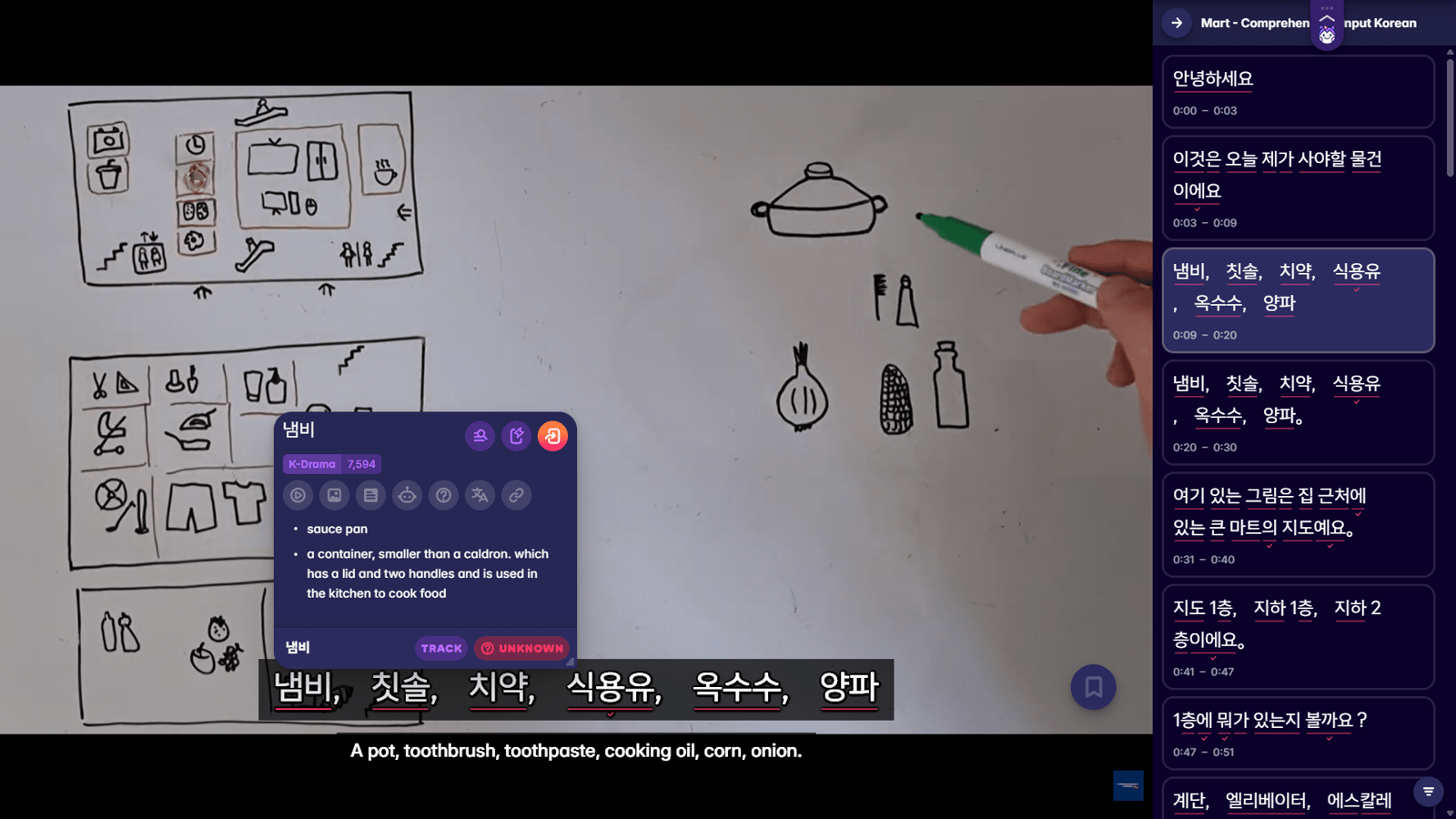
Anyway, if you want to practice these conditional forms with real Korean content, Migaku's browser extension and app let you look up words and grammar patterns instantly while watching shows or reading articles. Makes learning from actual Korean way more practical. There's a 10-day free trial if you want to check it out.
Forming conditional sentences fluently takes time
Start simple: "If I'm tired, I sleep early." "If the food is delicious, I eat a lot." These basic sentences build the foundation for more complex conditional expressions later. The conditional form appears in nearly every conversation once you reach intermediate Korean. Getting comfortable with it now will pay off constantly as you consume more Korean media down the road.
If you consume media in Korean, and you understand at least some of the messages and sentences within that media, you will make progress. Period.
Patience and repetition can help you internalize the rules!