# Korean Family Vocabulary Guide: List of Korean Terms for Family Members
> Use these Korean family terms to address your parents, siblings, and relatives. Includes formal vs casual terms, gender differences, and common phrases.
**URL:** https://migaku.com/blog/korean/korean-family-vocabulary
**Last Updated:** 2026-03-04
**Tags:** vocabulary, phrases
---
Learning how to talk about your family in Korean opens up some of the most common conversations you'll have. Whether you're introducing yourself, chatting with Korean friends, or trying to follow a K-drama without subtitles, family vocabulary comes up constantly. The tricky part? Korean has way more specific terms than English does. You can't just say "brother" or "sister" and call it a day. Korean family vocabulary changes based on gender, age, formality, and even which side of the family someone's on. Here's everything you need to know when [learning Korean](https://migaku.com/learn-korean).
---
## Why Korean family terms are more complex than English
English keeps family vocabulary pretty simple. You've got mom, dad, brother, sister, and you're basically set for immediate family. Korean? Completely different story.
Korean family terms split based on several factors.
1. First, the speaker's gender matters. A woman calling her older sister uses a different word than a man would.
2. Second, the relative age between you and the family member changes the term. Older siblings get different words than younger ones.
3. Third, formality levels shift the vocabulary. You might use one term at home and another when talking about your parents to strangers.
This complexity reflects Korean culture pretty deeply. [Age hierarchy and respect levels](https://migaku.com/blog/korean/korean-honorifics) are built right into the language. You can't talk about family members without acknowledging where everyone sits in the family structure.
---
## Immediate family: Parents
Let's start with the most basic terms. For parents, you've got formal and casual options.
- 아빠 (appa) means "dad" in the casual, everyday sense. Kids use this, and adults often keep using it when talking directly to their fathers. It's warm and familiar. 아버지 (abeoji) is the formal version of "father." You'd use this when introducing your dad to others or in more respectful contexts. If you're talking about someone else's father, you'd add 님 (nim) to make it 아버지님 , which adds an extra layer of respect.
- For mothers, the pattern's the same. 엄마 (eomma) is "mom," casual and affectionate. 어머니 (eomeoni) is "mother," formal and respectful. Again, 어머니님 would be how you'd respectfully refer to someone else's mother.
- When talking about both parents together, 부모님 (bumonim) is the go-to term. The 님 is built in because you're always showing respect when talking about parents in Korean.
---
## Siblings: Where it gets specific
Here's where Korean family vocabulary really shows its complexity. The word you use for siblings depends entirely on your gender and whether the sibling is older or younger than you.
For older siblings, you have four different terms:
- 형 (hyeong) is what males call their older brothers. You'll hear this constantly in Korean media. It's also used between close male friends who aren't related, which makes it even more common.
- 오빠 (oppa) is what females call their older brothers. This one's probably the most famous Korean family term internationally because it's also used by women for older male friends or boyfriends. The romantic usage has made it pretty well-known.
- 누나 (nuna) is what males call their older sisters. Less commonly used outside of family contexts compared to the others.
- 언니 (eonni) is what females call their older sisters. Like 오빠, this gets extended to close female friends who are older. You'll hear it all the time in Korean culture.
For younger siblings, things simplify. 동생 (dongsaeng) works for both genders and means "younger sibling." You can specify gender by saying 남동생 (namdongsaeng) for younger brother or 여동생 (yeodongsaeng) for younger sister, but plain 동생 works fine in most conversations.
The Korean language doesn't require you to specify whether you're talking about older or younger siblings in the same way. Age hierarchy matters more for older siblings, which is why they get specific terms.
---
## Grandparents and the paternal vs maternal side of the family
Korean makes a clear distinction between your father's side and your mother's side of the family. This matters especially for grandparents.
For **paternal** grandparents (father's parents):
- 할아버지 (harabeoji) - grandfather
- 할머니 (halmeoni) - grandmother
For **maternal** grandparents (mother's parents):
- 외할아버지 (oeharabeoji) - grandfather
- 외할머니 (oehalmeoni) - grandmother
That 외 (oe) prefix specifically marks the maternal side. Pretty much any maternal relative gets this prefix to distinguish them from the paternal side.
This distinction isn't just linguistic. Historically, Korean culture placed more importance on the paternal family line, and the language reflects that hierarchy. These days, the practical importance has faded, but the vocabulary remains.
---
## Extended family members in Korean
Korean family vocabulary extends way beyond the immediate family. You've got specific terms for family members such as aunts, uncles, and cousins, depending on which side they're from.
For **paternal uncles**:
- 큰아버지 (keunabeoji) - father's older brother
- 작은아버지 (jageunabeoji) - father's younger brother
- 고모부 (gomobu) - father's sister's husband
For **maternal uncles**:
- 외삼촌 (oesamchon) - mother's brother
- 이모부 (imobu) - mother's sister's husband
**Aunts** follow similar patterns:
- 고모 (gomo) - father's sister
- 이모 (imo) - mother's sister
- 큰어머니 (keunomeoni) - father's older brother's wife
- 작은어머니 (jageunomeoni) - father's younger brother's wife
Cousins generally use 사촌 (sachon), though you might hear more specific terms in traditional families.
The level of detail here can feel overwhelming at first. Most Korean learners focus on immediate family terms first and pick up extended family vocabulary gradually as they need it.
---
## In-law family terms in Korean for married couples
Marriage brings a whole new set of Korean family vocabulary into play. In-law terms differ based on whose family you're talking about and, again, gender matters.
For a wife, **her husband's parents** are:
- 시아버지 (siabeoji) - father-in-law
- 시어머니 (sieomeoni) - mother-in-law
For a husband, **his wife's parents** are:
- 장인 (jangin) - father-in-law
- 장모 (jangmo) - mother-in-law
**Siblings-in-law** get specific terms too:
- 시누이 (sinui) - husband's sister (from wife's perspective)
- 큰시숙 (keunsisuk) - husband's older brother
- 시동생 (sidongsaeng) - husband's younger brother
- 동서 (dongseo) - spouse of spouse's sibling
- 처남 (cheonam) - wife's brother
- 처형 (cheohyeong) - wife's older sister
- 처제 (cheoje) - wife's younger sister
For your own spouse, you'd use 남편 (nampyeon) for husband or 아내 (anae) for wife in formal situations. Casually, couples often use 여보 (yeobo), which is like "honey" or "dear."
---
## Common phrases to talk about relatives in Korean
Knowing individual terms helps, but you'll want some practical phrases too. Here are the most useful ones:
- 가족 (gajok) means "family." You'll use this word constantly.
- "우리 가족 " (uri gajok) means "my family" or "our family." Korean uses "our" where English uses "my" for family members, which reflects the collective nature of Korean culture.
- "가족이 몇 명이에요? " (gajogi myeot myeongieyo?) - "How many people are in your family?"
- "삼 남매예요 " (sam nammaeyo) - "We're three siblings."
- "외동이에요 " (oedongieyo) - "I'm an only child."
- "가족과 함께 살아요 " (gajokgwa hamkke sarayo) - "I live with my family."
These phrases come up in basically every introduction or getting-to-know-you conversation in Korean.
---
## Using Korean family terms beyond your own family
One quirk of the Korean language that catches learners off guard: **these family terms extend beyond biological family.** Koreans often use family vocabulary for non-relatives as a way to show respect.
Calling an older woman 언니 when you're not related signals friendship and familiarity. Using 형 for an older male friend shows camaraderie. This usage is super common and actually helps you sound more natural in Korean.
Older strangers might get called 아저씨 (ajeossi) for men or 아줌마 (ajumma) for women, which roughly translate to "uncle" and "aunt" but really just mean middle-aged man or woman. These aren't exactly family terms, but they follow the same pattern of using familial language in broader social contexts.
The Korean term choices you make signal your relationship with someone, your relative ages, and your level of respect. It's social information packed into vocabulary.
---
## Practice tips to learn Korean terms for family
Here's the thing about memorizing all these terms: you won't retain them from lists alone. You need context and repetition.
1. Start with immediate family terms that apply to your family. If you have an older brother and you're male, focus on 형 first. If you're female with a younger sister, 여동생 becomes relevant immediately. Personal connection makes Korean words stick better.
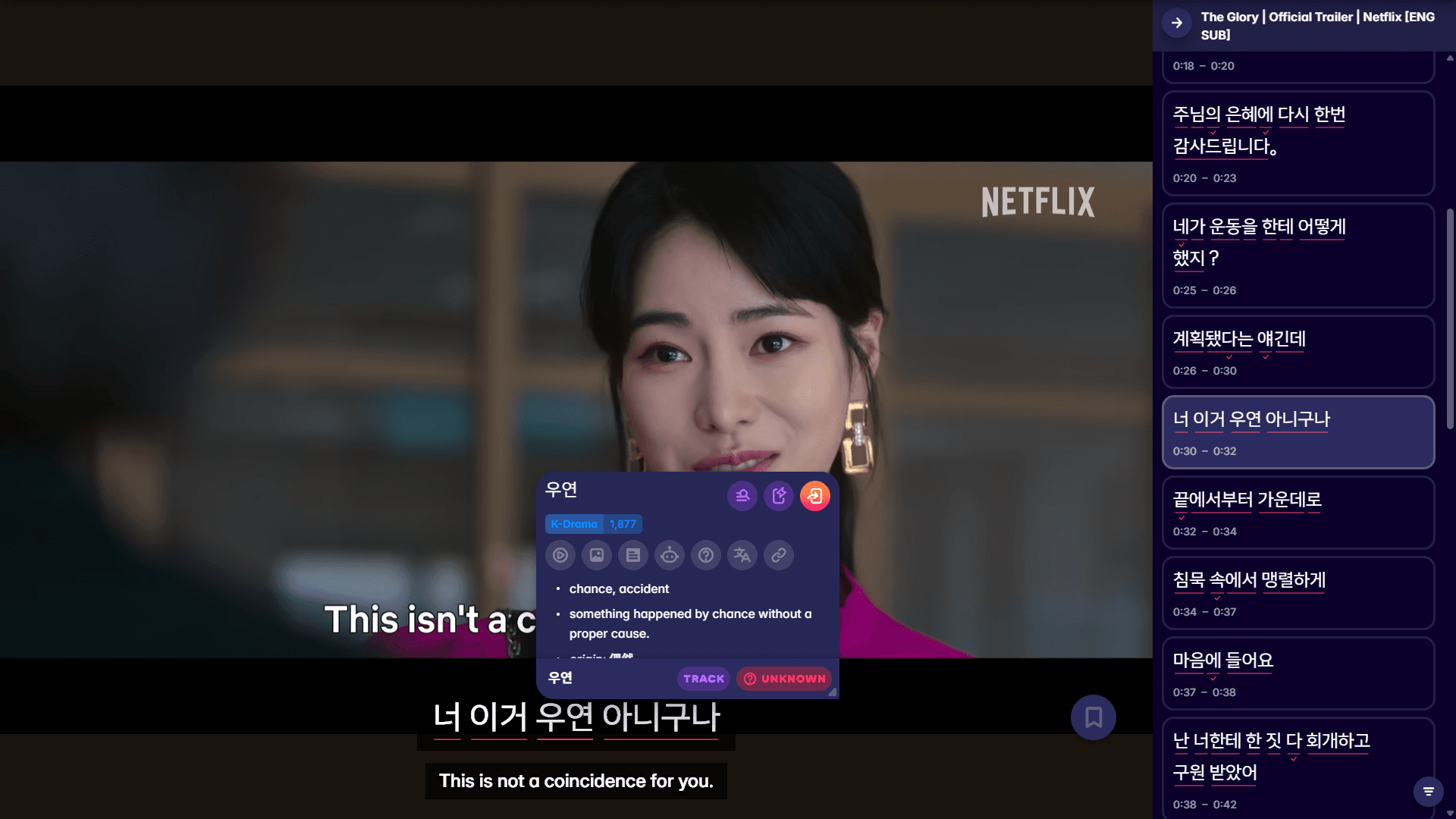
2. [Korean dramas and variety shows](https://migaku.com/blog/korean/best-korean-shows-for-learning) are goldmine resources for hearing Korean terms for family members naturally. Family relationships drive tons of Korean drama plots, so you'll hear 오빠, 언니, and 형 constantly. Pay attention to who uses which term and why.
3. Writing out your own family tree in Korean forces you to engage with the vocabulary actively. Draw it out, label everyone with the correct Korean term from your perspective, tell the difference between the mother’s side and the father’s side, and you'll remember the relationships much better.
Anyway, if you want to actually practice this vocabulary with real Korean content, Migaku's browser extension and app let you look up words instantly while watching shows or reading articles. Makes learning from context way more practical. There's a 10-day free trial if you want to check it out.
 ---
## Start with common Korean family terms
You don't need to memorize every single extended family term right away. Focus on the vocabulary that matches your life and the conversations you'll have. If you're learning Korean to connect with Korean friends, nail down the sibling terms and parent terms first. If you're learning for K-drama comprehension, those same terms plus the in-law vocabulary will cover most situations. The basic family terms used in K-dramas show up more often than you might expect.
> If you consume media in Korean, and you understand at least some of the messages and sentences within that media, you will make progress. _Period_.
It’s not hard, it’s just new.🚀
---
## Start with common Korean family terms
You don't need to memorize every single extended family term right away. Focus on the vocabulary that matches your life and the conversations you'll have. If you're learning Korean to connect with Korean friends, nail down the sibling terms and parent terms first. If you're learning for K-drama comprehension, those same terms plus the in-law vocabulary will cover most situations. The basic family terms used in K-dramas show up more often than you might expect.
> If you consume media in Korean, and you understand at least some of the messages and sentences within that media, you will make progress. _Period_.
It’s not hard, it’s just new.🚀