Korean Formal vs Informal Speech: 7 Speech Levels Explained
Last updated: March 25, 2026

When you start learning Korean, you'll quickly notice that the way you speak to your friends is completely different from how you'd address your boss or a stranger. Korean has seven distinct speech levels that change based on who you're talking to and the situation you're in. Getting these wrong can make conversations awkward or even offensive, so understanding how formality and politeness work in Korean is pretty essential for anyone serious about learning the language.
- What makes Korean speech levels different
- The seven Korean speech levels explained
- Formality vs politeness: Understanding the distinction
- How verb endings change across speech levels
- Pronouns and how they change with different speech levels
- Honorifics and special vocabulary
- Common mistakes learners make with 7 Korean speech levels
- Learning Korean speech levels effectively
What makes Korean speech levels different
Korean speech levels aren't just about being polite or rude. The Korean language has a built-in system where verb endings change depending on the social relationship between speakers and the formality of the situation. This goes way beyond what you'll find in English, where we might just add "please" or use "sir" to show respect.
Here's the thing: Korean operates on two separate dimensions. You've got formality (which relates to the situation) and politeness (which relates to your relationship with the person). These can mix and match, giving you different speech levels for different contexts.
Think of it like a 2x2 matrix. You can be:
- Formal and polite (meeting your friend's parents)
- Informal and polite (chatting with a coworker you're friendly with)
- Formal and impolite (a military command)
- Or informal and impolite (joking with close friends)
Each combination uses different verb endings, pronouns, and sometimes completely different vocabulary.
The seven Korean speech levels explained
Korean traditionally has seven speech levels, though most modern speakers regularly use only four of them. Let's break down all seven so you understand the complete system.
1. Hasipsio-che (하십시오체 ): The most formal polite style
This is the most formal polite speech level in Korean. You'll hear this in news broadcasts, formal announcements, military settings, and official ceremonies. The verb endings typically use -습니다 (-seumnida) or -십시오 (-sipsio).
Example: 앉으십시오 (anjeuseipsio) means "please sit down" in the most formal way possible.
You won't use this level much in daily conversation unless you're giving a presentation or speaking in an extremely formal setting. Even when meeting someone's parents for the first time, you'd probably use the next level down.
2. Hapsyo-che (합쇼체 )
This level is slightly less formal than Hasipsio-che but still very formal and polite. It uses endings like -ㅂ시다 (-psida). Honestly, this level has mostly fallen out of everyday use. You might encounter it in older Korean dramas or historical contexts, but modern speakers have largely abandoned it in favor of other levels.
3. Haeyo-che (해요체 )
Now we're getting to the speech levels you'll actually use constantly. Haeyo-che is the informal polite level, and it's probably the most versatile speech level in modern Korean. The verb endings use -아요/-어요/-여요 (-ayo/-eoyo/-yeoyo).
Examples:
- 가요 (gayo) - "I'm going"
- 먹어요 (meogeoyo) - "I eat" or "I'm eating"
- 해요 (haeyo) - "I do"
You'll use 해요체 with strangers, acquaintances, coworkers, people slightly older than you, and in most service situations like restaurants or stores. When someone asks "Juseyo formal or informal?" they're asking about 주세요 (juseyo), which is the 해요체 form meaning "please give me." So yes, juseyo is polite but informal in terms of the situation.
This is the default "safe" speech level. When in doubt, use 해요체.
4. Hae-che (해체 )
This is informal impolite speech, commonly called 반말 (banmal). The verb endings are just the basic stems with -아/-어/-여 (-a/-eo/-yeo) attached, which is why it's also called 해체.
Examples:
- 가 (ga) - "I'm going"
- 먹어 (meogeo) - "I eat"
- 해 (hae) - "I do"
You use 반말 with close friends, younger siblings, children, and people clearly younger than you in casual settings. Using 반말 with someone you should be speaking politely to is genuinely rude and can damage relationships. But with your friends? This is how you'll talk most of the time.
5. Haera-che (해라체 )
This is a formal impolite level. The verb endings use -ㄴ다/-는다 (-nda/-neunda) for statements and -아라/-어라 (-ara/-eora) for commands.
Examples:
- 간다 (ganda) - "I'm going"
- 먹는다 (meongneunda) - "I eat"
- 가라 (gara) - "Go!"
You'll see 해라체 in writing like diary entries, newspaper articles, books, and academic papers. In speech, it's used in military commands, by parents scolding children, or in situations where someone has authority over another person. It's pretty harsh-sounding in conversation.
6. Hage-che (하게체 )
This level sits between formal and informal, and it's rarely used in modern Korean. Older men might use it when speaking to younger men they're mentoring. The endings include -네 (-ne) and -게 (-ge). Unless you're reading historical texts or classic literature, you probably won't encounter this much.
7. Haerache (해라체 ) plain form
Some linguists separate out the plain declarative form as its own level. This is what you see in dictionary entries and grammar explanations. It's not really used in conversation but appears constantly in written Korean.
Formality vs politeness: Understanding the distinction
This is where Korean gets interesting. Formality and politeness are two separate concepts that work together to determine which speech level you use.
- Formality relates to the situation. A job interview is formal. Hanging out at a cafe is informal. A wedding ceremony is formal. Playing video games with friends is informal.
- Politeness relates to your relationship with the person. Your boss gets polite speech. Your younger sibling gets impolite speech. A stranger gets polite speech. Your childhood friend gets impolite speech.
The level of formality in the situation combines with the politeness required by the relationship to determine your speech level. You might use formal polite speech (하십시오체) when giving a presentation to senior colleagues, but informal polite speech (해요체) when chatting with those same colleagues at lunch.
This is why "oppa formal or informal" is a slightly tricky question. 오빠 (oppa) is an informal term that younger females use for older brothers or older male friends. The word itself is informal, so you wouldn't use it in formal situations. But you might use it with polite speech (오빠, 이거 봐요) or impolite speech (오빠, 이거 봐) depending on how close you are to that person.
How verb endings change across speech levels
Korean verbs conjugate differently for each speech level. Let's take the verb 가다 (gada, "to go") and see how it changes:
- Hasipsio-che: 가십시오 (gasipsio)
- Haeyo-che: 가요 (gayo)
- Hae-che: 가 (ga)
- Haera-che: 간다 (ganda) or 가라 (gara) for commands
The verb stem stays the same (가-), but the ending changes completely. This happens with every single verb in Korean, which means you need to learn conjugation patterns for each speech level you want to use.
For regular verbs, the patterns are pretty consistent. The 해요체 endings follow these rules:
- If the final vowel of the stem is ㅏ or ㅗ, add -아요 (-ayo)
- For other vowels, add -어요 (-eoyo)
- For 하다 (hada) verbs, it becomes -해요 (-haeyo)
Examples:
- 먹다 (meokda, "to eat") becomes 먹어요 (meogeoyo)
- 자다 (jada, "to sleep") becomes 자요 (jayo)
- 공부하다 (gongbuhada, "to study") becomes 공부해요 (gongbuhaeyo)
Learning these conjugation patterns takes practice, but they're regular enough that you'll pick them up pretty quickly with exposure.
Pronouns and how they change with different speech levels
Korean pronouns shift based on the speech level you're using. This trips up a lot of learners who mix informal pronouns with polite verb endings (or vice versa).
For "I":
- 저 (jeo) is the polite form, used with 해요체 or higher
- 나 (na) is the informal form, used with 반말
For "you":
- In polite speech, you often avoid the pronoun entirely or use the person's name/title
- 너 (neo) is used in informal speech with close friends
Getting these wrong creates a weird mismatch. Saying "저 가" (jeo ga) sounds off because you're using the polite "I" with informal verb endings. It should be either "저 가요" (jeo gayo) or "나 가" (na ga).
In polite speech, Korean speakers frequently drop pronouns altogether or use titles instead. Instead of saying "you," you might say someone's job title plus 님 (nim), like 선생님 (seonsaengnim) for teachers or 사장님 (sajangnim) for company presidents.
Honorifics and special vocabulary
Beyond verb endings and pronouns, Korean has honorific vocabulary that changes based on who you're talking to or about. These are completely different words, not just conjugations.
When speaking about someone you should honor (elders, bosses, customers), you use special honorific verbs:
Regular vs Honorific:
- 먹다 (meokda, "to eat") becomes 드시다 (deusida)
- 자다 (jada, "to sleep") becomes 주무시다 (jumusida)
- 있다 (itda, "to be/exist") becomes 계시다 (gyesida)
- 말하다 (malhada, "to speak") becomes 말씀하시다 (malssumhasida)
Example: Instead of "할머니가 밥을 먹어요" (halmeoni-ga babeul meogeoyo), you'd say "할머니가 밥을 드세요" (halmeoni-ga babeul deuseyo) when talking about your grandmother eating.
Even nouns can change. 밥 (bap, "rice/meal") becomes 진지 (jinji) when referring to an elder's meal. 나이 (nai, "age") becomes 연세 (yeonse) when asking about an older person's age.
The particle 이/가 (i/ga) can become 께서 (kkeseo) when marking an honored subject. So "grandmother went" would be "할머니께서 가셨어요" (halmeoni-kkeseo gasyeosseoyo) rather than "할머니가 갔어요."
Common mistakes learners make with 7 Korean speech levels
- Mixing pronouns with the wrong verb endings is probably the most common error. Using 저 (jeo) with 반말 verb endings or 나 (na) with polite endings sounds really awkward to native speakers.
- Another frequent mistake is using 반말 too early in a relationship. Western learners sometimes feel like polite speech creates distance, but in Korea, it's just the normal way to show basic respect. You can be warm and friendly while still using 해요체.
- Forgetting honorifics when talking about or to people who deserve them is another issue. If you're talking about your friend's mom, you need to use honorific verbs even if you're speaking to your friend in 반말.
- Some learners also struggle with the formality versus politeness distinction. They might use very formal speech with a close friend just because they're in a formal setting, when informal polite speech would be more appropriate.
- Code-switching between speech levels mid-conversation is actually normal in Korean, but learners often try to stick rigidly to one level. Native speakers fluidly adjust based on topic, who joins the conversation, or shifts in the social dynamic.
Learning Korean speech levels effectively
- Start by mastering 해요체 first. This is your foundation and your safety net. Once you're comfortable with 해요체 conjugation, add 반말 for casual situations.
- Practice conjugating the same verbs across different speech levels. Take common verbs like 가다, 먹다, 하다, 보다 and drill their forms in 해요체, 해체, and 하십시오체.
- Pay attention to speech levels in Korean content you consume. Korean dramas are actually great for this because you'll hear different characters using different speech levels based on their relationships. Notice when characters switch levels and why.
- Don't stress about the rarely-used levels like 하게체 and 합쇼체 when you're starting out. Focus on the levels you'll actually use: 하십시오체, 해요체, and 반말.
- Learn honorific vocabulary alongside regular vocabulary from the beginning. When you learn 먹다, also learn 드시다. When you learn 자다, learn 주무시다. This prevents having to relearn everything later.
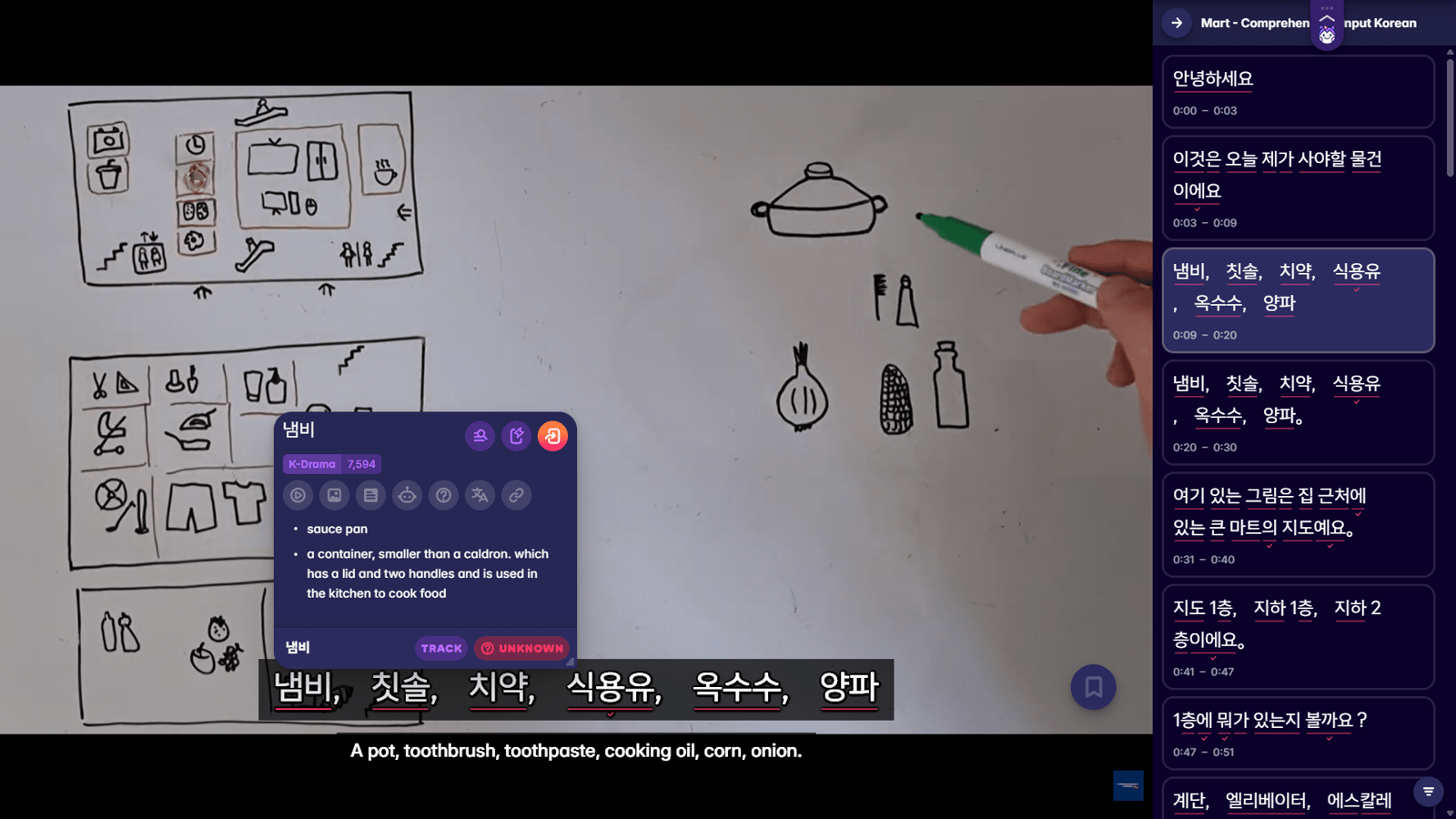
Anyway, if you're learning Korean and want to hear these speech levels in action, Migaku's browser extension and app let you watch Korean shows with instant lookups and sentence mining. You'll pick up the patterns way faster when you're seeing them used naturally. There's a 10-day free trial if you want to check it out.
Why Korean developed this speech forms system
Korea has a long history influenced by Confucian values that emphasize social hierarchy, respect for elders, and clearly defined relationships. The speech level system reflects these cultural values linguistically. The Korean speech level system seems overwhelming at first, but it becomes natural with practice. You'll develop an intuition for which level feels right in different situations if you consume Korean media extensively and purposely pay attention to their speech levels.
If you consume media in Korean, and you understand at least some of the messages and sentences within that media, you will make progress. Period.
Give yourself time to make mistakes and adjust!