Korean Slang Words: Texting & Gen Z Terms You Need (2026)
Last updated: April 6, 2026

If you've ever scrolled through Korean social media, watched a Korean streamer, or tried texting with Korean friends, you've probably encountered some confusing abbreviations and expressions that don't show up in textbooks. Korean internet slang evolves fast, especially with Gen Z leading the charge in 2026. Understanding these terms helps you actually connect with how Koreans communicate online, whether you're watching K-dramas, following K-pop idols on social media, or just trying to keep up with group chats. Let's break down the most common Korean slang you'll see across Korean texts, gaming chats, and social platforms as you learn Korean.
Korean texting abbreviations you'll see everywhere
Korean text slang relies heavily on abbreviations. Koreans love to shorten phrases to make texting faster, and once you know the patterns, they're pretty easy to decode.
ㅋㅋㅋ (ㅋㅋ)
This is basically the Korean version of "haha" or "lol." The consonant ㅋ represents the "k" sound in "keke," which is how Koreans write out laughter. You'll see this everywhere in korean texts. The more ㅋs someone adds, the funnier they find something. Sometimes you'll see just ㅋ for a small chuckle, or ㅋㅋㅋㅋㅋㅋㅋㅋ when something is genuinely hilarious.
ㅇㅋ
Short for 오케이 (okay). This slang term uses just the first consonants of each syllable. Super common when someone agrees to something or acknowledges a message.
ㄱㅅ (ㄱㅅ)
This abbreviation stands for 감사 (gamsa), meaning "thanks." You'll see this in quick exchanges where typing out the full word feels too formal or slow. It's casual and friendly.
ㅈㅅ
Short for 죄송 (joe송) or 미안 (mian), both meaning "sorry." When you need to apologize quickly in a text, ㅈㅅ does the job.
ㄴㄴ
This represents 노노 (no no). Used when disagreeing or saying something is wrong. Pretty straightforward once you know the pattern.
ㅇㅇ
Stands for 응응 (eung eung), which is like saying "yeah yeah" or "uh huh." It's a casual way to agree or acknowledge something.
Common Korean slang terms from Gen Z culture
Gen Z has really shaped Korean slang in 2025 and 2026. These terms show up constantly on Korean social media platforms, in comments sections, and in everyday conversations among younger Koreans.
대박 (daebak)
This exclamation means something like "awesome," "amazing," or "no way!" You use it when something surprising or impressive happens. It's been around for years but remains super popular. "That concert was 대박!"
헐 (heol)
An expression of shock or disbelief, similar to "what?!" or "seriously?!" When someone tells you surprising news, 헐 is the natural reaction.
에바 (eba)
Short for 에바다, which comes from "overly exaggerated." Koreans use this when someone is being too much, exaggerating, or going overboard. "You're being 에바 right now."
만찢남/만찢녀 (manjjingnam/manjjingnyeo)
This abbreviation combines 만화를 찢고 나온 남자/여자, which literally means "a man/woman who tore through a comic book." It describes someone so attractive they look like they stepped out of a comic or anime. Pretty creative, right?
인싸/아싸 (inssa/assa)
인싸 comes from "insider" and refers to popular, socially active people who are always in the loop. 아싸 comes from "outsider" and describes people who are more introverted or less socially connected. These social status terms are huge in Korean youth culture. "She's such an 인싸, she knows everyone."
꿀잼/노잼 (kkul-jaem/no-jaem)
꿀잼 means "honey fun," describing something super entertaining or funny. 노잼 means "no fun," for boring stuff. You'll see these all over Korean internet comments rating shows, videos, or experiences.
존맛 (jonmat)
Short for 존나 맛있다 (jonna masitda), meaning "really delicious." The food slang you need when something tastes amazing. "This Korean fried chicken is 존맛!"
JMT
The English abbreviation for 존맛탱 (jonmattaeng), another variation of "extremely delicious." Sometimes Koreans mix English letters into their slang for extra emphasis.
Korean slang for texting conversations
Beyond single-word expressions, some Korean texting slang involves longer phrases that get shortened for convenience.
ㅇㄷ (od)
Stands for 어디 (eodi), meaning "where." Quick way to ask someone's location.
ㄱㄱ (gg)
Can mean 고고 (go go), urging someone to hurry up or get moving. But here's something interesting: when Koreans want to say "GG" like the gaming term "good game," they actually just use the English "GG" or sometimes write it as 지지 in hangul.
ㅂㅂ (bb)
Short for 바이바이 (bye bye). Simple farewell in casual chats.
7ㅅ7
This uses Korean numbers creatively. The number 7 in Korean numbers looks like ㄱ when rotated, so this represents ㄱㅅㄱ, which is 감사감사 (thank you thank you). Pretty clever!
ㅇㅈ (oj)
Stands for 인정 (injeong), meaning "I agree" or "acknowledged." Use this when you want to show you recognize or accept what someone said.
Expressions and exclamations in Korean slang
Some Korean slang works better as standalone reactions or expressions rather than abbreviations.
오모/어머 (omo/eomeo)
This is what "omo" means in Korean slang. It's an exclamation of surprise, similar to "oh my!" You'll hear this constantly in K-dramas when characters react to shocking news. It's more commonly used by women, though not exclusively.
쩔어 (jjeoreo)
Means something is incredible or insane, in a good way. "That performance was 쩔어!"
실화? (silhwa?)
Literally asks "is this real?" Used when something seems too crazy to be true. Similar to "for real?" in English.
레알 (real)
Borrowed from Spanish "real," this emphasizes that something is genuine or serious. "레알 tired right now."
별로 (byeollo)
Means "not really" or "not particularly good." When something disappoints you, 별로 captures that mild dissatisfaction.
Platform-specific Korean slang words
Different Korean platforms have their own slang cultures, though many terms cross over.
Streaming and gaming slang
Korean gamers and streamers use tons of specific expressions. Beyond the standard ㅋㅋㅋ for laughter, you'll see:
- 고인물 (goinmul): Literally "stagnant water," referring to veteran players who've been playing so long they dominate newbies
- 핵 (haek): Short for "hacker" but used more broadly to mean someone is insanely good at something
- 극혐 (geuk-hyeom): Extreme disgust or hate, used when something is really off-putting
Social media expressions
On Korean Twitter (X), Instagram, and other platforms:
- 팩트 (paekteu): From English "fact," used to emphasize truth
- 인증 (injeung): Means "proof" or "verification," often used when people post photos to prove they did something
- 선넘 (seonneom): Short for 선을 넘다 (crossing the line), when someone goes too far
How to actually learn Korean text slang
Here's the thing about Korean internet slang: you can't really learn it from textbooks because it changes too fast. The best way to pick it up is through immersion in actual Korean content.
- Watch Korean streamers on platforms like AfreecaTV or YouTube.
- Read comments on Korean social media posts.
- Follow Korean accounts that interest you.
- When you see unfamiliar slang, look it up and save it. The context helps you understand not just what it means but when to use it.
Korean slang also gives you insight into the culture. The fact that terms like 인싸/아싸 exist shows how much Korean society thinks about social dynamics. Food slang like 존맛 reflects Korea's massive food culture. Understanding these connections makes the language way more interesting than just memorizing definitions.
If you want to actually practice reading Korean slang in real contexts, Migaku's browser extension and app let you look up unfamiliar terms instantly while browsing Korean websites or watching Korean content. Makes picking up these expressions way more natural than studying lists. There's a 10-day free trial if you want to check it out.
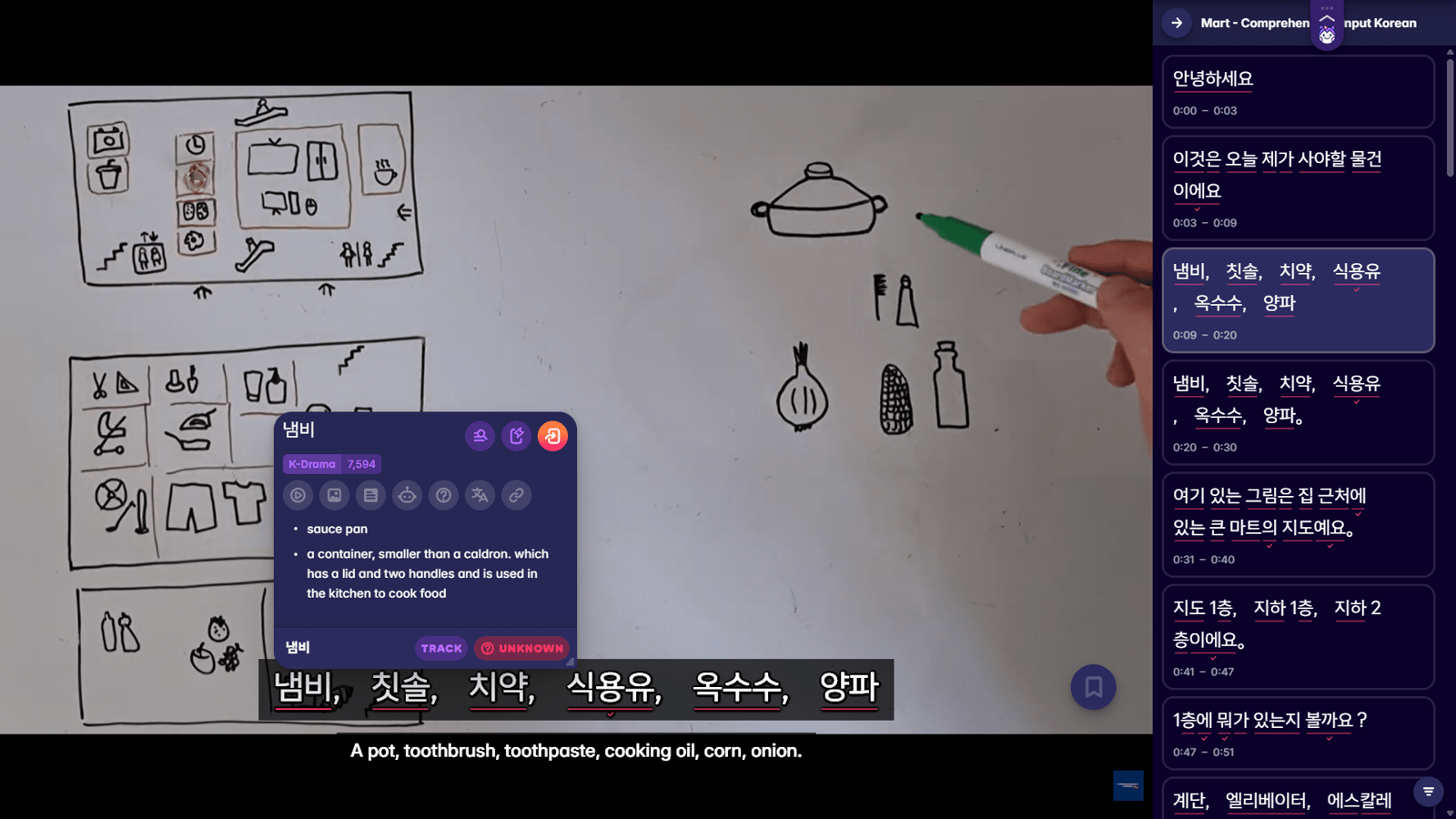
Learning Korean slang words and phrases is actually one of the fun aspects of language learning
These expressions give you access to the real personality of Korean online culture, not just the formal, polite language of textbooks. Start with the most common terms. Pay attention when you see them in context. Don't stress about memorizing every single slang term because new ones appear constantly and old ones fade away. Just stay curious and engaged with actual Korean content.
If you consume media in Korean, and you understand at least some of the messages and sentences within that media, you will make progress. Period.
Behind every slang phrase is a piece of everyday life.😃