Korean Restaurant Phrases: Handle Korean Dining Like a Local
Last updated: April 4, 2026
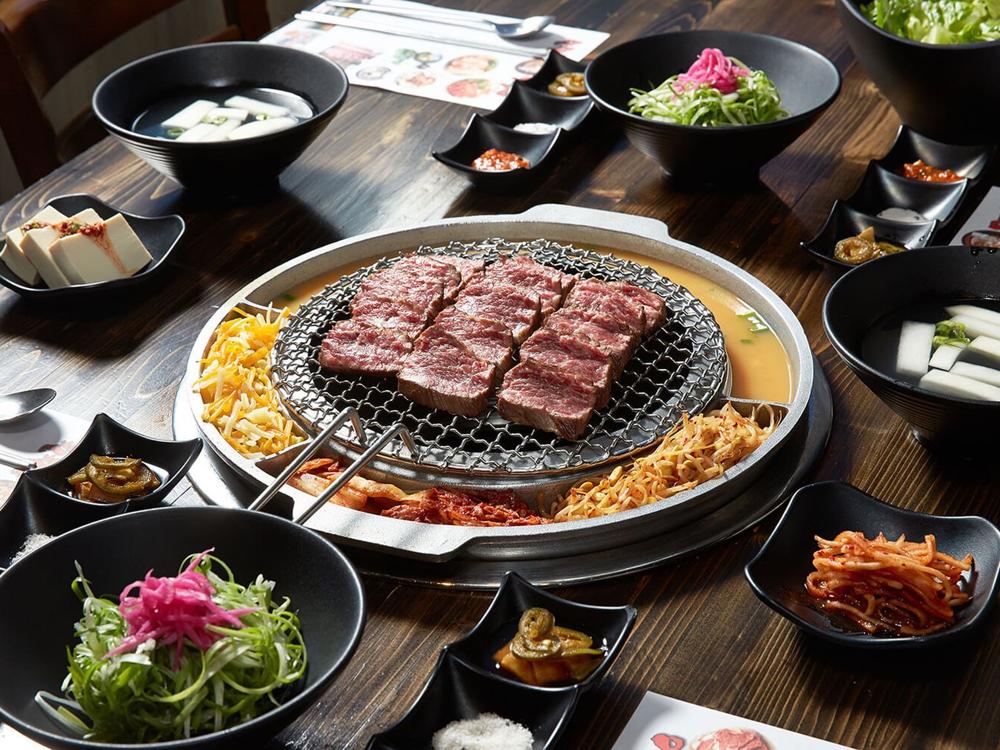
Walking into a Korean restaurant for the first time can feel intimidating if you don't know the language. You're excited to try authentic Korean food, but then the waiter approaches, and you freeze up. Maybe you point at the menu awkwardly, or just say "this one" repeatedly. Learning a handful of essential Korean restaurant phrases changes everything. You'll order confidently, ask for what you need, and actually enjoy the experience instead of stressing about communication. This guide covers the practical phrases you'll use when eating out in South Korea or at Korean restaurants anywhere.
- Essential Korean restaurant phrases you'll use every time
- Phrases for ordering specific Korean food items
- Asking questions and making requests at a Korean restaurant
- Understanding what the waiter says to you in Korean restaurants
- Paying the bill and wrapping up your Korean dining
- Korean restaurant and dining etiquette
- Building on the restaurant Korean phrases
Essential Korean restaurant phrases you'll use every time
Let's start with the absolute basics. These are the phrases you'll need at pretty much every Korean meal.
When you first sit down, the waiter will usually greet you and ask how many people are in your party. They might say "몇 분이세요?" (myeot buniseyo), which means "how many people?" You can respond with just the number followed by 명 (myeong): "두 명이요" (du myeongyo) for two people, "세 명이요" (se myeongyo) for three people.
The most useful word in any Korean restaurant is 주세요 (juseyo), which means "please give me" or simply "please." You'll use this constantly.
- Point at something on the menu and say "이거 주세요" (igeo juseyo) for "this one, please."
- Want water? "물 주세요" (mul juseyo).
- Need chopsticks? "젓가락 주세요" (jeotgarak juseyo).
Here are the core phrases for ordering food:
- 주문할게요.
I'll order / Ready to order. - 이거 주세요.
This one, please. - 저거 주세요.
That one, please. - 메뉴판 주세요.
Menu, please. - 물 주세요.
Water, please.
The beauty of these phrases is that they work in Korean restaurants anywhere, whether you're in Seoul or Los Angeles. Korean restaurant culture stays pretty consistent globally, so these same expressions apply.
Phrases for ordering specific Korean food items
Once you're ready to order dishes, you'll want to know how to request them properly. Korean meals often involve multiple components, and understanding how to order them makes the experience smoother.
For the main dish, you typically say the name of the food followed by 주세요 (juseyo). Some common ones:
- 비빔밥 주세요.
Bibimbap, please. - 김치찌개 주세요.
Kimchi stew, please. - 불고기 주세요.
Bulgogi, please. - 삼겹살 주세요.
Pork belly, please.
If you want to specify quantity, add the number before the dish name: "비빔밥 두 개 주세요" (bibimbap du gae juseyo) means "two bibimbaps, please." The counter word 개 (gae) works for most dishes.
Korean meals come with banchan, which are small side dishes like kimchi, pickled vegetables, and other accompaniments. These are usually free and refillable. If you want more of a particular side dish, you can say "김치 더 주세요" (kimchi deo juseyo) for "more kimchi, please." The word 더 (deo) means "more," and you'll use it frequently.
For drinks, the pattern stays the same:
- 소주 주세요.
Soju, please. - 맥주 주세요.
Beer, please. - 콜라 주세요.
Coke, please. - 녹차 주세요.
Green tea, please.
Asking questions and making requests at a Korean restaurant
Beyond basic ordering, you'll sometimes need to ask questions or make specific requests. These phrases help you communicate more nuanced needs.
To get the waiter's attention, say "저기요" (jeogiyo), which literally means "over there" but functions like "excuse me." Koreans use this constantly in restaurants. Don't yell across the room though. Many Korean restaurants have call buttons at each table, which is way more convenient.
When you need to ask about something on the menu:
- 이게 뭐예요?
What is this? - 맵나요?
Is it spicy? - 추천 메뉴가 뭐예요?
What do you recommend? - 이거 없이 주세요.
Without this, please. (useful for allergies or preferences)
Understanding what the waiter says to you in Korean restaurants
Learning Korean restaurant phrases goes both ways. You need to understand what the staff is saying too.
When you walk in, you'll hear "어서 오세요" (eoseo oseyo), which means "welcome." You don't need to respond, just smile and nod. They might follow up with "몇 분이세요?" (myeot buniseyo) asking how many people, which we covered earlier.
After you order, the waiter might confirm by repeating your order back to you. Listen for the dish names you said, and if everything sounds right, say "네" (ne) for "yes."
Common things you'll hear from restaurant staff:
- 잠시만요.
Just a moment. - 나왔습니다.
Here it comes. (when bringing food) - 맛있게 드세요.
Enjoy your meal. - 다 드셨어요?
Are you finished?
When they ask if you're done eating, you can respond with "네, 다 먹었어요" (ne, da meogeosseoyo) meaning "yes, I finished eating."
Paying the bill and wrapping up your Korean dining
In Korean culture, you typically pay at the counter near the entrance, not at your table. This surprises a lot of first-time visitors who are used to the waiter bringing the check.
When you're ready to leave, say "계산할게요" (gyesanhalgeyo) meaning "I'll pay now" or simply "계산이요" (gyesaniyo) for "check, please." Then get up and walk to the counter. The staff will usually tell you the total, and you can pay with cash or card.
If you want to ask for the bill at your table first (some places do it this way), say "계산서 주세요" (gyesanseo juseyo) for "bill, please."
Useful payment phrases:
- 카드 되나요?
Do you take cards? - 현금으로 할게요.
I'll pay with cash. - 따로 계산할게요.
We'll pay separately. - 영수증 주세요.
Receipt, please.
When leaving, you might say "잘 먹었습니다" (jal meogeotseumnida), which means "I ate well" or "thank you for the meal." This is polite and shows appreciation. The staff will usually respond with "감사합니다" (gamsahamnida) meaning "thank you."
Korean restaurant and dining etiquette
Understanding phrases is one thing, but knowing the cultural context makes your experience better. There are some etiquette considerations when eating out in South Korea that differ from Western restaurants.
- First, don't tip. Tipping isn't part of Korean culture, and leaving money on the table will just confuse people. The service is included in the price.
- When someone pours you a drink (especially alcohol like soju), hold your glass with both hands as a sign of respect. This applies more to formal situations or when older people are pouring, but it's good practice. Similarly, when pouring for others, use both hands on the bottle.
- Korean meals are often communal. If you order a stew or soup, it might come in one pot for the table to share. Don't be surprised if everyone eats from the same dish. Side dishes (banchan) are always shared.
- Speaking of banchan, these side dishes are free and unlimited at most Korean restaurants. You can ask for more kimchi or other sides without any extra charge. Just say the name of the side dish followed by "더 주세요" (deo juseyo).
- At Korean BBQ restaurants, the staff often cooks the meat for you, at least initially. Let them do their thing. They know the perfect timing and will cut it up with scissors (yes, scissors are normal for cutting meat in Korea).
Building on the restaurant Korean phrases
If you're studying Korean seriously, restaurant phrases make excellent practice material. They're practical, you'll use them in real situations, and they reinforce basic grammar patterns.
The phrase patterns you learn for restaurants apply to other situations too. The ~주세요 (juseyo) ending works for any request. At a store, you can say "봉투 주세요" (bongtu juseyo) for "bag, please." At a hotel, "수건 주세요" (sugeon juseyo) for "towel, please."
Restaurant conversations also expose you to numbers, which are tricky in Korean. Korean has two number systems (native Korean and Sino-Korean), and you use both in restaurants. Counting people uses native Korean numbers (한 명, 두 명, 세 명), while prices use Sino-Korean numbers.
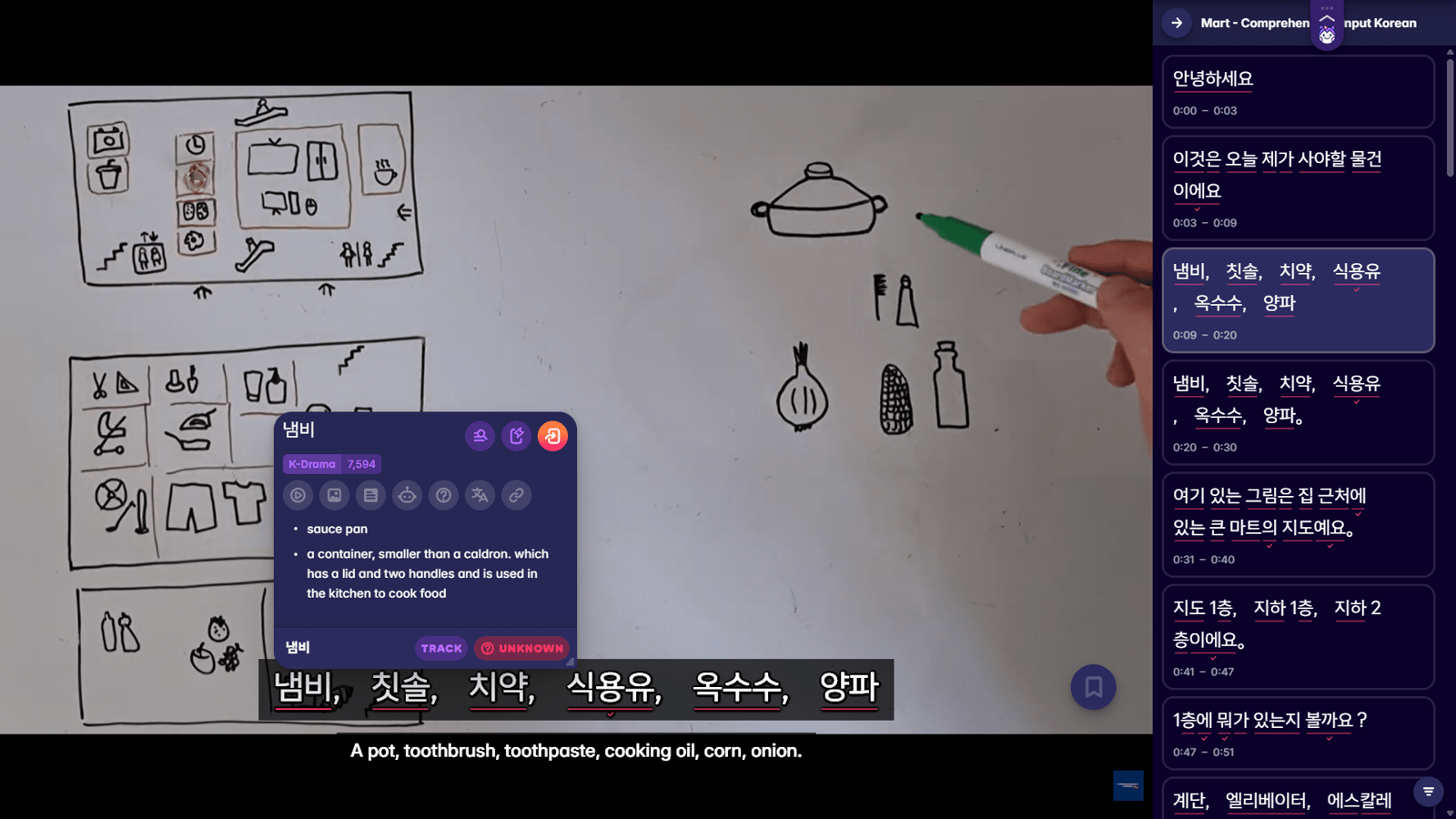
If you want to expand beyond restaurant phrases and actually understand Korean media, Migaku's browser extension and app let you look up Korean words instantly while watching shows or reading content. Makes learning from real Korean sources way more practical. There's a 10-day free trial if you want to check it out.
Ready to dine out at Korean restaurants?
Korean restaurant phrases open up an entire world of authentic dining experiences. You'll order confidently, interact with staff naturally, and actually enjoy Korean food culture instead of feeling lost. The best way to learn? Actually use these phrases. Find a Korean restaurant, study the menu beforehand, collect Korean food names from vlogs and blogs, and just go for it.
If you consume media in Korean, and you understand at least some of the messages and sentences within that media, you will make progress. Period.
One order, one dish, one word at a time.