Korean Travel Phrases: Basic Korean Phrases for Travelers
Last updated: March 4, 2026
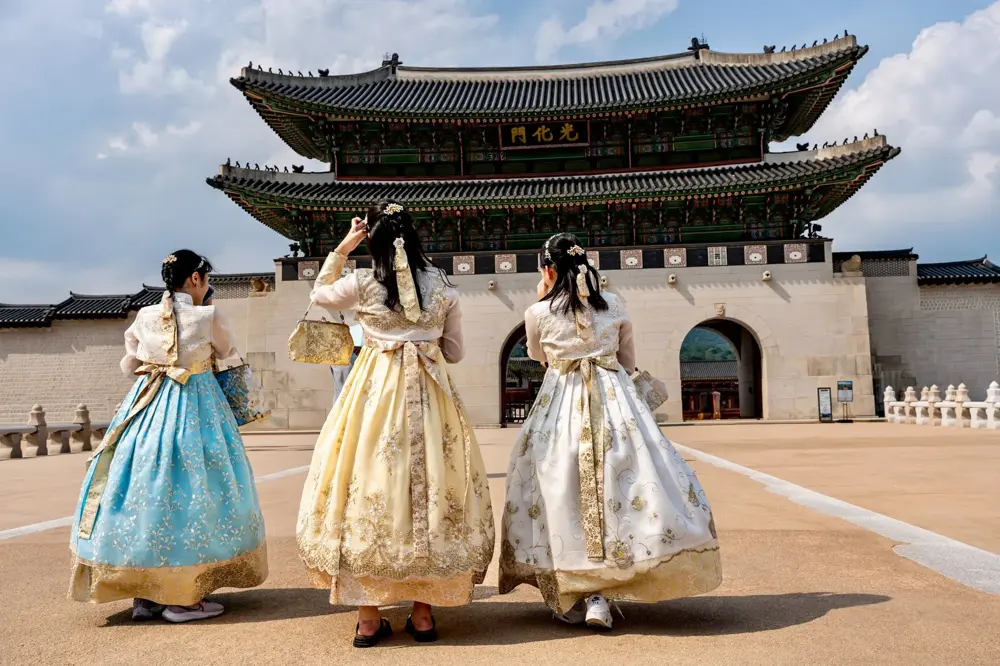
Planning a trip to Korea and worried about the language barrier? You're not alone. While English is becoming more common in tourist areas, knowing some basic Korean phrases will make your experience way smoother and help you connect with locals on a deeper level. Plus, Koreans really appreciate when visitors make an effort to speak their language, even if your pronunciation isn't perfect. This guide covers all the essential Korean travel phrases you'll need, from ordering food to asking for directions.
- Learn Korean greetings
- The magic word in Korean travel phrases: 주세요
- Common Korean phrases for restaurants and ordering food
- Learn Korean phrases for getting around and asking for directions
- Basic Korean phrases for shopping and handling money
- Useful Korean emergency phrases
- Informal Korean phrases and cultural notes
- Ten essential Korean phrases for travel
- Practice and pronunciation tips
Learn Korean greetings
Every interaction in Korea starts with a proper greeting, and politeness is built into the language structure. The formality level you use shows respect and sets the tone for the entire conversation.
The most important greeting is 안녕하세요 (annyeonghaseyo), which means "hello" and works for any time of day. The pronunciation sounds like "ahn-nyeong-ha-say-yo" with emphasis on the "say" part. You'll use this constantly, from entering shops to meeting new people.
When someone helps you, say 감사합니다 (gamsahamnida) for "thank you." This is the formal version that shows proper respect. You might also hear 고맙습니다 (gomapseumnida), which means the same thing but is slightly less formal. For casual situations with younger people, 고마워요 (gomawoyo) works fine.
To say goodbye, you have two options depending on who's leaving. If you're leaving and the other person is staying, say 안녕히 계세요 (annyeonghi gyeseyo). If they're leaving and you're staying, say 안녕히 가세요 (annyeonghi gaseyo). The difference matters to native speakers, though they'll understand either way.
The magic word in Korean travel phrases: 주세요
Once you learn 주세요 (juseyo), you'll use it everywhere. This word means "please give me" and becomes your best friend when ordering, shopping, or requesting anything. The pronunciation sounds like "joo-say-yo."
What does ju se yo mean exactly? It's a polite request marker that you attach to nouns. Point at something and say "이거 주세요 " (igeo juseyo) and you're asking for "this, please." At a restaurant, say "물 주세요 " (mul juseyo) for water. Need a taxi? "택시 주세요 " (taeksi juseyo).
The beauty of 주세요 is its simplicity. You don't need to construct complex sentences. Just say the thing you want plus 주세요, and you'll be understood. Here are some combinations you'll use constantly:
- 메뉴 주세요.
Menu, please. - 영수증 주세요.
Receipt, please. - 포장 주세요.
To go, please. - 계산서 주세요.
Bill, please.
Common Korean phrases for restaurants and ordering food
Korean food is a huge part of the culture, and restaurants are where you'll practice your Korean the most. These phrases will cover 90% of dining situations.
When you enter a restaurant, the staff will greet you with "어서 오세요 " (eoseo oseyo), meaning "welcome." You don't need to respond, but a smile and 안녕하세요 works in Korean culture. To tell them how many people are in your party, hold up fingers and say the number plus 명 (myeong): "두 명 " (du myeong) for two people, "세 명 " (se myeong) for three.
Ordering gets easier when you know these korean words and phrases:
- 이거 주세요.
I'll have this. (pointing at menu) - 추천 메뉴가 뭐예요?
What do you recommend? - 맵지 않게 해주세요.
Not spicy, please. - 더 주세요.
More, please. - 맛있어요.
It's delicious.
When you're done eating, get the server's attention by saying 저기요 (jeogiyo), which means "excuse me." Then say 계산 주세요 (gyesan juseyo) for the check. In Korea, you typically pay at the front counter rather than at your table.
Learn Korean phrases for getting around and asking for directions
Transportation and navigation require specific Korean phrase patterns. Whether you're taking the subway, catching a taxi, or walking around neighborhoods, these Korean phrases for travelers will help.
For basic direction questions, start with 어디예요? (eodiyeyo?), meaning "where is it?" Combine it with place names:
- 화장실 어디예요?
Where's the bathroom? - 지하철역 어디예요?
Where's the subway station? - 명동 어디예요?
Where's Myeongdong?
When taking a taxi, show the driver the address and say "여기 가주세요 " (yeogi gajuseyo), meaning "please go here." If you need them to stop, say "여기서 세워주세요 " (yeogiseo sewojuseyo) for "please stop here."
The subway system in Seoul is incredibly efficient, but announcements aren't always in English at every station. Learn these words and phrases:
- 환승
Transfer - 출구
Exit - 몇 번 출구예요?
Which exit number? - 이 지하철 (place name) 가요?
Does this subway go to (place)?
Basic Korean phrases for shopping and handling money
Korean markets and shops offer amazing experiences, especially when you can communicate with vendors. These phrases make shopping way more enjoyable.
To ask the price, say "얼마예요? " (eolmayeyo?). You'll hear this constantly and use it just as often. If you want to try something on, say "입어봐도 돼요? " (ibeobwado dwaeyo?) for clothes or "신어봐도 돼요? " (sineobwado dwaeyo?) for shoes.
Bargaining isn't common in regular stores, but at traditional markets like Namdaemun, you can try "깎아주세요 " (kkakkajuseyo), meaning "please give me a discount." It doesn't always work, but vendors appreciate the attempt.
When paying, you might hear "카드 되세요? " (kadeu doeseyo?), asking if you're paying by card. Respond with "네 " (ne) for yes or "아니요, 현금이요 " (aniyo, hyeongeumniyo) for "no, cash."
Useful shopping phrases include:
- 다른 색 있어요?
Do you have other colors? - 더 큰 거 있어요?
Do you have a bigger one? - 작은 거 있어요?
Do you have a smaller one? - 그냥 보는 거예요.
Just looking.
Useful Korean emergency phrases
Nobody wants to use emergency Korean phrases, but knowing them provides peace of mind. These are straightforward and important to memorize before your trip.
The universal emergency number in South Korea is 119 for ambulance and fire, and 112 for police. When calling, say "영어 할 수 있어요? " (yeongeo hal su isseoyo?), asking if they speak English. Most emergency operators have English speakers available.
Critical emergency phrases:
- 도와주세요.
Please help. - 아파요.
It hurts / I'm sick. - 병원
Hospital - 경찰
Police - 길을 잃었어요.
I'm lost. - 지갑을 잃어버렸어요.
I lost my wallet.
If you need a pharmacy, look for 약국 (yakguk) signs. Say "약 주세요 " (yak juseyo) and point to the affected area or show a translation on your phone.
Informal Korean phrases and cultural notes
While formal phrases are safer for tourists, picking up informal language helps you understand Korean people. Young Koreans use casual speech with friends, and you'll encounter it in trendy neighborhoods like Hongdae or Gangnam.
The informal version of hello is 안녕 (annyeong), which sounds exactly like the first part of the formal greeting. You might hear friends say 고마워 (gomawo) for thanks instead of the formal 감사합니다. These informal versions drop the formal endings and sound more relaxed.
Common slang you might encounter:
- 대박
Awesome / Amazing - 헐
What? / No way! - 짱
The best - 아싸
Yes! / Hooray!
Stick to formal speech when talking to anyone older than you, service workers, or people you've just met. Koreans take age hierarchy seriously, and using informal speech with strangers can come across as rude. When in doubt, use the formal 요 (yo) ending.
Ten essential Korean phrases for travel
If you only memorize ten phrases before your trip, make them these. They cover the most common situations and will get you through most interactions:
Korean | Pronunciation | English |
|---|---|---|
안녕하세요. | annyeonghaseyo | Hello. |
감사합니다. | gamsahamnida | Thank you. |
주세요. | juseyo | Please (give me). |
얼마예요? | eolmayeyo? | How much? |
어디예요? | eodiyeyo? | Where is it? |
화장실 어디예요? | hwajangsil eodiyeyo? | Where's the bathroom? |
이거 주세요. | igeo juseyo | This one, please. |
계산 주세요. | gyesan juseyo | Check, please. |
도와주세요. | dowajuseyo | Please help. |
죄송합니다. | joesonghamnida | I'm sorry. |
Write these down in a small notebook or save them on your phone. Practice pronunciation using YouTube videos or language apps before you arrive. The more comfortable you are with these basic Korean phrases, the more confident you'll feel navigating Korea.
Practice and pronunciation tips
Learning these basic Korean words and phrases before your trip sets you up for better experiences, but the real learning happens when you're in Korea.
- Don't be afraid to make mistakes when speaking the Korean language. Korean people are generally encouraging when foreigners attempt their language, and most people will help you if you're struggling.
- Practice with Korean restaurant staff, shop workers, and taxi drivers. Each interaction builds confidence and improves your pronunciation. You'll start recognizing patterns and picking up new essential words naturally through context.
If you want to go beyond basic travel phrases and learn to speak Korean properly, immersion with real content makes a huge difference. Migaku's browser extension and app let you look up words instantly with Korean pronunciation and Korean sentences while watching Korean shows or reading articles, so you're learning from actual usage rather than just memorized phrases. There's a 10-day free trial if you want to level up your Korean learning.

Boost your language learning with travel experiences!
Here's the thing. You can definitely get by in Seoul and other major cities with just English, but you'll be missing out. The moment you greet someone in Korean or say thank you properly, the entire interaction changes. Treat basic phrases for travel as a starting point and actually practice them when you arrive at your travel destinations. The sentences and words you mined from Korean media content will only stick in your memory longer after you hear and see them during your trip. Then you can slowly understand more and more about the Korean language.
If you consume media in Korean, and you understand at least some of the messages and sentences within that media, you will make progress. Period.
Study prepares you, travel teaches you.✈️