1-Week Hokkaido Winter Itinerary for Snow and Onsen
Last updated: May 27, 2026
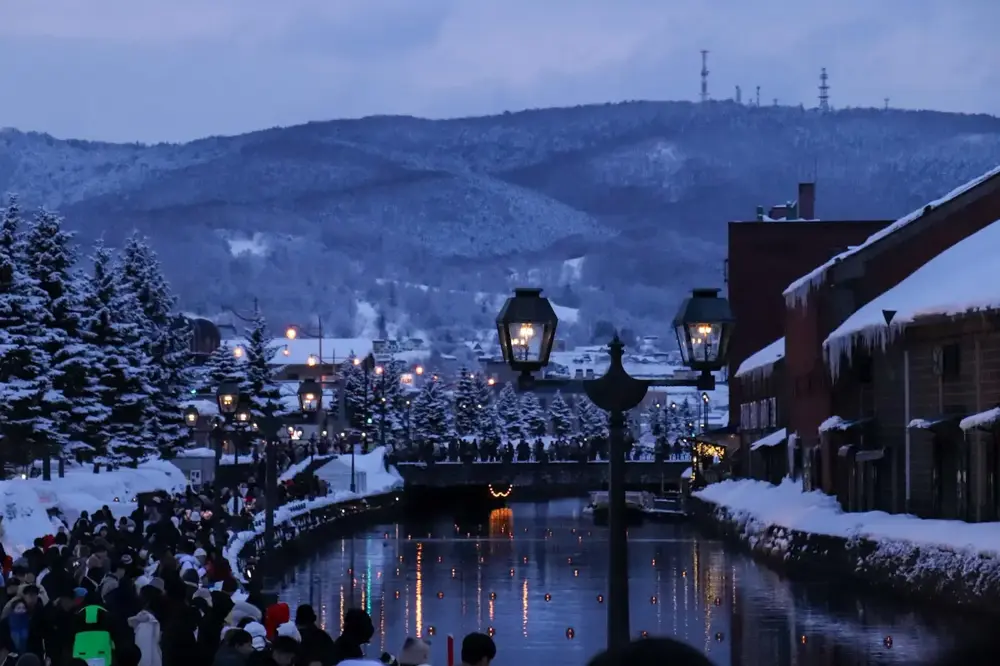
A 1-week Hokkaido winter itinerary works best as a loop from New Chitose Airport that hits Sapporo for the Snow Festival, Otaru for canal illuminations, Niseko or Rusutsu for powder skiing, and Noboribetsu for onsen, with an optional Asahikawa side trip. The route below is built around February 2026 festival dates, current JR fares, and the new Hokkaido accommodation tax that took effect April 1, 2026.
Last updated: May 27, 2026
When to Go and What to Expect
February is the sweet spot. Snow cover is reliable across the island, the major festivals overlap, and ski resorts are still in regular season. Sapporo in January averages a high of −3.7°C (25.3°F) and a low of −9.8°C (14.4°F), with snow falling on roughly 28 days of the month. Days are short, around 9 hours and 25 minutes of daylight, so plan to be outside between mid-morning and mid-afternoon and save illuminations for the evening.
Key festival windows for the 2026 season:
- 76th Sapporo Snow Festival: February 4–11, 2026 (Odori Park, Susukino, Tsudome)
- Otaru Snow Light Path Festival: February 7–14, 2026, 17:00–21:00 daily
- 67th Asahikawa Winter Festival: February 6–11, 2026
If you can align your trip with February 6–11, you can see all three without backtracking.
Entry, Visas, and Taxes to Budget For
Most travelers from visa-exempt countries still enter Japan with a short-stay landing permission. JESTA, Japan's planned Electronic System for Travel Authorization, is not yet live. The Cabinet approved the bill in March 2026, but the target rollout is fiscal year 2028 (April 2028 to March 2029), so it does not affect winter 2026 trips. Check the Immigration Services Agency of Japan for updates closer to your travel date.
Taxes that will show up on your bill:
- Hokkaido prefectural accommodation tax (from April 1, 2026): ¥100 per person per night for stays under ¥20,000, ¥200 for ¥20,000–49,999, ¥500 for ¥50,000 and over.
- Sapporo municipal tax: an additional ¥200 (stays up to ¥50,000) or ¥500 (stays over ¥50,000) per person per night.
- Niseko Town tax (until October 2026): tiered from ¥100 (under ¥5,000) to ¥2,000 (¥100,000+). From November 2026 it switches to a flat 3% of the accommodation fee.
- Sayonara Tax: Japan's international departure tax triples from ¥1,000 to ¥3,000 per person from July 2026, for all travelers aged 2 and up.
Fifteen Hokkaido municipalities, including Sapporo, Otaru, Kutchan, Niseko, Hakodate, Asahikawa, Furano, and Kushiro, levy a local lodging tax on top of the prefectural one. Build roughly ¥300–¥1,000 per person per night into your accommodation budget on top of the room rate.
Getting Around: Trains, Buses, and Passes
For a one-week loop based out of Sapporo, the JR Hokkaido Rail Pass is usually the right tool. Pricing for 2026:
Pass | Adult | Notes |
|---|---|---|
All Hokkaido 5-Day Ordinary | ¥21,000 | 50% off ages 6–11 |
All Hokkaido 7-Day Ordinary | ¥27,000 | 50% off ages 6–11 |
Sapporo-Noboribetsu Area Pass (4 days) | ¥10,000 | Regional only |
Sapporo-Furano Area Pass (4 days) | ¥11,000 | Regional only |
JR East-South Hokkaido Rail Pass (6 days) | ¥35,370 | Adds Tohoku/Tokyo routes |
The Hokkaido Rail Pass is valid for non-Japanese passport holders only (including foreign residents). It does not cover the Hokkaido Shinkansen or the SL Fuyu-no-Shitsugen sightseeing train. The nationwide Japan Rail Pass jumped to ¥53,000 for a 7-day standard adult pass on October 1, 2026, so for a Hokkaido-only trip, the regional pass is far better value.
Airport transfer from New Chitose to Sapporo Station:
- JR Rapid Airport: ¥1,430 one way, fastest service 33 minutes, about 7 services per hour. Reserved U-Seat is an extra ¥840.
- Airport limousine bus: ¥1,500 one way, 70–90 minutes depending on traffic and snow.
Note that the Hokkaido Shinkansen extension to Sapporo, originally aimed at 2031, was officially pushed by MLIT in December 2024 to the end of fiscal year 2038. For now, getting to Hokkaido from Honshu by train still means changing at Shin-Hakodate-Hokuto.
The 7-Day Itinerary
Day 1: Arrival and Sapporo
Fly into New Chitose Airport (CTS). Take the JR Rapid Airport to Sapporo Station (¥1,430, 33–40 minutes). Drop bags at your hotel near Sapporo or Odori stations. Walk Odori Park in the evening: during the Snow Festival (February 4–11, 2026), the 1.5-km sculpture corridor is illuminated from sundown until 22:00, and admission is free. Dinner at a Susukino ramen alley.
Day 2: Sapporo Deep Dive
Morning at the Hokkaido Museum or the Sapporo Beer Museum. Lunch at Nijo Market for uni, crab, and ikura don. Afternoon at the Susukino Snow Festival site, which leans into ice sculptures and is lively after dark. If you want a quieter family-friendly site, head out to Tsudome by shuttle bus for sledding and snow slides.
Day 3: Day Trip to Otaru
Otaru is 35–45 minutes by JR rapid train from Sapporo. Spend the afternoon wandering Sakaimachi Street, glass workshops, and the canal. From February 7–14, the Otaru Snow Light Path Festival lights the canal and Temiyasen rail path from 17:00 to 21:00, with admission free. For a wider view, the Tenguyama Ropeway runs a winter round-trip at ¥2,000 for adults and ¥1,000 for children. Return to Sapporo for the night.
Day 4: Transfer to Niseko or Rusutsu
Take a resort bus or JR + local bus combination from Sapporo to Niseko (around 3 hours) or Rusutsu (around 2 hours). Niseko United covers four interconnected mountains (Grand Hirafu, Hanazono, Niseko Village, Annupuri). The 2025–2026 regular season runs December 13, 2025 through March 22, 2026. Buy lift passes directly through the resort site, since prices are dynamic by date. The reusable lift pass card costs ¥500 for first-time purchasers, and a lost pass reissue is ¥3,500. Night skiing on Grand Hirafu (16:30–20:30) runs ¥3,200 for the season pass option in 2026.
Day 5: Full Ski Day
Full day on the mountain. Niseko's famously dry powder typically peaks in early to mid-February. If you're not skiing, options include snowshoeing tours, a sled-dog experience, or simply working through the onsen circuit at your accommodation. Lunch in Hirafu Village offers everything from soup curry to Hokkaido dairy soft serve.
Day 6: Niseko to Noboribetsu Onsen
Transfer to Noboribetsu, Hokkaido's most famous hot spring town. It's roughly 2.5 hours by bus or rail via Sapporo. Visit Jigokudani (Hell Valley), the geothermal crater that feeds the town's springs, then check into a ryokan. A traditional kaiseki dinner and multiple soaks in sulfur, iron, and salt baths is the point of the stop. The Sapporo-Noboribetsu Area Pass (¥10,000 for 4 days) is worth pricing against single tickets if you're moving between these towns.
Day 7: Optional Asahikawa or Return
Two options for your final day:
- Asahikawa Winter Festival (if dates align, February 6–11, 2026). The JR Limited Express from Sapporo takes about 80 minutes with services every 30–60 minutes, costing roughly ¥5,000 one way (covered by the Hokkaido Rail Pass). A highway bus is around ¥2,300 one way and takes about 2 hours. The festival, free to enter, is held at the Ishikari River riverside and Heiwa-dori Shopping Park, and features some of Japan's largest snow sculptures.
- Return to Sapporo and fly home from New Chitose. Allow at least 90 minutes between Sapporo Station and check-in, with extra buffer if a snowstorm is forecast.
Sample Budget for One Week (Per Person)
These are rough mid-range estimates in yen, excluding international flights:
Item | Estimate |
|---|---|
7-Day JR Hokkaido Rail Pass | ¥27,000 |
Airport transfer (round trip) | ¥2,860 |
Accommodation, 6 nights mid-range | ¥90,000–150,000 |
Accommodation taxes (prefectural + municipal) | ¥1,800–4,200 |
Ski lift passes (2 days, Niseko) | ¥18,000–25,000 (verify current dynamic pricing) |
Food and incidentals | ¥35,000–50,000 |
Sayonara Tax on departure | ¥3,000 (from July 2026) |
Lift ticket prices at Niseko, Rusutsu, and Kiroro are dynamic and change by date booked, so always confirm on the official resort site before paying.
Common Pitfalls to Avoid
- Underestimating travel time in snow. A 33-minute train can become 90 minutes after heavy snowfall. Always pad transfer days.
- Booking accommodation in February without locking in early. Hotels in Sapporo, Otaru, and Niseko sell out months ahead during festival week. Aim to book by October for February travel.
- Skipping cash. Many small Otaru shops, ryokan, and rural ski-town izakayas still prefer cash. Keep ¥20,000–30,000 in yen on hand.
- Forgetting the new departure tax. From July 2026, budget ¥3,000 per person for the Sayonara Tax (children under 2 exempt).
- Trying to use a nationwide JR Pass for Hokkaido only. The Hokkaido Rail Pass at ¥27,000 is roughly half the price of the ¥53,000 national pass and covers all the JR lines you'll actually use here.
- Bringing the wrong gear. Hokkaido in February requires a properly insulated waterproof jacket, snow boots with grip, thermal layers, and gloves. Sapporo sidewalks are icy in early morning.
- Assuming JESTA already applies. It does not. The system is targeted for fiscal year 2028.
FAQs
Is one week enough for Hokkaido in winter?
Yes, for a single-loop trip covering Sapporo, Otaru, one ski area, and one onsen town. If you want to add the Eastern Hokkaido drift ice tours from Abashiri or the SL Fuyu-no-Shitsugen steam train near Kushiro, plan 10–14 days.
What's the cheapest way from New Chitose to Sapporo?
The JR Rapid Airport at ¥1,430 is both the cheapest and the fastest in good weather. The limousine bus at ¥1,500 is comparable in price but slower.
Do I need a car?
No. The Hokkaido Rail Pass plus resort shuttle buses cover this itinerary. Renting a car in winter requires winter tires and experience driving on packed snow, which is not recommended for first-time visitors.
Can I see the Sapporo and Otaru festivals on the same trip?
Yes. The dates overlap for several days in February 2026 (Sapporo: February 4–11; Otaru: February 7–14). Plan Otaru as a day trip or short overnight from Sapporo.
Is Niseko worth it for non-skiers?
It can be, but Noboribetsu, Jozankei, or a Sapporo-based itinerary may give non-skiers more to do per day. Niseko's appeal is heavily snow-sport driven.
How cold does it actually get?
Sapporo in February averages around −3°C high and −10°C low. Inland Asahikawa is significantly colder and routinely drops below −15°C overnight.
Where else can I read about Japan itineraries?
For warmer-season planning, see this 1-Week Hokkaido itinerary for summer. For a first-timer's mainland trip, the 1-week Japan itinerary covering Tokyo, Kyoto, and Osaka is a good companion piece, and for something more unusual, this 2-week Japan itinerary off the beaten path covers regions most tourists miss.
If you're planning a longer stay in Japan or thinking about relocating, picking up some Japanese before you arrive makes everything from booking a ryokan to ordering 味噌ラーメン (miso rāmen) easier. Try Migaku if you want to learn from the kinds of Japanese shows, news, and YouTube channels you'd actually watch anyway.