2 Week South Korea Itinerary for Independent Travelers
Last updated: May 27, 2026
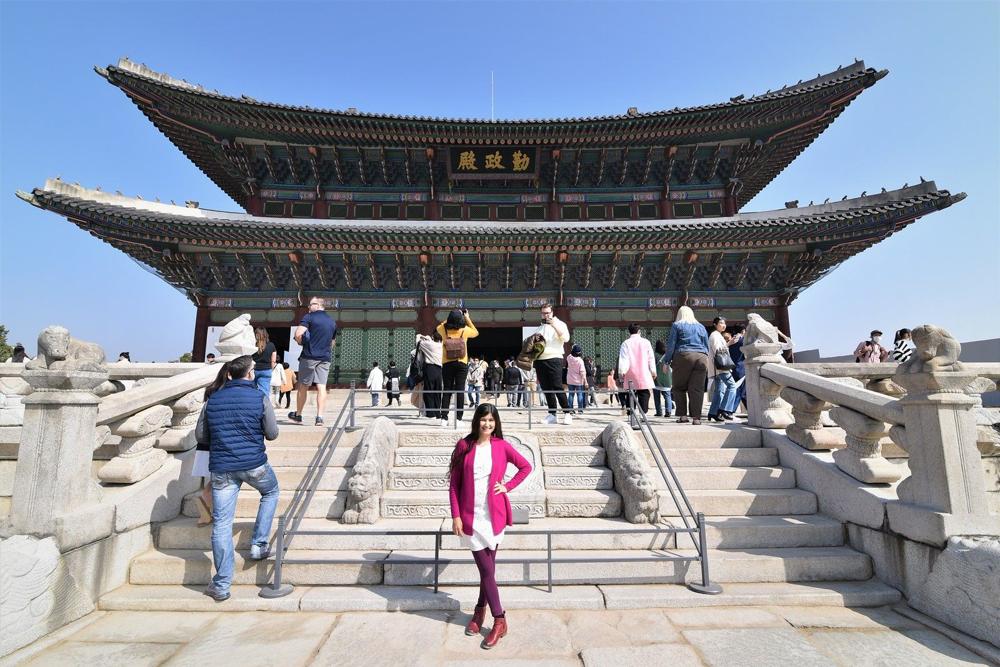
Fourteen days is enough time to see Seoul properly, ride the KTX south to Busan, detour through Gyeongju or Jeonju, and finish with Jeju Island or the DMZ. This guide lays out a realistic route for independent travelers, with current 2026 entry rules, transport fees, and the practical decisions you need to make before you book anything.
Last updated: May 27, 2026
Entry Requirements for 2026
Before you build the itinerary, confirm you can actually enter the country on your passport. The rules shifted again in 2026, and they will shift again on January 1, 2027.
- K-ETA exemption: South Korea has extended the temporary K-ETA exemption through December 31, 2026 (Korea Standard Time) for 67 eligible countries and territories, including the United States, United Kingdom, Canada, Australia, Japan, Singapore, and EU member states. If you travel before that date, you do not need K-ETA.
- K-ETA from January 1, 2027: The requirement returns. The application fee is KRW 10,000 (about US$8), it is non-refundable, and it remains valid for 3 years across multiple entries. Apply at least 72 hours before boarding via www.k-eta.go.kr.
- Visa-free stay: US citizens can stay up to 90 days for tourism or business. As of April 2026, visitors from 111 countries enjoy visa-free entry under various arrangements.
- Digital e-Arrival Card: Paper arrival forms were phased out at the end of 2025. Submit the e-Arrival Card at e-arrivalcard.go.kr up to 3 days before arrival. It is free. Travelers with a valid K-ETA are exempt from filing it on each trip.
- Prescription medications: Amphetamines, narcotics, and opioids require pre-approval from the Ministry of Food and Drug Safety (K-MFDS). Sort this out weeks ahead, not at the airport.
The US Embassy in Seoul is reachable at +82-2-397-4114. Save 112 (police) and 119 (ambulance and fire) in your phone, plus +82-2-3210-0404 for the Emergency Call Center for International Callers.
The 14-Day Route at a Glance
This itinerary assumes you arrive at Incheon International Airport (ICN) and depart from the same. It splits Seoul into two blocks bookending the southern loop, which avoids dragging luggage back and forth.
Days | Base | Focus |
|---|---|---|
1 to 5 | Seoul | City core, palaces, day trips |
6 | Jeonju | Hanok village, food |
7 to 9 | Busan | Coast, markets, Gamcheon |
10 | Gyeongju | Silla-era history |
11 to 13 | Jeju Island | Volcanic landscapes, coast |
14 | Seoul | Departure buffer day |
If you only have a week, see our 1 Week Korea Itinerary for a tighter version of this loop.
Days 1 to 5: Seoul
Land at Incheon. Two trains run into the city:
- AREX Express: ₩13,000 adult, ₩9,500 for children aged 6 to 12. Forty-three minutes from Terminal 1 to Seoul Station, 51 minutes from Terminal 2. T-money is not accepted on this service, so pay by card or cash at the kiosk.
- AREX All-Stop: Up to about ₩5,350 depending on your stop, 59 to 66 minutes to Seoul Station. T-money and the Climate Card work.
Pick up a T-money card at any convenience store inside the terminal for around ₩2,500 to ₩4,000. Load ₩30,000 to start. It works on subways, buses, and most taxis nationwide.
If you plan to ride the subway heavily within Seoul, the Climate Card is cheaper than per-ride fares once you take more than a handful of trips per day:
Climate Card | Price |
|---|---|
1 day | ₩5,000 |
3 days | ₩10,000 |
5 days | ₩15,000 |
7 days | ₩20,000 |
Since March 2026, you can buy and reload the Climate Card with international credit and debit cards at kiosks across 273 stations. Standard subway fare with T-money is ₩1,550; a single-ride ticket is ₩1,650. Bus-to-subway transfers within 30 minutes are free (60 minutes between 9 PM and 7 AM), up to four transfers per day.
A reasonable five-day Seoul block:
- Day 1: Arrive, recover, walk Myeongdong or Hongdae in the evening.
- Day 2: Gyeongbokgung Palace (try to catch the changing of the guard), Bukchon Hanok Village, Insadong.
- Day 3: Changdeokgung and the Secret Garden, Ihwa Mural Village, Dongdaemun Design Plaza after dark.
- Day 4: DMZ day tour. You must book through an authorized operator; bring your passport.
- Day 5: Itaewon, the War Memorial, and Namsan Tower at sunset.
Muslim travelers will find our Halal Food in Seoul guide useful for planning meals around Itaewon and the Seoul Central Mosque.
Key vocabulary worth knowing on the ground: 지하철 (jihacheol, subway), 환승 (hwanseung, transfer), and 출구 (chulgu, exit).
Day 6: Jeonju
Take the KTX from Yongsan Station to Jeonju (about 1 hour 45 minutes). A one-way ticket runs in the range of ₩35,000. Jeonju Hanok Village is the largest preserved hanok district in the country and the recognized home of bibimbap. Stay one night in a traditional hanok guesthouse and walk the alleys at dawn before the crowds arrive.
Days 7 to 9: Busan
From Jeonju, the easiest route is back via the KTX network to Busan. A direct KTX from Seoul to Busan takes about 2.5 hours and costs roughly ₩60,000 one way; from Jeonju you will route via Iksan or Daejeon.
If you are doing several long-distance trains, look at the KORAIL Pass, which is restricted to foreign passport holders and foreign residents on visas valid for less than 6 months:
KORAIL Pass (Adult, 2026) | Price |
|---|---|
2-day | ₩131,000 |
3-day | ₩186,000 |
4-day | ₩234,000 |
5-day | ₩275,000 |
The Korail Pass Plus launched at the end of 2025 and bundles a Rail Plus prepaid transit card for an extra ₩8,000. KTX booking opens 4 weeks before departure at 7:00 AM via the Korail Talk app. Pass holders are limited to 2 seat reservations per day, so plan your departures.
Three days in Busan covers:
- Gamcheon Culture Village in the hills above the harbor.
- Jagalchi Fish Market for raw fish breakfast.
- Haeundae and Gwangalli beaches, plus the Gwangan Bridge at night.
- Beomeosa Temple on the slopes of Geumjeongsan.
- Haedong Yonggungsa, a cliffside temple on the east coast.
Day 10: Gyeongju
Gyeongju was the capital of the Silla Kingdom for nearly a thousand years and the burial mounds, Bulguksa Temple, and Seokguram Grotto are all UNESCO-listed. From Busan, take the KTX to Singyeongju Station (about 30 minutes), then a local bus or taxi into the historic center. One full day is enough for the main sites if you start early.
Days 11 to 13: Jeju Island
Fly from Gimhae International Airport (Busan) to Jeju International Airport. The Gimpo-Jeju and Gimhae-Jeju routes are among the busiest in the world, so flights are frequent and often cheap if booked in advance.
Three days on Jeju, with a rental car:
- Day 11: Seongsan Ilchulbong (Sunrise Peak), Seopjikoji, Manjanggul lava tube.
- Day 12: Hallasan National Park (Yeongsil or Eorimok trails are manageable in a day).
- Day 13: West coast, Hyeopjae Beach, O'sulloc Tea Museum.
To drive in Korea on a non-Korean license, you need an International Driving Permit issued in your home country before you travel. Long-term residents should read our guide on how to exchange a foreign driver's license in Korea.
Day 14: Back to Seoul and Departure
Fly Jeju to Gimpo (the in-city Seoul airport, much faster than Incheon for connections). Leave a generous buffer if your international flight departs from Incheon. AREX runs from Gimpo to Incheon directly.
Costs, Taxes, and Refunds
VAT in South Korea is 10% and already included in posted prices. Tourists can claim a refund on purchases:
- Minimum purchase of KRW 15,000 in a single transaction at a participating store.
- Immediate refund at checkout is available up to ₩1,000,000 per single receipt at participating stores.
- You must depart Korea within 3 months of the purchase and have stayed less than 6 months.
- The duty-free purchase limit per person is USD 800.
- Effective January 1, 2026, the VAT refund for cosmetic surgery and aesthetic medical procedures was abolished. Do not factor it into a medical-tourism budget.
Taxis in Seoul start at ₩4,800 for the first 1.6 km, then ₩100 per additional 131 meters. Late-night and intercity surcharges apply.
When to Go
Spring and autumn are the obvious windows. For 2026, the Korea Meteorological Administration's forecast put first cherry blossoms in Jeju and Busan around March 25, Gangneung around April 1, and Seoul around April 3, with Seoul's peak bloom around April 8. The 2026 blooms ran 2 to 8 days earlier than the long-term average, so if you are chasing them in future years, build flexibility into your dates.
Summer (July to mid-August) is hot, humid, and the monsoon hits. Winter (December to February) is dry and cold; Seoul regularly drops below freezing, but it is also the cheapest season and ski resorts open in Gangwon Province.
Common Pitfalls
- Booking KTX too late. Pass holders only get 2 reservations per day, and popular Friday and Sunday trains sell out. Reserve as soon as the 4-week window opens.
- Assuming cards work everywhere. Small restaurants, traditional markets, and rural taxis sometimes only take cash or T-money. Carry ₩50,000 in cash as backup.
- Skipping the e-Arrival Card. Even if you have K-ETA exemption status, double-check whether your specific situation requires the digital arrival card on the official portal before you fly.
- Underestimating Incheon to Seoul transfer time. Allow at least 3 hours from central Seoul to ICN gate for an international flight, more during rush hour.
- Trying to do Jeju as a day trip. It is a full island. Two nights minimum, three is better.
- Forgetting the IDP. Without an International Driving Permit obtained at home, rental agencies on Jeju will refuse you.
Frequently Asked Questions
Is 2 weeks enough for South Korea?
Yes. Two weeks lets you see Seoul properly, ride the KTX to at least two other cities, and add Jeju. Three weeks would let you add Sokcho and Seoraksan or extend Jeju.
Do I need K-ETA in 2026?
No, if you hold a passport from one of the 67 exempt countries. The exemption runs through December 31, 2026. From January 1, 2027, K-ETA is required again. Verify at www.k-eta.go.kr before booking.
Should I get a KORAIL Pass or buy tickets individually?
If your itinerary uses 3 or more KTX legs of medium-to-long distance within consecutive days, the pass usually wins. For a Seoul to Busan round trip alone, individual tickets at about ₩60,000 each way are cheaper than a 2-day pass at ₩131,000.
Can I use my T-money card on Jeju?
Yes. T-money works nationwide on subways, buses, and most taxis.
Is tipping expected?
No. It is not customary in restaurants, taxis, or hotels. Service charges, when they apply, are already included.
What's the easiest way to get cash?
Global ATMs at convenience stores (CU, GS25, 7-Eleven) and at Korean banks accept foreign cards. Look for the "Global" label on the machine.
If you are planning to spend two weeks in Korea and want signs, menus, and conversations to make sense as you go, picking up some Korean before you fly pays off fast. Migaku turns Korean shows, YouTube videos, and articles into study material, so you can try Migaku and learn from the same content you will encounter once you land.