Becoming a German Citizen: The 3, 5, and 8-Year Paths
Last updated: May 20, 2026
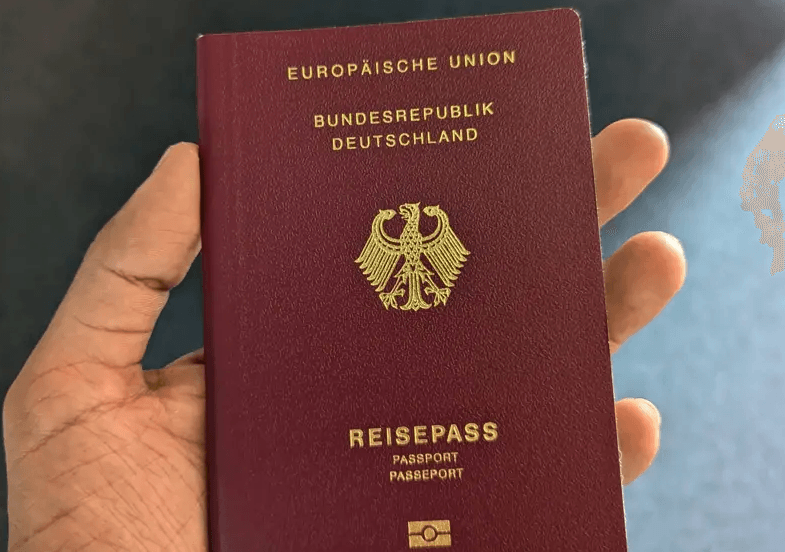
Germany now offers a single standard naturalization path after 5 years of legal residence, a 3-year route for spouses of German citizens, and a longer path for residence permits with restrictions. The much-discussed 3-year fast-track for exceptional integration was abolished on 30 October 2025.
Last updated: May 20, 2026
What changed in 2024 and 2025
German citizenship law went through two major shifts in roughly 16 months, and both matter if you are planning an application from 2026 onwards.
The Act on the Modernisation of Citizenship Law (StARModG) entered into force on 27 June 2024. It cut the standard residency requirement from 8 years to 5, generally allowed dual citizenship for all applicants, and removed the old retention permit (Beibehaltungsgenehmigung) for Germans acquiring a second nationality. It also introduced, briefly, a 3-year fast-track for applicants who could show "exceptional integration achievements" plus C1 German.
On 8 October 2025, the Bundestag voted 450 to 134 (with 2 abstentions) to abolish that fast-track. Since 30 October 2025 there is a uniform minimum residence period of 5 years for everyone applying under the standard route, and there are no transitional rules for 3-year applications that were still pending when the repeal took effect. Interior Minister Alexander Dobrindt framed the change as making the German passport "recognition for successful integration and not an incentive for illegal migration." According to Tagesschau, fewer than 1,000 people nationwide had applied under the short-lived fast-track.
What survived the 2025 repeal: the 5-year standard rule, the dual citizenship reform, and the 3-year path for spouses of German citizens under §9 StAG.
The three pathways in 2026
Despite the popular "3, 5, 8" framing, the current legal structure looks like this:
- 3 years: spouses of German citizens (§9 StAG), provided the marriage has lasted at least 2 years and you have lived legally in Germany for 3 years.
- 5 years: the standard route (§10 StAG) for all other foreign residents with a qualifying residence title.
- 6 years: possible in narrow special-integration cases at the discretion of the authority (still in the law after the October 2025 reform, distinct from the abolished 3-year track).
- 8 years and longer in practice: this used to be the statutory minimum before June 2024. It no longer applies, but in real terms the average length of residence at naturalization in 2024 was 11.8 years according to Destatis, because backlogs, missing documents, and incomplete language certificates push timelines well past the statutory minimum.
So "the 3, 5, and 8-year path" today is best understood as: marriage-based 3 years, standard 5 years, and the de facto 8-plus years that many applicants actually experience between arrival and a passport.
Who is eligible under §10 StAG (the 5-year route)
The standard requirements have not changed much in substance, only in duration. To naturalize under §10 you generally need:
- 5 years of legal and habitual residence in Germany.
- A permanent residence permit (Niederlassungserlaubnis), an EU long-term residence permit, or a qualifying temporary permit aimed at long-term stay.
- German language skills at level B1 of the Common European Framework of Reference (CEFR).
- A pass on the Einbürgerungstest (naturalization test), unless exempt.
- Financial self-sufficiency, meaning you support yourself and your dependents without drawing benefits under Social Code II (Bürgergeld) or XII.
- A clean criminal record (minor sentences may be tolerated within statutory limits).
- A commitment to the free democratic basic order of the Basic Law, including a declaration rejecting antisemitism and racism, added by the 2024 reform.
- Renunciation of your previous citizenship is no longer required in most cases since 27 June 2024.
Holders of certain residence titles are excluded from naturalization under the 2024 reform, including permits issued under §§ 16a, 16b, 16d, 16e, 16f, 17, 18f, 19, 19b, 19e, 20, 22, 23a, 24, 25(3)–(5), and §104c of the Residence Act (AufenthG). If you are on a study, training, or short-stay humanitarian permit, check with your local Staatsangehörigkeitsbehörde before counting years.
If you are still working out which permit suits you, our guide to German visa and residency options covers the freelancer (Freiberufler) route in detail.
The 3-year spouse route (§9 StAG)
This is now the only true "3-year" path in German law. To qualify you need:
- A spouse who has been a German citizen at the time of your application and during the qualifying period.
- A marriage that has lasted at least 2 years.
- 3 years of legal residence in Germany.
- The same B1 German, naturalization test, financial self-sufficiency, and clean-record requirements as the standard route.
- Integration into German conditions of life, which the authority assesses based on your overall situation.
Children of the applicant may often be co-naturalized even if they do not yet meet the residence period themselves.
Jus soli for children born in Germany
Children born in Germany to foreign parents acquire German citizenship at birth if at least one parent has been legally resident for more than 5 years (down from 8 under the 2024 reform) and holds a permanent residence permit. They keep German citizenship without having to choose between nationalities, since dual citizenship is now generally permitted.
Document checklist
Local authorities vary, but every Staatsangehörigkeitsbehörde will ask for some version of the following:
- Valid passport and all previous passports covering your residence period.
- Current residence permit and Meldebescheinigung (registration certificate).
- Birth certificate, and marriage or divorce certificates if applicable, with apostille and certified German translation.
- Proof of B1 German: a recognized certificate (for example telc, Goethe, ÖSD, TestDaF, DSH) or a German school-leaving certificate.
- Einbürgerungstest pass certificate, or proof of exemption.
- Proof of income: last 6 to 12 months of payslips, employment contract, or for freelancers tax assessments and the latest BWA.
- Pension insurance record (Rentenversicherungsverlauf).
- Rental contract and recent utility bills.
- Health insurance confirmation.
- Criminal record self-declaration (the authority pulls the actual record itself).
- Photos and biometric data as requested.
- Signed declaration of loyalty to the Basic Law.
If you have lived in other countries during the qualifying period, expect to provide police clearances from each.
Fees and processing time
Fees are set nationally by the Federal Office for Migration and Refugees (BAMF):
Item | Fee |
|---|---|
Adult naturalization | €255 |
Minor naturalized together with a parent | €51 |
Minor naturalizing alone | €255 |
Einbürgerungstest (per attempt) | €25 |
Language exams, certified translations, apostilles, and passport photos are extra and can easily add €200 to €500 depending on how many documents need translation.
Processing time is the bigger frustration. The naturalization authority has 12 weeks to process your application before you can file an Untätigkeitsklage (lawsuit for failure to act) at the administrative court. In practice, most applicants in 2025 and 2026 wait 12 to 18 months, and in cities like Berlin, Hamburg, and Munich significantly longer. Germany naturalized a record 291,955 people in 2024, a 46% increase over 2023, and the backlog has not cleared.
The Einbürgerungstest
The test is administered nationwide and costs €25 per attempt. Format:
- 33 multiple-choice questions drawn from a pool of 310 (300 general plus 10 specific to your federal state).
- 60 minutes to complete.
- Pass mark: at least 17 correct answers.
- You may retake it as often as you need.
You are exempt from the test if you hold a German school-leaving certificate or higher German qualification, or if you cannot take it due to age, illness, or disability. Former guest workers who entered the Federal Republic by 30 June 1974, and contract workers who entered the GDR by 13 June 1990, are exempt from both the test and the standard B1 requirement and only need basic spoken German.
The official BAMF question catalog is free to study, and most applicants prepare in a weekend or two.
The B1 German requirement
B1 is the floor for §10 and §9 applications. You can prove it with:
- A recognized B1 (or higher) certificate from telc, Goethe-Institut, ÖSD, TestDaF, or DSH.
- The "Deutsch-Test für Zuwanderer" (DTZ) at B1.
- A German Hauptschulabschluss or higher school qualification.
- At least 4 years of successful schooling in a German-language school.
- A completed vocational training or university degree in German.
B1 means you can handle most everyday situations, describe experiences, and write simple connected text. It is not trivial, especially the writing and listening sections, and many applicants underestimate how much active practice they need. If grammar is your weak point, working through the basics like cases and verbs (our German language skills for naturalization walkthrough on modal verbs is a good starting point) will help more than memorizing vocabulary lists.
Common pitfalls
- Gaps in residence. Long stays abroad (typically over 6 months) can break the qualifying period. Document every absence.
- Wrong residence title. Some permits do not count toward naturalization at all under the 2024 reform. Verify yours before applying.
- Benefits history. Receiving Bürgergeld or social assistance during the qualifying period is a hard blocker unless you fall within narrow statutory exceptions. Even short periods can require explanation.
- Tax and pension gaps. Freelancers who underpaid pension contributions or have inconsistent income statements often face delays.
- Untranslated documents. Every foreign-language document needs a certified German translation. Authorities reject uncertified ones.
- Old criminal matters. Even minor convictions can matter. Disclose everything; the authority will find it anyway.
- Assuming dual citizenship works for your origin country. Germany now allows it, but your country of origin may not. Check both sides.
- Workplace integration. Authorities pay attention to how settled you are. Stable employment and basic understanding of German work culture, including concepts like Feierabend and Sozialversicherung, are part of what "integration into German conditions of life" means in practice.
Application steps
- Confirm your residence title qualifies and tally your exact years of legal residence.
- Reach B1 German and take a recognized exam.
- Take and pass the Einbürgerungstest.
- Gather civil-status documents, translations, and apostilles from your country of origin.
- Request a Rentenversicherungsverlauf and assemble proof of income.
- Submit the application to your local Staatsangehörigkeitsbehörde (or, if you live abroad, to the Bundesverwaltungsamt). Some federal states now offer online portals.
- Respond promptly to requests for further documents. Missing paperwork is the single largest cause of delay.
- Attend the Einbürgerungsfeier (naturalization ceremony) and sign the loyalty declaration. You receive your naturalization certificate (Einbürgerungsurkunde) here.
- Apply for your German passport and ID card at your local Bürgeramt.
FAQs
Is the 8-year path still available? No. Since 27 June 2024 the statutory minimum is 5 years, with 3 years for spouses. The "8 years" figure now reflects real-world averages, not law.
Can I keep my original citizenship? Generally yes, since the 2024 reform. Check whether your country of origin allows dual nationality.
What if I applied under the 3-year fast-track before 30 October 2025? Those applications were caught by the repeal without transitional rules. Contact your authority and the Federal Ministry of the Interior (BMI) for current guidance.
Do I need to renounce my old passport at the ceremony? No, not in standard cases since the 2024 reform.
What if processing takes more than 12 weeks? You may file an Untätigkeitsklage at the administrative court, although in practice many applicants wait longer before doing so.
Who handles applications from abroad? The Bundesverwaltungsamt (BVA) in Cologne, usually via the German mission in your country of residence.
Are there exceptions to the B1 requirement? Yes, for former guest workers and contract workers, and in limited cases for older applicants or those with documented disabilities.
If you are working toward B1 (or pushing higher for your career in Germany), learning with real German shows, news, and books makes the test material feel like background knowledge instead of homework. Migaku is built for exactly that kind of native-content study.