Best Free Language Learning Resources: Courses, Apps, and Free Online Events
Last updated: April 7, 2026

You want to learn a new language but don't want to drop hundreds of dollars on courses or subscriptions? I get it. The good news is that in 2026, there are more quality free language learning resources than ever before. From spaced repetition apps to AI tutors, you can build genuine fluency without spending a cent. I've tested dozens of these tools myself, and I'm going to walk you through the best ones that actually work.
- Free language learning apps that actually deliver
- Language courses and structured learning platforms
- AI-powered conversational practice
- Video-based immersion learning
- Community and peer feedback platforms
- Live tutoring and conversation practice
- Resources for endangered and lesser-studied languages
- Free vs. premium features: What are you actually missing
- Combining multiple free online tools for comprehensive skill development
- FAQs
Free language learning apps that actually deliver
Let's start with the most accessible option for most people: mobile apps. These have come a long way from simple vocabulary drills.
Duolingo: The gamified gateway
Duolingo remains the most popular free language learning app for good reason. It's completely free (with ads), covers over 40 languages including less common ones like Hungarian, Turkish, and Finnish, and uses gamification to keep you coming back daily.
Here's the thing though. Duolingo works best as a beginner tool to build basic vocabulary and grammar patterns. The lessons are bite-sized, usually taking 5-10 minutes, which makes them easy to squeeze into your day. The app teaches through pattern recognition rather than explicit grammar explanations, which some learners love and others find frustrating.
The free version gives you access to all the core content. You'll see ads between lessons and have limited "hearts" (lives), but honestly, that's a pretty fair trade for free access to structured courses in dozens of languages.
Anki: The spaced repetition powerhouse
If you're serious about language learning, Anki is probably the single most effective free tool available. It's a flashcard app built on spaced repetition, which means it shows you cards right before you're about to forget them. This timing maximizes retention.
Anki has a steeper learning curve than Duolingo. The interface looks dated, and you'll need to either create your own flashcard decks or download pre-made ones. But once you get past that initial setup, it's incredibly powerful.
The desktop version is completely free, and there are nearly 1,000 free decks available for popular languages. You can find decks for vocabulary, grammar patterns, sentence mining, and even specialized topics like medical terminology in Portuguese or business Swedish.
I use Anki daily for Japanese vocabulary, and the retention rate is honestly impressive. Words I learned months ago still stick because of the spaced repetition algorithm.
Quizlet
Quizlet is more user-friendly than Anki and has a huge library of pre-made flashcard sets. The free version lets you study any set, create your own cards, and use basic study modes. It's particularly good if you're a beginner and want something that just works without much setup.
The spaced repetition isn't as sophisticated as Anki's, but for casual learning, it does the job.
Memrise
Memrise has official courses (some require premium) but also thousands of community-created courses that are completely free. You can find courses for vocabulary, phrases, and even niche topics like slang or regional dialects.
Language courses and structured learning platforms
Sometimes you want more structure than an app can provide. These platforms offer complete courses without charging you anything.
Language Transfer
This is one of my favorite hidden gems. Language Transfer offers complete audio courses for Spanish, French, German, Italian, Greek, Turkish, and a few other languages. The courses are based on the "thinking method" where the instructor guides you to construct sentences yourself rather than just memorizing phrases.
Open Culture language resources
Open Culture curates free language courses from universities and institutions. You can find complete courses in over 40 languages, including less commonly taught ones like Dutch, Finnish, and Hungarian. These tend to be more academic in approach, which works well if you're an intermediate learner who wants deeper grammatical understanding.
AI-powered conversational practice
This is where things have gotten really exciting in the past couple years. AI language tutors have become shockingly good.
ChatGPT as your free tutor
You can use ChatGPT (the free version) as an incredibly flexible language tutor. Ask it to have conversations with you in your target language, correct your mistakes, explain grammar points, or even roleplay specific scenarios like ordering at a restaurant or interviewing for a job.
I've used ChatGPT to practice Japanese conversations, and it's patient, never judges you for making the same mistake repeatedly, and can adjust its level to match yours. You can tell it "speak to me like I'm a beginner" or "use more advanced vocabulary."
The key is being specific with your prompts. Instead of just saying "teach me French," try "let's have a conversation about cooking in French, and correct any mistakes I make at the end of each response."
Video-based immersion learning
Immersion is how you actually get fluent, and video content is one of the best ways to immerse yourself.
YouTube channels for language learners
YouTube has exploded with quality free language content. Channels like Easy Languages offer street interviews with subtitles in both the target language and English. They cover tons of languages including Portuguese, Swedish, Turkish, and Dutch.
For comprehensible input (content slightly above your level), channels like Dreaming Spanish or Easy German provide hours of free content designed specifically for learners at different levels.
Community and peer feedback platforms
Learning alone gets boring. These platforms connect you with other learners and native speakers.
HelloTalk and Tandem
Both apps connect you with native speakers who want to learn your language. You help them with English, they help you with their language. It's free language exchange.
The apps include built-in translation and correction tools, so you can text back and forth, send voice messages, or even do video calls. I've had some great conversations with Japanese learners who corrected my mistakes and explained cultural nuances I never would have learned from a textbook.
Reddit language learning communities
Subreddits like r/languagelearning and language-specific communities (r/LearnJapanese, r/French, etc.) are goldmines of free resources, advice, and motivation. People share their progress, recommend resources, and answer questions from learners at all levels.
Live tutoring and conversation practice
Getting live practice used to mean paying for a tutor, but there are free options now.
Language exchange meetups
Sites like Meetup.com and Eventbrite list free language exchange events in most major cities. You show up, practice speaking with other learners and native speakers, and usually pay nothing (maybe the cost of a coffee).
Even small cities often have language cafes or conversation groups for popular languages like Spanish or French.
Discord language servers
Discord has become a hub for language learners. You can find servers dedicated to specific languages where people do voice chats, text practice, and share resources. It's like having a study group available 24/7.
Resources for endangered and lesser-studied languages
This is an area where the free language learning community really shines.
Omniglot
Omniglot is a massive encyclopedia of writing systems and languages. If you want to learn Finnish, Hungarian, or even more obscure languages, Omniglot provides basic phrases, alphabet guides, and links to learning resources.
Tatoeba
Tatoeba is a collection of sentences and translations maintained by volunteers. It's incredibly useful for seeing how words and grammar work in context. You can search for specific words or grammar patterns and see them used in real sentences across dozens of languages.
Free vs. premium features: What are you actually missing
Most free language learning apps use a freemium model. Here's what you typically get with free versions versus paid:
- Free usually includes all core content, basic features, and community access. You'll deal with ads, might have usage limits (like Duolingo's hearts system), and miss out on convenience features like offline access or detailed progress tracking.
- Premium removes ads, adds convenience features, and sometimes includes extra content like advanced grammar explanations or personalized learning paths.
For most learners, especially beginners and intermediate students, the free versions provide everything you need to make real progress. Premium is nice to have, but rarely essential.
Combining multiple free online tools for comprehensive skill development
Here's the reality: No single free tool will take you from zero to fluent. But combining several free resources absolutely can.
A solid free language learning stack might look like this:
- Start your day with 15 minutes of Duolingo or Anki for vocabulary building. This gives you the raw materials (words and basic grammar patterns).
- Then spend 20-30 minutes with comprehensible input like YouTube videos or podcasts at your level. This trains your listening comprehension and shows you how the language actually sounds.
- A few times per week, practice output (speaking and writing) through HelloTalk or language exchange meetups. This forces you to actively use what you've learned rather than just passively consuming.
- Use ChatGPT when you have specific questions about grammar or want to practice conversations on particular topics.
This combination hits all four skills (reading, writing, listening, speaking) without costing anything.
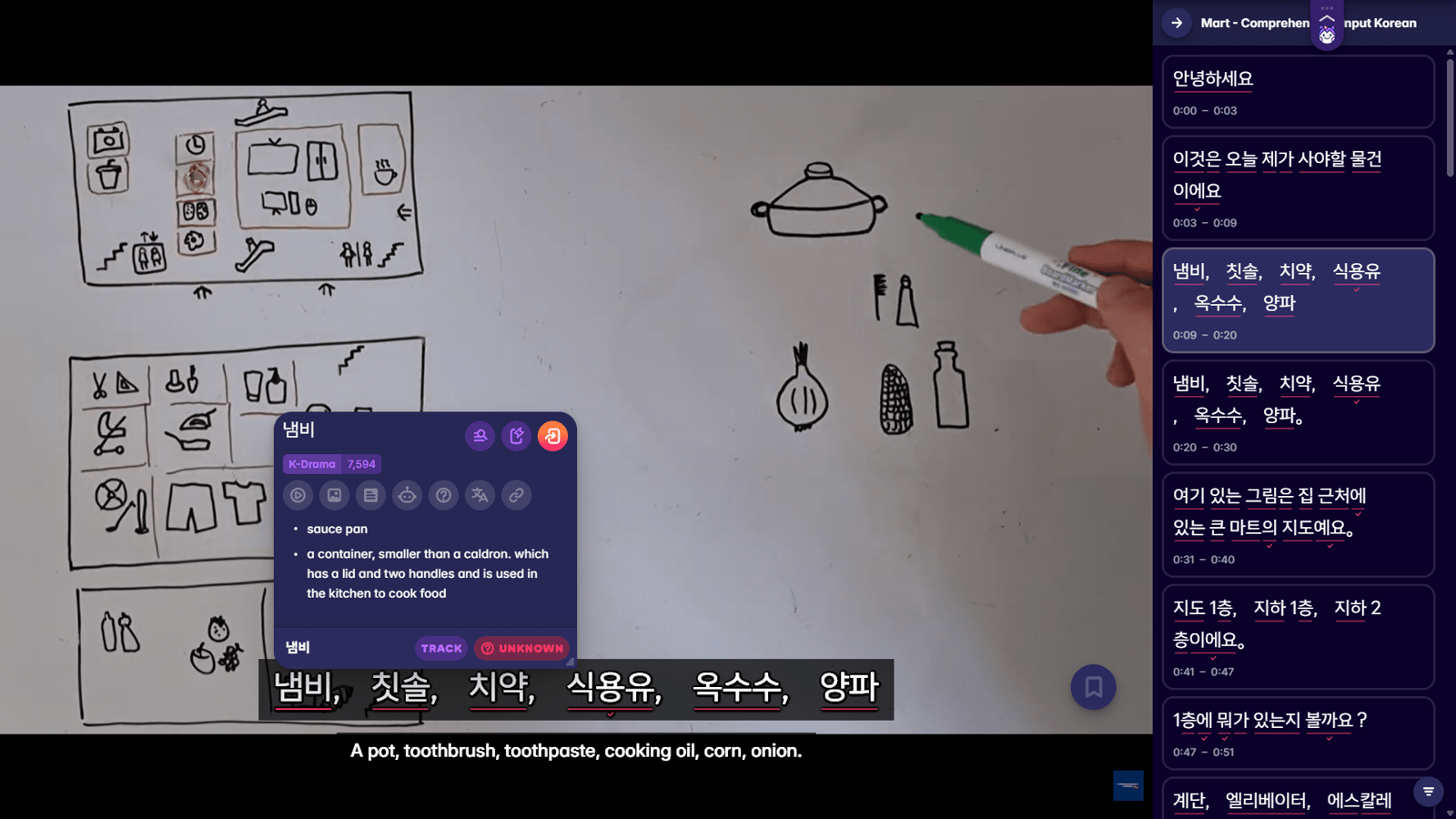
Anyway, if you want to take your immersion learning to the next level, Migaku's browser extension and app let you look up words instantly while watching shows or reading articles in your target language. Makes the whole process way more practical than constantly pausing to look things up. There's a 10-day free trial if you want to check it out.
FAQs
Finding the free courses and tools that work for you
You've got options. Tons of them. The challenge in 2026 isn't finding free language learning resources, it's choosing which ones to actually use and sticking with them long enough to see results. My advice? Start with one app for structured learning (Duolingo or Anki), one source of immersion (YouTube or podcasts), and one way to practice output (language exchange app or local meetup). Use those consistently for a month before adding more tools.
If you consume media in your target language, and you understand at least some of the messages and sentences within that media, you will make progress. Period.
The best learning strategy doesn't have to cost you!