Best French Podcasts for French Language Learning in 2026
Last updated: March 25, 2026

Finding good French podcasts can feel overwhelming when you're trying to learn the language. There are hundreds of options out there, and most recommendation lists just throw names at you without explaining what makes each one useful. I've spent way too much time testing different French podcasts at various levels, so here's what works for language learners who want to improve their listening skills and pick up useful vocabulary.
- Why French podcasts work for language learning
- Best French podcasts for beginners
- Intermediate French podcasts to advance your skills
- Best podcasts in French for native-level content
- News-based French podcasts for real-world vocabulary
- Where to find these French podcasts
- How to use French podcasts for learning
Why French podcasts work for language learning
Podcasts give you something textbooks can't: real French spoken at natural speeds by native speakers. You get to hear pronunciation, rhythm, and intonation patterns that you'll encounter when you visit France or speak with French speakers.
The cool thing about using podcasts to learn French is that you can listen while doing other stuff. Commuting, cooking, walking, whatever. You're getting input hours that you wouldn't otherwise have time for.
However, not all French podcasts are good for learners. Some native content is way too fast and complex for beginners. Others designed for learners can be too slow and boring once you advance past the basics. You need to match the podcast to your level.
Best French podcasts for beginners
Coffee Break French
This is probably the most famous French podcast for absolute beginners. The host speaks in English and introduces French concepts gradually, which makes it super accessible if you're just starting out.
Each episode builds on previous lessons, covering essential grammar and vocabulary in bite-sized chunks. The pacing is deliberate, giving you time to absorb new words before moving forward.
The downside? It can feel a bit too structured if you prefer a more immersive approach. But for someone who needs hand-holding through the basics, it's pretty solid.
Duolingo French Podcast
These episodes tell interesting stories in French, but here's what makes them beginner-friendly: the narration alternates between English and French. The English parts provide context, while the French dialogue lets you follow along without getting completely lost.
The stories cover real people and cultural topics from France and French-speaking countries. You're learning vocabulary while engaging with content that isn't boring.
Production quality is excellent, too. Clear audio, professional voice actors, and transcripts available if you want to read along.
Intermediate French podcasts to advance your skills
InnerFrench
This podcast deserves all the hype it gets. Hugo, the host, speaks clearly in French about fascinating topics like psychology, history, and culture. He uses everyday vocabulary but slows down just enough that intermediate learners can follow.
What makes InnerFrench special is that Hugo understands language learning. He's a French teacher who structures episodes specifically for learners. The topics are genuinely interesting, not the usual boring "let's talk about ordering coffee" stuff.
Each episode comes with a transcript, which is clutch when you want to study specific phrases or vocabulary. You can listen first, then read along to catch what you missed.
Français Authentique
Johan's approach focuses on comprehensible input. He speaks at a moderate pace about daily life topics, personal development, and French culture. The language is authentic but accessible.
The podcast emphasizes understanding over perfection, which takes pressure off. You're not expected to catch every single word. The goal is to build your listening comprehension gradually.
Johan also offers practical tips for learning French throughout the episodes, so you're getting meta-advice while practicing the language itself.
Best podcasts in French for native-level content
Les Baladeurs
Once you're comfortable with intermediate content, Les Baladeurs offers documentary-style episodes about French culture, society, and daily life. The speakers use natural, unscripted French at normal speeds.
Topics range from urban exploration to social issues, giving you exposure to diverse vocabulary and speaking styles. This is the kind of content French people listen to, not stuff made for learners.
Fair warning: this will be challenging if you're not solidly intermediate or advanced. But that challenge is exactly what pushes your skills forward.
Transfert
This podcast from Slate.fr features real people telling personal stories. The emotional, narrative style makes it engaging even when the language gets complex.
You'll hear different accents, speaking speeds, and vocabulary choices depending on who's being interviewed. That variety mirrors real-world French conversations where not everyone sounds like a textbook.
Kiffe ta race
If you want to understand contemporary issues in France, this podcast discusses race, identity, and culture with sharp, intelligent conversation. The hosts speak quickly and use current slang and expressions.
This isn't beginner-friendly at all, but it's gold for advanced learners who want to grasp how French people actually talk about complex social topics.
News-based French podcasts for real-world vocabulary
Journal en français facile
This is Radio France Internationale's simplified news podcast. They cover current events from around the world, but the speakers articulate clearly and use straightforward vocabulary.
Each episode is only about 10 minutes, making it easy to fit into your day. You're learning the kind of French you'd encounter reading newspapers or watching news broadcasts.
The vocabulary tends toward formal and informative, which is different from conversational podcasts. That variety helps you develop range in your comprehension.
Where to find these French podcasts
Most of these podcasts are available on Spotify, Apple Podcasts, and other major platforms. Some also have dedicated websites with additional resources like transcripts and exercises.
YouTube also hosts many French podcasts. Many creators upload their episodes there, sometimes with subtitles that help with comprehension.
The podcast apps make it easy to download episodes for offline listening, which is clutch if you're traveling or have spotty internet.
How to use French podcasts for learning
Just passively listening won't get you fluent in French language. You need to engage with the content actively, at least some of the time.
- Start by listening to an episode once through without stopping. Get the general idea and don't stress about every word. Then listen again, this time pausing to look up key vocabulary or replay confusing sections.
- If transcripts are available, read along during your third listen. This connects the sounds you're hearing with the written words, reinforcing both your listening and reading skills.
- Try shadowing, where you repeat what the speaker says immediately after hearing it. This improves your pronunciation and helps you internalize natural speech patterns and French grammar rules.
- Set a specific time each day for learning podcasts. Morning coffee, lunch break, evening walk, whatever works. Consistency matters more than duration.
- Mix up your podcast choices. Don't just listen to one show. A wide range of topics exposes you to varied vocabulary and speaking styles.
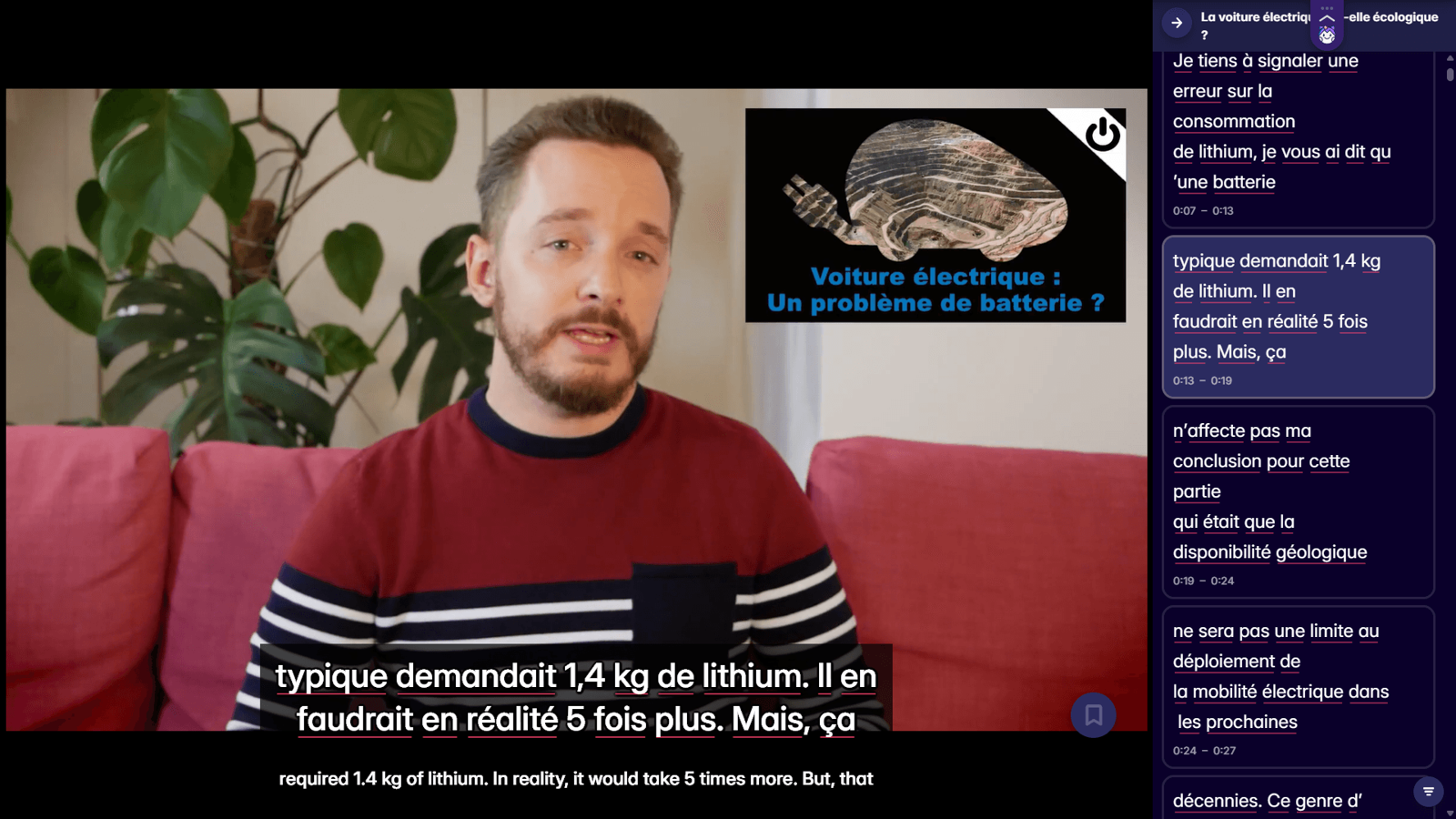
Anyway, if you want to make the most of French content beyond podcasts, Migaku's browser extension and app let you look up words instantly while watching French shows or reading French articles. The instant dictionary and sentence mining features make immersion learning way more practical. There's a 10-day free trial if you want to check it out.
Podcasts work best as part of a broader learning strategy
Listening to podcasts is excellent for listening comprehension and vocabulary exposure, but you still need to practice speaking, writing, and grammar. Use podcasts to complement your other studies. If you're working through a textbook, find podcast episodes on similar topics to reinforce what you're learning.
If you consume media in French, and you understand at least some of the messages and sentences within that media, you will make progress. Period.
Language learning is gradual.📖🎧