# What Are the Best Podcasts to Learn German in 2026?
> Find the best German podcasts for your level. From Easy German to advanced shows, here's what actually works for learning German through listening.
**URL:** https://migaku.com/blog/language-fun/best-german-podcasts
**Last Updated:** 2026-03-20
**Tags:** resources, discussion
---
[Learning German](https://migaku.com/learn-german) through podcasts is honestly one of the smartest moves you can make. You get real conversations, natural speech patterns, and topics that actual German speakers care about. Plus, you can listen while commuting, doing dishes, or working out at the gym. The tricky part? Finding podcasts that match your level and keep you engaged. I've spent way too much time testing different German podcasts, so here's what works for learners at different stages.
----
## Why podcasts work so well for learning German
Here's the thing about podcasts.
1. They expose you to German the way people speak it, complete with filler words, regional accents, and the kind of casual expression you'd never find in a textbook.
2. When you listen regularly, your brain starts picking up on sentence structures and pronunciation patterns without you consciously trying.
3. You can find podcasts for literally any interest. Into true crime? There's a German podcast for that. Love discussing philosophy at 2am? Yep, covered. This matters because you'll stick with listening when the topic interests you, instead of forcing yourself through boring [grammar](https://migaku.com/blog/language-fun/german-grammar-guide) explanations.
Most learners wonder if they can learn German just from podcasts. The honest answer is that podcasts work amazingly well for listening comprehension, vocabulary building, and getting comfortable with natural speech. But you'll still need to practice speaking, writing, and reading to become truly fluent. Think of podcasts as one powerful tool in your learning toolkit, not the entire workshop.
----
## Starting out: Podcasts for beginners
### Easy German podcast
Easy German stands out as probably the most popular podcast for German learners, and yeah, it deserves the hype. Cari and Manuel host conversational episodes about everyday life in Germany, speaking clearly at a pace that beginners can follow. They cover topics like German bureaucracy, dating culture, and weird German traditions.
Each episode comes with a full transcript, which is honestly a game changer. You can read along while listening, look up words you don't know, and understand what's happening. The hosts also explain tricky phrases and cultural context in both German and English when needed.
You can find Easy German on Spotify, Apple Podcasts, and pretty much every other podcast platform. New episodes drop regularly, so you'll have plenty of content to work through. The earlier episodes tend to be simpler, so start from the beginning if you're a complete beginner.
### Coffee Break German
Coffee Break German takes you from absolute zero to intermediate level across multiple seasons. Each episode runs about 15-20 minutes, perfect for fitting into your day. The format mixes English explanations with German practice, so you're never completely lost.
The host Mark speaks English while his co-host introduces German phrases and conversations. They build on previous lessons, so you want to listen in order rather than jumping around randomly. Season 1 covers basics like introducing yourself and ordering food, while later seasons tackle more complex grammar and longer conversations.
### Slow German
Slow German does exactly what the name suggests. Annik speaks German at a deliberately slow pace while discussing German culture, history, and daily life. Each episode focuses on a single topic and includes a transcript you can download from the website.
This podcast works great when Easy German still feels too fast. The slow speed gives you time to process each word and notice how sentences fit together. Topics range from German festivals to famous historical figures, so you're learning about the culture while improving your listening skills.
----
## Intermediate level podcasts for German learners
### Deutschlandfunk podcasts
Once you can handle basic conversations, Deutschlandfunk offers a bunch of podcasts made for native German speakers. These cover news, culture, science, and politics at a normal speaking pace. Yeah, it's challenging, but that's kind of the point.
The "Eine Stunde History" podcast dives into historical events with expert interviews. "Der Tag" produces documentary-style episodes about fascinating topics. You won't catch every word at first, but you'll improve faster by pushing yourself with real content.
### Fest & Flauschig
This comedy podcast with Jan Böhmermann and Olli Schulz is genuinely funny if you're into German humor. They chat about pop culture, current events, and random observations about life. The language is casual and fast, packed with slang and cultural references.
Fair warning, this is tough for intermediate learners. But if you can follow even 60% of what they're saying, you're doing pretty well. The humor gives you motivation to keep listening and figure out the jokes. Each episode runs over an hour, so there's plenty of material.
### Verbrechen
True crime fans should check out Verbrechen, which examines real criminal cases from Germany. The hosts discuss each case in detail, often with additional experts or journalists. The storytelling pulls you in even when you don't understand every single word.
The vocabulary here gets specific, covering legal terms and crime-related language. But the narrative structure helps you follow along through context. Episodes include transcripts on some platforms, making it easier to review sections you missed.
----
## Best German podcasts for advanced listening
### Zeit Wissen
Zeit Wissen explores science, technology, and research in accessible language. The topics range from climate change to psychology studies to artificial intelligence. Journalists interview experts and break down complex subjects for general audiences.
This podcast helps you build academic and professional vocabulary in German. The speech is natural but clear, and the episode structure usually follows a logical progression that aids comprehension. Perfect for when you want to sound educated in German conversations.
### Lage der Nation
For politics and current affairs, Lage der Nation delivers weekly analysis of German and international news. The hosts discuss political developments, explain background context, and share their perspectives on major issues.
The language here is sophisticated, and the topics require cultural knowledge about Germany's political system. But if you're planning to live in Germany or follow German news, this podcast gets you up to speed on how people actually discuss politics there.
----
## Finding free podcasts and resources
Pretty much all German podcasts are free to access on standard podcast platforms.
1. **Spotify, Apple Podcasts, and Google Podcasts** host the vast majority of shows mentioned here. Some podcast creators offer bonus content or early access through Patreon, but the main episodes cost nothing.
2. **YouTube** also hosts many German podcasts, including Easy German's video podcast format. Watching the video version adds visual context that can help with comprehension. The Easy German YouTube channel has hundreds of street interview videos alongside their podcast episodes.
When looking for the best German podcasts to learn effectively, start with shows that match your current level. Pushing yourself slightly beyond your comfort zone works great, but jumping straight to advanced content when you're a beginner just leads to frustration and giving up.
----
## Using transcripts to boost learning
Transcripts turn podcasts from [passive listening](https://migaku.com/blog/language-fun/active-vs-passive-listening-language-learning) into active learning. You can read along while listening to connect spoken sounds with written words. After listening, review the transcript to look up unknown vocabulary and understand sentences you missed.
Easy German provides transcripts for all their podcast episodes through their website and Patreon. Coffee Break German includes lesson notes with key phrases and explanations. Many German podcasts for native speakers don't offer transcripts, but you can sometimes find fan-made versions or use transcription software.
Here's a practical method:
1. Listen to an episode once without the transcript.
2. Listen again while reading along.
3. Finally, review the transcript to study new words and phrases.
This three-step approach reinforces learning way better than just passive listening.
----
## Building a podcast routine that sticks
The learners who improve through podcasts listen consistently, not just when they feel motivated.
1. Pick specific times in your day for podcast listening. Morning commute, lunch break, evening walk, whatever fits your schedule.
2. Start with shorter episodes around 15-20 minutes if you're building the habit. You can always add more listening time later. Trying to listen for two hours straight when you're not used to it just burns you out.
3. Mix different podcast types to keep things interesting. Rotate between educational podcasts designed for learners and entertainment podcasts for native speakers. This variety prevents boredom and exposes you to different speaking styles and vocabulary ranges.
----
## Making podcasts work with other learning methods
Podcasts shouldn't be your only learning resource, but they complement other methods perfectly.
1. Use them alongside grammar study, [vocabulary apps](https://migaku.com/blog/language-fun/best-german-learning-apps), and conversation practice. The listening practice from podcasts makes your speaking better because you internalize natural sentence patterns and pronunciation.
2. Combine podcast listening with active immersion in German content. Watch German shows, read German articles, and try to use new words you learned from podcasts in your own sentences. This multi-angle approach builds language skills faster than any single method alone.
3. Some learners like to shadow podcasts, meaning they repeat what the speaker says immediately after hearing it. This technique improves pronunciation and speaking fluency. Start with slower podcasts like Slow German or Easy German before trying to shadow faster native content.
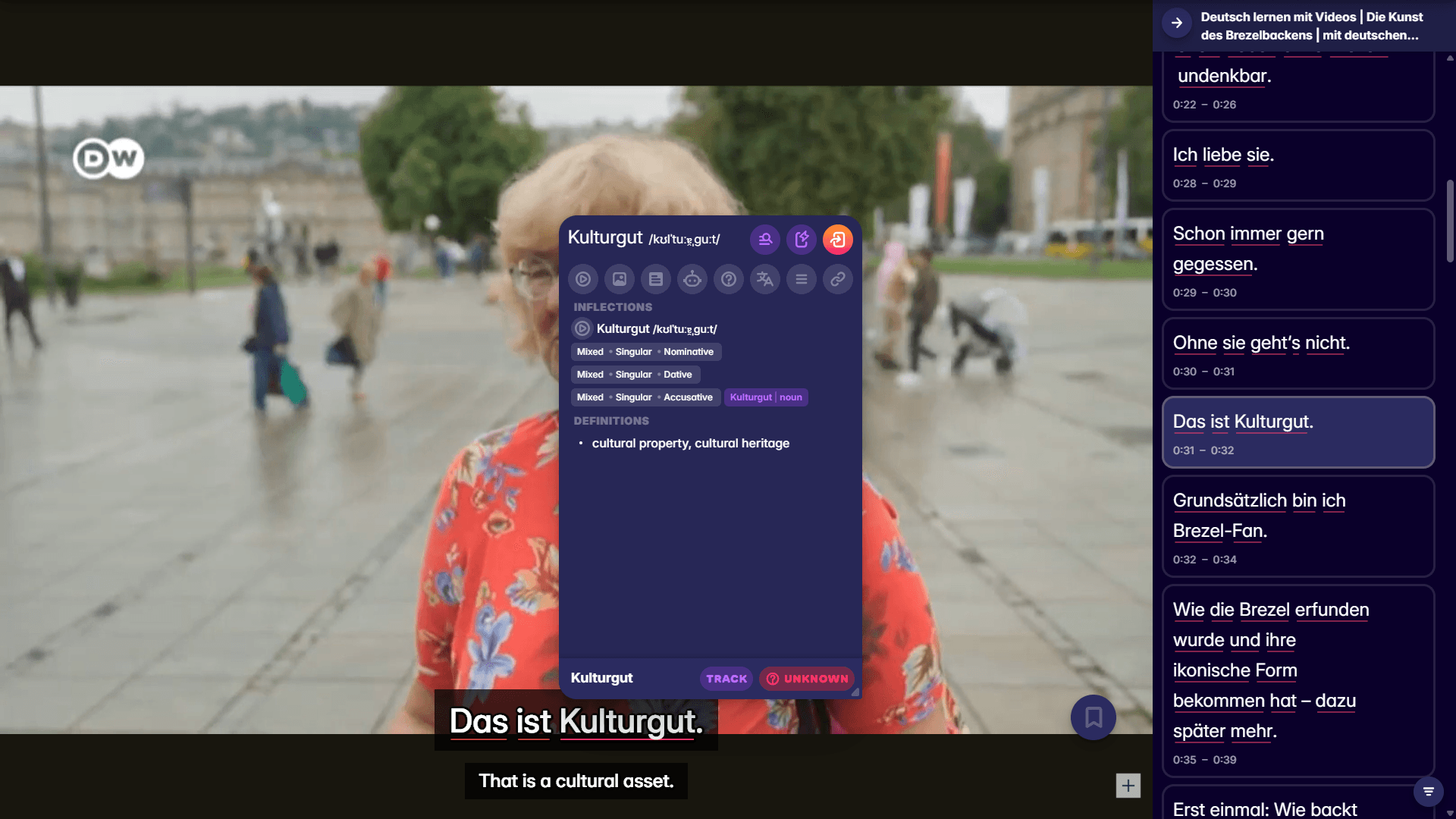
Anyway, if you want to level up your German learning beyond podcasts, Migaku's browser extension and app let you look up words instantly while watching German shows or reading German articles. The popup dictionary and sentence mining features make immersion learning way more practical. There's a 10-day free trial if you want to check it out.
 ----
## FAQs
That depends entirely on your level and interests. For beginners, Easy German podcast offers the best combination of clear speech, interesting topics, and learning support. Intermediate learners should try Deutschlandfunk's various shows. Advanced learners can pick any podcast that matches their interests since [comprehension matters more](https://migaku.com/blog/language-fun/comprehensible-input-method-language-learning) than finding "learner-friendly" content at that stage.
Based on effectiveness and popularity: Easy German for overall learning, Coffee Break German for structured beginner lessons, Slow German for gentle introduction to native content, Deutschlandfunk for intermediate news and culture, and Zeit Wissen for advanced topical learning. Your personal top 5 might look different based on your interests and level.
----
## One final tip on using German podcasts to learn the language...
Look, podcasts are incredibly useful for German learning, but they work best when you actually engage with the content instead of just letting it play in the background. Take notes on new vocabulary. Pause to look up words. Listen to interesting episodes multiple times. The effort you put in directly correlates with how much you improve.
> If you consume media in German, and you understand at least some of the messages and sentences within that media, you will make progress. _Period_.
Celebrate when you follow a complex explanation; those moments show real progress.👍
----
## FAQs
That depends entirely on your level and interests. For beginners, Easy German podcast offers the best combination of clear speech, interesting topics, and learning support. Intermediate learners should try Deutschlandfunk's various shows. Advanced learners can pick any podcast that matches their interests since [comprehension matters more](https://migaku.com/blog/language-fun/comprehensible-input-method-language-learning) than finding "learner-friendly" content at that stage.
Based on effectiveness and popularity: Easy German for overall learning, Coffee Break German for structured beginner lessons, Slow German for gentle introduction to native content, Deutschlandfunk for intermediate news and culture, and Zeit Wissen for advanced topical learning. Your personal top 5 might look different based on your interests and level.
----
## One final tip on using German podcasts to learn the language...
Look, podcasts are incredibly useful for German learning, but they work best when you actually engage with the content instead of just letting it play in the background. Take notes on new vocabulary. Pause to look up words. Listen to interesting episodes multiple times. The effort you put in directly correlates with how much you improve.
> If you consume media in German, and you understand at least some of the messages and sentences within that media, you will make progress. _Period_.
Celebrate when you follow a complex explanation; those moments show real progress.👍